



Origin of pho: Where does pho come from?
Hanoi Pho and Nam Dinh Pho have just been inscribed on the list of National Intangible Cultural Heritage. In my opinion, this is something that should have been done a long time ago, rather than waiting until now.
I still remember just the other day at the Pho Festival 2024 held in Nam Dinh back in March, some friends and I discussed the topic of Pho, including exploring the origins of a Vietnamese dish that has now become a national brand in international cuisine.
To this day, there are still many different views on the origins of pho, with three popular hypotheses: Pho originates from the French dish Pot-au-Feu; pho originates from the Chinese Niu Rou Fan (beef rice noodle soup); and pho originates from the Vietnamese bun xao trau (buffalo noodle soup).
In March, when news about director Tran Anh Hung's film - The Pot-au-Feu, titled Muon Vi Nhan Gian in Vietnamese - winning an award at Cannes (in mid-2023) reached Vietnam, I became even more convinced that Pot-au-Feu was indeed one of the three origins, and specifically the initial origin that gave the name to Vietnamese pho.
However, my close friend Dr. Vu The Long, who has conducted extensive research on Vietnamese cuisine, wrote on his personal page after watching Tran Anh Hung's film: The French Pot-au-Feu dish that some people insist is the ancestor of Vietnamese Pho? A bit hard to believe!.
Well, I am precisely one of those who believe so, except I don't call it the ancestor. It is merely one of the three sources that converged to form pho, consisting of French cuisine (stewed beef), Chinese cuisine—or more accurately, wet-rice civilization cuisine (processed rice products)—and our own local cuisine, or more broadly Southeast Asian cuisine (fish sauce fermented from sea fish).
Among these, Western cuisine was the starting point, which is why it only appeared in modern history when Westerners came to occupy our country. The hypothesis that Nam Dinh was the birthplace of pho stems from the presence of a fairly large working-class and middle-class Western community living there when Nam Dinh served as the textile industry center of all Indochina.
Through research, I learned that 14-Michelin-star chef Pierre Gagnaire, who inspired and served as culinary consultant for Tran Anh Hung's film, clearly explained that Pot-au-Feu is an ancient French dish, originally very rustic, which must strictly be a beef stew (including both broth and solids: beef bones and meat). In some cases where additions were desired, only goat and rabbit were allowed, while the skill in making this dish lay in how chefs selected or adjusted vegetables, fruits, and spices during cooking.
Over time, across generations and regions, Pot-au-Feu also evolved and adapted by adding an increasingly rich and creative variety of meats or vegetables..., but its core could never lack the flavor of stewed beef.
Eventually, Pot-au-Feu was no longer just a humble dish, appearing on the menus of the upper class, and the art of cooking it grew increasingly diverse, catering to both commoners and aristocracy depending on the chef and financial standing.
When we come close to agreeing that Nam Dinh was where Pho first appeared before spreading to Hanoi and other colonial-era urban centers, we cannot overlook the demand from a large number of relatively working-class Europeans, such as foremen, engineers, or staff working in the largest textile center in Indochina.
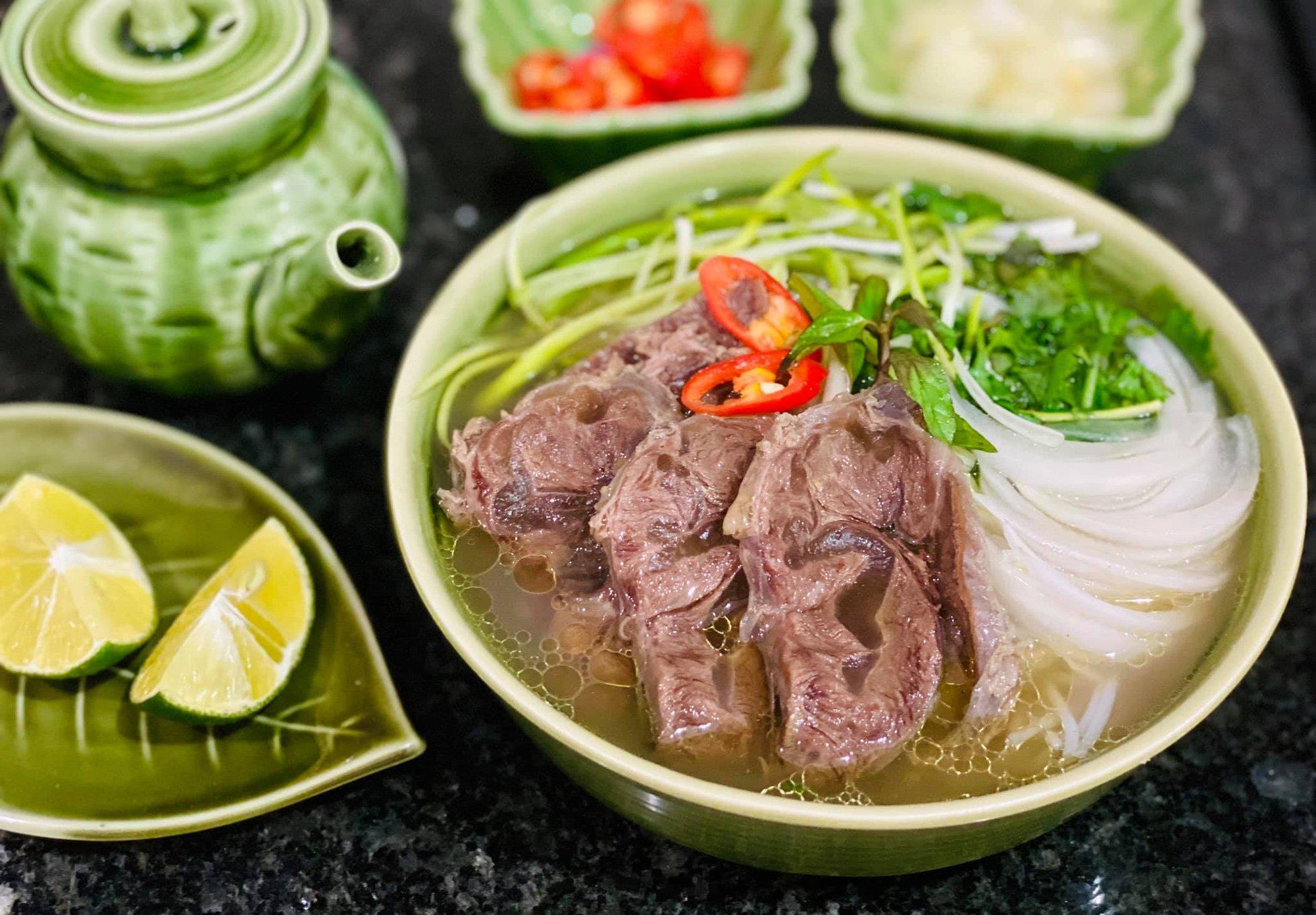
It was they who brought this relatively humble Pot-au-Feu to this land to reminisce about the culinary flavors of their homeland. However, two new elements were added: the use of fish sauce and fresh rice flour noodles cut into strands.
When this dish originated, it was initially still categorized as a humble meal, and the popular way to eat it was around street vendor carts sitting on the edge of small benches, meaning people mostly held chopsticks in one hand and a bowl of pho in the other, slurping away standing or sitting.
A question arises: before 1954, did Hanoi already have restaurants, shops, or stores selling Pho, or were there still only street vendor carts? At that time, I was 7 years old, often walking to school or wandering alone from Hang Duong Street as far as Hang Than Street, knowing there was a pho cart there; Hang Chieu also had a pho cart, but the place I ate at most often was Hang Ca. During this period, Hanoi had many Chinese restaurants (cao lau), or Vietnamese restaurants serving fragrant rice with pork sausage. Meanwhile, Western meals were usually found in Western hotels or restaurants.
Next, Hanoi entered a difficult period of economic recovery, followed by strict State management of rice and beef. As a result, state-owned trade stores sold pho in relatively decent shopfronts—using requisitioned properties during housing reforms—but this was humble unmanned (meatless) Pho. Later, pho followed migrants moving from North to South or to France, entering the free market and flourishing toward higher quality and luxury, with adaptations to suit tastes in new lands...
By 1975, once again, a large number of Vietnamese evacuated to the United States, taking with them pho that grew increasingly grand, with names like Pho Tau Bay (airplane pho), Pho Tau Bo (battleship pho)...
Since the Doi Moi period, with the acceptance of the market economy and the abolition of subsidies, the environment for pho improved noticeably and pho took center stage, becoming increasingly delicious, full of flavor, and subject to many adaptations. Fundamentally, however, it maintained its core of stewed beef + pho noodles + fish sauce; chicken pho was the sole exception (unclear when it first appeared), relying purely on stewed chicken to make pho!
Developments toward luxury include the foie gras pho bowl by famous French chef Didier Corlou, who married a Vietnamese woman and spent years in Vietnam. A famous diner who loved this dish was US Senator John Kerry. Vietnamese kitchens, meanwhile, began using imported beef or creating elaborate dishes like stone bowl Pho, driving prices up manifold...
Thus, the development path of Pho is very similar to that of Pot-au-Feu. Furthermore, the evocative name Pot-au-Feu itself—translated based on the image of a pot (Pot) placed on (au) the fire (Feu)—shows that this dish must be eaten hot, as eating it cold loses its flavor, which is also very similar to Pho.
Many people have put forward the hypothesis that Pho is a phonetic variation of Chinese (Niu Rou Fan) or something similar, which I do not find convincing. But I remember that in the early 1990s, when our country first opened up for integration, my maternal uncle—who had studied and lived in France for a long time—came back to Vietnam and ate pho, asserting that our word pho was a shorthand term used by overseas Vietnamese there derived from the word Feu.
Later, I had the opportunity to work in France and once sat down to converse with Mr. Dang Van Long, who spent many years close to the Vietnamese community serving as soldiers for the French during the two World Wars. He recounted that during World War I, tens of thousands of Vietnamese went not only as military laborers but also fought in combat on many battlefields across France, North Africa, and the Mediterranean... They easily integrated into the new land in every respect, with the sole irreplaceable needs being pipe tobacco (thuoc lao) and fish sauce. Therefore, the French government had to arrange to import these two items from Vietnam to supply them as essential goods... In the kitchens for Vietnamese soldiers, even the Pot-au-Feu dish was specially prepared using fish sauce, which Vietnamese diners loved for its familiar taste and sufficient nutrition. Right in the kitchens of Vietnamese soldiers, people simply called this dish by its final word Feu/Pho, and that was enough to be understood...
I suspect that Nam Dinh also attracted many of these soldiers upon their return, and they may have contributed to the formation of Pho (!?). Of course, Pot-au-Feu was only one factor; besides that were pho noodles and indigenous spices (for example, broth enriched with black cardamom, peanut worms, or local shallots, herbs, coriander...) allowing pho to endure sustainably and continually improve to become tastier and more refined.
A few words to contribute to understanding the origin of Pho, a dish recently inscribed on the National Intangible Cultural Heritage list. I hope to receive many contributions regarding the origins of this national soul-and-essence dish.
Author: Mr. Duong Trung Quoc is a historical researcher and National Assembly delegate *** continuously from term XI to term XIV (20 years).


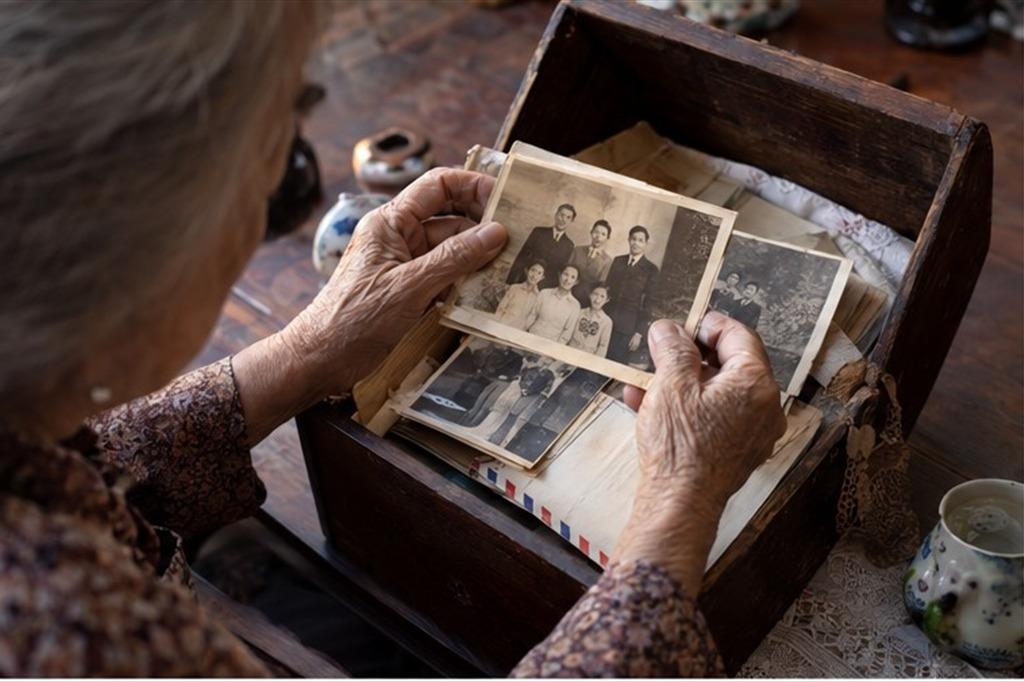 Letters, photographs and keepsakes: learning gratitude for earlier generations through family memory
 Easing neck and shoulder tension at a desk: adjusting your setup and changing position
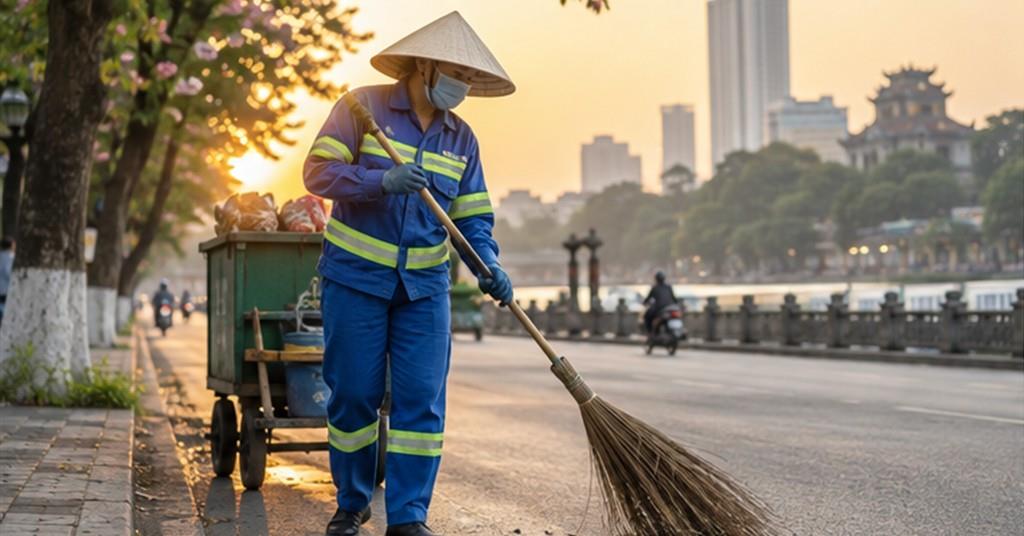 A city is clean and safe because of people who start their working day before we do
 One phone-free hour a day: a small gap for returning to real life
 Small rituals that keep a family close inside a busy schedule
 Morning light and your sleep rhythm: building a steadier wake-up schedule
 Repair instead of replacing in a hurry: a small habit for a sturdier home and less waste
 A happy family is not a family that never argues
Đăng nhập để bình luận: / Sign in to comment: