



Strength training for beginners: start light, get the technique right, build up gradually
Strength training is not only for people who want large muscles. Suitable resistance work helps you keep the ability to stand up, carry things, climb stairs and get through everyday tasks. A beginner does not need to lift heavy; what matters is learning the movement, choosing a manageable level and building up in a controlled way.
Common activity guidance encourages adults to work the major muscle groups on at least two days a week, alongside aerobic activity. That is a long-term goal, not something you must reach in the first week. Anyone who has not been active can start very small and still gain from doing it regularly.
What to remember first
- Two full-body sessions a week is a realistic starting point for many people.
- Put technique and a controlled range of motion before adding load.
- The basic movement patterns are squatting, hinging at the hip, pushing, pulling and bracing the trunk.
- Controlled muscle fatigue is not the same as a sharp pain in a joint or pain that radiates.
- Rest, sleep and nutrition are part of how the body adapts.
Building a session out of everyday movements
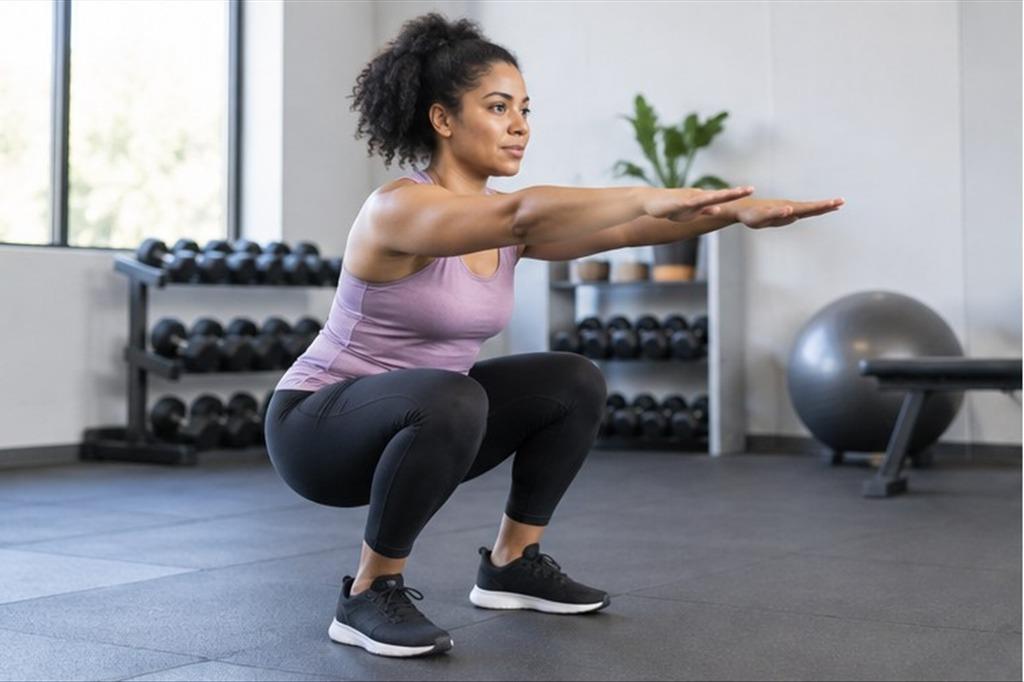
Standing up from a chair can be your first squat; pushing against a wall can replace a floor press-up; a resistance band imitates a pulling movement; carrying two light bags trains your ability to carry things. Choosing four to six movements that cover the whole body is more useful than collecting many isolation exercises. Expensive equipment is not needed, but anything used in place of a weight must be solid, easy to grip and not leak.
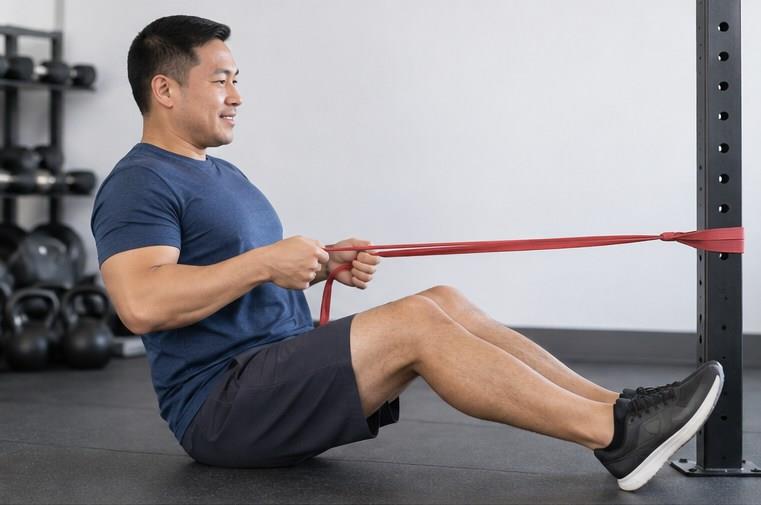
A light load is enough to learn the technique
In the first sessions, use a load that lets you repeat the movement smoothly while still feeling you could do a few more. One or two sets per exercise may be enough to get used to it. Keep the tempo slow, the feet stable and the breathing even, and stop when the posture stops being controlled. Filming from a safe angle, or asking a qualified person to watch, can help spot mistakes.

Increase one variable at a time
Once you are completing it easily over several sessions, you can add a few repetitions, raise the weight slightly, add a set or choose a harder variation. Do not increase everything at once. Recording the exercise, the load and how it felt gives your progress a basis. In a busy week, or one with poor sleep, you can hold steady or reduce the load without losing all your gains.

Telling normal discomfort from a warning sign
The feeling of a muscle working, of warmth and of gradual fatigue is usually acceptable; a sharp pain, joint pain, numbness, loss of strength or radiating pain is not. Muscle soreness after a session can happen when you are starting out, but it is not a condition for proving that the session worked. A light warm-up and an unhurried increase in load beat training to exhaustion.
Recovering so that you can come back
The same muscle group needs time to recover, especially when a session is new or heavier than usual. Alternate the days, sleep as well as you can, eat a varied diet and do not ignore illness or injury. Consistency over months matters more than one very heavy session followed by a long break because of pain or fear of training.
Turning knowledge into a habit
A useful change usually comes from one small act repeated, not from a week of overdoing it. Choose something easy to measure, attach it to a point that already exists in your day and watch your body over a few weeks. A short log of symptoms, activity levels, products used or the circumstances in which a problem appears can help you see a pattern; it does not replace a diagnosis.
Do not apply the same formula to everyone. Age, pregnancy, underlying conditions, current medication, occupation, climate and access to services all make needs different. If a change causes pain, lasting discomfort or worsening symptoms, stop and seek appropriate advice rather than enduring it to reach a number you found online.
Things that are easily misunderstood
You have to train to exhaustion to get results
Beginners can progress at a manageable level with a few repetitions left in reserve; exhaustion easily degrades technique.
The more muscle soreness, the better the session
Soreness is not a direct measure of effectiveness. The goal is adaptation, progress and normal daily life, not hunting for the feeling of pain.
Women who lift weights will immediately become too muscular
Changes in body shape depend on many factors and happen gradually; strength training mainly helps movement capacity and maintains muscle mass.
Seven things you could start right away
- Choose two non-consecutive days in the week.
- Start with four to six full-body movements.
- Use a load that lets you keep your technique with strength to spare.
- Breathe evenly and avoid holding your breath for long.
- Write down the exercises and the loads after each session.
- Increase only one variable at a time.
- Stop if you get a sharp pain, dizziness or unusual breathlessness.
When should you seek professional help?
Chest pain, fainting, unusual breathlessness, an irregular heartbeat, weakness or severe pain all need urgent assessment. Persistent joint pain, swelling, numbness or a clear loss of strength after training should also be examined. Anyone with cardiovascular disease, uncontrolled blood pressure, an injury, who is pregnant or has recently had surgery needs an individual plan from a qualified professional.
When you go for a consultation, bring a list of the medicines and supplements you take, when the symptoms began, what makes them better or worse, and photographs of their progression if appropriate. Specific information helps a health worker assess better than simply saying “for a long time” or “very uncomfortable”. Symptoms that are sudden or severe, or that affect breathing, consciousness or the ability to function, need urgent assessment as a priority.
A self-assessment checklist
- What is my goal, and what behaviour can measure it?
- Does this change suit my underlying conditions, my medication and my individual guidance?
- Am I changing one factor, or too many things at once?
- What signs show my body is responding well, and what signs mean I should stop?
- After two to four weeks, what should I keep, adjust or take to a professional?
Safety notes
Do not treat a template routine from the internet as a prescription you must follow. Technique and range of motion have to suit your own body; holding your breath, using too much load or training through pain can all raise the risk. If you do not know where to begin, a single assessment session with a qualified professional may be worth it.
This article offers general health information. It does not diagnose and does not replace advice from a doctor, pharmacist, dentist, dietitian or qualified trainer. Anyone who is pregnant, has recently had surgery, has a chronic condition, a history of severe allergy, or is undergoing treatment should consult the professional responsible for their care before making any significant change.
Conclusion
Sustainable strength training begins with leaving a session feeling that you could come back. Learning the movements properly, noting small gains and giving the body time to recover will take a beginner further than a few days of excessive enthusiasm.



 Strength training for beginners: start light, get the technique right, build up gradually
 Loving your country through small daily acts: when responsibility starts at your own front door
 Drinking enough water each day: reading your needs instead of forcing a number
 Carrying it on with more than thanks: what can young people do to be worthy of those who came before?
 Letters, photographs and keepsakes: learning gratitude for earlier generations through family memory
 Easing neck and shoulder tension at a desk: adjusting your setup and changing position
 A city is clean and safe because of people who start their working day before we do
 One phone-free hour a day: a small gap for returning to real life
Đăng nhập để bình luận: / Sign in to comment: