



Sun protection done properly: choosing an SPF, applying enough and remembering to reapply
An effective sunscreen is not just about the SPF number. A product needs broad-spectrum protection, has to suit your skin, and must be applied in sufficient quantity, at the right time, and reapplied when needed. More important still, the cream is only one layer in a strategy that includes shade, clothing, a hat and how you arrange your time outdoors.
Ultraviolet rays can have an effect even on a cloudy day, and they accumulate over time. SPF mainly describes protection against UVB under test conditions; a “broad spectrum” label tells you the product also protects against UVA. Real-world effectiveness drops when too little is applied, when areas are missed, or when sweat, water and towelling take it away.
What to remember first
- Favour SPF 30 or above, broad spectrum, and water resistant if you will be swimming or sweating.
- Apply it to every exposed area, including the ears, the neck, the backs of the hands and the feet.
- Apply it before going out, following the instructions on the product label.
- Reapply roughly every two hours, and after swimming, sweating or towelling off.
- Sunscreen does not replace shade, long sleeves, sunglasses and a wide-brimmed hat.
Read the label with three questions
Is the SPF 30 or above; does the product state broad-spectrum or UVA/UVB protection; and is its water resistance suited to what you will be doing? “Water resistant” does not mean it will not come off; the label usually gives the tested duration and you still have to reapply. The best product is the one you can apply in sufficient quantity, that does not bother you noticeably, and that is easy to carry for reapplication.

Applying enough matters more than chasing a very high SPF
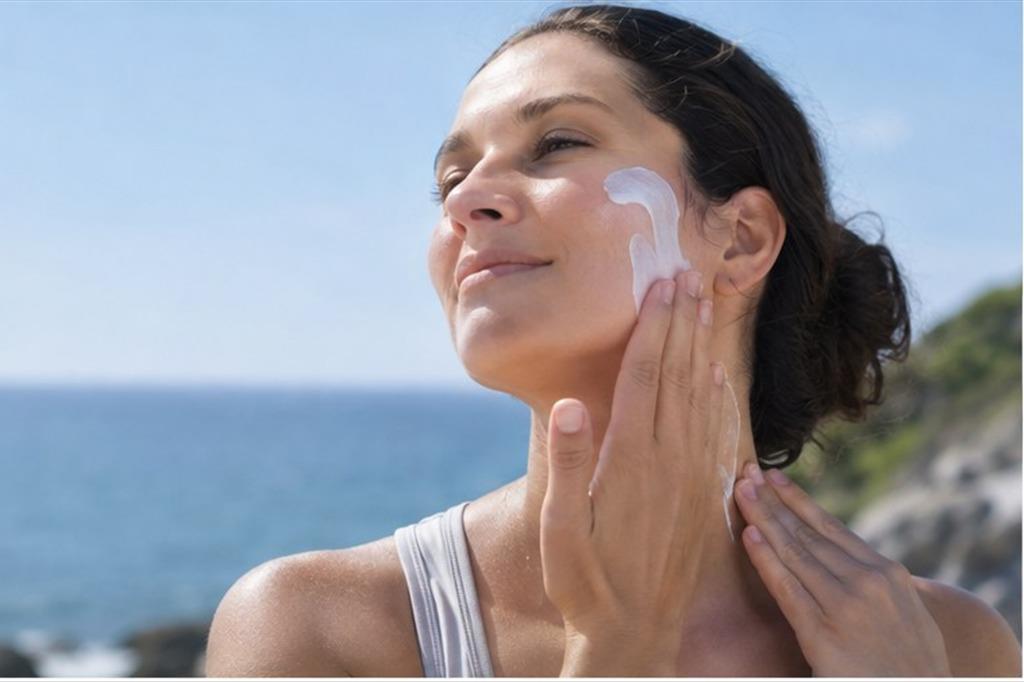
A layer that is too thin gives less protection than the test conditions suggest. The rule of two finger-lengths can serve as a practical estimate for the face and neck, but faces differ in size and products differ in texture; read the manufacturer's guidance. Applying two thin layers one after the other sometimes helps reduce missed spots along the hairline, the sides of the nose, the ears and under the chin.
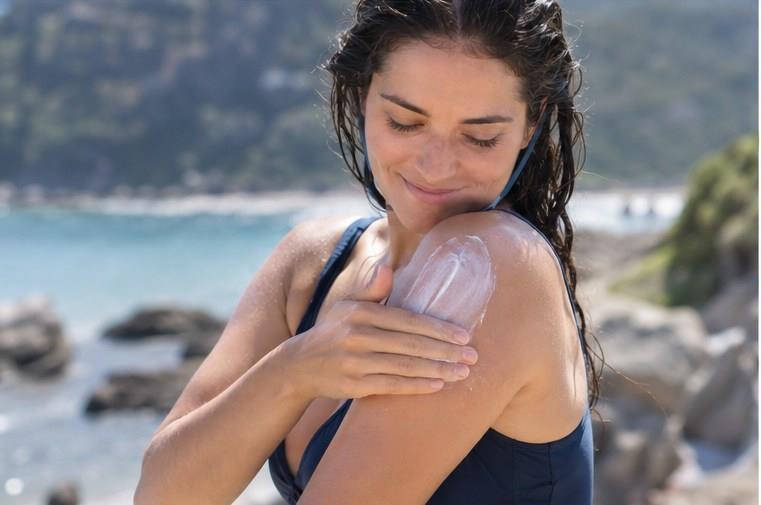
Reapply according to the activity, not to a vague memory
Set a reminder if you will be outside for a long time. The roughly two-hour mark is the common guidance; swimming, heavy sweating or using a towel calls for earlier reapplication according to the label. Wearing make-up does not make this rule disappear. A stick, cream or spray may be convenient, but a spray needs enough product, should not be inhaled and should not be used near a flame.

Sensitive and acne-prone skin still needs protection
Test a product on a small area for a few days, favour fragrance-free formulas if you irritate easily, and choose a texture that suits you. A mineral product may be the answer for some people, but it is not automatically free of allergic reactions. If a cream stings the eyes, you can use a stick around the eye area, wear a hat and avoid applying close to the mucous membranes.
Building a barrier of several layers
Find shade, avoid the fiercest sun where you can, wear covering fabric, put on UV-blocking sunglasses and a wide-brimmed hat. Glass can block some UVB, but UVA can still pass through depending on the type of glass. Anyone working near a window or driving for long periods should think about where they sit, about blinds, about film that meets a proper standard, and about protecting exposed skin.
Turning knowledge into a habit
A useful change usually comes from one small act repeated, not from a week of overdoing it. Choose something easy to measure, attach it to a point that already exists in your day and watch your body over a few weeks. A short log of symptoms, activity levels, products used or the circumstances in which a problem appears can help you see a pattern; it does not replace a diagnosis.
Do not apply the same formula to everyone. Age, pregnancy, underlying conditions, current medication, occupation, climate and access to services all make needs different. If a change causes pain, lasting discomfort or worsening symptoms, stop and seek appropriate advice rather than enduring it to reach a number you found online.
Things that are easily misunderstood
The higher the SPF, the less you need to apply and the longer you can stay in the sun
A high SPF does not fully compensate for too little product, missed areas or failing to reapply.
On an overcast day, or under a parasol, you do not need sun protection
UV rays can still pass through cloud and reflect off sand, water and road surfaces; shade is only one layer of protection.
Darker skin is not affected by the sun
Melanin provides a degree of natural protection, but it does not remove UV damage, pigmentation or the risk of skin cancer.
Seven things you could start right away
- Choose SPF 30 or above with broad-spectrum protection.
- Check the expiry date and store it away from high heat.
- Apply before going out, as the label directs.
- Do not miss the ears, neck, lips, backs of the hands and feet.
- Carry the product with you so you can reapply.
- Add a wide-brimmed hat, sunglasses and covering clothing.
- Test on a small area if your skin irritates easily.
When should you seek professional help?
Stop using the product and wash gently if there is burning, swelling, hives or clear blistering; difficulty breathing or swelling of the lips or tongue needs emergency help. A new mark on the skin, a sore that does not heal, or a mole that changes in size, shape or colour or that bleeds should be assessed by a dermatologist.
When you go for a consultation, bring a list of the medicines and supplements you take, when the symptoms began, what makes them better or worse, and photographs of their progression if appropriate. Specific information helps a health worker assess better than simply saying “for a long time” or “very uncomfortable”. Symptoms that are sudden or severe, or that affect breathing, consciousness or the ability to function, need urgent assessment as a priority.
A self-assessment checklist
- What is my goal, and what behaviour can measure it?
- Does this change suit my underlying conditions, my medication and my individual guidance?
- Am I changing one factor, or too many things at once?
- What signs show my body is responding well, and what signs mean I should stop?
- After two to four weeks, what should I keep, adjust or take to a professional?
Safety notes
Avoid applying it to broken skin or to the eye area, as the product directs. Do not let small children use a spray on their own. Medicines and some skincare products can increase sensitivity to light; ask a doctor or pharmacist if you are under treatment.
This article offers general health information. It does not diagnose and does not replace advice from a doctor, pharmacist, dentist, dietitian or qualified trainer. Anyone who is pregnant, has recently had surgery, has a chronic condition, a history of severe allergy, or is undergoing treatment should consult the professional responsible for their care before making any significant change.
Conclusion
Proper sun protection is a simple system: choose a suitable label, apply enough, reapply, and cut your exposure by physical means. Doing it consistently every day is worth more than buying an expensive product and using only a very thin layer of it.



 Sun protection done properly: choosing an SPF, applying enough and remembering to reapply
 Young people going home to build a living: success does not have to be in the city
 The family meal, and its power to keep a household together
 Strength training for beginners: start light, get the technique right, build up gradually
 Loving your country through small daily acts: when responsibility starts at your own front door
 Drinking enough water each day: reading your needs instead of forcing a number
 Carrying it on with more than thanks: what can young people do to be worthy of those who came before?
 Letters, photographs and keepsakes: learning gratitude for earlier generations through family memory
Đăng nhập để bình luận: / Sign in to comment: