



The flood season in the Mekong Delta: linh fish, sesbania blossom and meals that follow the water
When the water comes down from upstream into the Mekong Delta, meals in many places change with the young fish, the sesbania blossom and the greens that grow in flooded ground. The season does not only bring good food; it is a rhythm of livelihood, of markets, of boats and of the knowledge needed to read the water.
The food in this article is seen as a living system: dishes are tied to climate, ingredients, labour, family memory and the ways people sit down together. So this is not a claim that an entire country has only one palate or one set of rituals. Every region, religion, community and household has its own versions, and each deserves respect.
Quick facts
- Setting: the upstream areas and many localities across the Mekong Delta.
- Produce often mentioned: linh fish, sesbania blossom, water lily stems, field greens and freshwater fish.
- Representative dishes: sour soup, hotpot, braised fish, fried fish and, depending on the place, fermented preserves.
- The seasonal rhythm depends on water levels, the flow and environmental change.
- Not all of the delta shares the same water calendar or the same way of cooking.
How it came about
The delta was formed by the network of the Tien and Hau rivers, the canals and the alluvial soil. The water cycle once carried fish, sediment and aquatic greens into the fields; people organised their fishing, their gathering and their markets around the rise and fall of the water.
Young linh fish are prized for their soft bones and sweet taste, and go together with the yellow sesbania blossom, which is crisp and faintly nutty. Sour soup and hotpot let the two meet tamarind, herbs and field greens; braising extends how long they keep and suits them to rice.
Talking about the flood season means looking at both the benefits and the hardships. The water can create a livelihood but it is also dangerous, cuts off roads, and shifts with dams, extraction and climate. The food is the memorable part of a complicated ecosystem.
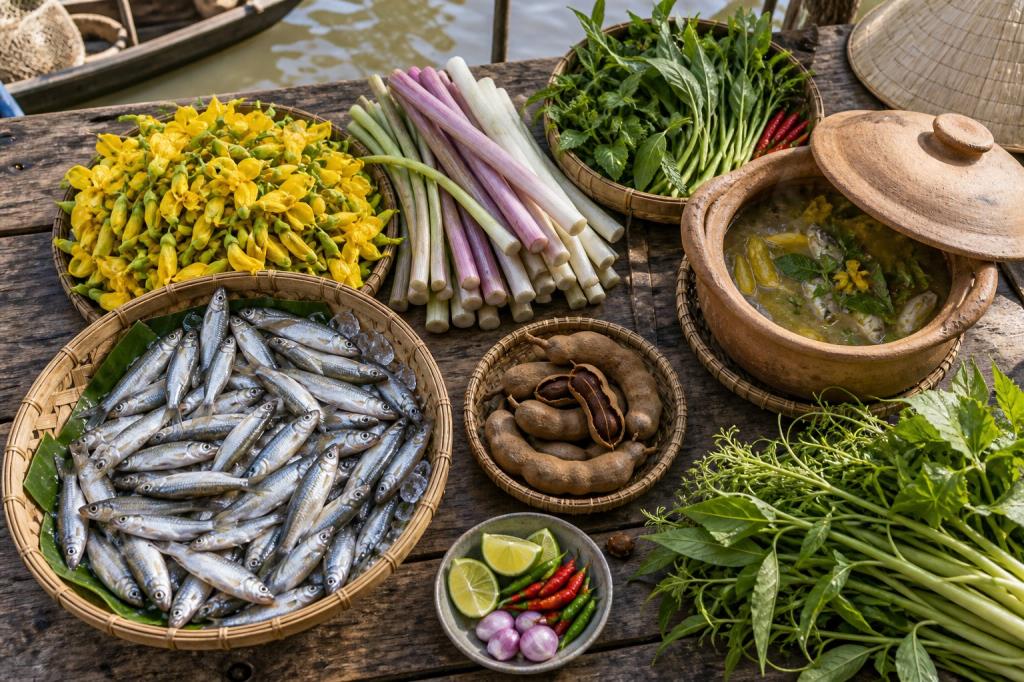
How is a meal put together?
A meal usually has rice, something braised or fried, a sour soup and vegetables. Braised fish carries a deep salt-sweet note; the sour soup provides the liquid and the greens; a boiled dish or raw herbs lighten the meal. Fruit from the garden may close it.
At a floating market the structure is different: noodle soups, rice vermicelli, coffee and fruit are sold from boats in the early morning. Passing a bowl between two vessels takes skill from both seller and buyer; this is food tied directly to travel by water.
The elements that make the character recognisable
- Linh fish come with the season, and their size affects how they are cooked.
- Sesbania blossom brings a yellow colour and a crisp texture.
- Tamarind, mangrove apple or another local sour ingredient gives the soup its flavour.
- Fish sauce and sugar balance the southern salt-and-sweet register.
- An earthenware pot helps a braise hold its heat and concentrate the flavour.
- Boats, the market and the display pole organise trade on the river.
The list above is a map for observing, not a formula that boxes anything in. An ordinary family meal may be far simpler, while a festival table is elaborate and full of symbolism. The cultural value lies as much in how things are chosen, prepared, divided and offered to one another as in the number of dishes.
Ingredients tell a story of geography
The land, the water and the orchards yield a great deal of rice, fruit, vegetables and aquatic produce. Slow canals link houses, markets and fields; meals are therefore strongly local, yet also shaped by trade with Cambodia and by the Khmer, Chinese and Cham communities.
Blossoms and greens have to be gathered at the right moment; linh fish grow through the season, so the dishes change. When the wild supply falls, farmed fish or substitutes appear. Naming the source honestly lets a diner tell a seasonal memory from a dish served all year round.
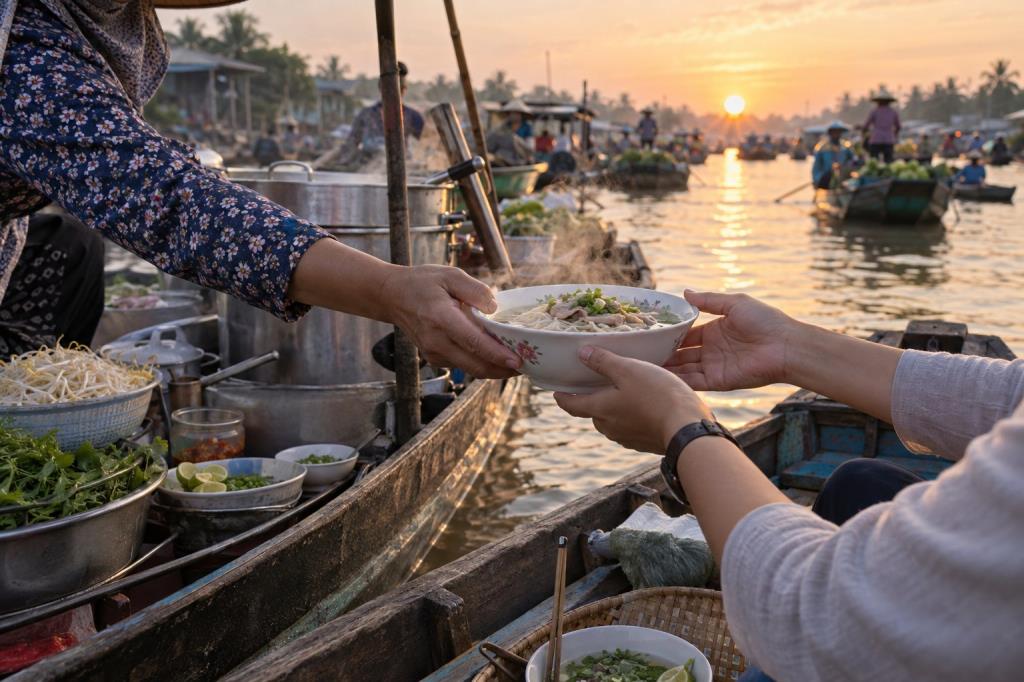
The techniques that build the flavour
Small linh fish need gentle cleaning so they do not break up. Cook the soup or hotpot at a moderate heat and add the fish at the right moment so it cooks but keeps its shape; the blossom usually goes in near the end to keep its crunch and colour. The bones still need attention where small children are eating.
For braised fish, use a pot of the right size and balance the caramel and the fish sauce so the flavour is not harsh. Bring it to the boil first, then lower the heat so it soaks in; stirring vigorously breaks the fish. Field greens must be correctly identified, washed in several changes of water and cooked appropriately.
Seen from the kitchen, a traditional technique is usually a community's answer to a very practical problem: making grain easier to eat, using up a harvest, extending how long food keeps, or building layers of aroma from a limited supply of fuel. When modern technology shortens a stage, the flavour may still be good, but the rhythm of the work, the sensory knowledge and the space in which the craft is handed on all change too.
The table, hospitality and good manners
Hospitality in the delta usually shows itself in offers of more food, of fruit or of a drink. A guest can receive that openly while still being clear about their limits. On a boat, safety matters more than taking a photograph or trying to hold a bowl with one hand.
- Sit steadily in the boat and follow the boatman's instructions.
- Take bowls and drinks with both hands when they pass between boats.
- Do not throw rubbish or tip food into the river.
- Ask the price first and pay tidily in a cramped space.
- Eat small fish slowly and watch for bones.
- Respect the early market hours and the real working life of the boat traders.
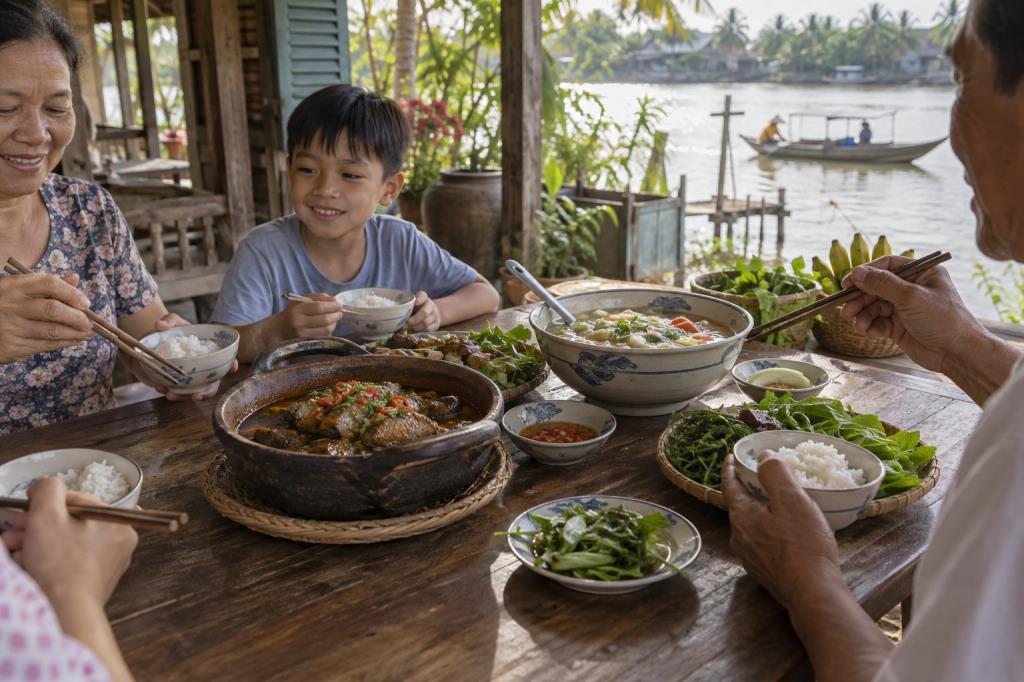
Differences between regions and families
An Giang, Dong Thap, Can Tho, Kien Giang and other localities each have their own water conditions, communities and dishes. The sourness may come from tamarind, mangrove apple or another fruit; linh fish are braised, fried in batter, cooked in soup or fermented according to the season.
A sweet palate is often used to describe the delta, but not every dish is heavy with sugar. Sweetness can come from vegetables, coconut, fish and the method of cooking; families adjust it to habit, health and the kind of dish.
The best approach is to use the name of the region, the community or the specific dish wherever you can. Very broad labels such as “Asian food”, “Middle Eastern cuisine” or “African dishes” are convenient in conversation but easily blur history and diversity. A dish that has crossed borders may also be kept alive by several communities at once; looking for a single “owner” is often less meaningful than understanding the branches along which it grew.
Common misconceptions
The flood season is just a tourist season for good food
It is also an ecological and economic cycle, and it carries risk. Experiencing it responsibly means caring about safety, the environment and the people who live there.
Every dish in the delta is very sweet
Sweetness is one feature of many dishes, but sourness, saltiness, bitterness and aroma matter too. The proportions change from province to province and from household to household.
Floating markets exist to serve visitors
The markets grew first of all out of the need to trade on the river. Tourism is a newer layer of activity; take care not to get in the way of the people who are actually buying and selling.
A more respectful way to experience it while travelling
- Go with a local guide and wear a life jacket on the boat.
- Do not ask a seller to repeat a dangerous manoeuvre for a photograph.
- Use your own bottle and carry your rubbish to a collection point.
- Ask whether the fish is wild or farmed if the season matters to you.
- Buy what you will eat and avoid wasting seasonal produce.
- Learn about the contributions of the Khmer, Chinese and Cham communities in that particular locality.
If a host or someone serving shows you a way of eating that differs from your habits, watch first and then follow it as far as you are comfortable. You can politely ask about allergies, dietary needs or how hot something is. Ask permission before photographing people cooking, an altar, a ritual or a private space; prices and judgements about the food also belong in their local context.
Trying it at home without turning the dish into a stereotype
If you have linh fish in season from a safe source, make the sour soup with sesbania blossom and add the blossom last. When you do not, use another suitable small fish but call it an inspired version. Do not buy foraged aquatic greens unless you can identify them with certainty.
A compact table of braised fish, sour soup, boiled greens and rice already expresses the logic of balance. Cut the sugar and fish sauce for health reasons, and do not try to build flavour with large quantities of seasoning. Keep the fish cold and cook it promptly; cool any leftovers early.
A version cooked at home should honestly be called an adaptation when the equipment or the local ingredients are missing. Say clearly what you substituted and how it affects the aroma, the texture and the colour. If you want to go deeper, learn from the cooks, writers and communities attached to that tradition rather than relying on a short video or a commercialised version.
An observation checklist for the five senses
- At which stage does the aroma appear: toasting, grinding, fermenting, steaming or simmering?
- Is the dominant texture crisp, airy, chewy, smooth or juicy?
- Does the depth of flavour sit in the main dish, or does it come from the side dishes and the seasonings on the table?
- What part do the utensils, the crockery and the seating arrangement play?
- Who prepares the food, how is the knowledge passed on, and on what occasion does the meal take place?
Traditional food in modern life
Changes in flow, saltwater intrusion, subsidence and extreme weather all affect the fish stocks, the crops and the seasonal calendar. People adapt with new varieties, with aquaculture and by changing occupation; the dishes change along with them.
Floating markets have shrunk or changed function in some places as roads developed. Conservation is not a matter of lining up more boats for visitors but of sustaining livelihoods, the water environment and a real need to trade. Food can help tell that story in concrete terms.
Preserving heritage does not mean freezing a dish at some imagined moment in time. Young people, migrants, home cooks and restaurants all keep adjusting portions, equipment, sources of ingredients and ways of serving. What matters is recognising the core body of knowledge, acknowledging those who pass the craft on, and creating the conditions for a community to decide for itself how its heritage moves forward.
Terms worth remembering
- Mua nuoc noi: the period when water from upstream floods large parts of the delta.
- Ca linh: a group of small fish that move with the flood season and are used in many dishes.
- Bong dien dien: an edible yellow blossom that appears mainly in the flood season.
- Cay beo: the pole on a boat from which samples are hung to show what is for sale.
- Thuong ho: traders whose business and daily life are bound to the river.
- Ca kho to: fish braised to a deep flavour in an earthenware or other suitable pot.
Conclusion
The flood season enters memory through a bowl of sour soup, a pot of braised fish and the yellow of the blossom, but the food is only a doorway. Step through it and you find the whole system of rivers, markets, fishing and the adaptability of the people of the delta — a heritage to be enjoyed together with a responsibility towards the water.



 The flood season in the Mekong Delta: linh fish, sesbania blossom and meals that follow the water
 How to make honey-glazed roast chicken: glossy, juicy and never burnt
 Tu Tru banh gai of Thanh Hoa: the black of ramie leaf and a sweet, nutty filling
 How to make bun bo Nam Bo: tender beef, crisp vegetables and a balanced dressing
 Bamboo-tube rice, grilled chicken and the fires of the Central Highlands: from the tube to the shared tray
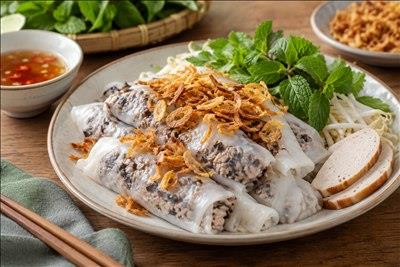 How to make banh cuon with pork filling: a thin, soft sheet that does not stick
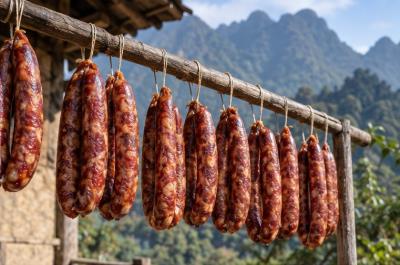 Cao Bang cured sausage: mountain sun, spices and a kitchen in the cold season
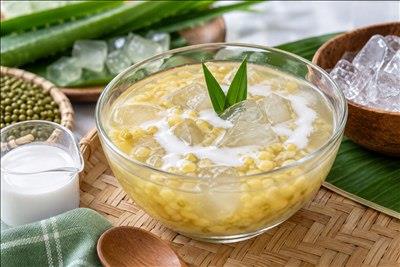 How to cook mung bean and aloe sweet soup: refreshing, with crisp aloe and no bitterness
Đăng nhập để bình luận: / Sign in to comment: