



Cham meals on the south-central coast: sun, wind, the farming year and layers of exchange
Meals in the Cham communities of the south-central coast reflect a hot dry climate, farming, livestock, coastal trade and a varied religious life. Rice, vegetables, fish, meat and spices are chosen according to the season, the household and religious rules.
It is wrong to speak of “Cham cuisine” as a single menu. Cham communities following different traditions and living in different places have their own dietary rules, festivals and ways of cooking. What matters is stating the context clearly, and not letting a dish served to tourists stand in for everyday life.
Quick facts
- Setting: Ninh Thuan, Binh Thuan and other areas of settlement.
- Context: a dry climate, farming, livestock and trade.
- Ingredients: rice, vegetables, and fish or meat depending on the community and the occasion.
- Spices: toasted, pounded and combined to suit the dish.
- Faith: can shape both what is chosen and how food is handled.
Climate enters the kitchen
Sun, wind and water decide what is grown, when it is harvested and how it is kept. Drying food, toasting it or cooking it with a heavy hand can be ways of adapting, but a meal is not made only of strong flavours. Vegetables, soup and simple dishes provide balance in a hot climate.
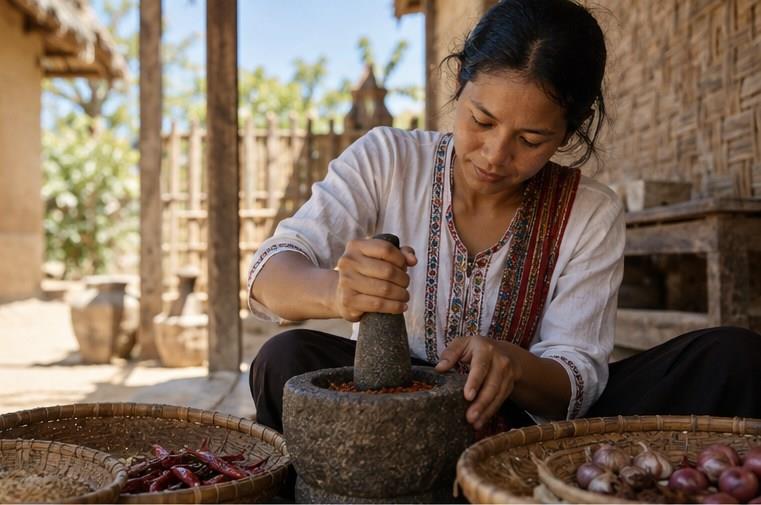
Spice is a technique, not a label
Seeds, roots and chillies are treated to open up their aroma and then combined for each dish. Calling every fragrant dish a curry easily erases the local name and the differences between recipes. Writers and sellers should ask how the community names a dish rather than attaching a label familiar to visitors.
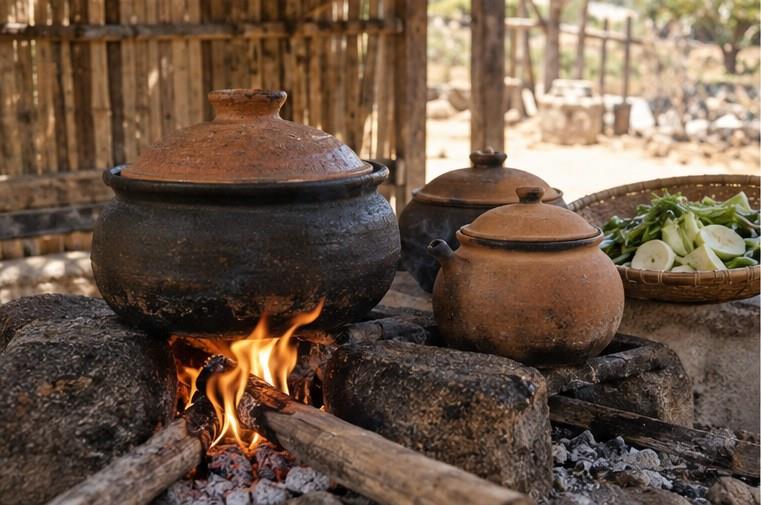
Earthenware and handwork
Cham pottery is tied to the hands, the clay and a particular way of firing, but not every pot on the stove carries ritual meaning. Cooking vessels hold heat, conduct it and take part in the texture of a dish. An experience should distinguish clearly between everyday utensils, goods for sale and objects with sacred meaning.
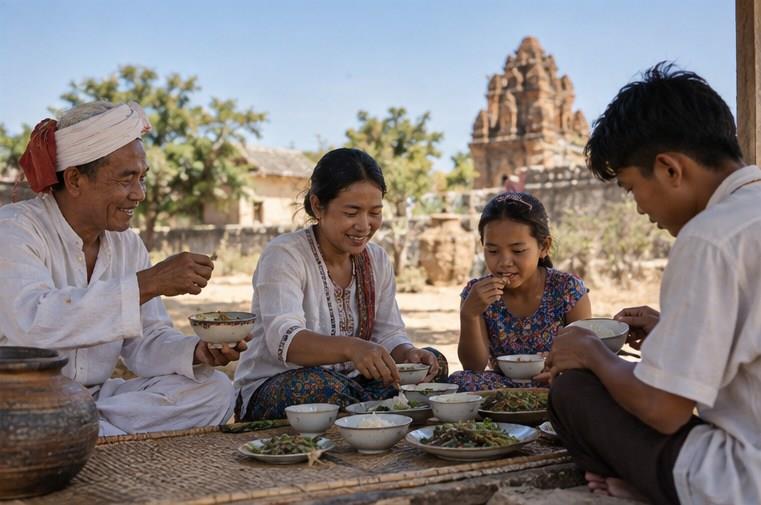
Religion and the courtesy it asks for
Which ingredients are acceptable, how animals are slaughtered, when people eat and how a ceremony differs from an ordinary meal can all vary between communities. A visitor should not deduce any of it from an ethnic name. Asking the host what to avoid, and not bringing outside food in without agreement, is the safe way to behave.
Exchange does not erase identity
A history of trade linked Cham people with many parts of Southeast and South Asia; living alongside other communities keeps that exchange going. A dish can change and still hold its memory through aroma, technique and the occasions on which it is eaten. Identity is a community's right to name itself, not a degree of “exotic” in a visitor's eyes.
How to read a living tradition
Regional culture is not a fixed set of recipes. Under the same dish name, the ingredients and the way it is served can change with the season, the household, religious practice, livelihood and patterns of migration. What is shared points to a history of exchange; what differs shows a community adapting rather than losing its character.
When you experience it, ask for the name of the dish and the specific locality, ask permission before photographing people or private spaces, pay a fair price, and avoid turning clothing or rituals into props. A new version still has value as long as whoever tells the story is clear about what changed and respects those who hold the knowledge.
Things that are easily misunderstood
There is one set of dietary rules shared by all Cham people
Faith, locality and household create important differences; you have to ask within the specific context.
The more spices, the more authentically Cham
Spices have to be balanced to the dish; an ordinary meal holds plenty of light, simple things.
Suggestions for experiencing it responsibly
- Ask the community what they call the dish.
- Learn the dietary rules before joining a meal.
- Do not bring in outside food without asking.
- Ask permission to photograph places of worship and the kitchen.
- Buy pottery and food from makers who are open about their sources.
- Do not lump rituals together with tourist performances.
- Respect a choice not to explain personal matters.
An observation checklist
- Which community, which locality and which period does this dish and this custom belong to?
- Which details belong to everyday life, and which are for festivals or for receiving guests?
- How do the sources of ingredients, the seasons and the environment shape the way it is cooked?
- Who does the work of preparing it, and how is the knowledge passed on?
- How can a visitor take part without intruding on privacy or distorting the ritual?
A note of caution
Cham communities are not uniform in faith or in food rules. This piece offers only a frame for observing; when you join a meal, follow the host's guidance.
Conclusion
A Cham meal shows that culture is made from environment, exchange and the choices each community makes. The right attitude is not to hunt for the “strangest” dish but to listen to the names, the limits and the story told by the people themselves.


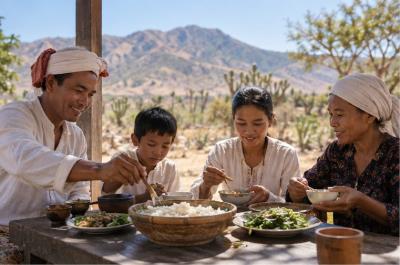 Cham meals on the south-central coast: sun, wind, the farming year and layers of exchange
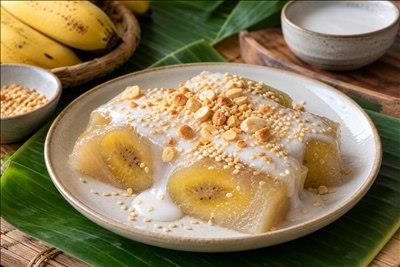 How to make steamed banana cake: chewy translucent batter and coconut sauce that does not split
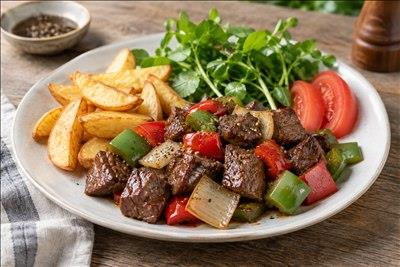 How to make bo luc lac: tender juicy beef, a well-judged sauce and crisp potatoes
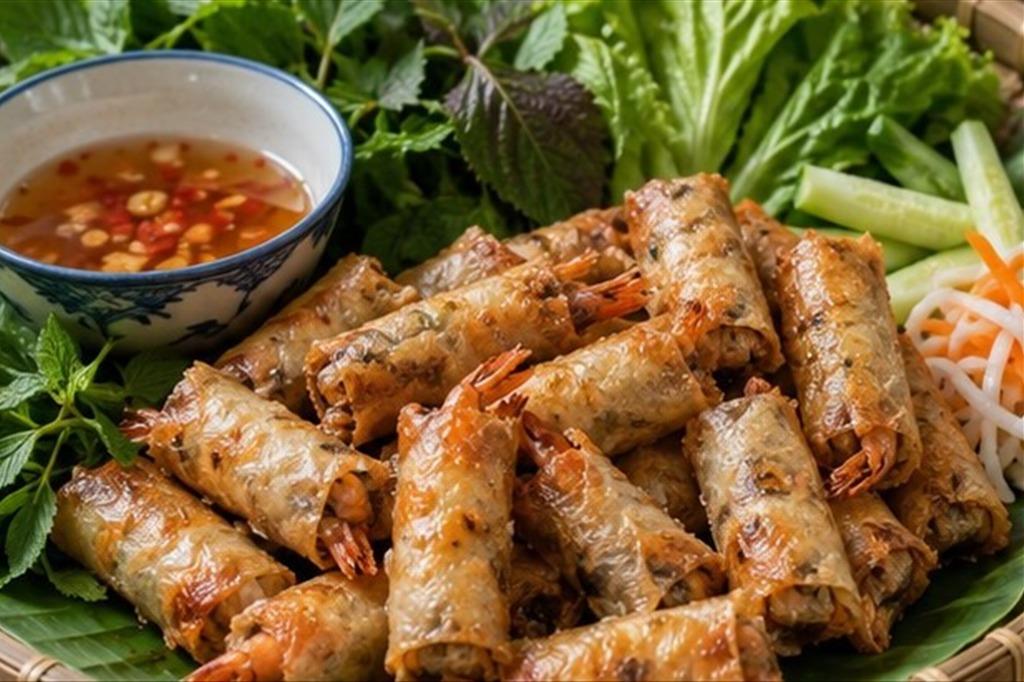 Binh Dinh cha ram tom dat: small crisp rolls from the coast
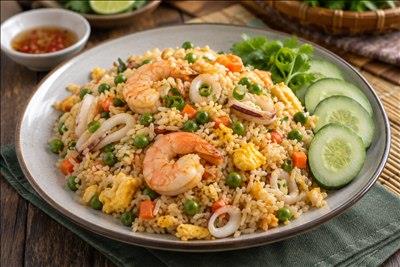 How to make seafood fried rice: separate grains, wok aroma and never soggy
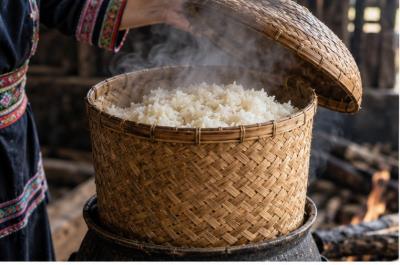 Thai kitchens in the northwest: upland sticky rice, folded grilled fish and cham cheo beside the stilt house
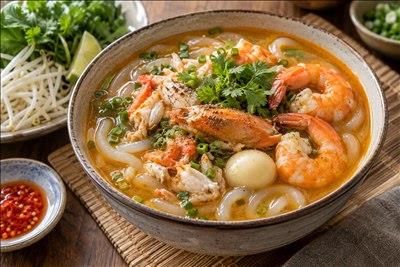 How to cook banh canh cua: a sweet broth, just enough body and plenty of toppings
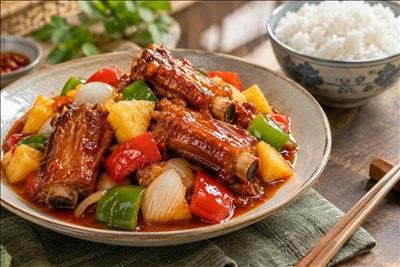 How to make sweet-and-sour pork ribs: tender meat, a glossy sauce and crisp vegetables
Đăng nhập để bình luận: / Sign in to comment: