



Binh Dinh cha ram tom dat: small crisp rolls from the coast
Binh Dinh cha ram tom dat is usually rolled small, letting through the sweetness of the prawn, a little richness from the pork and the thin rice paper that turns crisp in the fryer. The compact size means the rolls cook quickly and go easily with fresh greens, pickles and a dipping sauce.
The name cha ram and the recipe vary across central Vietnam. The version tied to Binh Dinh emphasises the small local prawn, thin rice paper and a roll sized for a single mouthful. Frozen packs let the dish travel, but they need an unbroken cold chain and clear frying instructions; a product that has thawed should not simply be refrozen.
Quick facts
- Locality: Binh Dinh.
- Main ingredients: small local prawn, pork, rice paper and seasonings.
- Technique: rolled small and evenly, then fried until golden and crisp.
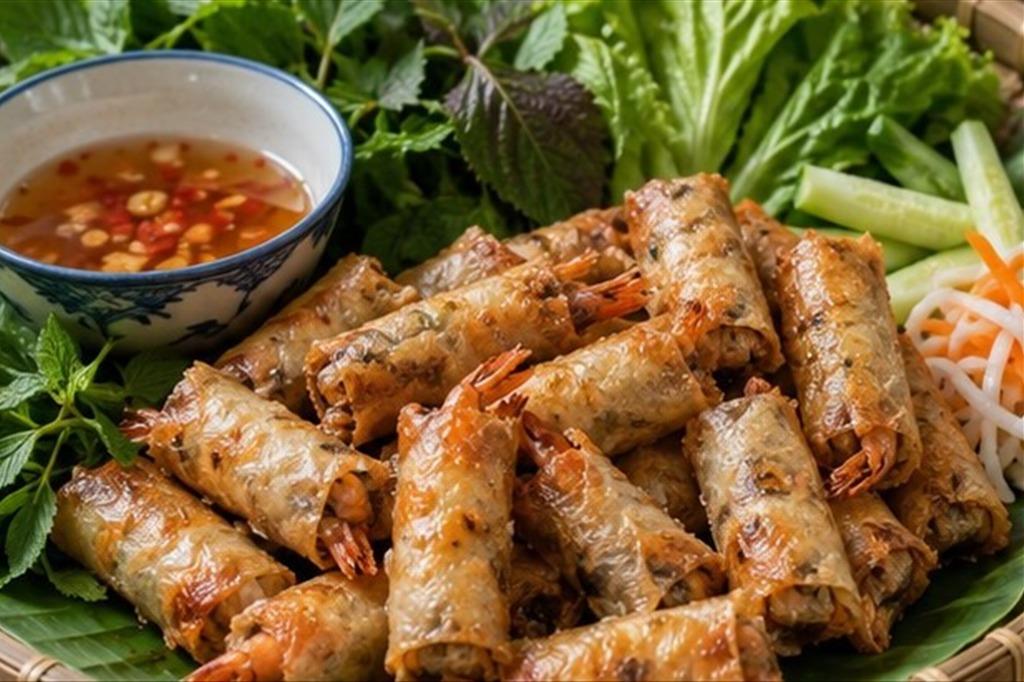
- How to eat it: with greens, pickles, rice noodles or rice.
- Sold as: ready-fried, or raw rolls, frozen.
The small prawn gives both the sweetness and the shape
The prawns are chosen at a suitable size, cleaned and drained. Some methods leave the tail on as a recognisable touch, but the head, the shell and the vein are dealt with according to the recipe. Wet prawns make the rolls spit in the oil and soften the wrapper; prawns that are not fresh give off a smell no amount of seasoning will cover.
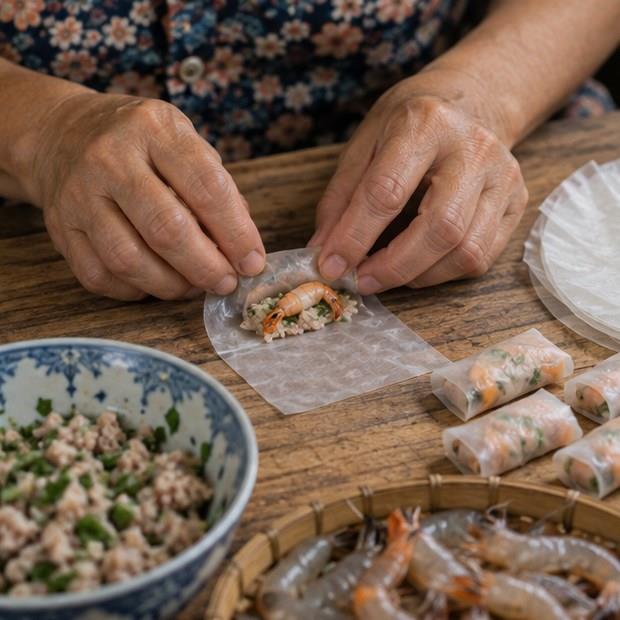
Rolling small is itself a technique
The rice paper is dampened just enough, the filling laid neatly, then rolled firmly without being crushed. A loose roll soaks up oil and comes apart; one rolled too tight splits as the filling expands. Rolls of even size cook through together. The hands work quickly, because once dampened the paper keeps softening.
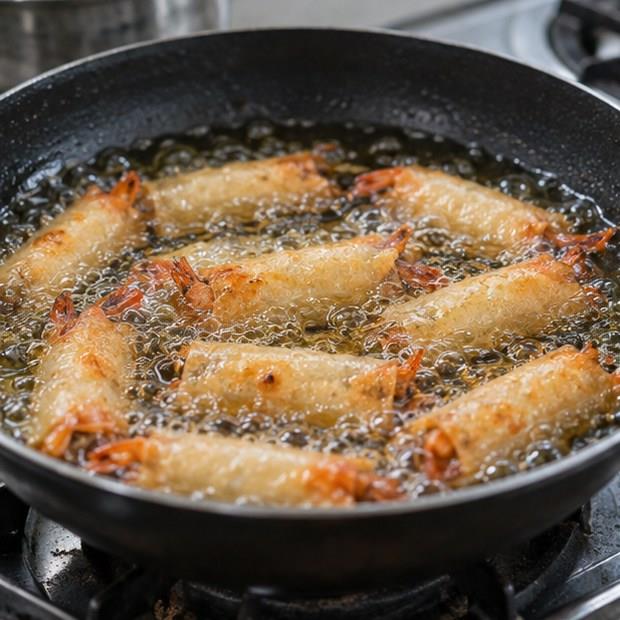
Frying for a crisp wrapper and a cooked filling
The oil needs to be hot enough without smoking. Too low and the rolls soak up oil; too high and the wrapper darkens before the prawn and pork are cooked. Fry in small batches, turn them evenly and drain them on a rack. A moderate golden colour and the sound of a crisp wrapper matter more than a deep brown.

Greens and pickles offset the frying
Lettuce, herbs, cucumber, pickles and a mixed fish sauce make each roll feel lighter. You can wrap them in rice paper or eat them straight. Use the dipping sauce in moderation so the wrapper does not go soft too quickly. The greens must be clean, and the pickles kept in their own container.
Frozen packs carry the speciality further afield
Freezing done properly keeps the raw rolls, but the packaging has to state the date, the temperature and how to cook them. Buyers should carry them in a cool bag and get them into the freezer promptly. A pack frozen into one solid block, heavy with ice crystals or showing signs of thawing, is a reason to question the quality.
Why does a dish come to identify a region?
A speciality is not made by a list of ingredients alone. Climate decides the season, soil affects the quality of the produce, and markets, roads and the rhythm of work shape how it is prepared. Techniques repeated across generations give a dish its own “voice”, even though every household keeps different proportions and knacks. So a local version should be seen as a living tradition, not a closed recipe.
Fame brings its own problems. As demand grows, a product may be made in a hurry, given a longer shelf life, or labelled with a place name despite having no connection to the craft village. Buyers can help protect its value by asking where it was made, reading the ingredients, choosing transparent producers and accepting a price that reflects the work. An unusually cheap gift is sometimes a sign to look more closely rather than a bargain.
Tasting so as to recognise the structure of the flavour
Do not rush to add a lot of dipping sauce, chilli or sugar at the first bite. Look at the natural colour, smell the main aroma, feel whether it is soft, chewy, crisp or firm, and only then try it with what comes alongside. This helps you recognise the role of each element and understand why local people arrange the dish as they do. Temperature matters too: something just cooked smells and feels different from the same thing gone cold or carried a long way.
There is no single yardstick for taste. Someone used to sweetness may find central dishes salty; someone who likes it light may find fermented food too strong. Instead of ranking the “best”, ask which village, shop or household this version comes from, and whether it was made to eat straight away or to take away as a gift. A specific question opens a more interesting story than an absolute verdict on a whole region.
Things that are easily misunderstood
The bigger the prawn, the better the roll
A small roll needs a prawn of the right size; too large a prawn unbalances it and makes even cooking difficult.
Frozen rolls can be left out of the cold on a long journey
A break in the cold chain raises the risk; freezing does not replace continuous storage at the right temperature.
Suggestions for trying it
- Choose evenly made rolls in sealed packaging.
- Keep them cold as directed.
- Do not thaw them for long at room temperature.
- Fry in small batches.
- Make sure the prawn and pork are cooked right through.
- Drain the oil before eating.
- Ask about the ingredients if you are allergic to prawn or pork.
Buying it and taking it home as a gift
Prefer products that carry the maker's name, an address, a production date, a use-by date and clear storage instructions. For goods sold loose, ask when they were made, how they were transported and what signs would show they are no longer good. Attractive packaging helps on a long journey but does not replace the quality inside; equally, a rustic look does not automatically prove something is handmade or safe.
Buy an amount that suits the distance and how well you can keep it. Fresh items containing meat, seafood, broth or raw vegetables need temperature control; dried goods and sweets still have to be kept away from damp, heat and insects. If you are flying or crossing an area with quarantine rules, check the airline's rules and those of your destination. Do not vacuum-seal something unsuitable and then assume it can sit at room temperature.
A note on food safety
Raw prawn and pork must be kept cold, separated from ready-to-eat food and fried right through. Avoid oil that smokes or that has been reused too many times. Anyone allergic to crustaceans should not eat these; the rice paper and the dipping sauce can also cause cross-contamination.
Anyone allergic to prawn, crab, legumes, sesame, peanut, dairy, egg or anything else needs to ask specifically, since these can be in the filling, the broth and the dipping sauce. Young children, older adults, pregnant people and those with weakened immunity should favour food that is cooked through, stored properly and eaten soon. If something smells odd, is unusually slimy, has swollen packaging, or has been out at room temperature for an unknown length of time, the safe choice is not to eat it.
Conclusion
Binh Dinh cha ram tom dat appeals through its proportion: a small prawn, a small roll, a thin wrapper and a wide basket of greens. It is precisely the control of every detail that produces the crisp sound and the sweetness of this gift from the coast.


 Binh Dinh cha ram tom dat: small crisp rolls from the coast
 How to make seafood fried rice: separate grains, wok aroma and never soggy
 Thai kitchens in the northwest: upland sticky rice, folded grilled fish and cham cheo beside the stilt house
 How to cook banh canh cua: a sweet broth, just enough body and plenty of toppings
 How to make sweet-and-sour pork ribs: tender meat, a glossy sauce and crisp vegetables
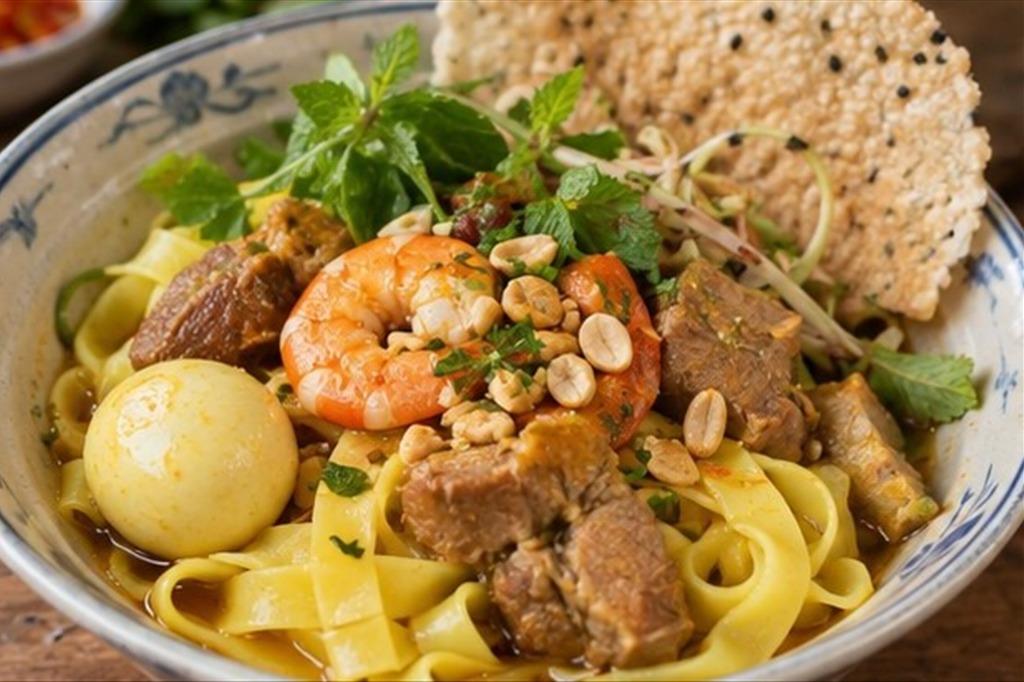 Mi Quang of Quang Nam: little broth, yet the full flavour of the Quang region
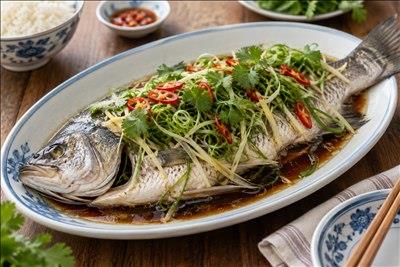 How to steam fish with soy sauce: juicy flesh, fragrant ginger and spring onion, no fishy smell
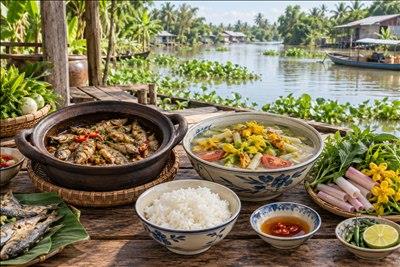 The flood season in the Mekong Delta: linh fish, sesbania blossom and meals that follow the water
Đăng nhập để bình luận: / Sign in to comment: