



Banh cay from Thai Binh: from toasted sticky rice and malt syrup to a sweet beside the teacup
Banh cay is a well-known gift sweet from Thai Binh, memorable for a slice woven together from toasted sticky rice, sesame, peanuts, candied fruit and a binding layer of malt syrup. The piece is small but carries many stages, from preparing the rice to judging the right degree of chewiness so it cuts cleanly while staying crisp and nutty.
The name banh cay is usually linked with Nguyen village in Dong Hung district. The origin story is told in several ways, and the recipe changes from maker to maker and from era to era. Rather than trying to settle on a single legend, you can look at the technique and at the habit of eating it with tea to understand what it means locally.
Quick facts
- Best-known origin: Nguyen village, Dong Hung, Thai Binh.
- Base ingredients: sticky rice, malt syrup, sesame, peanuts and additions.
- Texture: crisp and airy with a light chew, and slices that hold together.
- How to eat it: cut small pieces and take it slowly with hot tea.
- Storage: sealed and dry, away from heat and humidity.
The sticky rice passes through several states
The rice may be steamed, dried, coloured, cut and toasted to produce grains of differing airiness. Every step controls moisture: too wet and it will not puff when toasted, too dry and it crumbles. The colours in traditional versions usually come from ingredients, but exactly how they are used depends on the maker and should not be guessed at by eye alone.
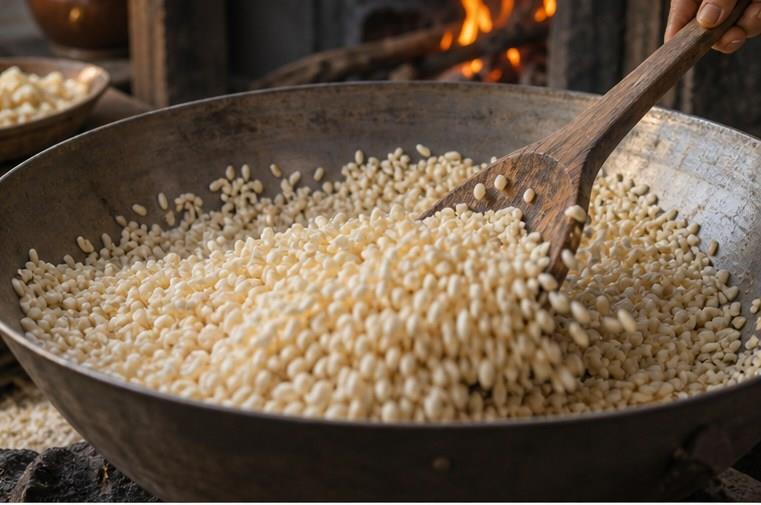
Malt syrup is the bridge that holds the texture
The malt syrup has to be hot enough and reduced to the right point to coat the ingredients without turning the sweet into a hard block that sticks to your teeth. When mixing, the maker must work fast without crushing the grains; when pressing, the force has to be just enough to bind the block while leaving air pockets. This is a sensory stage that resists being reduced to a single number.
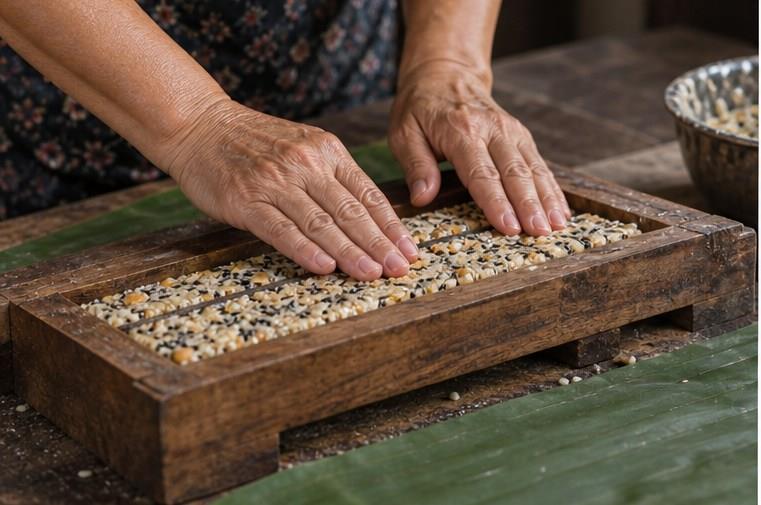
The mould and the slice
The block is pressed in a mould and left to settle before cutting. A sharp knife and the right moment give a clean face where the layers of grain are visible. Crumbs do not have to be thrown away; a workshop can put them to sensible use, but anything sold has to be clear about its ingredients, its hygiene and its packing date.
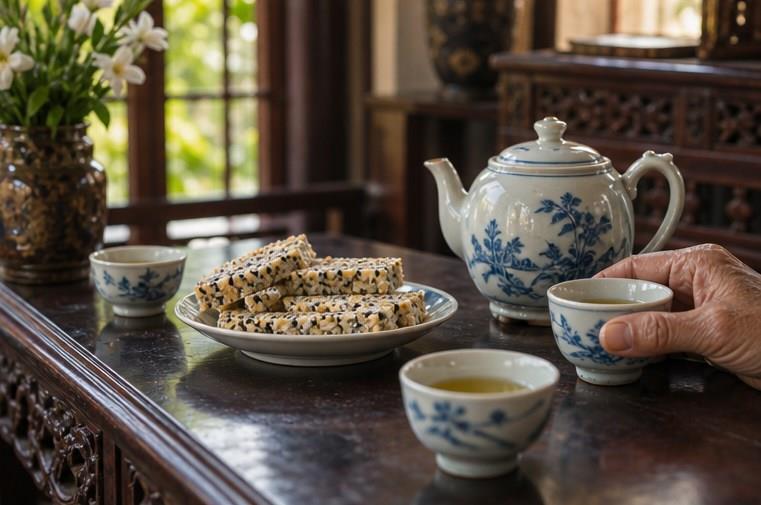
Why it suits tea
The sweetness and the fat from peanuts and sesame are balanced by the light astringency and warmth of the tea. People usually cut small pieces rather than bite into a whole bar, so the crispness, the chew and the aroma arrive one after another. That slow pace turns the sweet from a snack into part of the conversation.
Choosing it as a gift
Sealed packaging, a list of ingredients, a use-by date and a clearly named producer matter more than an oversized box. A good piece has no rancid smell, is not soft and does not weep stickiness. Anyone allergic to peanuts, sesame or gluten should read the label; recipes vary and may include other ingredients.
How to look at a living tradition
No region or community should be reduced to a single recipe. Ingredients, names and ways of serving shift with the season, the family, religion, occupation and patterns of migration. What is shared shows a history of exchange; what differs shows the capacity to adapt.
When you go and try it, use the right name for the dish and the region if you know them, listen to the people making it, ask before photographing private spaces, and avoid treating the word “authentic” as an absolute stamp. A new version still has value as long as it says what has changed and respects the people who keep the craft alive.
Common misunderstandings
Banh cay is made from the small crab it seems to be named after
There are several folk explanations of the name; shape and colour are often mentioned, but no single account should be asserted as the only truth.
The sweeter it is, the longer it keeps
Safety depends on the process, the moisture and the packaging; a strong sweetness proves nothing about quality.
Practical suggestions and things to try
- Choose a packet with the seal intact.
- Read the ingredients if you are allergic to peanuts or sesame.
- Cut small slices with a sharp knife.
- Have it with unsweetened or lightly scented tea.
- Reseal it as soon as you open it.
- Do not keep it next to a hot stove or anywhere damp.
- Buy an amount that matches how long you will take to eat it.
Observation checklist
- What context, season and audience is being talked about?
- Which details are facts, and which are impressions or personal choices?
- How do the ingredients, tools or setting affect the outcome?
- Are there any safety, allergy, cost or privacy risks to check?
- What small thing could you try today and review later?
Important note
It usually contains peanuts and sesame, and some recipes may include other ingredients. Do not eat anything that has gone soft or mouldy, smells rancid, or comes in damaged packaging.
Conclusion
What makes banh cay worth valuing is how many small stages come together in it. When a slice is cut to the right size, set beside a cup of tea and passed to the person next to you, this Thai Binh gift shows its quality most clearly: many layers, and none of them loud.


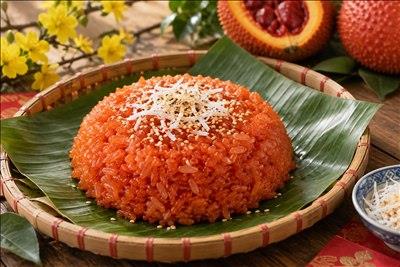 How to cook xoi gac: a beautiful red, chewy separate grains and never claggy
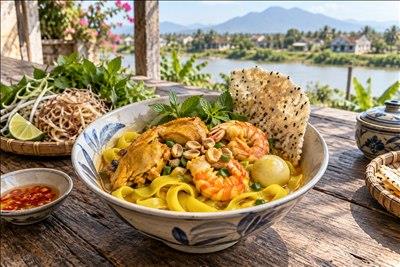 Mi Quang and the kitchens of Quang Nam: a bowl with little broth and a great deal of memory
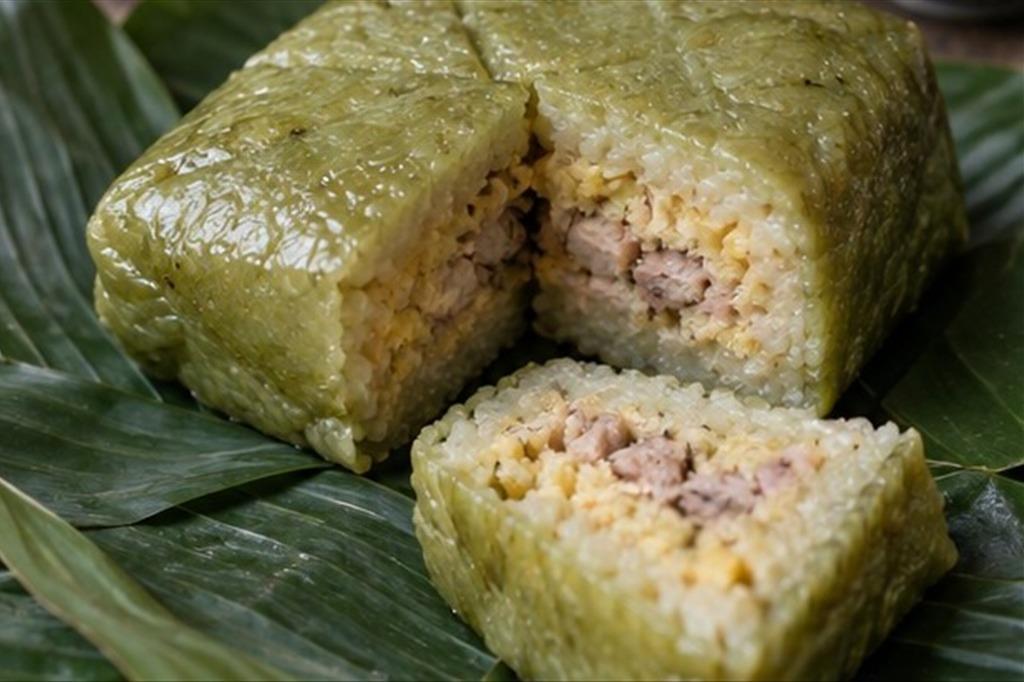 Bo Dau banh chung: the green square cake at the crossroads into Thai Nguyen
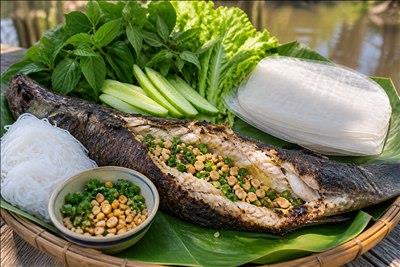 How to cook ca loc nuong trui: evenly done, juicy flesh and no taste of ash
 How to make Hoi An chicken rice: fluffy grains, juicy chicken and a crisp onion salad
 Me xung from Hue: chewy malt, toasted sesame and the slow rhythm of tea
 The food of Hue: where the royal kitchen, everyday dishes and small street stalls meet
 Hue vegetarian food: why is something so plain still so layered in flavour?
Đăng nhập để bình luận: / Sign in to comment: