



Bamboo-tube rice, grilled chicken and the fires of the Central Highlands: from the tube to the shared tray
Bamboo-tube rice and grilled chicken are the famous pair from the Central Highlands, but they should not be made to stand for the whole diversity of the region. Placed properly within Jrai, Bahnar and other specific communities, the bamboo tube, the sticky rice and the charcoal fire tell a story about environment, labour and sharing.
The food in this article is seen as a living system: dishes are tied to climate, ingredients, labour, family memory and the ways people sit down together. So this is not a claim that an entire country has only one palate or one set of rituals. Every region, religion, community and household has its own versions, and each deserves respect.
Quick facts
- Settings: the village, the family hearth, festival days and local eating houses.
- Notable techniques: cooking inside bamboo tubes, grilling over charcoal, pounding salt mixtures and using native leaves.
- Familiar dishes: bamboo-tube rice, grilled chicken, cassava leaves, bitter aubergine and many dishes particular to each community.
- The Central Highlands is home to many peoples; the dishes and the rituals are not uniform.
- It is important to distinguish a genuine community experience from something staged for tourism.
How it came about
The Central Highlands is a broad plateau covering several provinces and many communities, among them the Ede, Mnong, Jrai, Bahnar and Xo Dang, together with people who came from elsewhere. “Highland cuisine” is therefore a very general label; this article concentrates on the bamboo-tube rice and grilled chicken usually presented in Jrai and Bahnar contexts in Gia Lai and nearby areas.
Cooking in a tube makes use of bamboo as the vessel itself. Sticky rice is soaked, put into the tube with water, stoppered with a leaf and then roasted while being turned around the fire. The natural material both holds the steam and passes a faint aroma into the rice.
Free-range chicken is grilled over charcoal, usually with a pounded salt mixture of chilli, lemongrass or leaves according to the cook. At community occasions the fire and the tray create a meeting place; but any ritual meaning has to be established for that particular community and not applied across the board.
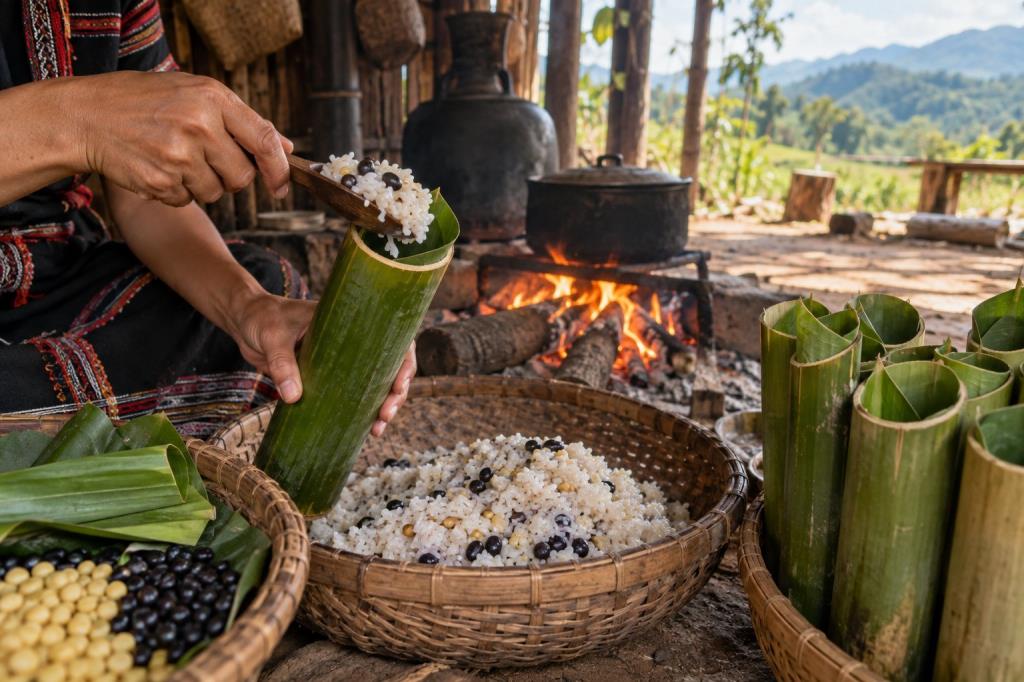
How is a meal put together?
Once cooked, the charred outer layer of the tube is pared away, leaving a thin membrane, and the tube is broken into lengths. The grilled chicken is chopped or torn and set out with the salt dip, herbs, a soup or cassava leaves. People divide the portions according to whether it is a family occasion or a festival.
The tube rice brings a tender, lightly fragrant note; the chicken brings smoke and grilled skin; the chilli salt provides the sharp accent. Forest greens, bitter aubergine or a soup balance the whole. Proportions and components change from village to village, with the season and with what is available.
The elements that make the character recognisable
- Freshly harvested sticky rice decides how tender and fragrant the rice will be.
- A young bamboo tube provides a natural cooking chamber.
- A leaf stopper holds in the steam and protects the rice.
- Glowing coals give an even heat and avoid scorching flames.
- Free-range chicken has a flesh structure that suits grilling.
- The pounded salt mixture and local leaves give the specific flavour signature.
The list above is a map for observing, not a formula that boxes anything in. An ordinary family meal may be far simpler, while a festival table is elaborate and full of symbolism. The cultural value lies as much in how things are chosen, prepared, divided and offered to one another as in the number of dishes.
Ingredients tell a story of geography
Basalt soil, the wet and dry seasons, the forest and the swidden fields shape the supply of rice, cassava, maize, vegetables, leaves and bamboo. The forest is not limitless, however; harvesting tubes, leaves and wild foods has to follow community agreements and the capacity to regenerate.
Coffee, pepper and industrial crops have transformed livelihoods, while markets and roads have brought new ingredients into the kitchen. Today's dishes therefore both hold an indigenous memory and reflect exchange with the Kinh and with migrant groups.
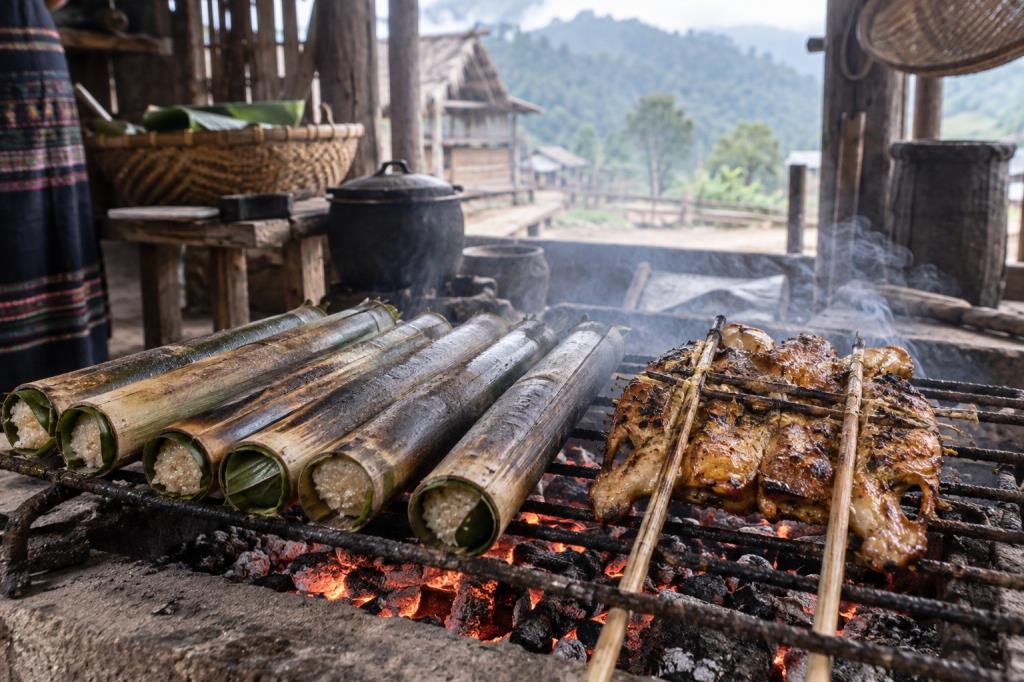
The techniques that build the flavour
The tube must be clean, closed by a node at one end and not of a species that poses a risk. The rice is soaked just enough, with the water adjusted to the variety; do not pack it full, because the grains need room to swell. While roasting, turn it constantly so the heat travels around the tube and one side does not char while the centre is still raw.
The chicken is spatchcocked or skewered so the thickness is fairly even, grilled away from the coals and brought closer at the end to colour. The smoke must be clean, with no taint of chemicals or plastic. Poultry has to be safely cooked through to the thickest part; keep the knives and boards for raw and cooked food separate.
Seen from the kitchen, a traditional technique is usually a community's answer to a very practical problem: making grain easier to eat, using up a harvest, extending how long food keeps, or building layers of aroma from a limited supply of fuel. When modern technology shortens a stage, the flavour may still be good, but the rhythm of the work, the sensory knowledge and the space in which the craft is handed on all change too.
The table, hospitality and good manners
When invited to eat within a community, a guest should follow the host's guidance about where to sit, in what order and how to take any drink. A cultural space is not an open stage; photographing people, sacred objects, rituals and homes all require permission.
- Use the correct name of the community if the host tells you it.
- Wait to be invited before taking from a shared dish or drink.
- Receive your portion with both hands when the occasion is formal.
- Do not touch jars, gongs or ritual objects on your own initiative.
- Ask clearly before photographing the cooks and the children.
- Eat what you can and avoid leaving the rice and meat that has been shared out.
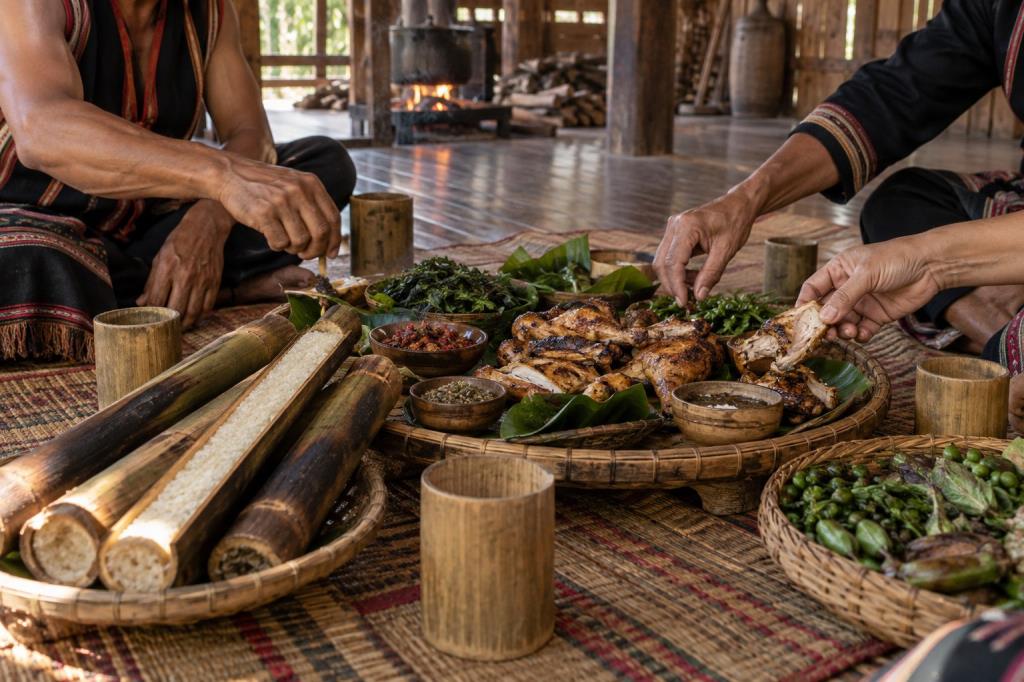
Differences between regions and families
Ways of making tube rice differ in the variety of rice, the tube, the amount of water and the roasting time. The salt dip may use chilli, lemongrass, leaves or seeds depending on the place. Jrai and Bahnar grilled chicken each have local techniques and stories and should not be collapsed into a single recipe.
Tourist restaurants often serve a tray of many dishes, decorated with woven textiles or set in a communal-house style space. That can be a doorway into the experience, but it does not automatically represent everyday life; it is worth asking who cooks, where the recipe came from and whether the community takes part.
The best approach is to use the name of the region, the community or the specific dish wherever you can. Very broad labels such as “Asian food”, “Middle Eastern cuisine” or “African dishes” are convenient in conversation but easily blur history and diversity. A dish that has crossed borders may also be kept alive by several communities at once; looking for a single “owner” is often less meaningful than understanding the branches along which it grew.
Common misconceptions
The Central Highlands has only tube rice and grilled chicken
Those two are easy to recognise, but the region also has cassava leaves, bitter aubergine, stream fish, other tube-cooked and grilled dishes, and a whole store of practices particular to each people.
All the peoples of the Highlands eat the same way
Ingredients may overlap, but the names, the methods, the occasions and the meanings differ. Be specific rather than using one blanket label.
The more decoration in a space, the more authentic it is
Authenticity comes from the people who practise, from knowledge and from community relationships. Staged props are no substitute for participation and consent.
A more respectful way to experience it while travelling
- Choose experiences run directly by the community or by local people.
- Ask which people, village or family the dish belongs to.
- Do not call forest greens “strange” in a way that belittles them or treats them as a dare.
- Drink in moderation, and remember you may decline on health grounds.
- Do not buy or sell wild animals or products of unclear origin.
- Respect the rules about photography, and do not re-enact a ritual for engagement.
If a host or someone serving shows you a way of eating that differs from your habits, watch first and then follow it as far as you are comfortable. You can politely ask about allergies, dietary needs or how hot something is. Ask permission before photographing people cooking, an altar, a ritual or a private space; prices and judgements about the food also belong in their local context.
Trying it at home without turning the dish into a stereotype
If you make tube rice, use only plant tubes that someone experienced has confirmed are safe, clean them, and roast outdoors in a well-ventilated place. A simpler option is to cook the sticky rice in a pot and wrap it in a leaf as an inspired version, stating clearly that it is not traditional tube rice.
Season the chicken lightly so the taste of the meat and the smoke still come through, grill over clean coals and check the internal temperature. Serve it with chilli salt, boiled greens or a soup. Do not use ceremonial dress or ritual objects as props for a meal.
A version cooked at home should honestly be called an adaptation when the equipment or the local ingredients are missing. Say clearly what you substituted and how it affects the aroma, the texture and the colour. If you want to go deeper, learn from the cooks, writers and communities attached to that tradition rather than relying on a short video or a commercialised version.
An observation checklist for the five senses
- At which stage does the aroma appear: toasting, grinding, fermenting, steaming or simmering?
- Is the dominant texture crisp, airy, chewy, smooth or juicy?
- Does the depth of flavour sit in the main dish, or does it come from the side dishes and the seasonings on the table?
- What part do the utensils, the crockery and the seating arrangement play?
- Who prepares the food, how is the knowledge passed on, and on what occasion does the meal take place?
Traditional food in modern life
Tube rice and grilled chicken appear at festivals and in restaurants, opening up livelihoods for artisans and cooks. But commercialisation can over-season the dish, use bamboo unsustainably, or separate the food from the name of the community it belongs to.
Good conservation lets the Jrai, the Bahnar and other rights-holders decide how the story is told, receive the benefits and pass on the craft. Materials harvested sensibly, food that is safe and stories with clear attribution let a dish travel far without becoming a generic image.
Preserving heritage does not mean freezing a dish at some imagined moment in time. Young people, migrants, home cooks and restaurants all keep adjusting portions, equipment, sources of ingredients and ways of serving. What matters is recognising the core body of knowledge, acknowledging those who pass the craft on, and creating the conditions for a community to decide for itself how its heritage moves forward.
Terms worth remembering
- Lam: the technique of cooking food inside a bamboo tube.
- Com lam: rice cooked inside a tube by steam and the heat of the fire.
- Lo o: a kind of bamboo commonly used for the tubes.
- Jrai: an ethnic community with a large population in Gia Lai.
- Bahnar: an ethnic community in the Central Highlands and nearby areas.
- Ruou can: a fermented drink taken through a tube in particular community settings.
Conclusion
Tube rice and grilled chicken appeal for more than the smell of bamboo and charcoal. When we name the cook, the place and the community correctly, we see that behind the food lie the skills of using the material, controlling the fire and building relationships around a shared tray — things that deserve more respect than any tourist backdrop.


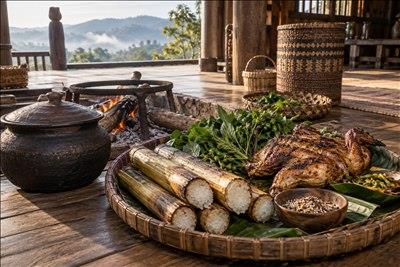 Bamboo-tube rice, grilled chicken and the fires of the Central Highlands: from the tube to the shared tray
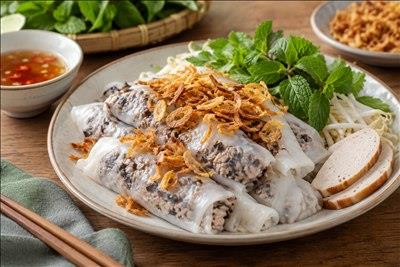 How to make banh cuon with pork filling: a thin, soft sheet that does not stick
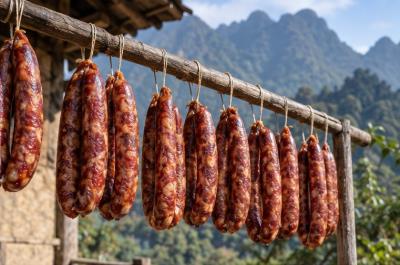 Cao Bang cured sausage: mountain sun, spices and a kitchen in the cold season
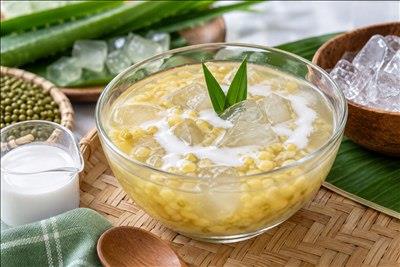 How to cook mung bean and aloe sweet soup: refreshing, with crisp aloe and no bitterness
 How to cook xoi gac: a beautiful red, chewy separate grains and never claggy
 Mi Quang and the kitchens of Quang Nam: a bowl with little broth and a great deal of memory
 Bo Dau banh chung: the green square cake at the crossroads into Thai Nguyen
 How to cook ca loc nuong trui: evenly done, juicy flesh and no taste of ash
Đăng nhập để bình luận: / Sign in to comment: