



Thai kitchens in the northwest: upland sticky rice, folded grilled fish and cham cheo beside the stilt house
In the kitchens of many Thai families in Vietnam's northwest, sticky rice, stream fish, herbs and forest spices meet around the fire. Upland sticky rice, folded grilled fish and the cham cheo dipping mix are widely known, but their full meaning lies in the technique, the season and the way everyone prepares the meal together.
Thai people live across many provinces, in groups and localities with different languages, dress and tastes. This article uses a few familiar features as a door into observation; it does not treat a meal laid on for tourists as the template for a whole community.
Quick facts
- Setting: the valleys and villages of the northwest.
- Staple: glutinous rice, along with plain rice and maize depending on the place.
- Techniques: steaming, grilling, burying in embers, boiling and blending spices.
- Dishes mentioned: sticky rice, folded grilled fish, cham cheo and seasonal vegetables.
- Values: sharing the work, receiving guests and passing on skills through practice.
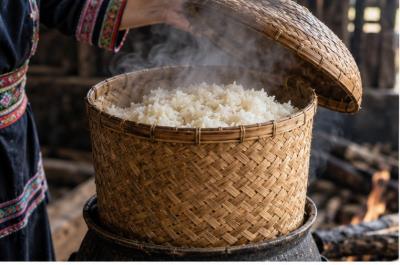
Sticky rice and the wooden steamer
The rice is soaked long enough, drained and then steamed in a suitable vessel. The grains come out tender but not mushy, so a small handful can be pinched off and still stay reasonably loose. The variety, the water and the timing all vary with the season; the skill lies in reading the steam, turning the rice and keeping water from pooling at the bottom.
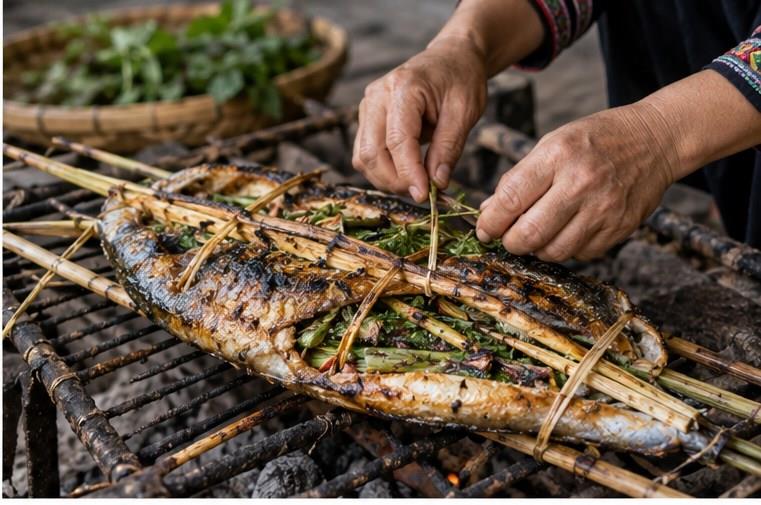
Pa pinh top is more than grilled fish
The fish is cleaned, opened out in a particular way, seasoned and then folded shut before grilling. The herbs, the mac khen pepper and other elements differ from household to household. The heat has to reach it evenly so the skin turns fragrant and the flesh cooks through without drying; visitors should watch for small bones and should not assume every kind of stream fish is caught sustainably.
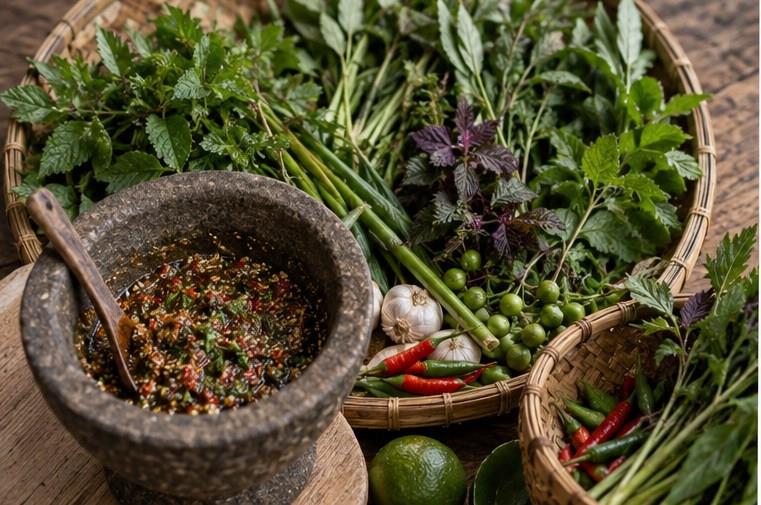
Cham cheo is a way of combining flavours
Cham cheo is usually built on salt, chilli and aromatics pounded together, but it has many variants depending on the dish. The mortar releases essential oils and creates a texture that grinding to a powder cannot match. A small dish of it is enough to lift vegetables, sticky rice or meat; a strong flavour should not cover the quality of the ingredients.
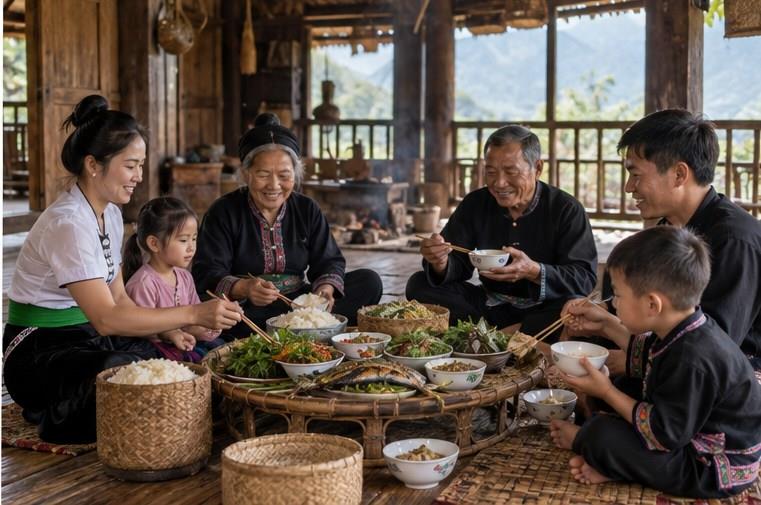
The hearth and the stilt house
The hearth gives heat, dries food and is where adults show children how to recognise smells, flame and doneness. Where it sits and how life goes on around it have changed, because of building materials, fire safety and a new pace of living. Keeping a culture does not mean obliging families to go on using a hearth that no longer suits them.
Tourism and the right to tell the story
An experience meal can bring income, but it should be for people within the community to decide which dishes and which stories are shared. The price should reflect the time spent sourcing ingredients and cooking, not just the food itself. Asking permission before entering a kitchen or putting on traditional dress makes the encounter more equal.
How to read a living tradition
Regional culture is not a fixed set of recipes. Under the same dish name, the ingredients and the way it is served can change with the season, the household, religious practice, livelihood and patterns of migration. What is shared points to a history of exchange; what differs shows a community adapting rather than losing its character.
When you experience it, ask for the name of the dish and the specific locality, ask permission before photographing people or private spaces, pay a fair price, and avoid turning clothing or rituals into props. A new version still has value as long as whoever tells the story is clear about what changed and respects those who hold the knowledge.
Things that are easily misunderstood
Every northwestern dish uses a great deal of mac khen
Spices are used according to the dish and the locality; overusing one aroma flattens the differences.
A ceremonial spread represents the everyday meal
An ordinary meal can be far simpler, resting on vegetables, rice and whatever the season provides.
Suggestions for experiencing it responsibly
- Ask for the dish by the name used in the village.
- Ask permission before photographing the hearth and the cook.
- Try a small amount of cham cheo first.
- Watch for fish bones and spice allergies.
- Do not pick unfamiliar forest plants yourself.
- Pay properly for a cooking experience.
- Do not press a host to perform a ritual.
An observation checklist
- Which community, which locality and which period does this dish and this custom belong to?
- Which details belong to everyday life, and which are for festivals or for receiving guests?
- How do the sources of ingredients, the seasons and the environment shape the way it is cooked?
- Who does the work of preparing it, and how is the knowledge passed on?
- How can a visitor take part without intruding on privacy or distorting the ritual?
A note of caution
Dish names, ingredients and customs vary between Thai groups and localities. Do not identify forest plants for eating on your own; fish should come from a legal source and be cooked through.
Conclusion
The Thai kitchen of the northwest stays in the memory for the way sticky rice, fish, greens and fire connect with a pair of hands. Seen as a process of labour and of handing on a craft, the food becomes more than a list of specialities.



 Thai kitchens in the northwest: upland sticky rice, folded grilled fish and cham cheo beside the stilt house
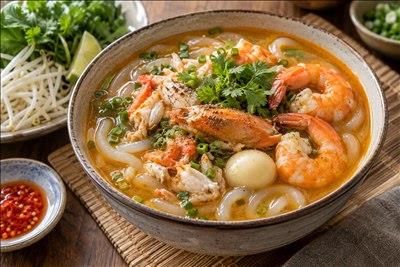 How to cook banh canh cua: a sweet broth, just enough body and plenty of toppings
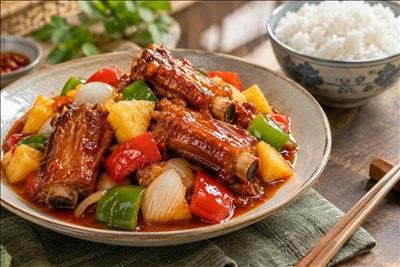 How to make sweet-and-sour pork ribs: tender meat, a glossy sauce and crisp vegetables
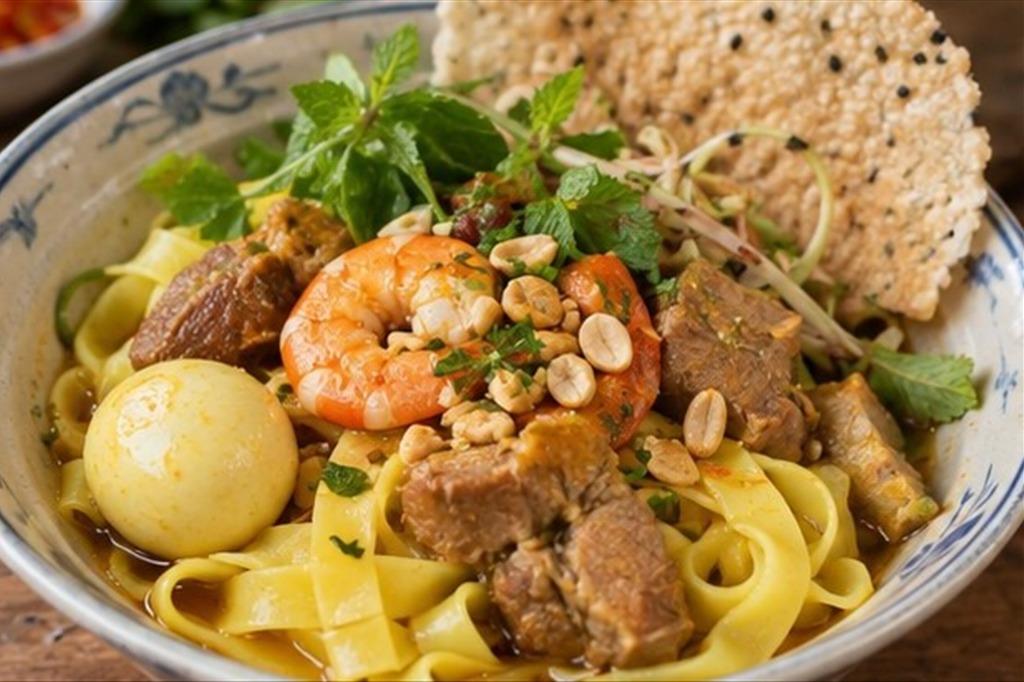 Mi Quang of Quang Nam: little broth, yet the full flavour of the Quang region
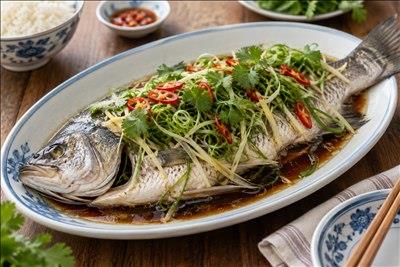 How to steam fish with soy sauce: juicy flesh, fragrant ginger and spring onion, no fishy smell
 The flood season in the Mekong Delta: linh fish, sesbania blossom and meals that follow the water
 How to make honey-glazed roast chicken: glossy, juicy and never burnt
 Tu Tru banh gai of Thanh Hoa: the black of ramie leaf and a sweet, nutty filling
Đăng nhập để bình luận: / Sign in to comment: