



All About Vietnamese Burial Customs (Part 3)
This is a common question from many families:
- In a year with many death anniversaries: father, mother, grandfather, grandmother, great-grandparents, great-great-grandparents, etc., which anniversary is the most important?
- After burial, there are ceremonies for 3 days, 49 days, 100 days, the first death anniversary, the second death anniversary, etc... which ceremony is the main one?
Answer: In ancient times, this was not recorded in ritual codes, but nowadays it is a very practical issue, because in every family, descendants work and reside in different places, and few families do not have members living far away; in a year, they only have the conditions to gather once or twice on major family occasions. Due to limited economic circumstances, when inviting relatives and friends—first to attend the ancestor memorial service to fulfill spiritual desires, and second to express filial affection and kinship—it is not possible to spread events out across many occasions. Thus, families must focus on the main ceremony.
Regarding death anniversaries, customs across regions generally agree that the death anniversary of parents is the main one (note: parents of the head of the household), while for funeral rituals, customs vary from place to place. Some places emphasize the 49-day ritual as the main one, others consider the 100-day ritual main, and some consider it sufficient to properly complete the 3-day ceremony. This is because during the grief and confusion of a funeral, expression of gratitude toward close friends and those assisting with the funeral may have shortcomings, so the 3-day ceremony is treated as a major ritual for the bereaved family to thank those who cared for their parents during illness and helped arrange the burial. Some places emphasize the first death anniversary (called Tieu tuong), while others emphasize the second death anniversary (called Dai tuong, also known as gio het - the end of mourning). There is an argument stating: Since it is called Tieu tuong (minor auspiciousness). Ritual-wise, today combining Dai tuong and Dam te (end-of-mourning ritual) involves more complex rites than Tieu tuong (see section: How to conduct Dam te).
In short: Economic and living conditions past and present differ. This is a practical issue, especially for families facing financial difficulties or whose descendants work far away. Therefore, depending on local customs and specific family circumstances, members can agree among themselves. If conditions permit, the family can gather; those far away can commemorate the date on their own.
How is the tru phuc (dam te / end-of-mourning ritual) performed after mourning ends?
After two years, select an auspicious day within the extra period of three months to perform the tru phuc ceremony. Tru phuc consists of 3 rituals:
1. Tomb restoration ceremony: Repair and shape the grave into a round tomb.
2. Dam te ritual: Remove mourning headbands. Destroy and burn items belonging to the funeral ceremony, and escort the spirit tablet to the main altar. Remove the temporary mourning altar. Store away funeral banners and condolence couplets.
3. Escorting the spirit tablet to the main altar and announcing to ancestors: Prepare a new spirit tablet in advance, covered with red paper or cloth. When dam te at the mourning altar is finished, burn the old spirit tablet along with the black ribbon surrounding the picture frame and the funeral eulogy. Afterwards, escort the spirit tablet, incense burner, and portrait (if any) to the main altar, placed on a lower tier. In the case of a younger son's household that does not worship higher-level ancestors, the altar remains as is; there is no need to move the altar, but only to report to the household deities and ancestors at the ancestral house.
Why is there a custom of burning votive paper?
According to ancient beliefs, the deceased also need food, drinks, housing, clothing, tobacco, betel nut, travel money, and all daily expenses just like when they were alive...
The deceased are also given a share of the estate. In Son La and Lai Chau, many places still build grave houses filled with bronze pots, wooden trays, earthenware teapots, dishes, machetes, blankets, mats, clothes, hats... full amenities for an individual. The deceased are even allocated buffaloes, pigs, chickens, paddy, rice... After three years, the chief mourner performs a prayer ritual and goes to the grave to ask for reusable items back, as well as living livestock, including newly born animals...
From offering real items, the ritual of burning votive paper gradually emerged—that is, replacing them with symbolic objects made of bamboo, wood, straw, clay, or paper, scaled down in size so those in the underworld can carry them, thanks to the Divine Magic of turning little into much. The clothes worn by the deceased during life, left at the grave house after three years to rot, were not fit for other uses, so people burned them, eventually evolving into using paper clothes. That is why there is the proverb Follow ghosts, wear paper clothes.
Why reburial (exhumation and reinterment)? In which cases should reburial be avoided?
...After a person passes away, three years after the end of mourning or a couple of years later, the children arrange for reburial.
The day before reburial, a farewell ceremony is performed at the ancestral hall. On the day of reburial, a ritual prayer is offered to the local earth deity at the new grave site.
First, open the grave, collect the bones and arrange them in a ceramic urn (tieu sanh), sprinkle ritual herb water (nuoc vang) over them, and cover tightly so no sunlight can penetrate. Wealthy families use nested coffins as in the original burial.
Then, rebury the remains in new land. As for the old decayed coffin, if rotten it is discarded; if good, it is brought home to be used for bridges or buffalo/horse stables so livestock won't suffer foot rot when standing on it.
Popular belief also held that: If anyone suffers from chest/body aches, taking a piece of rotten coffin plank, burning it, and placing it under the bed to sleep on will cure the pain.
There are many reasons for reburial.
First, because of poverty, when parents pass away, the family lacks funds and buys a cheap coffin temporarily, waiting until after three years to rebury, fearing the rotten wood will damage the remains.
Second, because the ground has termites/ants or flooding, they rebury.
Third, because geomancers (feng shui practitioners), seeing a grave sink without reason, or trees on top of the grave drying up naturally, or family members becoming promiscuous/insane, or constant illness and turmoil in the household, or troublemakers causing lawsuits and trouble, attribute it to bad land and rebury.
Fourth, those seeking fame, wealth, and status hire a geomancer to find auspicious land for reburial. Some, seeing another family prospering, bury their own family's grave close to that prosperous grave to share in its good fortune.
During reburial, custom dictates three auspicious signs (tuong thuy, meaning the grave is thriving auspiciously) where reburial must NOT be carried out.
First, if digging reveals a yellow snake, it is considered a dragon-snake spiritual omen. Second, if opening the coffin reveals reddish vines (dodder vines) entwined, it is considered dat ket (coalesced auspicious land). Third, if the earth vapor there is warm and the grave pit is dry without water, or water forms milky drops, these are all good signs. Whenever encountering such signs, one must re-cover the grave immediately.
What is celestial burial (thien tang)?
In ancient times, some people traveled far from home for business and unfortunately died suddenly from heatstroke or windstroke along the way. Travel companions or passersby recognized them, only having time to mark the spot where the deceased lay before rushing to notify the bereaved family. When the family arrived at the scene, termites had already buried the entire corpse. Relatives believed this was an auspicious burial spot provided and buried by Heaven itself, calling it thien tang (heavenly burial), predicting future prosperity for the family; thus they left it untouched and built it higher without reburials. Such thien tang graves are often located by main roadsides. Today along highways, one can still occasionally see ancient earthen mounds called thao mo (grassy graves). Subjected to hundreds of years of wind and rain, they remain raised; most are unclaimed graves of those who died along the road and whose families never found them. These graves are still kept built up with continuous incense smoke, cared for by local residents and passing merchants who believe these spirits are sacred, granting health and prosperity.
What is corpse-preserving soil (dat duong thi)?
There are ancient graves where, due to embalming techniques, flesh remains intact without decay after hundreds of years. But there are also ancient graves where flesh stays intact because they were buried in corpse-preserving soil (dat duong thi).
Dat duong thi is what kind of soil, what chemical elements it contains, what temperature and humidity levels, and what features help identify it—no one knows for sure. Perhaps ancient feng shui masters discovered it but the knowledge has been lost today, or perhaps it was found purely by coincidence. All that is known is that it provides an environment where both aerobic and anaerobic bacteria are destroyed.
Hopefully in the future, as science advances or more people dedicate research to it, the mystery of corpse-preserving soil will be uncovered.
[red]Why is it taboo to build up a grave mound during the mourning period?[/red]
According to custom, three days after burial is the grave-opening ceremony (mo cua ma). During this time, the grave is repaired neatly, grass is planted around it, drainage ditches are dug, and surrounding brush is cleared to prevent roots from spreading, penetrating the tomb, or piercing the coffin. From that day on, when descendants visit to burn incense, they may only take soil from around the perimeter to fill sunken spots, and must not climb onto the grave mound or strike it with spades or hoes.
This taboo is very reasonable: During these three years, the coffin and body are decomposing, and there have been cases where graves collapsed due to lack of precaution. A collapsing or disturbed grave, though a natural phenomenon, brings great anxiety to the bereaved family.
Why must exhumation during reburial take place at night or early morning before sunrise, or under a sheltered tent if done during the day?
Some argue that since the living (Yang) and dead (Yin) are separated, sunlight must be avoided. However, in our view, based on practical experience, in many cases involving corpse-preserving soil or the three auspicious signs (tuong thuy / thriving graves) where reburial should not occur and the grave must be filled back immediately, if a body remains intact after many years and direct sunlight hits it, it decomposes immediately and shrivels up. Thus, as a precaution against this, avoiding sunlight gradually became a general custom.
How are funerals handled during Tet (Lunar New Year)?
Lunar New Year (Tet) is a time of joy for the entire nation, marking the beginning of good fortune for a whole year, holding sacred significance. A family must set aside personal grief to join the collective joy. Therefore, custom dictates removing mourning headbands during the three days of Tet. Households in major mourning refrain from visiting relatives and neighbors to give New Year wishes; conversely, neighbors come to offer New Year wishes and comfort the grieving family. What if someone passes away on the 30th day of the 12th lunar month or the 1st day of Tet? Such cases are rare but do happen. If a death occurs on the 30th of the 12th month and the family can manage it, they should complete the burial on that day, as postponing into the new year brings many inconveniences. Most families avoid carrying over burials into New Year's Day. If a death occurs on the 1st day of Tet, mourning is not announced immediately, but all preparations are made so the mourning announcement ceremony can take place on the morning of the 2nd day. What if a pre-planned wedding collides with a funeral?
That is a case of uu hy trung phung (coexistence of grief and joy). Joy and sorrow arrive at the same time. Life is limited, death unexpected—life has limits, but no one knows when death will come. According to ritual etiquette, while the house is in mourning and white headbands are worn, especially for major mourning, all celebrations are avoided. However, if a wedding is already prepared, being overly rigid causes hardship for both families, often ruining young couples' relationships, especially when elderly parents on both sides might pass away sequentially, extending mourning up to seven or eight years without end.
Therefore, ancient customs made an allowance: Cuoi bon tang (wedding run ahead of mourning). At that time, the deceased rests temporarily on the bed covered with a blanket/mat without being placed in the coffin yet, or the family may privately perform shroud placement and encoffining without officially commencing the thanh phuc (formal wearing of mourning clothes) ceremony. According to ritual, before thanh phuc, no one in the house is permitted to wail/cry. Although neighbors may know, since the family hasn't officially announced mourning, they do not visit yet, except close relatives and immediate neighbors who assist each other like family.
Meanwhile, both families hastily hold the wedding with all necessary rites—bride procession, bride reception, ancestor report, red thread ceremony... but offerings are very simple, attendees kept to a minimum restricted to immediate family and a few close relatives. Invited guests and friends are excused, to be explained later. Once the wedding is completed, formal mourning is announced. The newlyweds become family members and observe mourning attire like all other descendants. If both families are understanding, the bride can be wed from morning to noon, and mourning announced in the evening of the same day.
What if a house has a wedding while a nearby neighbor has a funeral?
People with etiquette and compassion never laugh and joke in front of others' grief. An educated and understanding family never allows children to play boisterously or blast loud music when a neighbor suffers a tragedy. In such cases, the wedding proceeds normally but firecrackers, loud music, and noisy singing should be avoided to prevent a stark contrast between tears and laughter. The same applies during national mourning.
How should funeral attendees behave?
Whether close or distant, attending a funeral requires solemnity, demonstrating respect for the deceased and compassion for the grieving family. It is extremely rude to laugh, chat loudly, or joke around while the bereaved family is in pain.
In rural areas, many places still practice lavish feasting during funerals, which is truly inappropriate.
Admittedly meals are unavoidable, but they should be limited to volunteers helping out and relatives traveling from afar. For villagers, neighbors, and friends, a funeral is not an occasion to pay back food debts. There is nothing joyful during a time of family grief.
If drinking feasting customs cannot be abolished immediately, people attending funerals should exercise self-restraint, assist wholeheartedly where possible, and avoid being demanding or critical if food arrangements are inconvenient. The old bad habit of criticizing funerals, blaming weddings is nothing to be proud of!
Young people should also note: When attending a funeral, do not wear loud, revealing, or ridiculous clothing, as this is very inappropriate and offends many.
What should you do when encountering a funeral procession on the road?
If encountering a funeral procession coming from the opposite direction, without being told, no matter how rushed people are, everyone dismounts—including motorcyclists and cyclo drivers—doffs their hats, walks past the procession, and only then remounts. Cars slow down and do not honk.
If traveling in the same direction and dismounting is inconvenient, slow down and take off your hat.


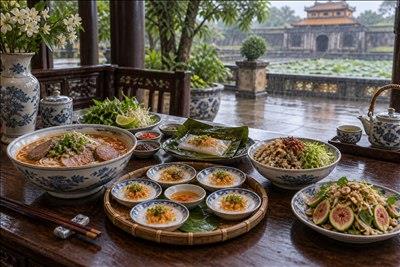 The food of Hue: where the royal kitchen, everyday dishes and small street stalls meet
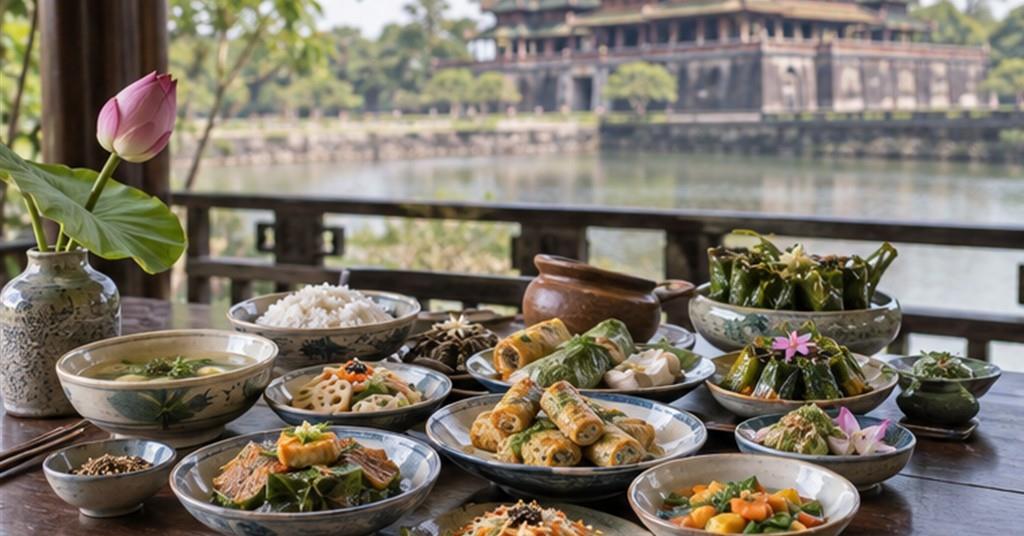 Hue vegetarian food: why is something so plain still so layered in flavour?
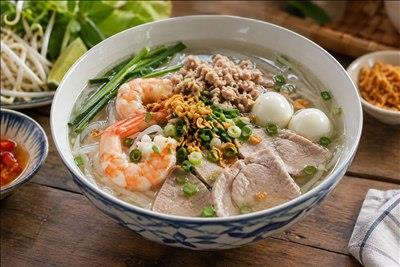 How to cook hu tieu Nam Vang: a clear broth, sweet from the bones, with noodles that hold
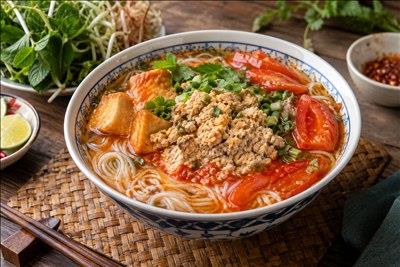 How to cook bun rieu cua: fragrant, with the crab curd in soft clouds and a clear broth
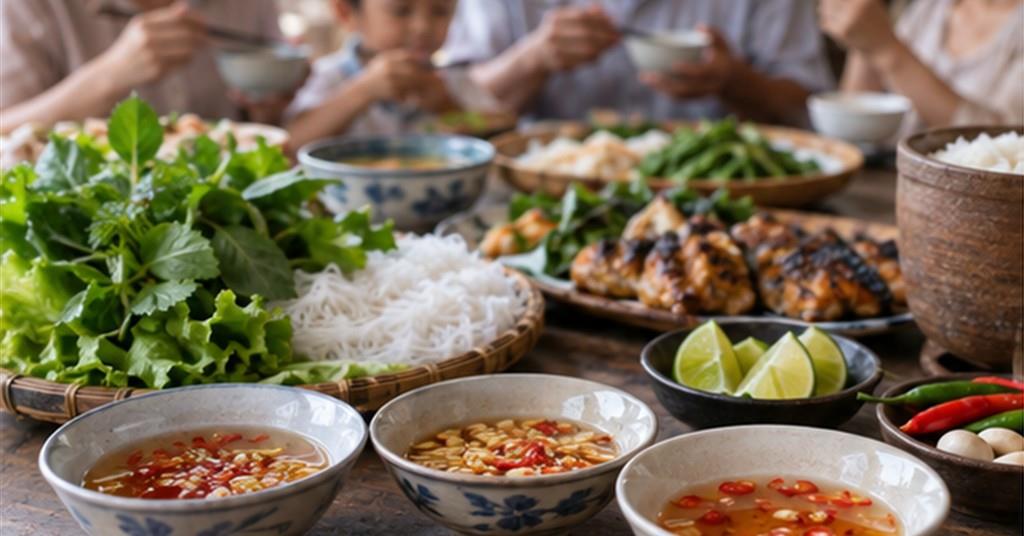 Fish sauce on the table across the three regions: from how it is mixed to what it is eaten with
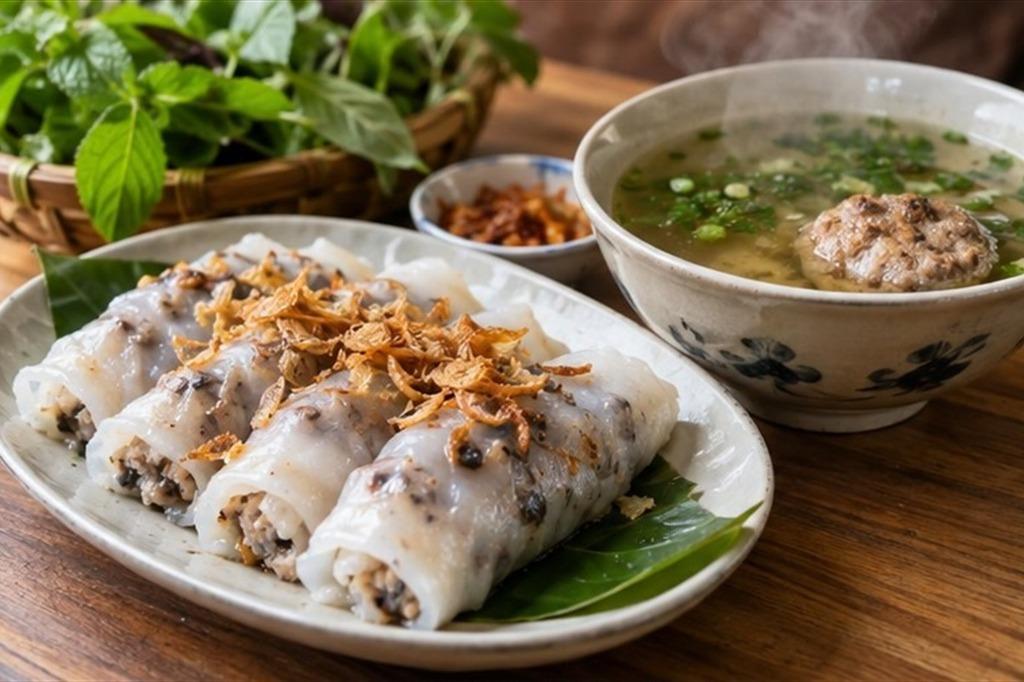 Cao Bang banh cuon: a thin rice sheet eaten with a bowl of hot broth on the frontier
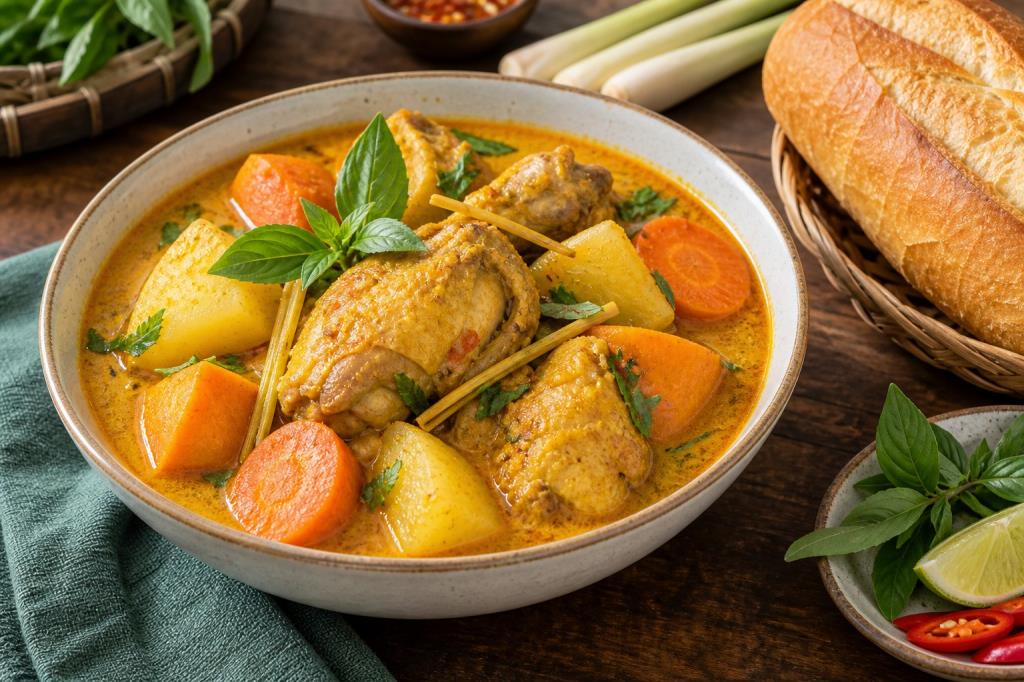 How to cook Vietnamese chicken curry: gently rich, tender meat and potatoes that hold together
 The coastal kitchen of central Vietnam: grilled fish, fermented sauce and getting through the storm season
Đăng nhập để bình luận: / Sign in to comment: