



The coastal kitchen of central Vietnam: grilled fish, fermented sauce and getting through the storm season
The central coast has produced a kitchen that is at once fresh and well prepared. Fish that has just landed can be grilled or cooked straight away; the rest of the catch is dried, salted and fermented into sauce to carry the household through rough days at sea. Each technique is an answer to the sun, the wind, the fuel available and the uncertainty of a fishing trip.
From Thanh Hoa down to Binh Thuan there are hundreds of coastal villages with different species, fishing seasons and tastes. It would be wrong to lump every dish into one “salty and spicy” style. Some places prefer a clean flavour that keeps the sweetness of the fish, others use strong seasoning; what they share is respect for freshness and for the ability to preserve.
Quick facts
- Scope: the coastal communities of central Vietnam.
- Food sources: pelagic fish, bottom fish, squid, shellfish and local vegetables.
- Techniques: grilling, steaming, braising, drying, salting and fermenting.
- Seasonal rhythm: shaped by the wind, the fish runs, the weather and whether it is safe to go out.
- Values: making full use of the catch, keeping stores, and holding the community together.
The morning begins at the landing
When the boats come in, the fish is sorted by freshness, size and what it will be used for. What is to be eaten at once must be kept cold and handled quickly; what will be dried or fermented has its own standards. The bustle of the scene should not obscure the hard labour, the risks of the trade, or the role women play in buying, selling and preparing.
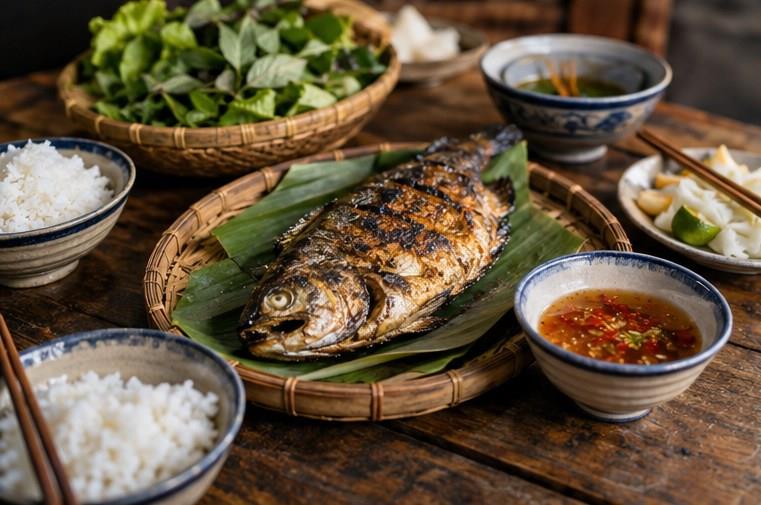
Grilling so the fish can still speak
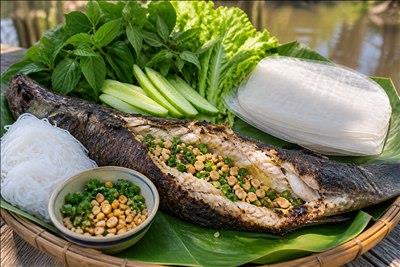
Fresh fish needs only enough salt, a steady heat and the right moment to turn. Banana leaf, a grate or a charcoal fire each give a different aroma, but the fuel must be clean and free of toxic smoke. Dipping sauce, herbs and rice paper are there to complement, not to cover for an ingredient past its best. Eating a whole fish also means paying attention to small bones.
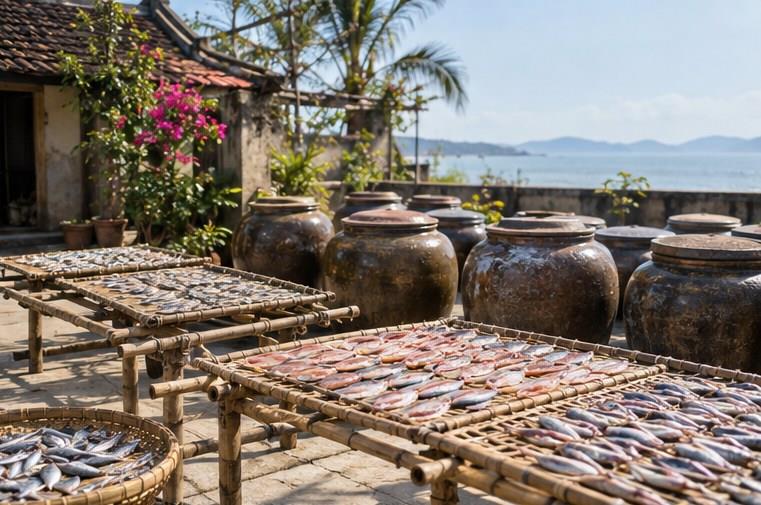
Fermented sauce is a technology of time
Salting and fermenting turn a seasonal glut of fish into something that lasts. The salt ratio, the cleanliness of the equipment, the temperature and the time all decide both safety and flavour. Every region has its own names and its own ways of drawing off, filtering and blending; handmade does not automatically mean safe if the process is treated carelessly.
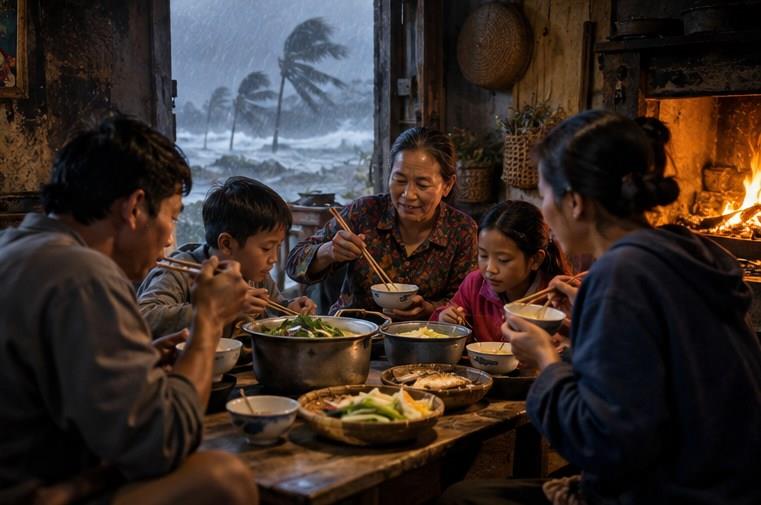
A meal on a day when the sea is rough
When the boats cannot go out, dried fish, fermented sauce, pickles and vegetables become the stores. A pot of hot rice and one small braised dish can carry a whole family through a long day of rain. This capacity to prepare is survival knowledge, but today's extreme weather adds further demands: clean water, refrigeration and an evacuation plan.
The future of a coastal kitchen
Declining stocks, plastic waste, erosion and climate change all reach the table directly. Experiencing this responsibly means choosing seafood that is in season and of legal size, cutting down on single-use items and paying a fair price. Keeping the food alive also means keeping the livelihoods and the ecosystem that produce the ingredients.
How to look at a living tradition
No region or community should be reduced to a single recipe. Ingredients, names and ways of serving shift with the season, the family, religion, occupation and patterns of migration. What is shared shows a history of exchange; what differs shows the capacity to adapt.
When you go and try it, use the right name for the dish and the region if you know them, listen to the people making it, ask before photographing private spaces, and avoid treating the word “authentic” as an absolute stamp. A new version still has value as long as it says what has changed and respects the people who keep the craft alive.
Common misunderstandings
Seafood right by the sea is always freshly caught
Supply chains can bring produce in from elsewhere; ask where it came from and look at how it is stored, rather than relying on where the restaurant stands.
The stronger the smell, the better the sauce
A strong smell is no substitute for hygiene, clarity, a well-built flavour and a clear source of ingredients.
Practical suggestions and things to try
- Go to the market early, but do not get in the way of the unloading.
- Ask permission before photographing people at work.
- Choose seafood that is in season and of legal size.
- Check that the food is being kept cold.
- Use dipping sauce in moderation to cut down on sodium.
- Never use painted wood or rubbish as grilling fuel.
- Support places that are transparent about where the fish comes from and how it is handled.
Observation checklist
- What context, season and audience is being talked about?
- Which details are facts, and which are impressions or personal choices?
- How do the ingredients, tools or setting affect the outcome?
- Are there any safety, allergy, cost or privacy risks to check?
- What small thing could you try today and review later?
Important note
Seafood causes allergies in some people, and raw or fermented fish must come from a process you can trust. Follow weather warnings and stay out of the landing area while it is in operation.
Conclusion
The coastal kitchen of central Vietnam holds both the bright moment of a fresh catch and the patience of a fermenting jar over months. Understanding those two rhythms lets us see the food not only with our sense of taste, but with respect for the sea and for the people who live from it.



 Cao Bang cured sausage: mountain sun, spices and a kitchen in the cold season
 How to cook mung bean and aloe sweet soup: refreshing, with crisp aloe and no bitterness
 How to cook xoi gac: a beautiful red, chewy separate grains and never claggy
 Mi Quang and the kitchens of Quang Nam: a bowl with little broth and a great deal of memory
 Bo Dau banh chung: the green square cake at the crossroads into Thai Nguyen
 How to cook ca loc nuong trui: evenly done, juicy flesh and no taste of ash
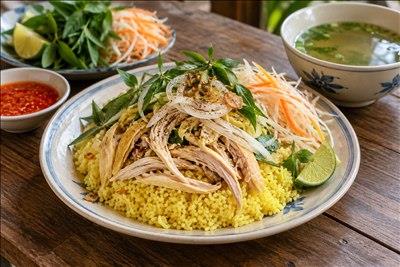 How to make Hoi An chicken rice: fluffy grains, juicy chicken and a crisp onion salad
 Me xung from Hue: chewy malt, toasted sesame and the slow rhythm of tea
Đăng nhập để bình luận: / Sign in to comment: