



Tu Tru banh gai of Thanh Hoa: the black of ramie leaf and a sweet, nutty filling
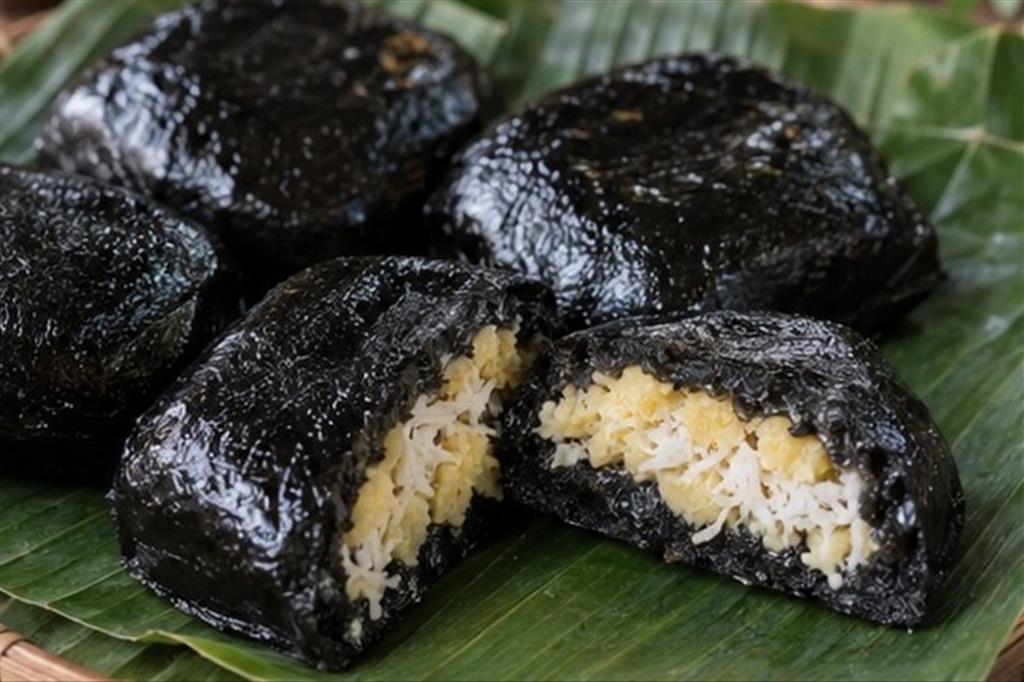
Tu Tru banh gai from the Thanh region stands out for its glossy black skin, chewy and fragrant from ramie leaf and glutinous rice flour, wrapped around a filling of mung bean, coconut and sugar with variations from family to family. Wrapped in dried banana leaf, the cake carries a sweet, nutty taste and the mark of a traditional gift-making craft.
The name Tu Tru belongs to a craft-village area in Tho Xuan, Thanh Hoa. Banh gai is made in many other places too, but the proportion of leaf, the molasses or sugar, the scent of the filling and the style of wrapping make the difference. Do not use the blackness as the only criterion; texture, aroma and where it was made are more reliable.
Quick facts
- Locality: the Tu Tru area, Tho Xuan, Thanh Hoa.
- The skin: carefully processed ramie leaf, glutinous rice flour and a sweetener.
- The usual filling: mung bean, coconut and sugar, sometimes with sesame or lard.
- Technique: pounding and kneading the skin, portioning the filling, wrapping in leaves and steaming.
- Character: a chewy black skin, a sweet and nutty filling, and a gentle leafy scent.
Ramie leaf takes a great deal of preparation
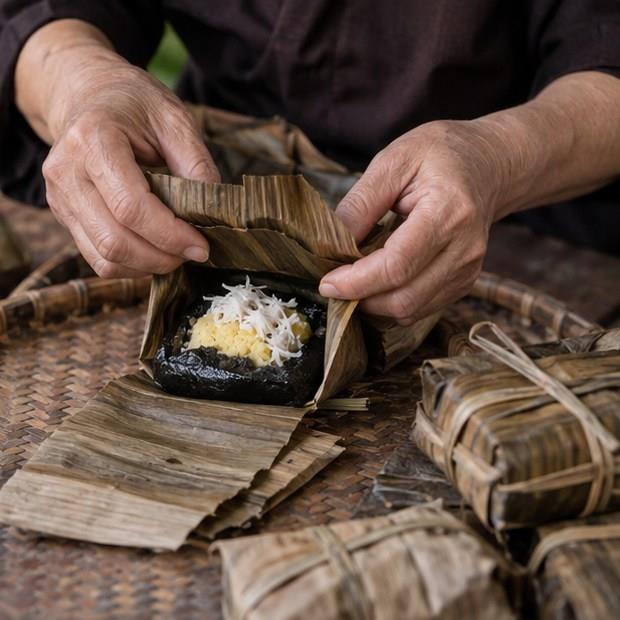
The leaves are selected, with unsuitable parts removed, then boiled or otherwise treated and pounded or ground until smooth. Coarse fibres left in make the skin gritty; insufficient treatment can leave a sharp smell. The black comes from the leaf and the processing, and usually has a natural depth rather than a uniform blackness.
Glutinous rice flour gives the chew
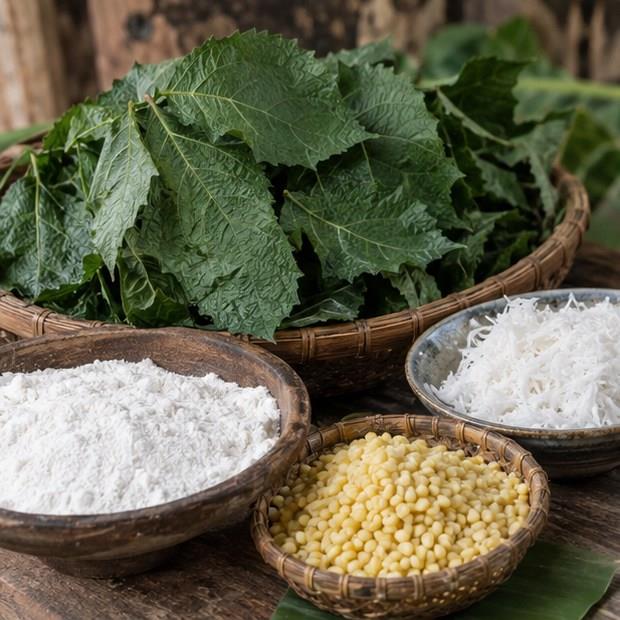
The rice flour is combined with the ramie leaf and the sweetener, then kneaded until uniform. The dough must be soft enough to enclose the filling without being sticky and wet. The proportions are each household's secret; too much sugar makes the taste harsh, too little leaf loses the aroma, and dough that is not fine leaves the surface dull.
The nutty filling behind the black skin
Mung beans are cooked, mashed and stirred down with sugar, coconut or other ingredients. Some versions include lard for richness, or sesame, or flavourings. The filling has to be dry so it does not burst the skin during steaming. Anyone eating vegetarian or with an allergy should ask, since the outside tells you nothing about all the ingredients.
Wrapping and steaming hold the cake's shape
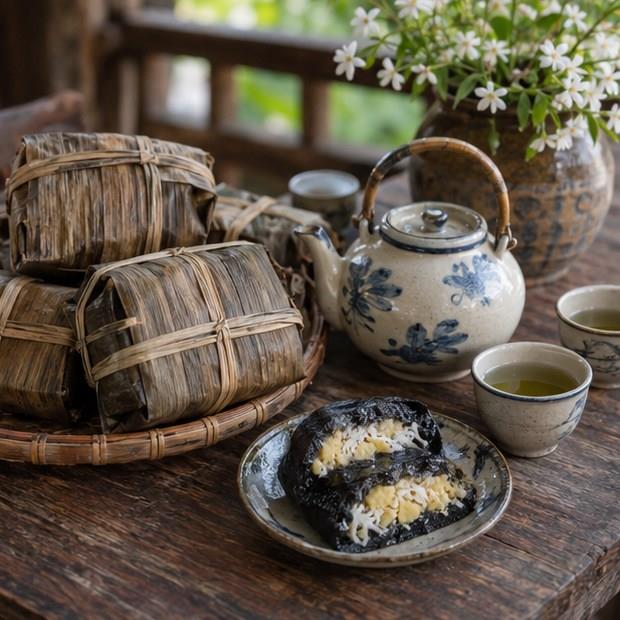
Dried banana leaf shapes the cake, stops it sticking and holds the aroma. It is wrapped firmly by hand and steamed until the skin turns translucent, chewy but not soggy. After steaming it must cool and let the steam escape before packing; sealing it while hot lets water condense and shortens how long it keeps.
A sweet to go with a cup of tea
Because it is sweet and chewy, cut it into small pieces and eat it with unsweetened tea. Cooled, its texture settles; one that is too hard may have been kept too long or lost moisture. It makes the finest gift when the label gives the date of making, the ingredients and the shelf life, rather than relying on the traditional tied leaf alone.
Why does a dish come to identify a region?
A speciality is not made by a list of ingredients alone. Climate decides the season, soil affects the quality of the produce, and markets, roads and the rhythm of work shape how it is prepared. Techniques repeated across generations give a dish its own “voice”, even though every household keeps different proportions and knacks. So a local version should be seen as a living tradition, not a closed recipe.
Fame brings its own problems. As demand grows, a product may be made in a hurry, given a longer shelf life, or labelled with a place name despite having no connection to the craft village. Buyers can help protect its value by asking where it was made, reading the ingredients, choosing transparent producers and accepting a price that reflects the work. An unusually cheap gift is sometimes a sign to look more closely rather than a bargain.
Tasting so as to recognise the structure of the flavour
Do not rush to add a lot of dipping sauce, chilli or sugar at the first bite. Look at the natural colour, smell the main aroma, feel whether it is soft, chewy, crisp or firm, and only then try it with what comes alongside. This helps you recognise the role of each element and understand why local people arrange the dish as they do. Temperature matters too: something just cooked smells and feels different from the same thing gone cold or carried a long way.
There is no single yardstick for taste. Someone used to sweetness may find central dishes salty; someone who likes it light may find fermented food too strong. Instead of ranking the “best”, ask which village, shop or household this version comes from, and whether it was made to eat straight away or to take away as a gift. A specific question opens a more interesting story than an absolute verdict on a whole region.
Things that are easily misunderstood
The blacker the cake, the more ramie leaf it has
The colour also depends on the processing and on additives; a deep black does not in itself prove the proportion of leaf or the quality.
A leaf-wrapped cake keeps for ages with no special storage
The cake is moist and has a bean and coconut filling, so it does spoil; follow the shelf life and the storage conditions.
Suggestions for trying it
- Read the ingredients if you are vegetarian or have an allergy.
- Choose ones whose wrapping is dry and not seeping.
- Ask the date of production.
- Eat small pieces with tea.
- Keep it somewhere cool, as instructed.
- Do not eat it if it smells sour or has mould.
- Buy from a workshop that states its address in the craft area.
Buying it and taking it home as a gift
Prefer products that carry the maker's name, an address, a production date, a use-by date and clear storage instructions. For goods sold loose, ask when they were made, how they were transported and what signs would show they are no longer good. Attractive packaging helps on a long journey but does not replace the quality inside; equally, a rustic look does not automatically prove something is handmade or safe.
Buy an amount that suits the distance and how well you can keep it. Fresh items containing meat, seafood, broth or raw vegetables need temperature control; dried goods and sweets still have to be kept away from damp, heat and insects. If you are flying or crossing an area with quarantine rules, check the airline's rules and those of your destination. Do not vacuum-seal something unsuitable and then assume it can sit at room temperature.
A note on food safety
The cake may contain sesame, coconut, beans and animal fat; ask clearly if you have an allergy or eat vegetarian. Because it is moist, do not eat it if the wrapping leaf is slimy, if there is mould, a sour smell or a change in the filling. Store it and eat it within the period the workshop gives.
Anyone allergic to prawn, crab, legumes, sesame, peanut, dairy, egg or anything else needs to ask specifically, since these can be in the filling, the broth and the dipping sauce. Young children, older adults, pregnant people and those with weakened immunity should favour food that is cooked through, stored properly and eaten soon. If something smells odd, is unusually slimy, has swollen packaging, or has been out at room temperature for an unknown length of time, the safe choice is not to eat it.
Conclusion
Tu Tru banh gai makes its impression through its blackness, but it stays in the memory through the chew, the nutty filling and the scent of the leaf. Only by looking at the work of preparing the leaves, kneading the dough and steaming does one see all the labour hidden inside this small gift from the Thanh region.



 Tu Tru banh gai of Thanh Hoa: the black of ramie leaf and a sweet, nutty filling
 How to make bun bo Nam Bo: tender beef, crisp vegetables and a balanced dressing
 Bamboo-tube rice, grilled chicken and the fires of the Central Highlands: from the tube to the shared tray
 How to make banh cuon with pork filling: a thin, soft sheet that does not stick
 Cao Bang cured sausage: mountain sun, spices and a kitchen in the cold season
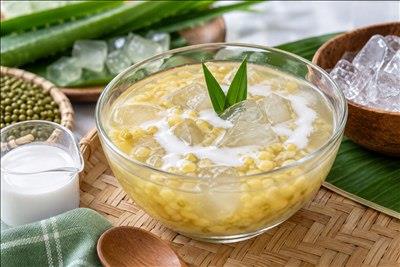 How to cook mung bean and aloe sweet soup: refreshing, with crisp aloe and no bitterness
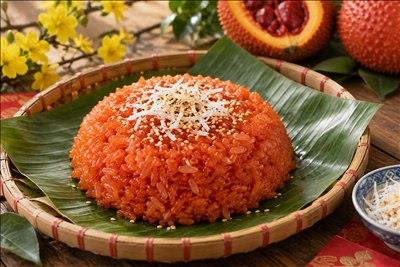 How to cook xoi gac: a beautiful red, chewy separate grains and never claggy
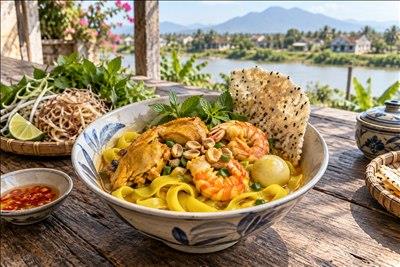 Mi Quang and the kitchens of Quang Nam: a bowl with little broth and a great deal of memory
Đăng nhập để bình luận: / Sign in to comment: