



Banh da cua of Hai Phong: red noodles and a bowl of crab broth with the port city's character
Banh da cua from Hai Phong is recognisable at once by its reddish-brown noodles, its field-crab broth and the green of the vegetables and wild betel leaf. A bowl may be plain or have fritters, prawn and meat added, but the red noodles and the crab flavour remain the two anchors that set it apart from the many crab noodle soups found elsewhere.
It appears everywhere from breakfast shops to food-tour routes, and comes in many versions. There are soup bowls and dry mixed bowls; some places use water spinach, water mimosa, betel-leaf fritters, fried shallots and pork crackling. Variation is natural, as long as the seller does not let the additions overwhelm the quality of the crab and the noodles.
Quick facts
- Place: Hai Phong.
- Core components: red banh da noodles and field-crab broth.
- Common accompaniments: water spinach, water mimosa, betel leaf, fried shallots, fritters.
- Texture: noodles chewy yet soft, a broth with deep savoury sweetness, vegetables still crisp.
- When: commonly eaten at breakfast, lunch or in the late afternoon.
The red noodles are the soul of it
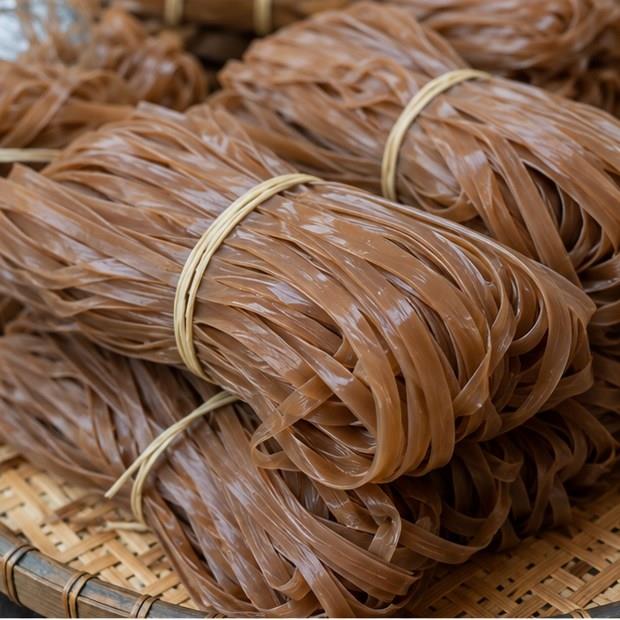
The noodles are made from rice, spread into sheets, dried and cut into strips; the reddish-brown colour and the chewiness depend on the recipe and the processing. Before serving, the dried strips are soaked and then blanched just enough. Too little and the core stays hard; too long and they swell, go mushy and cloud the broth. A good bowl keeps the noodles soft but still with bite.
The crab broth must be sweet without being fishy
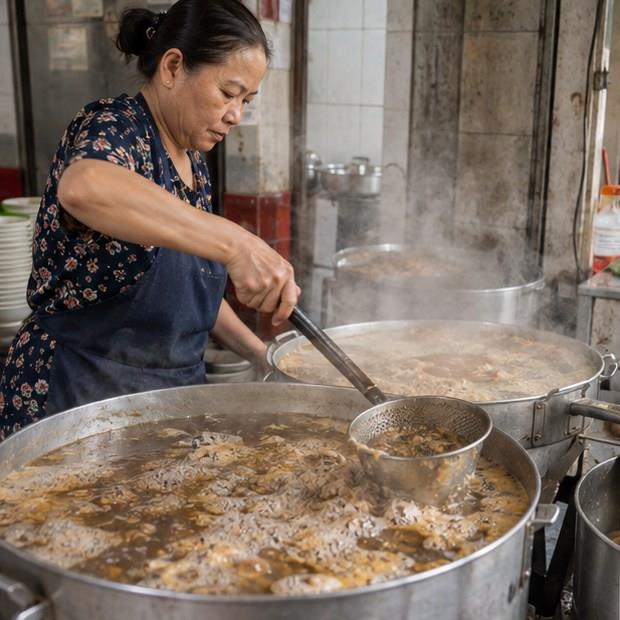
The field crabs are cleaned, pounded or ground, strained and then cooked so the meat sets into soft curds. The heat has to be controlled so that the roe, the meat and the liquid all smell pleasant. Bone stock or seasoning can support the broth but should not erase the crab. Live crabs must be handled hygienically and cooked thoroughly.
Vegetables and fritters make the palette
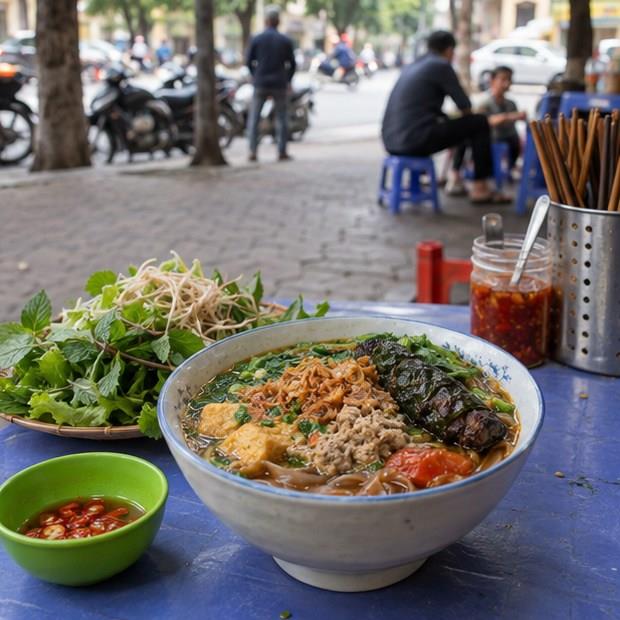
Water spinach, water mimosa, spring onion, betel leaf and tomato give the green and red, and balance the richness. Betel-leaf fritters or fish cakes add a grilled aroma, but every shop makes its own choices. Vegetables should be blanched just until done and still fresh; too many toppings fill the eye but can bury the noodles.
The soup bowl and the mixed bowl
The soup version emphasises the hot crab broth; the mixed version concentrates on the noodles, the toppings and a sauce, with a separate bowl of broth depending on the shop. These are not two opposing dishes but two ways of arranging the same ingredients. A first-time diner should ask about the heat, the toppings and the portion, since what counts as “the full bowl” varies.
From a homely meal to the food-tour map
Banh da cua has helped turn Hai Phong's eating-shop culture into a travel experience. That appeal creates livelihoods, but it also leads easily to showy portions and shops chasing photographs. A memorable place usually has consistent noodles, a clean-tasting broth and honest service rather than a bowl piled high with toppings.
Why does a dish come to identify a region?
A speciality is not made by a list of ingredients alone. Climate decides the season, soil affects the quality of the produce, and markets, roads and the rhythm of work shape how it is prepared. Techniques repeated across generations give a dish its own “voice”, even though every household keeps different proportions and knacks. So a local version should be seen as a living tradition, not a closed recipe.
Fame brings its own problems. As demand grows, a product may be made in a hurry, given a longer shelf life, or labelled with a place name despite having no connection to the craft village. Buyers can help protect its value by asking where it was made, reading the ingredients, choosing transparent producers and accepting a price that reflects the work. An unusually cheap gift is sometimes a sign to look more closely rather than a bargain.
Tasting so as to recognise the structure of the flavour
Do not rush to add a lot of dipping sauce, chilli or sugar at the first bite. Look at the natural colour, smell the main aroma, feel whether it is soft, chewy, crisp or firm, and only then try it with what comes alongside. This helps you recognise the role of each element and understand why local people arrange the dish as they do. Temperature matters too: something just cooked smells and feels different from the same thing gone cold or carried a long way.
There is no single yardstick for taste. Someone used to sweetness may find central dishes salty; someone who likes it light may find fermented food too strong. Instead of ranking the “best”, ask which village, shop or household this version comes from, and whether it was made to eat straight away or to take away as a gift. A specific question opens a more interesting story than an absolute verdict on a whole region.
Things that are easily misunderstood
Banh da cua uses sea crab
The name refers to the field crab in the traditional broth; seafood may be an addition in some versions.
The more toppings, the more authentically Hai Phong
The core is still the red noodles, the crab broth and the balance; toppings are no substitute for technique.
Suggestions for trying it
- Taste the broth before adding calamansi or chilli.
- Ask whether it is the soup or the mixed version.
- Order toppings according to your appetite.
- Eat while the noodles are freshly blanched, to keep the bite.
- Watch out for small bones or bits of crab shell.
- Ask what is in the fritters if you have allergies.
- Choose a shop that keeps the live-crab area separate from cooked food.
Buying it and taking it home as a gift
Prefer products that carry the maker's name, an address, a production date, a use-by date and clear storage instructions. For goods sold loose, ask when they were made, how they were transported and what signs would show they are no longer good. Attractive packaging helps on a long journey but does not replace the quality inside; equally, a rustic look does not automatically prove something is handmade or safe.
Buy an amount that suits the distance and how well you can keep it. Fresh items containing meat, seafood, broth or raw vegetables need temperature control; dried goods and sweets still have to be kept away from damp, heat and insects. If you are flying or crossing an area with quarantine rules, check the airline's rules and those of your destination. Do not vacuum-seal something unsuitable and then assume it can sit at room temperature.
A note on food safety
Field crabs must be cleaned and cooked through; do not use dead crabs or ones of unknown origin. Anyone allergic to crustaceans must avoid the broth as well, even without ordering crab toppings. The bowl should be eaten hot; vegetables and utensils must be kept clean and separate from raw food.
Anyone allergic to prawn, crab, legumes, sesame, peanut, dairy, egg or anything else needs to ask specifically, since these can be in the filling, the broth and the dipping sauce. Young children, older adults, pregnant people and those with weakened immunity should favour food that is cooked through, stored properly and eaten soon. If something smells odd, is unusually slimy, has swollen packaging, or has been out at room temperature for an unknown length of time, the safe choice is not to eat it.
Conclusion
Banh da cua from Hai Phong is appealing because ordinary components are arranged with real character: red noodles, crab broth, green vegetables and the scent of betel leaf. Tasting a well-proportioned bowl, rather than chasing a pile of toppings, makes the port city's character much easier to see.


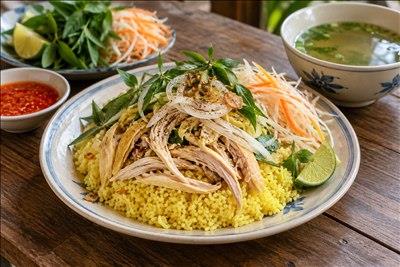 How to make Hoi An chicken rice: fluffy grains, juicy chicken and a crisp onion salad
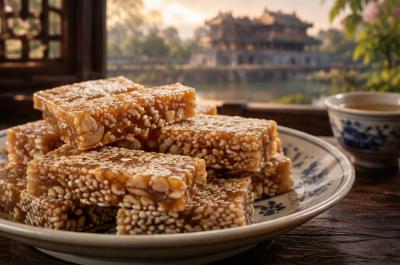 Me xung from Hue: chewy malt, toasted sesame and the slow rhythm of tea
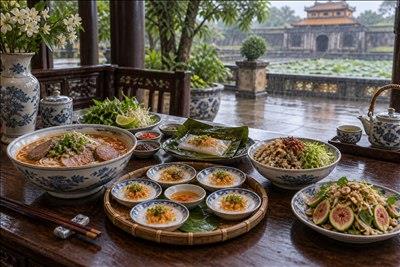 The food of Hue: where the royal kitchen, everyday dishes and small street stalls meet
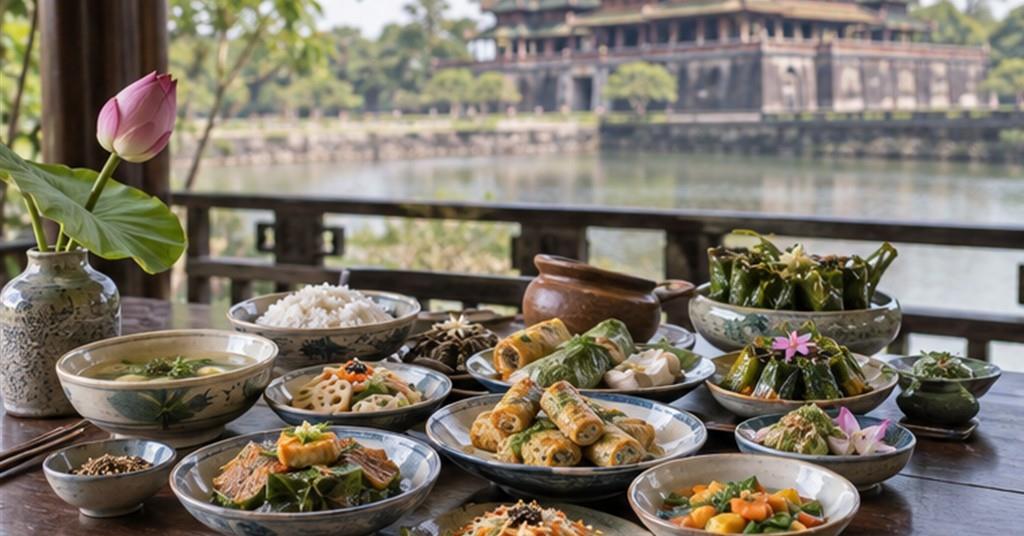 Hue vegetarian food: why is something so plain still so layered in flavour?
 How to cook hu tieu Nam Vang: a clear broth, sweet from the bones, with noodles that hold
 How to cook bun rieu cua: fragrant, with the crab curd in soft clouds and a clear broth
 Fish sauce on the table across the three regions: from how it is mixed to what it is eaten with
 Cao Bang banh cuon: a thin rice sheet eaten with a bowl of hot broth on the frontier
Đăng nhập để bình luận: / Sign in to comment: