



How to make che khuc bach: soft milk cubes, a clean syrup and fresh fruit
Good che khuc bach has milk cubes that wobble softly, cut cleanly and are not rubbery, a lightly fragrant syrup and fruit that is still fresh. This recipe for eight explains how to bloom the gelatine properly, how to control the temperature of the milk mixture, and which enzyme-bearing fruit to keep separate so the dessert neither weeps nor fails to set.
Quick facts
- Serves: 8 bowls.
- Preparation: 35 minutes.
- Chilling: at least 4 hours.
- Difficulty: medium.
- Serve it cold and do not leave it out for long.
Ingredients
- 500 ml of cream and 500 ml of unsweetened fresh milk.
- 18-22 g of powdered or leaf gelatine, depending on how firm you want it.
- 100-130 g of sugar for the milk mixture.
- 1.2 litres of water and 180 g of rock sugar.
- Pandan leaves or fresh longan.
- Lychee, strawberry, grapes or peach.
- Toasted flaked almonds.
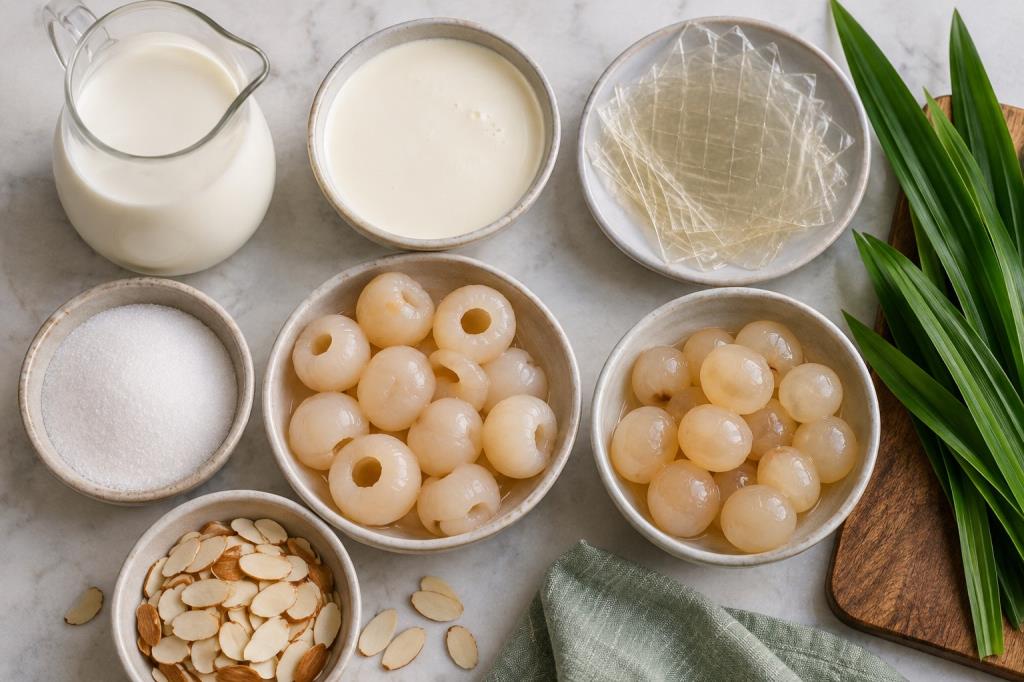
Choosing the ingredients decides the quality
The milk and cream should be within date, kept cold and free of any sour smell. The gelatine should be in an unopened packet and not damp; read the ratio on the label, because bloom strengths differ. The fruit should be just ripe and unbruised. Fresh pineapple, kiwi, papaya and ginger carry enzymes that can stop the gelatine setting if they are mixed raw into the milk cubes.
Prefer ingredients with a clear origin, still within their date and kept at the right temperature. Frozen food should be thawed in the fridge, in the microwave or under cold running water, not left on the worktop for hours. Vegetables eaten raw must be washed under clean running water, drained and kept apart from raw meat and fish.
Preparing and laying out before you turn on the heat
Weigh the gelatine on a digital scale. For powder, sprinkle it evenly over about five times its weight in cold water and let it bloom for 10 minutes; for leaves, soak them in cold water and squeeze them gently. Prepare a clean container, lined with film if you want to lift the block out easily. Wash and drain the fruit, and cut it only close to serving.
Weigh the seasonings into small bowls and keep the utensils for raw and cooked food in two separate areas. Have a clean plate ready for the finished items; never put cooked food back on a plate that has held raw meat or seafood. Read all the steps through first, so the parts that have to be done quickly are not interrupted.
Step 1: warm the milk base
Heat the milk, cream and sugar over a low flame to about 55-65C, stirring until dissolved but never letting it boil. Too much heat makes the milk taste less fresh and forms a skin. Turn off the heat before you add the gelatine.
Step 2: dissolve the gelatine completely
Add the bloomed gelatine to the warm mixture and stir gently until it is clear with no grains left. Never boil gelatine. Strain it through a sieve into the container and skim the foam off the top so the set block is smooth.
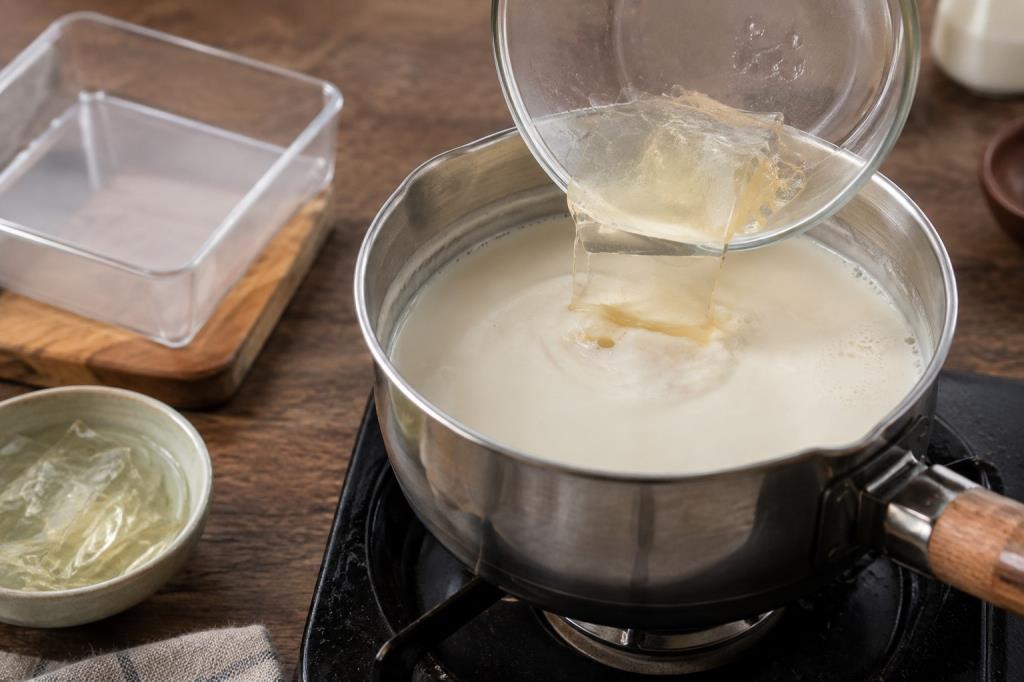
Step 3: chill it for long enough
Let the container cool a little within the safe window, then cover it and put it in the fridge for at least 4 hours. Do not move it to the freezer to force it to set, because ice crystals wreck the texture. Cut it only once the block has set completely.
Step 4: cook a clean syrup
Heat the water, rock sugar and pandan until the sugar dissolves, simmer gently for a few minutes, then remove the leaves, cool it quickly and keep it cold. If you are using longan, add the cleaned fruit while the syrup is still moderately hot, and do not cook it long enough to go mushy.
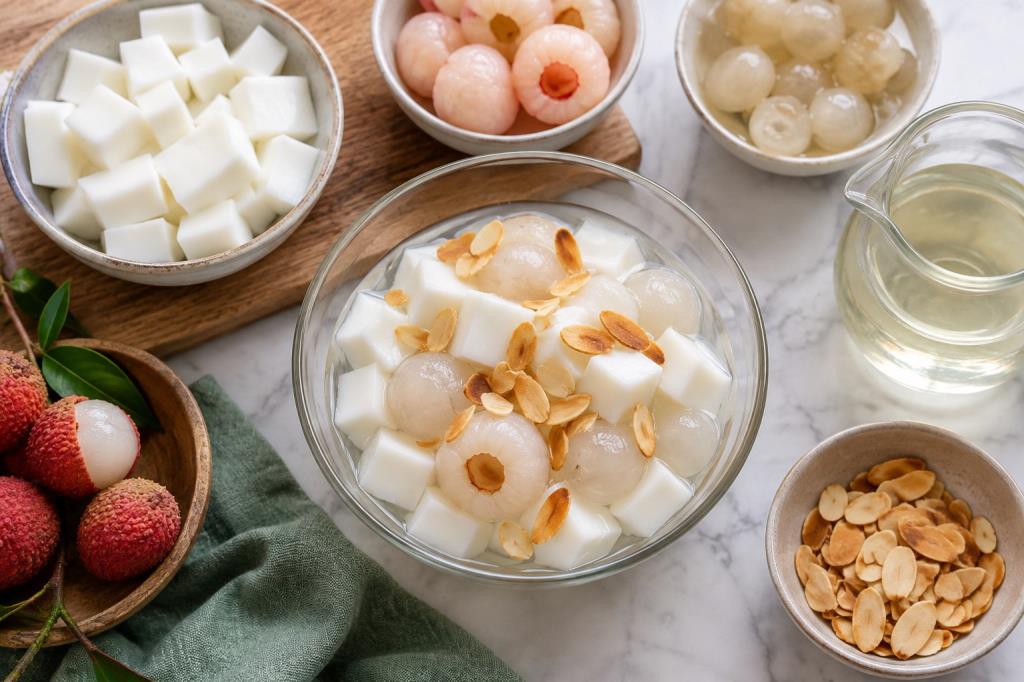
Step 5: assemble the bowls close to serving
Cut the milk block with a warm knife or a crinkle cutter, divide it between bowls with the fruit, ladle over the cold syrup and scatter the toasted almonds last. Do not mix sour fruit into the container of milk cubes in advance.
Small tips that make the dish more consistent
- Weigh the gelatine accurately.
- Always bloom the gelatine in cold liquid.
- Do not boil the milk base.
- Stir gently to keep the foam down.
- Strain it before chilling.
- Do not use the freezer to force the set.
- Cook the syrup separately.
- Cool the syrup before ladling it over.
- Cut the fruit close to serving.
- Scatter the almonds last.
Every kitchen has a different hob power, pan thickness and level of moisture in the ingredients. The times are therefore only a reference; judge by colour, smell, tenderness, the rate of evaporation and the core temperature together. Note down the amount of liquid, the size of the equipment and the actual timings so it is easier to repeat next time.
Common mistakes and how to rescue the dish
The milk cubes will not set
There was not enough gelatine, it was not bloomed, or it met enzymes from fresh fruit. You can warm the mixture gently again, add more bloomed gelatine and chill it; do not boil it.
The milk cubes are rubbery
Too much gelatine was used. Cut them smaller and add more syrup and fruit; next time reduce the amount according to the bloom strength.
There is a lot of foam on the surface
It was stirred too hard or poured from too high. Skim the foam while it is still warm, strain it and pour close to the surface of the container.
The syrup is cloudy or sour
The fruit was cut too early, bruised, or left soaking too long. Replace the syrup with a fresh batch and only assemble the bowls just before eating.
A systematic way to taste and adjust
Taste a spoonful that has both liquid and a representative piece of the ingredients, let it cool for a few seconds and then work out whether the dish is short on salt, sweetness, acidity, richness or aroma. Change only one element at a time and wait until the seasoning has dissolved completely before tasting again. Fish sauce, salt, sugar and acid should go in a small amount at a time; this is far safer than trying to fix everything in one go.
If the dish is too salty, the real answer is to add suitable unsalted ingredients or liquid; adding sugar only masks the sensation and does nothing to the sodium. If it is too sweet, increase the liquid slightly and rebalance the salt before adding acidity. If the spices are harsh, take the solids out and let the dish rest rather than carrying on cooking it for a long time.
Controlling the heat and the equipment
The equipment has to suit the quantity: too wide a pot boils the liquid away quickly, too small a pot leaves the ingredients piled on top of each other, and a thin pan creates hot spots that burn. Heat it in a controlled way, watching the sizzle, the size of the bubbles and the rate of evaporation rather than just the position of the dial. When you need to top up a hot dish, use hot water so the cooking is not interrupted.
A food thermometer is a useful checking tool. Put the probe into the thickest part, away from bone and the base of the pan, and clean it before and after each reading. Poultry needs to reach 74C, minced meat 71C and fish 63C; for a dish where a direct reading is not practical, make sure every raw component is cooked through and the dish is held at a safe temperature.
Scaling the recipe up or down
Doubling means weighing the gelatine at exactly the same ratio but dividing the mixture between shallow containers so it cools evenly. The syrup can simply be scaled up with the servings; the fruit and almonds are prepared bowl by bowl.
When you double the recipe, use wider equipment or work in batches so the food meets the heat in the same way as in the original recipe. Start strong seasonings at about 1.7 times and taste again, because the surface area for evaporation does not scale linearly. When you halve it, switch to a smaller pot to keep the depth of liquid and stop it drying out too quickly.
A schedule so the dish is ready on time
The stock, the base sauce and anything that needs marinating can be done in advance, following the storage guidance. The herbs, the frying, grilling, griddling and the assembly should be left until close to the meal. If you are cooking several dishes, work backwards from serving time: leave whatever has to be crisp or hot until last, and finish the cold work and the preparation first.
While you cook, clear away any utensil that has touched raw food straight away, change a dirty cloth and keep the worktop dry. For each batch, use the same ladle or weigh the portions so the results are even. Never taste with a spoon and then put that spoon back into the pot.
Serving and presentation
Use chilled bowls or glasses, set the white milk cubes against brightly coloured fruit and ladle over just enough syrup. The toasted almonds go on top so they stay crisp.
Warm the plates or bowls for a hot dish and chill them for a cold dessert. Leave some space around the food so the main components are easy to see. Herbs, nuts, fried shallots or a finishing sauce should only go on just before serving, to keep their colour and texture.
Preparing ahead and storing
Keep the milk cubes and the syrup separately, covered in the fridge, and use them within 3-4 days; cut fruit should be eaten sooner. Do not leave a dairy dessert at room temperature for more than 2 hours, or 1 hour when it is above 32C.
Cooked food should not stay at room temperature for more than 2 hours, or more than 1 hour when the surroundings are above 32C. Divide leftovers into shallow containers so they chill quickly and use them within 3-4 days; when reheating, bring the whole portion to 74C. Only reheat what you are going to eat, and throw away anything with an odd smell, sliminess or other unusual sign rather than tasting it.
Allergy and safety notes
The dessert contains dairy, and gelatine of animal origin should be declared. Almonds are a tree nut allergen. You can leave the almonds out, but you still have to avoid cross-contact from trays and utensils.
Pregnant women, young children, older people and anyone with a weakened immune system should eat food that is cooked right through, and should be especially careful about cross-contamination. Read the label on packaged seasonings, as fish, crustaceans, soy, wheat, egg, milk, sesame or peanut can appear in ready-made sauces.
A checklist for the finished dish
- The raw components have reached a safe temperature with no undercooked areas left.
- It smells as it should, with no old oil, burnt or oddly sour note.
- Salt, sweetness, acidity and richness are balanced when tasted at eating temperature.
- The main texture is what you were aiming for: tender without falling apart, crisp without being raw.
- The serving plate and the tongs are clean and have not touched raw food.
- The garnish went on close to serving time and the allergens have been announced.


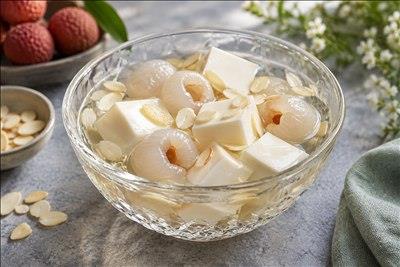 How to make che khuc bach: soft milk cubes, a clean syrup and fresh fruit
 Trang Bang dew-dried rice paper: a supple sheet made by daytime sun and night dew
 Cham meals on the south-central coast: sun, wind, the farming year and layers of exchange
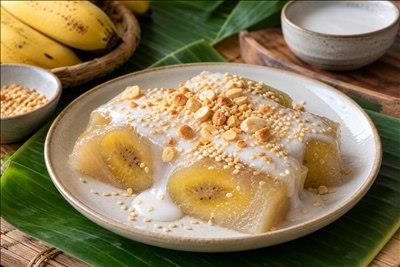 How to make steamed banana cake: chewy translucent batter and coconut sauce that does not split
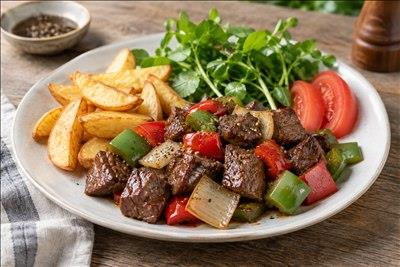 How to make bo luc lac: tender juicy beef, a well-judged sauce and crisp potatoes
 Binh Dinh cha ram tom dat: small crisp rolls from the coast
 How to make seafood fried rice: separate grains, wok aroma and never soggy
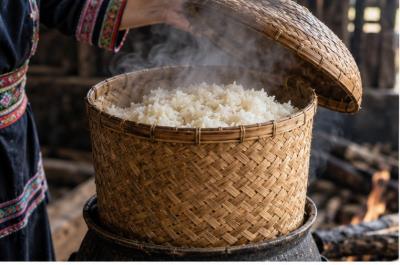 Thai kitchens in the northwest: upland sticky rice, folded grilled fish and cham cheo beside the stilt house
Đăng nhập để bình luận: / Sign in to comment: