



How to cook mi Quang with chicken: deep flavour, noodles that hold and just enough broth
Mi Quang is not a noodle dish swimming in broth. A proper bowl has chewy noodles, chicken infused with turmeric and shallot, and just enough strongly flavoured broth to come halfway up the noodles, finished with roasted peanuts, raw herbs and sesame rice crackers. The recipe below serves six and concentrates on the order of the chicken, the broth and the way the bowl is built.
Quick facts
- Serves: 6 bowls.
- Preparation: 45 minutes.
- Marinating the chicken: 30 minutes.
- Cooking: 60-75 minutes.
- Difficulty: medium.
Ingredients
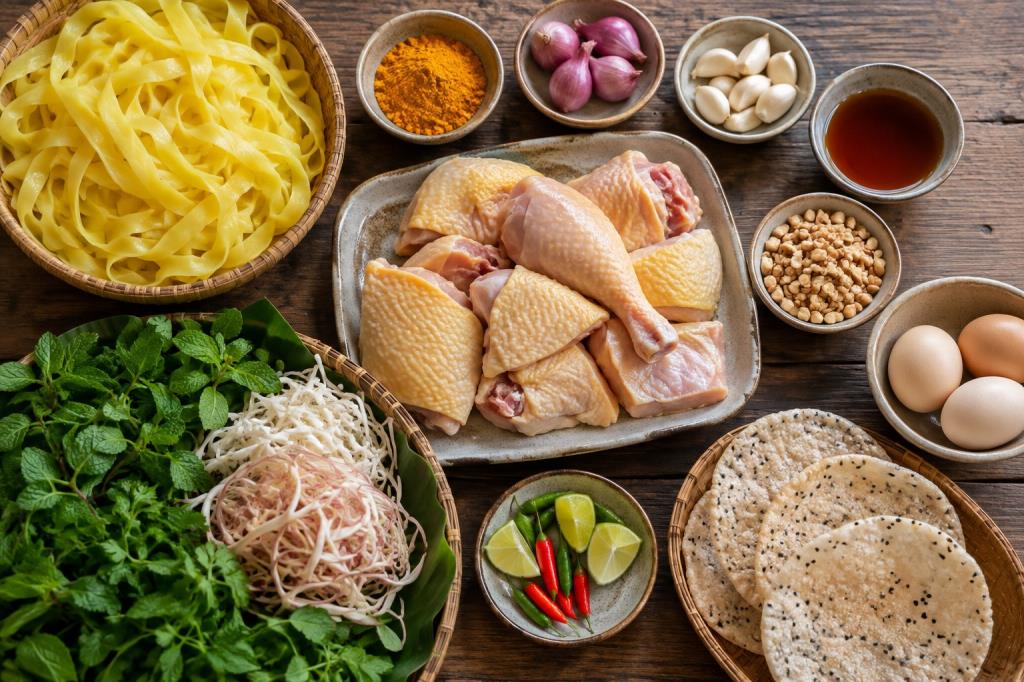
- 1.3 kg of free-range chicken, cut into pieces.
- 1 kg of fresh mi Quang noodles.
- 1.8 litres of water or light chicken stock.
- 4 shallots, 4 cloves of garlic, 30 g of fresh turmeric.
- 45 ml of fish sauce, 15 g of sugar, salt and pepper.
- 6 boiled eggs or quail eggs, optional.
- 100 g of roasted peanuts; spring onion.
- Banana blossom, lettuce, mint, bean sprouts, lime and sesame rice crackers.
Choosing and preparing the ingredients
Free-range chicken has firm flesh that suits this broth; with a commercially raised bird, shorten the time. Thigh and wing pieces stand up to cooking better than breast. Fresh noodles should still be springy with no sour smell. Fresh turmeric gives a clear aroma, but use it in moderation so it does not turn bitter.
Marinate the chicken with pounded turmeric, shallot and garlic, 30 ml of fish sauce, sugar and pepper for 30 minutes in the fridge. Slice the banana blossom thinly, steep it briefly in weak lime water, rinse it and drain. Peel the roasted peanuts and crush them coarsely; do not grind them to powder.
Step 1: sear the chicken
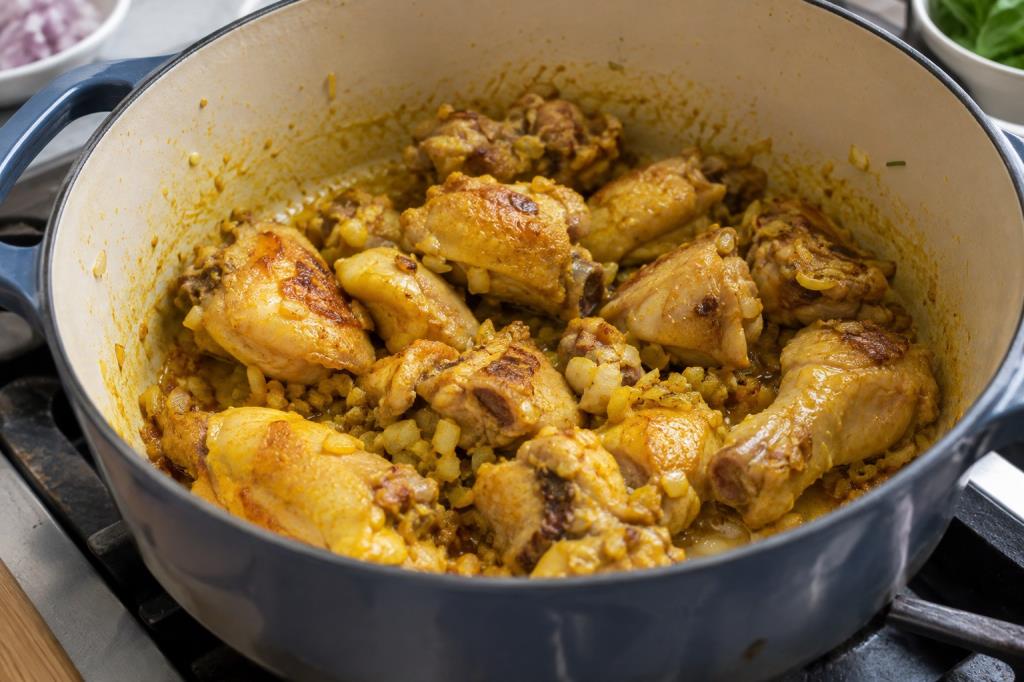
Heat the pot, add oil and lay the chicken out in a single layer. Sear until the skin is slightly golden, and only then pour in the marinade. Do not stir constantly; keep a medium heat so the bits of turmeric and shallot do not burn.
Step 2: cook the broth
Add hot water just to cover the chicken, bring it to the boil and then lower the heat. Skim the scum and cook for 35-50 minutes depending on the bird. The broth should be stronger than a soup but not as salty as a dipping sauce; the chicken must reach at least 74C in the thick part.
Step 3: finish with the eggs and seasoning
Add the boiled eggs for the last 10 minutes so they take up a little colour. Season with the rest of the fish sauce, salt and sugar once you know the final volume of liquid. If the colour is pale, add turmeric oil fried separately rather than tipping in raw turmeric powder.
Step 4: deal with the noodles
Blanch the noodles in portions in a separate pot of water, just until hot, and shake them thoroughly dry. Do not cook them in the broth pot, as the starch clouds it and the noodles soak up all the liquid. If the noodles are already soft, a quick rinse in hot water is enough.
Step 5: build the bowl
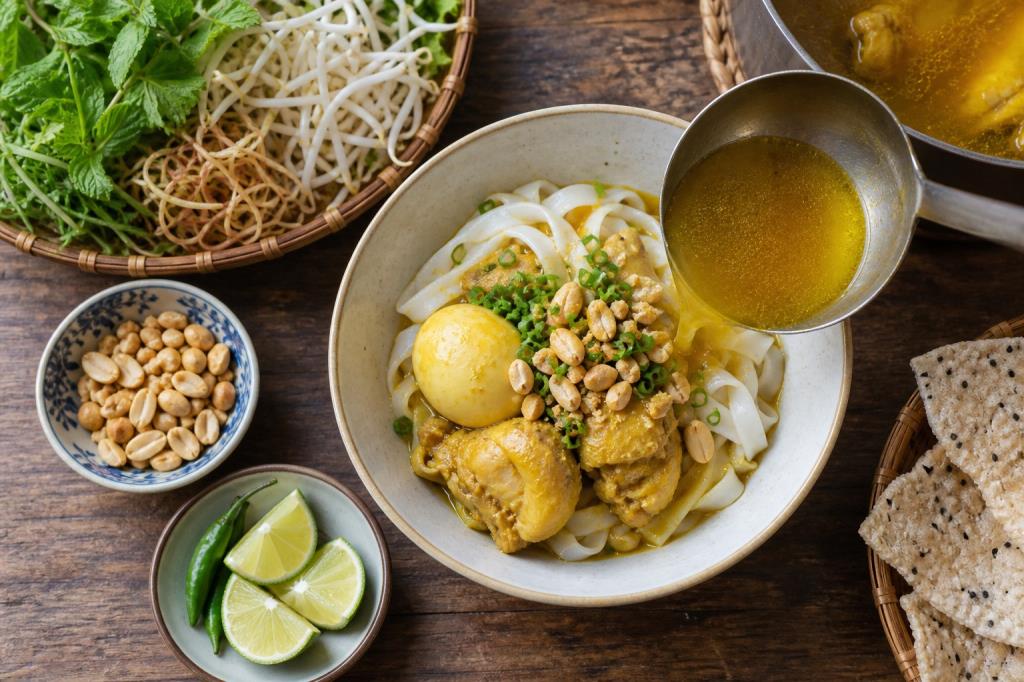
Put the base of raw vegetables, the noodles, the chicken and the eggs into the bowl. Ladle the broth in to about a third or half the height of the noodles, then scatter the peanuts, spring onion and broken crackers. Do not flood it the way you would a bowl of pho.
Step 6: adjust as you serve
Keep the broth at a gentle simmer, with the noodles and vegetables in their own area. Work two bowls at a time so the noodles do not sit waiting. Put the lime, chilli and fish sauce on the side so each person can adjust.
Ten small tips that are easy to apply
- Cut the chicken into even pieces.
- Set the breast aside to add later if you need to.
- Use turmeric in moderation.
- Sear the skin before adding the liquid.
- Skim the scum, but do not stir hard.
- Do the final seasoning once the liquid has reduced.
- Blanch the noodles in a separate pot.
- Shake the noodles completely dry.
- Ladle on a moderate amount of broth.
- Scatter the peanuts and crackers just before eating.
Common mistakes and how to rescue them
The chicken is dry
The breast has been cooked too long. Lift it out early and let it rest in a little of the broth; next time add the breast after the thighs.
The broth is bitter
The turmeric or the shallot burnt. Move the part that is not stuck to the bottom into a clean pot, add light stock and season again.
The noodles have fallen apart
They were blanched too long or left sitting in the broth. Use a fresh batch, heat them only briefly and ladle the broth on at the moment of eating.
The bowl is too salty
Use less broth in the bowl, dilute the pot with light stock and taste again; do not try to fix it with sugar alone.
Organising the kitchen so the dish is ready on time
Read the whole recipe before you start, then weigh and sort the ingredients into groups: raw food, cooking seasonings, vegetables that are eaten as they are, and the finishing touches. A knife, board, pair of tongs or plate that has touched raw meat or seafood must not be reused for cooked food until it has been washed. Having a clean tray ready to receive the finished items saves you rushing at the last minute.
If you are cooking for a crowd, finish the parts that can be kept cold in advance, and leave the herbs, the frying or grilling and the assembly until close to the meal. Note down when each stage started, the actual temperatures and how much liquid you used. These small notes are more useful next time than adding seasoning by feel.
Scaling the recipe up or down
When cooking for a crowd, finish the pot of broth first, keep the chicken just hot and blanch the noodles round by round. Increase the liquid gradually so the flavour is not diluted; count the peanuts, vegetables and crackers per bowl.
When you double the recipe, choose a wider pot or pan rather than stacking the food in layers. Start strong seasonings at about 1.7 times and taste afterwards, because the surface area for evaporation and the saltiness of the ingredients do not scale linearly. When you halve it, switch to smaller equipment to keep the depth of liquid and the rate of heat transfer appropriate.
Serving and presentation
Mi Quang is eaten with raw vegetables, banana blossom, lime, green chilli and sesame rice crackers. Every bowl needs enough chicken, noodles, broth and something crisp; do not mix the vegetables into the communal pot.
Preparing ahead and storing
Store the broth, the chicken, the noodles and the vegetables separately. Fresh noodles are at their best on the day. Chill the chicken and the broth within 2 hours and reheat to 74C; the vegetables and peanuts should be fresh.
Cooked food should not sit at room temperature for more than 2 hours. Divide leftovers into shallow containers, chill them promptly and use them within 3-4 days; when reheating, bring the whole portion to 74C. Only reheat what you are going to eat, and throw the dish away if there is an odd smell, sliminess or anything unusual, rather than tasting it to check.
Allergy and safety notes
Fish sauce contains fish, peanuts are an allergen, and packaged crackers or noodles may be produced alongside wheat. Keep the peanuts entirely separate for anyone with a severe allergy.
Pregnant women, young children, older people and anyone with a weakened immune system should eat food that is cooked right through and avoid cross-contamination. Always read the label on packaged seasonings, as fish, shrimp, soy, wheat, egg, milk or peanut can turn up where you would not expect them.
Checking the dish before you serve it
Do not rely on the times given in a recipe alone, because the size of the ingredients, the type of pot and the power of the hob all differ. Check the safe temperature, the tenderness, the amount of liquid, the colour and the smell together. Taste a small amount after letting it cool for a few seconds; food that is too hot usually makes salt and sweetness harder to judge. Add seasoning only in small amounts, stir or turn it just enough, and wait for the flavour to settle before seasoning again.
Move the finished dish to a clean bowl or plate, wipe the rim neatly and add the garnish close to serving time. If the dish has to wait, keep it hot properly but avoid carrying on with a strong heat, which dries the meat, softens the vegetables or thickens the sauce. Note down the quantities you actually used, the timings and the adjustments that worked, so the next attempt is more consistent.
Cleaning up after cooking
Let the oil or the pot cool to a safe temperature before you deal with it, but put the cooked food away within the proper time before you tidy the kitchen. Wash up working from the clean areas towards the ones that touched raw food. Cloths and sponges that have picked up meat juices need washing or replacing, and the worktop, cupboard handles and tap are worth wiping down too, as they are often touched during preparation.


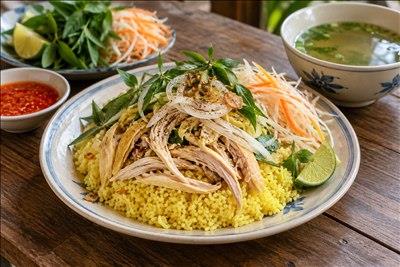 How to make Hoi An chicken rice: fluffy grains, juicy chicken and a crisp onion salad
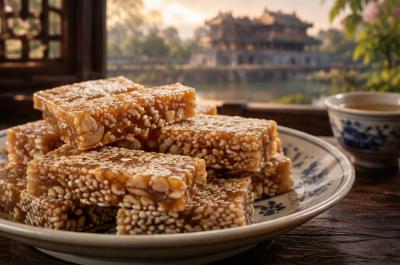 Me xung from Hue: chewy malt, toasted sesame and the slow rhythm of tea
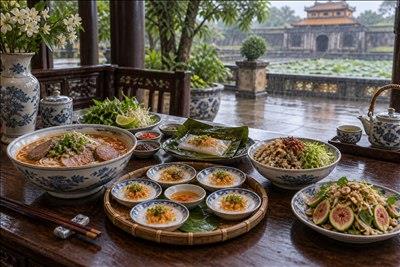 The food of Hue: where the royal kitchen, everyday dishes and small street stalls meet
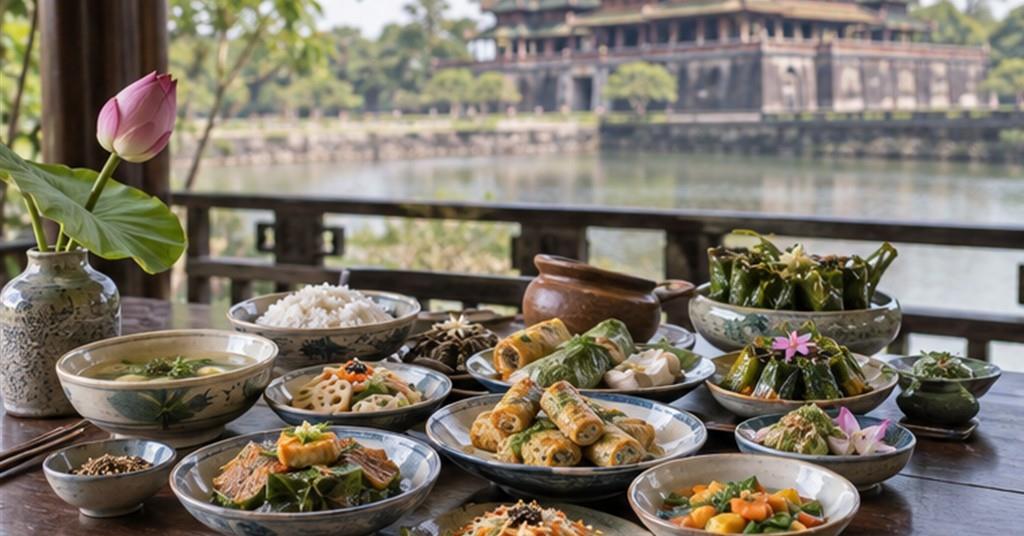 Hue vegetarian food: why is something so plain still so layered in flavour?
 How to cook hu tieu Nam Vang: a clear broth, sweet from the bones, with noodles that hold
 How to cook bun rieu cua: fragrant, with the crab curd in soft clouds and a clear broth
 Fish sauce on the table across the three regions: from how it is mixed to what it is eaten with
 Cao Bang banh cuon: a thin rice sheet eaten with a bowl of hot broth on the frontier
Đăng nhập để bình luận: / Sign in to comment: