



How to make southern banh xeo: thin, crisp for longer and not greasy
A good southern banh xeo has a thin shell with a crisp, lacy edge and a middle firm enough to hold the prawns, pork and bean sprouts without being as thick as a pancake. The yellow comes from turmeric, and the crispness comes from the ratio of flour to liquid, the heat of the pan and putting the lid on at the right moment. The recipe below makes about 10-12 crepes of 24 cm, with the dipping sauce and tips for keeping them crisp when you are feeding a crowd.
Quick facts
- Serves: 5-6 people.
- Preparation: 45 minutes.
- Resting the batter: 30-60 minutes.
- Cooking: 35-45 minutes.
- Difficulty: medium.
For the shell
- 400 g of rice flour.
- 40 g of cornflour or tapioca starch.
- 500 ml of water, with another 50-100 ml to adjust.
- 300 ml of thin coconut milk.
- 1 teaspoon of turmeric powder.
- 4 g of salt, 1 teaspoon of sugar.
- 4 spring onions, finely sliced.
Filling and vegetables
- 300 g of medium prawns, cleaned.
- 300 g of pork belly, thinly sliced.
- 400 g of bean sprouts, well drained.
- 150 g of steamed mung beans, optional.
- Lettuce, mustard greens, herbs, cucumber.
- Cooking oil; pickled carrot and radish.
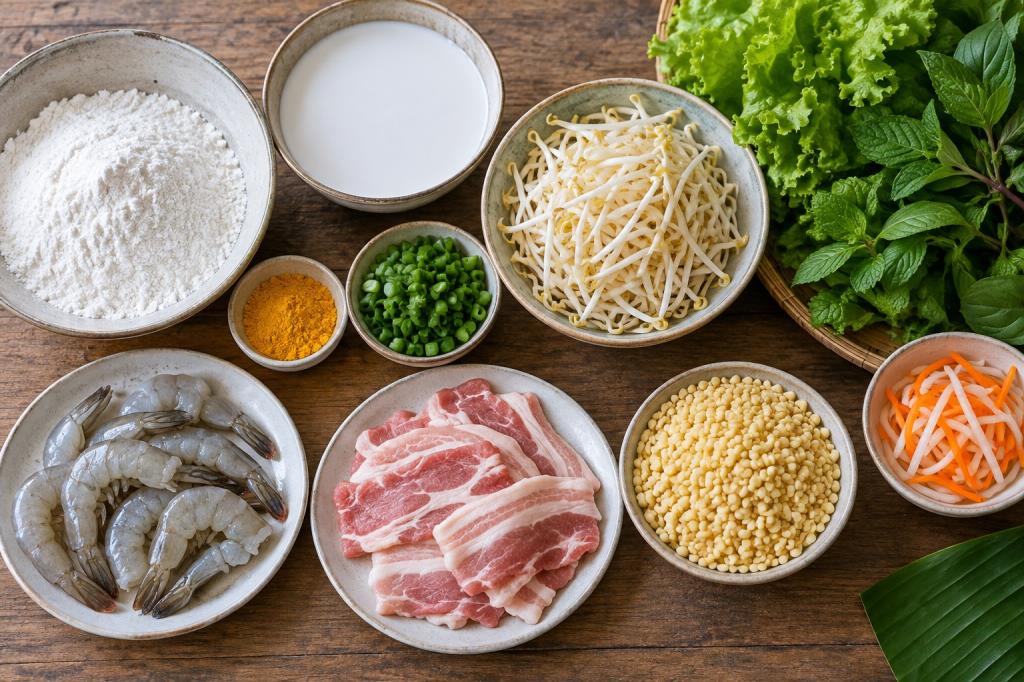
Mixing a lump-free batter of the right consistency
Mix the rice flour, cornflour, turmeric, salt and sugar. Pour the water in stages, stirring from the middle outwards until smooth, and only then add the coconut milk. Strain it through a sieve if there are still lumps. The right batter is thinner than pancake batter: it runs in a continuous stream and coats the pan in a thin film. Too thick gives a heavy crepe, too thin and the shell tears.
Rest the batter for 30-60 minutes so the flour absorbs the water. Stir from the bottom before pouring, as it settles. Add the spring onion after the rest so it stays a good green. Make one test crepe and adjust: if the shell is thick and does not spread, add water 15 ml at a time; if it keeps tearing, mix in a spoonful of rice flour dissolved separately.
Preparing a clean filling with little liquid
Devein the prawns, rinse them quickly and pat them thoroughly dry. Slice the pork 2-3 mm thick. Marinate the prawns and pork separately with a little fish sauce and pepper for 10-15 minutes; do not use much sugar, which burns before the crepe crisps. Wash the bean sprouts and drain them completely. A filling that is still wet drops the temperature of the pan and leaves the middle of the crepe soggy.
Stir-fry the pork just until it changes colour, then the prawns just until they firm up; do not cook them dry, as they carry on cooking inside the crepe. Use separate utensils for raw and cooked prawns and pork. If you want to cook them straight in the pan, the pieces must be thin, the heat sufficient and the filling up to a safe temperature before serving.
Preparing the vegetables and the dipping sauce
Pick over the vegetables, wash them well, spin or pat them completely dry and keep them cold. Large mustard green leaves are for wrapping; lettuce, fish mint, Thai basil and perilla build layers of aroma. Do not leave wet vegetables next to the crepes, as the moisture takes the crispness out of the edges. Prepare the pickled carrot and radish at least 30 minutes ahead.
Mix 60 ml of fish sauce, 180 ml of warm water and 60-80 g of sugar; let it cool, then add lime juice or vinegar, garlic and chilli. Taste it against the actual saltiness of your fish sauce. The dipping sauce should be gently sweet and sour, thin enough to soak into the vegetables without overpowering the crepe.
Choosing a pan and checking the heat
An aluminium pan or a seasoned cast-iron pan gives the best crisp edge; a non-stick pan is easier for a beginner. A diameter of 22-26 cm suits a home hob. Heat the pan over a medium-high flame for 2-3 minutes, add a little oil and swirl it around. A drop of batter should sizzle at once without browning instantly.
If the pan is not hot enough, the batter sits in a thick layer and soaks up oil. If it is too hot, the batter sets before you can swirl it, leaving big holes and burnt edges. After each crepe, wipe out the burnt bits of filling with paper held in a tool, never touching the pan directly with your hand.

Step 1: pour the batter thinly out to the edge
Put a few pieces of pork and some prawns into the pan and stir them until hot. Stir the batter, ladle out about 80-100 ml, pour it in from the rim and quickly tilt the pan in a circle so the batter coats it thinly. A clear sizzle is the sign of good heat. If there is thick batter in the middle, tilt the pan so the excess runs to the rim rather than adding a lot more oil.
Put the lid on for 45-60 seconds so the steam cooks the surface of the batter and the filling. Take the lid off, scatter the bean sprouts and mung beans over one half and cover again for 30-45 seconds. Do not add the sprouts at the start, as the liquid they release softens the shell. The timing varies with the pan and the hob; watching the surface lose its wet look matters more than the clock.
Step 2: take the lid off and crisp the edge
Take the lid right off so the steam escapes, and drizzle a teaspoon of oil around the sides. Lower to a medium heat and carry on for 2-4 minutes until the edge lifts away by itself and is flecked golden brown. Test gently with a thin spatula; if it is still stuck, wait rather than prising it hard.
The crepe crisps because water evaporates, so keeping the lid on throughout is a common mistake. Cooking with the lid off from the start, though, can leave the filling undercooked. The two-stage approach, a short cover to steam and then an open pan to dry, keeps the balance. Do not use too much oil; surplus oil makes the shell heavy and quickly cloying.
Step 3: fold the crepe and lift it out
Once the base is crisp, use a spatula to fold the half without filling over the other. Slide the crepe onto a wire rack or a plate with an airy lining, and do not stack hot crepes. Steam trapped between two of them softens the edges in a matter of minutes. If you are eating straight away, take it to the table with the vegetables.
Between crepes, let the pan come back up to heat for about 30 seconds and stir the batter. Adjust the flame if the colour is changing too fast. The first crepe is usually a test; note how much batter each ladle holds and what heat setting works, so the rest come out consistent.

Twelve tips for keeping them crisp
- Drain the filling and the bean sprouts thoroughly.
- Rest the batter, then stir from the bottom before each ladle.
- Use thin coconut milk and do not increase it too much.
- The pan has to be hot before you pour.
- Pour from the rim and swirl quickly.
- Do not try to cover the middle with a thick layer of batter.
- Cover briefly to cook the surface.
- Add the bean sprouts after the filling.
- Take the lid right off so the steam escapes.
- Only add a little oil around the edge.
- Wait for the crepe to release before folding it.
- Put it on a rack and do not stack them hot.
Common mistakes and how to rescue them
The shell is soft and greasy
The pan was not hot enough, the batter was too thick, or the lid was left on too long. Raise the heat moderately, take the lid off and let the steam escape, then move the crepe to a rack. Next time add a little water to the batter and use less oil. A crepe that has gone cold can be crisped again in a dry pan or a hot oven for a few minutes.
The shell tears when you fold it
The batter was too thin, there was too much filling, or the base was not cooked enough. Wait until the edge lifts, take some of the filling out and use a wide spatula. For the next batch, dissolve a spoonful of rice flour in a little water and stir it in, rather than sprinkling dry flour straight into the bowl.
The crepe is thick with no lacy edge
The ladle was too full, or you swirled too slowly. Use less batter and pour around the rim of a properly hot pan. A little oil on the sides of the pan helps form the crisp holes; there is no need to flood it with oil.
The filling is raw or rubbery
The pork was cut too thick, or the prawns were cooked too long. Slice the pork thin, stir-fry it briefly and check the temperature. A whole cut of pork needs at least 63C followed by a rest, while small pieces mixed into a filling should be taken to 71C; prawns are done when they are firm and opaque but not yet curled tight.
Cooking for a crowd
Use two pans of the same size if someone can help, portion the filling into small piles and keep the batter in a measuring jug. Hold the crepes on a rack in a 90-100C oven for as short a time as possible, with the door slightly ajar so the steam escapes. Do not cover them tightly with foil. The best approach is still to serve in rounds, so everyone gets a crepe straight from the pan.
Sensible variations
You can replace the pork with mushrooms and tofu for a meat-free version, but the dipping sauce also has to move away from fish sauce if it needs to be fully vegan. The prawns can be replaced with thinly sliced squid, which cooks quickly. If you use beer or sparkling water to help the texture, swap in part of the liquid just before you cook and do not let the mixture stand for long.
How to eat it and how to serve it
Break off a piece of the crepe, put it on a mustard green or lettuce leaf with herbs and pickles, roll it to a manageable size and dip. Do not pour the fish sauce over the whole crepe if you want to keep it crisp. Serve the vegetables in an airy basket, the dipping sauce in small bowls and the crepes on a woven tray or a wide plate.
Storage
Mixed batter should be used on the day and kept cold while it waits; stir it well before using it again. Cooked filling and leftover crepes go into the fridge within 2 hours. The crepes are best on the day, and can be reheated in a pan or the oven rather than a microwave. Reheat the filling to 74C and do not reheat it over and over.
Allergy notes
The dish contains prawns and fish sauce, and may contain coconut. Someone with a shellfish allergy cannot simply have the prawns taken out if the crepe was cooked with them. Some ready-made flour mixes contain wheat or additives, so read the label if you are avoiding gluten. Use a separate pan and utensils when serving anyone with a severe allergy.



 How to cook bun rieu cua: fragrant, with the crab curd in soft clouds and a clear broth
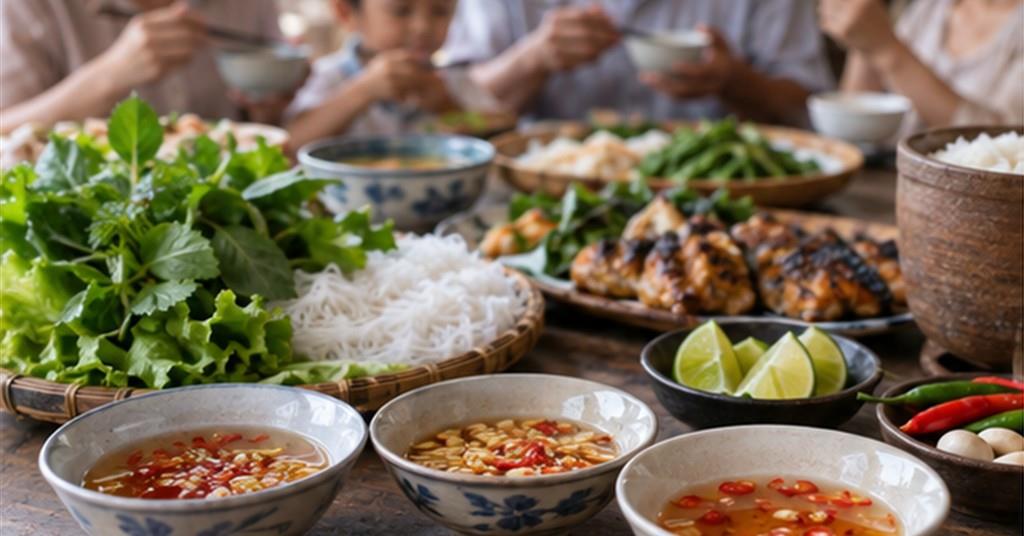 Fish sauce on the table across the three regions: from how it is mixed to what it is eaten with
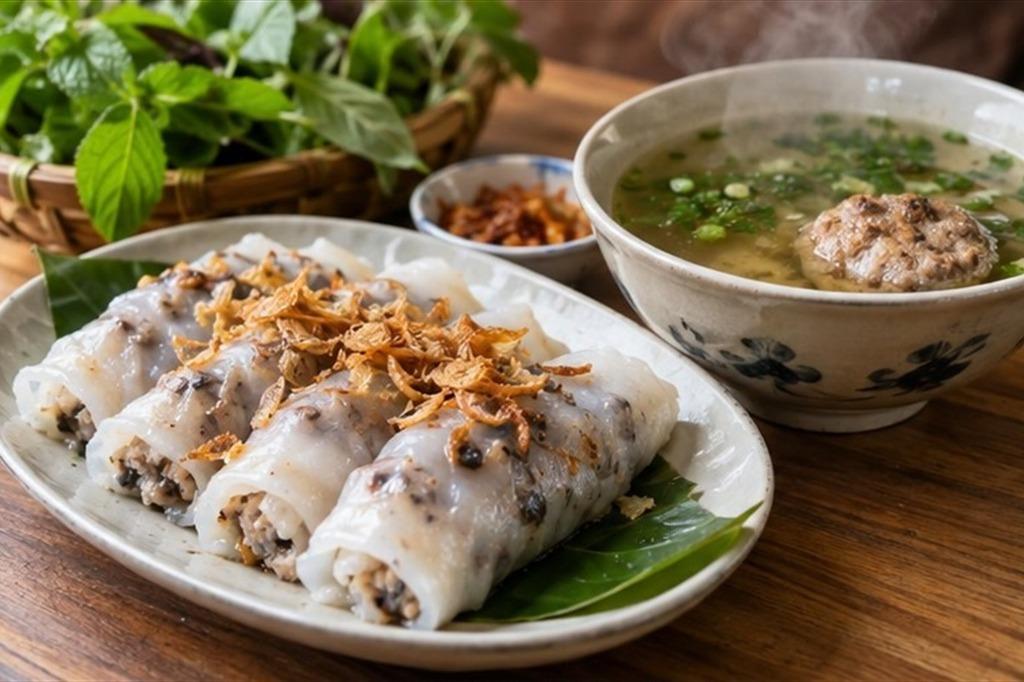 Cao Bang banh cuon: a thin rice sheet eaten with a bowl of hot broth on the frontier
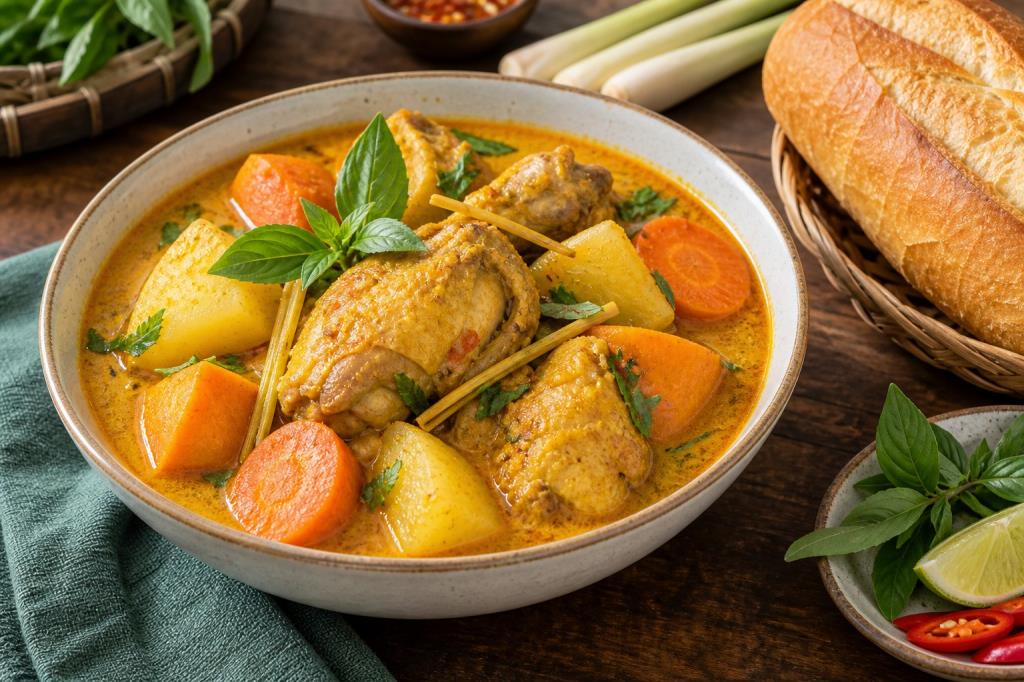 How to cook Vietnamese chicken curry: gently rich, tender meat and potatoes that hold together
 The coastal kitchen of central Vietnam: grilled fish, fermented sauce and getting through the storm season
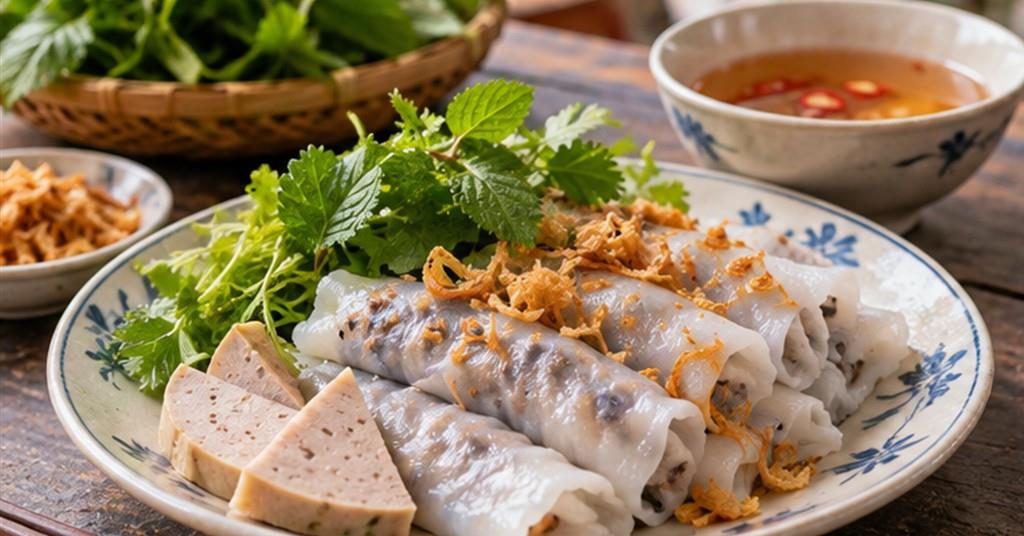 Bánh cuốn across the three regions: the same thin sheet, a different way of eating it
 How to make cha gio that stays crisp, with an evenly cooked filling and no split wrappers
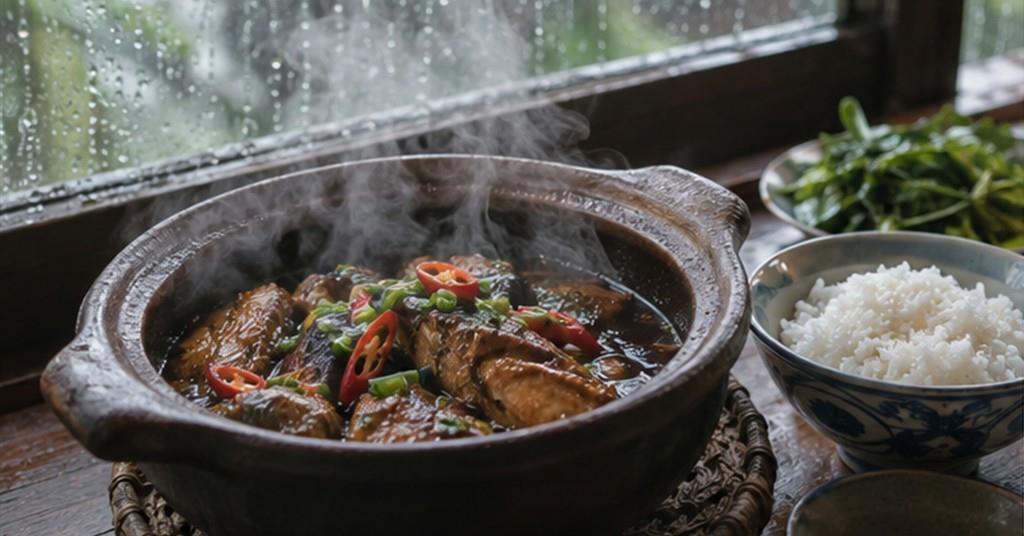 What is it about a Vietnamese rainy-season meal that people far from home never forget?
Đăng nhập để bình luận: / Sign in to comment: