



How to make steamed banana cake: chewy translucent batter and coconut sauce that does not split
A good steamed banana cake has naturally sweet pieces of banana set in a chewy, translucent batter with no soggy base, and a coconut sauce that is lightly thickened, fragrant and free of split oil. This recipe for a 20 cm tin concentrates on how ripe the bananas are, how much moisture there really is, and how to stop condensation dripping onto the surface.
Quick facts
- Serves: 8-10 pieces.
- Preparation: 25 minutes.
- Macerating the banana: 20 minutes.
- Steaming: 35-45 minutes.
- Difficulty: easy to medium.
Ingredients
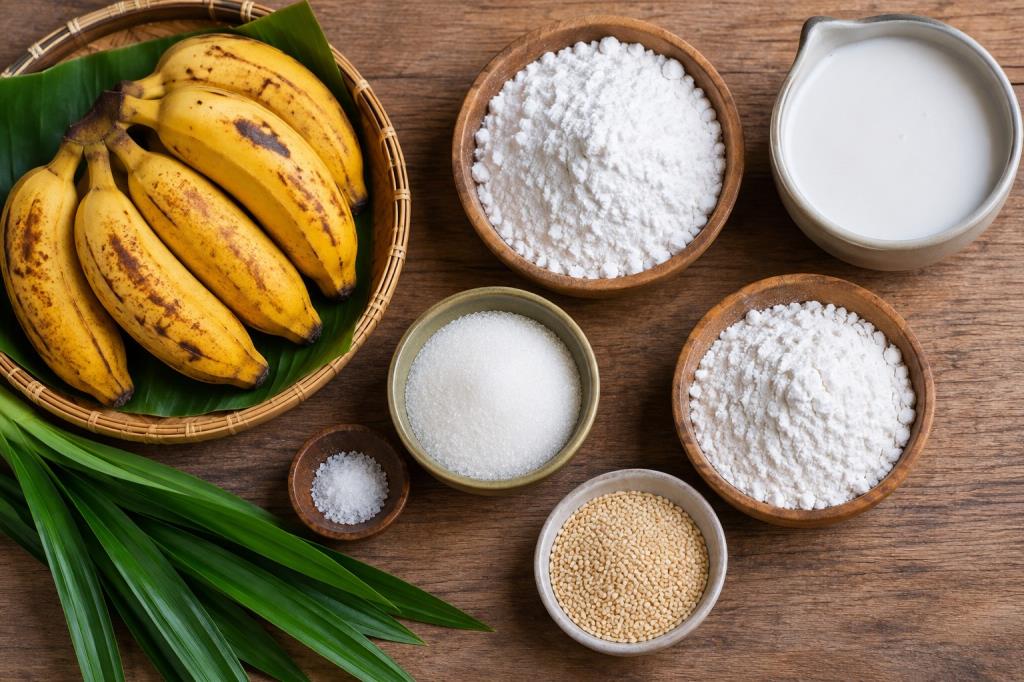
- 800 g of ripe saba bananas, peeled.
- 180 g of tapioca starch and 30 g of rice flour.
- 120-160 g of sugar, depending on how sweet the bananas are.
- 220 ml of water or thin coconut milk.
- 400 ml of coconut milk for the sauce.
- Salt, and vanilla if you like.
- Toasted sesame seeds or roasted peanuts.
Choosing the ingredients decides the quality
Saba bananas should be yellow and ripe with brown spots, fragrant and soft but not yet fermenting; green bananas make the cake astringent, while mushy ones weep and make the flour hard to balance. Fresh coconut milk smells cleanly rich, not sour. The flours must be dry, with no lumps or mould.
Prefer ingredients with a clear origin, still within their date and kept at the right temperature. Frozen food should be thawed in the fridge, in the microwave or under cold running water, not left on the worktop for hours. Vegetables eaten raw must be washed under clean running water, drained and kept apart from raw meat and fish.
Preparing and laying out before you turn on the heat
Cut the bananas into slices 7-10 mm thick, toss them gently with part of the sugar and the salt, leave them for 20 minutes and then measure the liquid they release. Mix the tapioca starch and rice flour with the liquid a little at a time until the batter is thick but pourable; count the banana juice too, and do not mechanically pour in all the water. Brush the tin with a thin film of oil and preheat the steamer.
Weigh the seasonings into small bowls and keep the utensils for raw and cooked food in two separate areas. Have a clean plate ready for the finished items; never put cooked food back on a plate that has held raw meat or seafood. Read all the steps through first, so the parts that have to be done quickly are not interrupted.
Step 1: mix in the banana without breaking it up
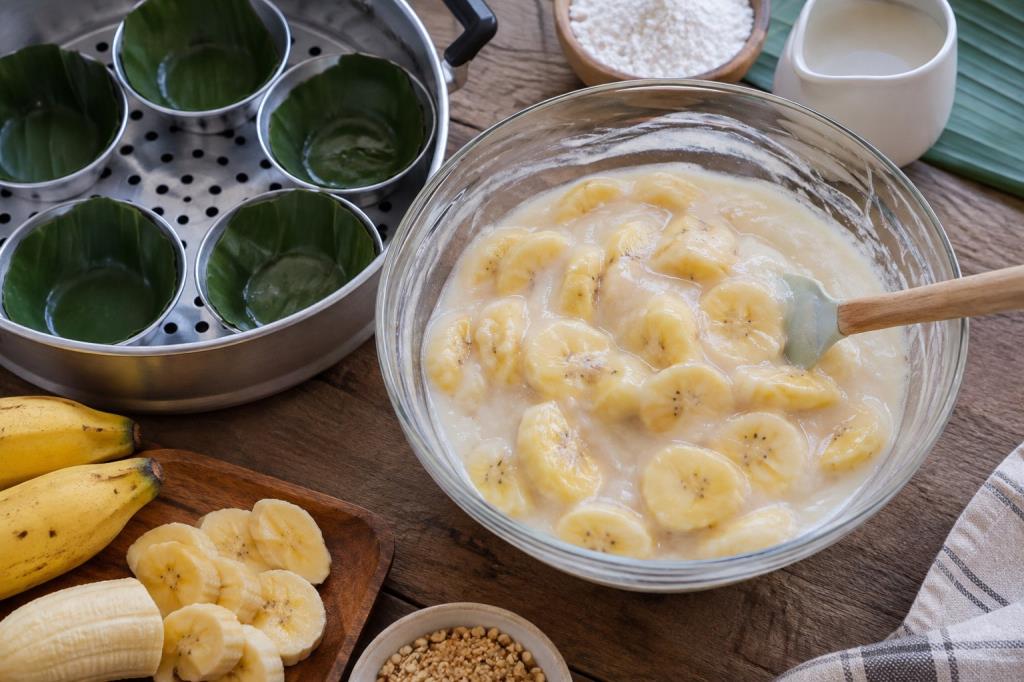
Fold the banana slices into the batter with a spatula, keeping a few good-looking slices back for the top. The batter should cling around the banana, not run like water. If the bananas released a lot of juice, reduce the liquid; only if it is too thick should you add more, a spoonful at a time.
Step 2: pour it into the tin at a moderate depth
Pour it about 3-4 cm deep so the steam penetrates evenly, and tap the tin gently to release bubbles without compacting the batter. Arrange the banana slices on top. If your tin is small, split it between two tins rather than making the layer deeper.
Step 3: steam it and control the condensation
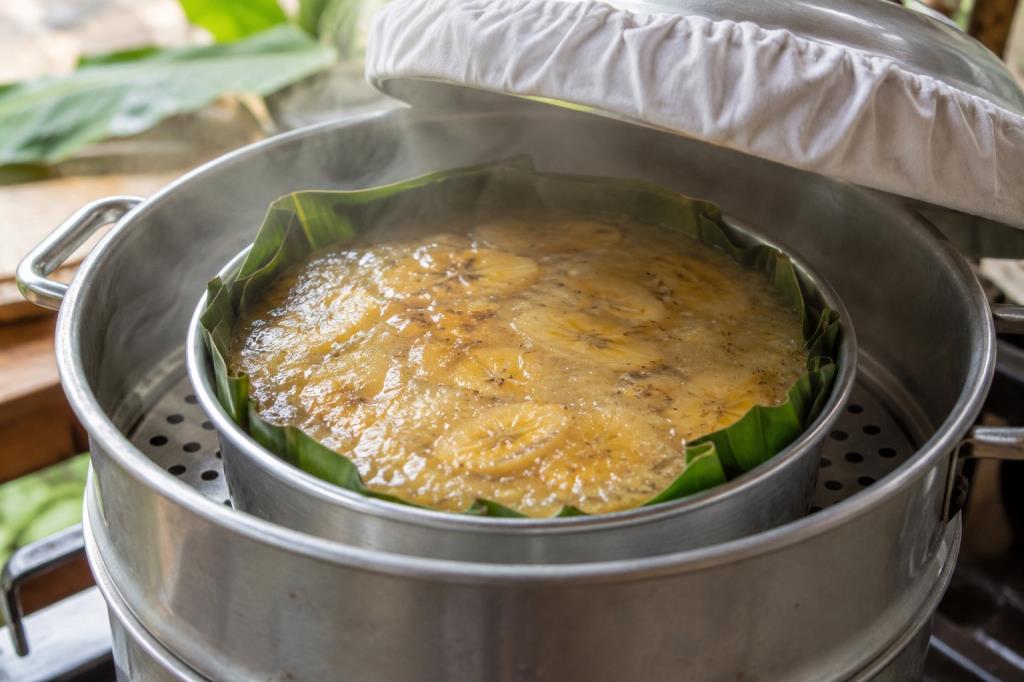
Put the tin in once the water is boiling and steam over a medium flame. Wrap a cloth under the lid or wipe it regularly so drops do not fall onto the cake. Do not keep lifting the lid; turn the tin once if the steamer heats unevenly.
Step 4: check that the cake is cooked
After 35 minutes, push a skewer into the middle: the batter should have turned translucent and springy, with no cloudy white liquid left. If the surface is done but the centre is still cloudy, lower the heat and keep steaming. Let the cake cool for at least 30 minutes before cutting so the structure settles.
Step 5: cook the coconut sauce
Heat the coconut milk with the sugar and a pinch of salt over a low flame, without letting it roll to a boil. Slake a little tapioca starch in cold water and pour it in a little at a time until the sauce is thick but flowing. Turn off the heat before the oil splits, spoon it over the cake as you serve and scatter the sesame on top.
Small tips that make the dish more consistent
- Choose bananas that are ripe but not mushy.
- Count the juice the bananas release.
- Add the liquid a little at a time.
- Do not stir the banana to a pulp.
- Keep the layer from getting too deep.
- Preheat the steamer.
- Wrap a cloth under the lid.
- Steam over a steady medium flame.
- Let the cake cool before cutting.
- Cook the coconut sauce without a hard boil.
Every kitchen has a different hob power, pan thickness and level of moisture in the ingredients. The times are therefore only a reference; judge by colour, smell, tenderness, the rate of evaporation and the core temperature together. Note down the amount of liquid, the size of the equipment and the actual timings so it is easier to repeat next time.
Common mistakes and how to rescue the dish
The base is soggy
The batter was too wet or a lot of condensation dripped in. Steam it for a few more minutes without the cloth and let it cool completely; next time use less water.
The cake is still cloudy white
The centre is not cooked or the layer is too deep. Keep steaming over a medium flame, and use shallower tins next time.
The cake is hard and rubbery
Too much tapioca starch or not enough liquid. Serve it with plenty of coconut sauce; next time add more banana or a little more water.
The coconut sauce has split
The heat was too high. Turn it off and stir in a little warm water; next time keep it at a bare simmer and add the thickener at the end.
A systematic way to taste and adjust
Taste a spoonful that has both liquid and a representative piece of the ingredients, let it cool for a few seconds and then work out whether the dish is short on salt, sweetness, acidity, richness or aroma. Change only one element at a time and wait until the seasoning has dissolved completely before tasting again. Fish sauce, salt, sugar and acid should go in a small amount at a time; this is far safer than trying to fix everything in one go.
If the dish is too salty, the real answer is to add suitable unsalted ingredients or liquid; adding sugar only masks the sensation and does nothing to the sodium. If it is too sweet, increase the liquid slightly and rebalance the salt before adding acidity. If the spices are harsh, take the solids out and let the dish rest rather than carrying on cooking it for a long time.
Controlling the heat and the equipment
The equipment has to suit the quantity: too wide a pot boils the liquid away quickly, too small a pot leaves the ingredients piled on top of each other, and a thin pan creates hot spots that burn. Heat it in a controlled way, watching the sizzle, the size of the bubbles and the rate of evaporation rather than just the position of the dial. When you need to top up a hot dish, use hot water so the cooking is not interrupted.
A food thermometer is a useful checking tool. Put the probe into the thickest part, away from bone and the base of the pan, and clean it before and after each reading. Poultry needs to reach 74C, minced meat 71C and fish 63C; for a dish where a direct reading is not practical, make sure every raw component is cooked through and the dish is held at a safe temperature.
Scaling the recipe up or down
To double the recipe, use two tins at the same depth or steam it in two rounds. The coconut sauce can be made in one large pan, but the tapioca starch still goes in a little at a time.
When you double the recipe, use wider equipment or work in batches so the food meets the heat in the same way as in the original recipe. Start strong seasonings at about 1.7 times and taste again, because the surface area for evaporation does not scale linearly. When you halve it, switch to a smaller pot to keep the depth of liquid and stop it drying out too quickly.
A schedule so the dish is ready on time
The stock, the base sauce and anything that needs marinating can be done in advance, following the storage guidance. The herbs, the frying, grilling, griddling and the assembly should be left until close to the meal. If you are cooking several dishes, work backwards from serving time: leave whatever has to be crisp or hot until last, and finish the cold work and the preparation first.
While you cook, clear away any utensil that has touched raw food straight away, change a dirty cloth and keep the worktop dry. For each batch, use the same ladle or weigh the portions so the results are even. Never taste with a spoon and then put that spoon back into the pot.
Serving and presentation
Cut the cake with an oiled knife into moderate pieces, spoon over the coconut sauce and scatter sesame or peanuts. It can be eaten warm or cool, but do not let the sauce sit long enough to wet the surface.
Warm the plates or bowls for a hot dish and chill them for a cold dessert. Leave some space around the food so the main components are easy to see. Herbs, nuts, fried shallots or a finishing sauce should only go on just before serving, to keep their colour and texture.
Preparing ahead and storing
Keep the cake and the coconut sauce separately in the fridge and use them within 3-4 days. Chill them within 2 hours. Steam or lightly microwave the cake; stir the coconut sauce as it reheats and do not bring it to a hard boil.
Cooked food should not stay at room temperature for more than 2 hours, or more than 1 hour when the surroundings are above 32C. Divide leftovers into shallow containers so they chill quickly and use them within 3-4 days; when reheating, bring the whole portion to 74C. Only reheat what you are going to eat, and throw away anything with an odd smell, sliminess or other unusual sign rather than tasting it.
Allergy and safety notes
Coconut, sesame and peanuts can all cause allergies. Anyone allergic to peanuts should leave out the topping altogether and avoid utensils that have been used to crush peanuts.
Pregnant women, young children, older people and anyone with a weakened immune system should eat food that is cooked right through, and should be especially careful about cross-contamination. Read the label on packaged seasonings, as fish, crustaceans, soy, wheat, egg, milk, sesame or peanut can appear in ready-made sauces.
A checklist for the finished dish
- The raw components have reached a safe temperature with no undercooked areas left.
- It smells as it should, with no old oil, burnt or oddly sour note.
- Salt, sweetness, acidity and richness are balanced when tasted at eating temperature.
- The main texture is what you were aiming for: tender without falling apart, crisp without being raw.
- The serving plate and the tongs are clean and have not touched raw food.
- The garnish went on close to serving time and the allergens have been announced.


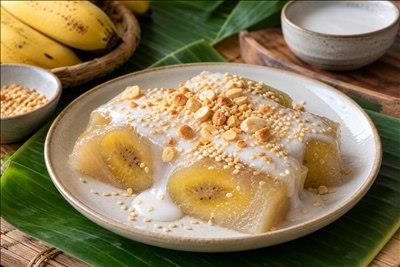 How to make steamed banana cake: chewy translucent batter and coconut sauce that does not split
 How to make bo luc lac: tender juicy beef, a well-judged sauce and crisp potatoes
 Binh Dinh cha ram tom dat: small crisp rolls from the coast
 How to make seafood fried rice: separate grains, wok aroma and never soggy
 Thai kitchens in the northwest: upland sticky rice, folded grilled fish and cham cheo beside the stilt house
 How to cook banh canh cua: a sweet broth, just enough body and plenty of toppings
 How to make sweet-and-sour pork ribs: tender meat, a glossy sauce and crisp vegetables
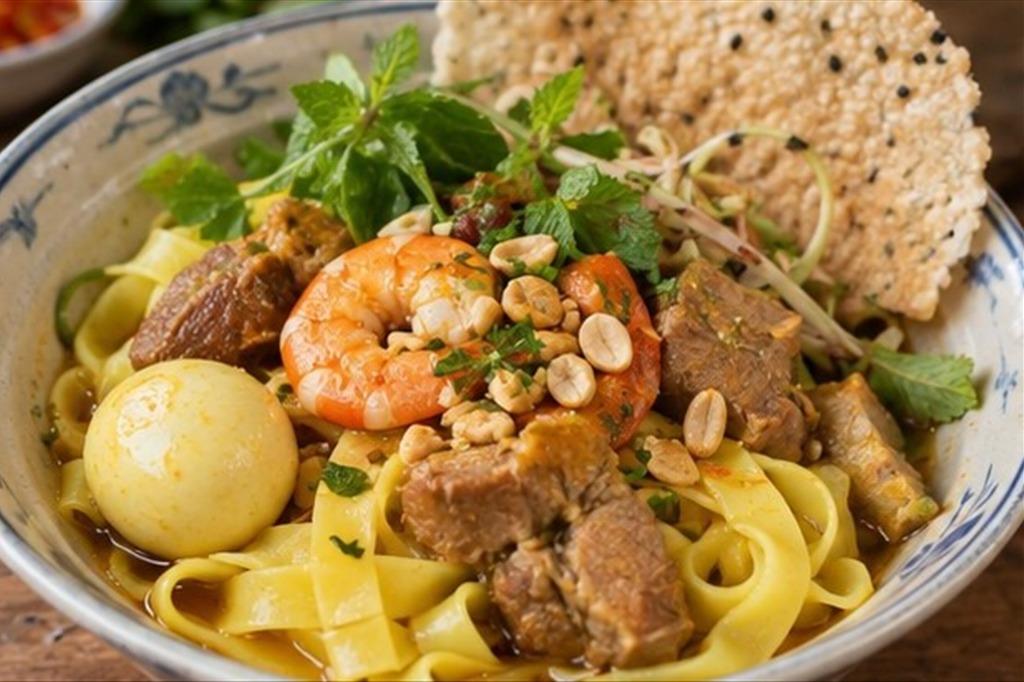 Mi Quang of Quang Nam: little broth, yet the full flavour of the Quang region
Đăng nhập để bình luận: / Sign in to comment: