



All About Vietnamese Burial Customs (Part 2)
How is the burial ceremony conducted?
Depending on the locality and religion, customs and rituals vary from place to place. In the past, some villages appointed young, strong men from the neighborhood to carry the coffin and perform the burial. In places with a scholar association (hoi tu van), this group would manage and direct the affairs according to established village conventions. Nowadays, rural areas have funeral assistance societies, while cities and towns have cemetery management boards, and elderly care sub-associations in wards and communes step in to organize everything thoughtfully.
The burial ceremony is conducted according to each family's circumstances: wealthy families do elaborate rites, less fortunate ones keep it simple. Here, we only discuss what the bereaved family needs to do:
When a loved one passes away, the head of the mourning family must quickly report it so that arrangements can be discussed according to established rules.
In ancient times, the chief mourner provided a cash reward for the signal bearer and the pallbearers. If from the time the coffin was loaded onto the bier until reaching the grave site, the cup of wine and dish of peanut oil placed atop the coffin did not spill a drop, the chief mourner would reward them very generously.
Relatively close and distant family members, lined up according to their degree of kinship and wearing mourning attire according to family rites, follow behind the hearse. In the past, a white cloth canopy was held overhead, called bach mac. The eldest son walks ahead of or beside the hearse/coffin according to the custom of father escorting, mother welcoming.
After lowering the coffin into the grave, all attendees walk around the grave once, with each person throwing a handful of soil into the pit.
Once the grave mound is built, everyone stands around the grave, and the funeral manager along with the ritual officiants perform the completion ceremony.
The general rites are as described above, but many places also have specific local customs such as chanting prayers, placing amulets, trapping a chicken, pinning special leaves, erecting a neu pole, performing the grave-closing ceremony, burning paper effigies, scattering votive gold paper along the road, planting incense at surrounding graves, inviting passersby to chew betel and smoke tobacco, hosting those who built the grave mound, etc.
The cold air (cadaveric chill) from a corpse, and how to prevent it?
Does cold air, yin energy, or malevolent energy exist in a corpse?
No one has measured the exact temperature inside a corpse, but many people agree that perceptually, a newly deceased person feels much colder than normal human body temperature as well as the ambient environment.
This phenomenon is explained as follows: When a human at normal body temperature (37°C) suddenly loses heat generation, the temperature doesn't merely drop to match room temperature, but temporarily dips even lower before gradually stabilizing over time.
Folk wisdom recognizes the cold air at the house of a newly deceased person as a real phenomenon, and falling ill due to exposure to this cold air is common—especially for those with chronic conditions such as rheumatism, high blood pressure, or mental illness—whereas healthy young people are rarely affected.
There is a theory holding that people of the same bloodline (children and parents, siblings, or close blood relatives) do not catch this cold air and have no adverse reactions even when embracing the body or dressing the corpse. However, as a precaution, elderly people, heavily pregnant women near their delivery date, and mothers with newborn babies are still discouraged from attending corpse-dressing rituals, burials, and reburials.
Some people react immediately upon absorbing the cold air. Others directly dress the corpse and absorb cold air without harm to themselves because they are healthy; nevertheless, to protect vulnerable family members at home, they must smoke-purify themselves before entering houses with elderly, frail people, or infants. Neighbors living near a funeral home who have frail elderly members or young children often set up a brazier burning pomelo peel and locust pods at the doorway to drive away impure energy. For people suspected of being bitten by a rabid dog, families strictly isolate them from funerals and cemeteries for fear that exposure to cold air will trigger rabies before treatment can be administered.
Customs to Observe During the Lying-in-State?
-Why is there a custom of placing an upside-down bowl of rice, an egg, inserting a pair of chopsticks vertically into the rice with the egg wedged between them, and lighting incense above the head of the deceased during the time before encoffinment?
-Why do people drive a metal stake near the foot of the bed of the deceased?
-Why do people continuously burn incense and candles (or an oil lamp if candles are unavailable) before encoffinment until the burial without letting the flame or incense go out?
-Why are two young banana plants placed on both sides of the altar table near the coffin?
-Why is there a custom of setting up a large torch in the middle of the yard at night before the burial (if keeping the body overnight), while descendants and relatives keep vigil around the coffin (the nighttime Chuc thuc ritual, meaning the torch-planting ritual)?
-Why is there a custom forbidding family members from crying while standing next to the corpse, avoiding dropping tears onto the body?
- Why must the hung hole (a small hole dug in the middle of the bed where the deceased lay before encoffinment, burned using rice husks, charcoal, firewood, or rags) be burned after the encoffinment ritual?
-Why are firecrackers detonated during a funeral, which is a sad event? (This custom was only found in cities for deceased elderly people).
-Why must cats be caged or locked away when someone in the house has recently passed away?
-Why do people climb onto the roof to remove a few tiles or thatch leaves when someone dies in a house (for houses with closed roofs and few doors)?
All the above questions share a common answer: It is folk experience, using techniques to balance yin and yang energies and absorb evil influences to prevent cold air and guard against the phenomenon of Qui nhap trang (reanimation of corpses). Originating from practical experience, these practices were gradually copied and became customs.
Using smoke, fire, and sunlight (burning incense, candles, lamps, torches, charcoal, rice husks, removing roof tiles, opening doors, digging the hung hole, firing firecrackers, etc.) serves to dissipate cold air. Using a bowl of rice, an egg, young banana plants, etc., helps absorb the cold air (if you cut the egg in half, the yolk often turns deep greenish, similar to eggs used in coin-rubbing folk remedies). Caging cats prevents them from jumping over the corpse; avoiding weeping onto the deceased, driving a metal stake under the bed, or removing roof tiles are techniques used to neutralize the attraction between opposite (yin and yang) electrical fields.
In addition, attendees at funerals—especially those attending encoffinment—employ other techniques to guard against cold air, such as holding raw ginger in their mouths, drinking silverberry leaf tea, chewing betel nut, or smoking themselves with pomelo peel and locust pods before and after attending the funeral.
The phenomenon of corpse reanimation (Qui nhap trang)
This is the phenomenon where a corpse suddenly sits or leaps up. This phenomenon is very rare but has occurred, so folk customs instituted taboo precautions against it, calling it Qui nhap trang (demon entering the corpse), though in reality no demon or ghost possesses the corpse. The cause: Negative electrical charge accumulated in the newly deceased body has not fully dissipated when it encounters a strong positive electrical charge that attracts it.
A corpse suddenly jumping up is due to attraction by an external force with electromagnetic induction. Therefore, according to folk beliefs, when someone dies, the greatest taboo is letting a cat suddenly jump over the corpse (so people must guard the body and cage cats). There have been instances where a splash of wine thrown onto the body or a warm tear falling on it created a stream of energy, attracting the corpse to sit up momentarily before collapsing. As for the phenomenon of a corpse chasing a living person: the corpse cannot actually walk; rather, it is drawn along by the heat plume of a living person or by balanced airflow convection when the body is in a standing position parallel to a living person. Removing roof tiles or thatch so that direct sunlight shines down also aims to eliminate this attraction phenomenon.
Is the 3-day ceremony (Le te ngu) calculated from time of death or after burial?
This custom is not uniform; some places count three days after death, while others count three days after burial. According to classical ceremonial codes, there is no 3-day ceremony, only Le te ngu (soothing rites) consisting of so ngu (first soothing), tai ngu (second soothing), and tam ngu (third soothing). Ngu means peace/tranquility, referring to three rites performed to bring peace to the soul. According to Tho Mai Gia Le (Tho Mai Family Rites), after burial, the spirit tablet is brought home for the so ngu sacrifice. After completing so ngu, on a nhu day (i.e. Yi, Ji, Xin, Gui), the tai ngu sacrifice is held, and on a cuong day (i.e. Jia, Bing, Wu, Geng, Ren), the tam ngu sacrifice is held. Phan Ke Binh also explained it in this manner.
Over time, people simplified this by combining all three rites into just the tam ngu sacrifice, which is why it came to be called the 3-day ceremony. Thus, it is calculated three days after burial, colloquially known as the opening of the grave ceremony. On that day, descendants go to repair the grave, lay turf, clear drainage ditches, etc. Ngu means comforting sacrifice, and sacrifice applies to the deceased or deities. Under old customs, bodies were rarely buried immediately after death, often remaining in the house for five to seven days. Before burial, the
Depending on the locality and religion, customs and rituals vary from place to place. In the past, some villages appointed young, strong men from the neighborhood to carry the coffin and perform the burial. In places with a scholar association (hoi tu van), this group would manage and direct the affairs according to established village conventions. Nowadays, rural areas have funeral assistance societies, while cities and towns have cemetery management boards, and elderly care sub-associations in wards and communes step in to organize everything thoughtfully.
The burial ceremony is conducted according to each family's circumstances: wealthy families do elaborate rites, less fortunate ones keep it simple. Here, we only discuss what the bereaved family needs to do:
When a loved one passes away, the head of the mourning family must quickly report it so that arrangements can be discussed according to established rules.
In ancient times, the chief mourner provided a cash reward for the signal bearer and the pallbearers. If from the time the coffin was loaded onto the bier until reaching the grave site, the cup of wine and dish of peanut oil placed atop the coffin did not spill a drop, the chief mourner would reward them very generously.
Relatively close and distant family members, lined up according to their degree of kinship and wearing mourning attire according to family rites, follow behind the hearse. In the past, a white cloth canopy was held overhead, called bach mac. The eldest son walks ahead of or beside the hearse/coffin according to the custom of father escorting, mother welcoming.
After lowering the coffin into the grave, all attendees walk around the grave once, with each person throwing a handful of soil into the pit.
Once the grave mound is built, everyone stands around the grave, and the funeral manager along with the ritual officiants perform the completion ceremony.
The general rites are as described above, but many places also have specific local customs such as chanting prayers, placing amulets, trapping a chicken, pinning special leaves, erecting a neu pole, performing the grave-closing ceremony, burning paper effigies, scattering votive gold paper along the road, planting incense at surrounding graves, inviting passersby to chew betel and smoke tobacco, hosting those who built the grave mound, etc.
The cold air (cadaveric chill) from a corpse, and how to prevent it?
Does cold air, yin energy, or malevolent energy exist in a corpse?
No one has measured the exact temperature inside a corpse, but many people agree that perceptually, a newly deceased person feels much colder than normal human body temperature as well as the ambient environment.
This phenomenon is explained as follows: When a human at normal body temperature (37°C) suddenly loses heat generation, the temperature doesn't merely drop to match room temperature, but temporarily dips even lower before gradually stabilizing over time.
Folk wisdom recognizes the cold air at the house of a newly deceased person as a real phenomenon, and falling ill due to exposure to this cold air is common—especially for those with chronic conditions such as rheumatism, high blood pressure, or mental illness—whereas healthy young people are rarely affected.
There is a theory holding that people of the same bloodline (children and parents, siblings, or close blood relatives) do not catch this cold air and have no adverse reactions even when embracing the body or dressing the corpse. However, as a precaution, elderly people, heavily pregnant women near their delivery date, and mothers with newborn babies are still discouraged from attending corpse-dressing rituals, burials, and reburials.
Some people react immediately upon absorbing the cold air. Others directly dress the corpse and absorb cold air without harm to themselves because they are healthy; nevertheless, to protect vulnerable family members at home, they must smoke-purify themselves before entering houses with elderly, frail people, or infants. Neighbors living near a funeral home who have frail elderly members or young children often set up a brazier burning pomelo peel and locust pods at the doorway to drive away impure energy. For people suspected of being bitten by a rabid dog, families strictly isolate them from funerals and cemeteries for fear that exposure to cold air will trigger rabies before treatment can be administered.
Customs to Observe During the Lying-in-State?
-Why is there a custom of placing an upside-down bowl of rice, an egg, inserting a pair of chopsticks vertically into the rice with the egg wedged between them, and lighting incense above the head of the deceased during the time before encoffinment?
-Why do people drive a metal stake near the foot of the bed of the deceased?
-Why do people continuously burn incense and candles (or an oil lamp if candles are unavailable) before encoffinment until the burial without letting the flame or incense go out?
-Why are two young banana plants placed on both sides of the altar table near the coffin?
-Why is there a custom of setting up a large torch in the middle of the yard at night before the burial (if keeping the body overnight), while descendants and relatives keep vigil around the coffin (the nighttime Chuc thuc ritual, meaning the torch-planting ritual)?
-Why is there a custom forbidding family members from crying while standing next to the corpse, avoiding dropping tears onto the body?
- Why must the hung hole (a small hole dug in the middle of the bed where the deceased lay before encoffinment, burned using rice husks, charcoal, firewood, or rags) be burned after the encoffinment ritual?
-Why are firecrackers detonated during a funeral, which is a sad event? (This custom was only found in cities for deceased elderly people).
-Why must cats be caged or locked away when someone in the house has recently passed away?
-Why do people climb onto the roof to remove a few tiles or thatch leaves when someone dies in a house (for houses with closed roofs and few doors)?
All the above questions share a common answer: It is folk experience, using techniques to balance yin and yang energies and absorb evil influences to prevent cold air and guard against the phenomenon of Qui nhap trang (reanimation of corpses). Originating from practical experience, these practices were gradually copied and became customs.
Using smoke, fire, and sunlight (burning incense, candles, lamps, torches, charcoal, rice husks, removing roof tiles, opening doors, digging the hung hole, firing firecrackers, etc.) serves to dissipate cold air. Using a bowl of rice, an egg, young banana plants, etc., helps absorb the cold air (if you cut the egg in half, the yolk often turns deep greenish, similar to eggs used in coin-rubbing folk remedies). Caging cats prevents them from jumping over the corpse; avoiding weeping onto the deceased, driving a metal stake under the bed, or removing roof tiles are techniques used to neutralize the attraction between opposite (yin and yang) electrical fields.
In addition, attendees at funerals—especially those attending encoffinment—employ other techniques to guard against cold air, such as holding raw ginger in their mouths, drinking silverberry leaf tea, chewing betel nut, or smoking themselves with pomelo peel and locust pods before and after attending the funeral.
The phenomenon of corpse reanimation (Qui nhap trang)
This is the phenomenon where a corpse suddenly sits or leaps up. This phenomenon is very rare but has occurred, so folk customs instituted taboo precautions against it, calling it Qui nhap trang (demon entering the corpse), though in reality no demon or ghost possesses the corpse. The cause: Negative electrical charge accumulated in the newly deceased body has not fully dissipated when it encounters a strong positive electrical charge that attracts it.
A corpse suddenly jumping up is due to attraction by an external force with electromagnetic induction. Therefore, according to folk beliefs, when someone dies, the greatest taboo is letting a cat suddenly jump over the corpse (so people must guard the body and cage cats). There have been instances where a splash of wine thrown onto the body or a warm tear falling on it created a stream of energy, attracting the corpse to sit up momentarily before collapsing. As for the phenomenon of a corpse chasing a living person: the corpse cannot actually walk; rather, it is drawn along by the heat plume of a living person or by balanced airflow convection when the body is in a standing position parallel to a living person. Removing roof tiles or thatch so that direct sunlight shines down also aims to eliminate this attraction phenomenon.
Is the 3-day ceremony (Le te ngu) calculated from time of death or after burial?
This custom is not uniform; some places count three days after death, while others count three days after burial. According to classical ceremonial codes, there is no 3-day ceremony, only Le te ngu (soothing rites) consisting of so ngu (first soothing), tai ngu (second soothing), and tam ngu (third soothing). Ngu means peace/tranquility, referring to three rites performed to bring peace to the soul. According to Tho Mai Gia Le (Tho Mai Family Rites), after burial, the spirit tablet is brought home for the so ngu sacrifice. After completing so ngu, on a nhu day (i.e. Yi, Ji, Xin, Gui), the tai ngu sacrifice is held, and on a cuong day (i.e. Jia, Bing, Wu, Geng, Ren), the tam ngu sacrifice is held. Phan Ke Binh also explained it in this manner.
Over time, people simplified this by combining all three rites into just the tam ngu sacrifice, which is why it came to be called the 3-day ceremony. Thus, it is calculated three days after burial, colloquially known as the opening of the grave ceremony. On that day, descendants go to repair the grave, lay turf, clear drainage ditches, etc. Ngu means comforting sacrifice, and sacrifice applies to the deceased or deities. Under old customs, bodies were rarely buried immediately after death, often remaining in the house for five to seven days. Before burial, the


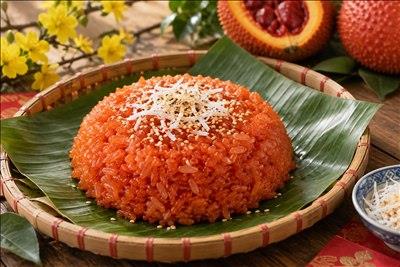 How to cook xoi gac: a beautiful red, chewy separate grains and never claggy
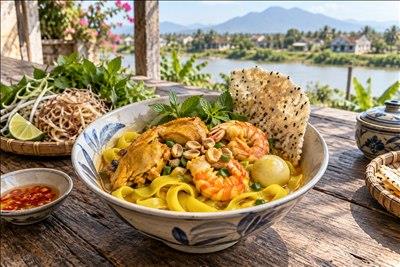 Mi Quang and the kitchens of Quang Nam: a bowl with little broth and a great deal of memory
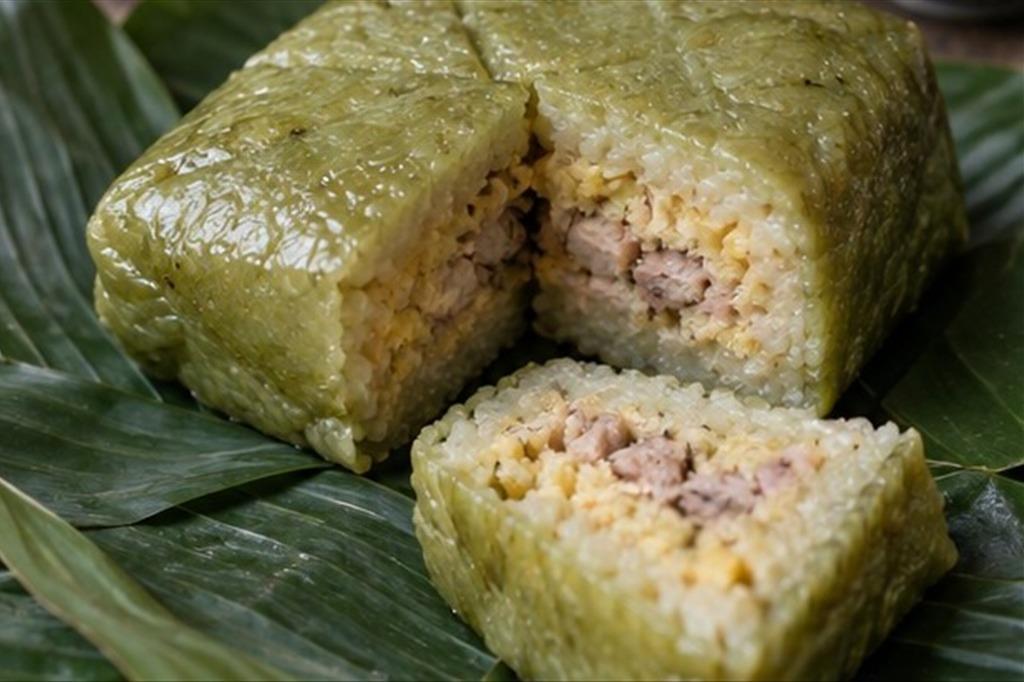 Bo Dau banh chung: the green square cake at the crossroads into Thai Nguyen
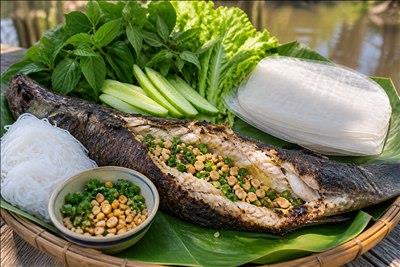 How to cook ca loc nuong trui: evenly done, juicy flesh and no taste of ash
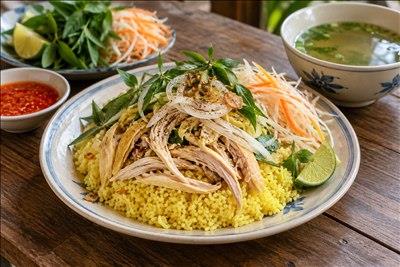 How to make Hoi An chicken rice: fluffy grains, juicy chicken and a crisp onion salad
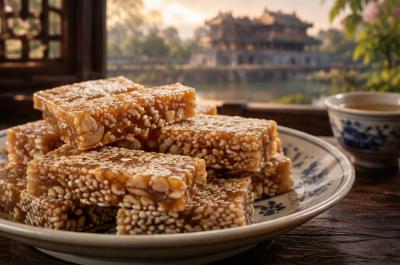 Me xung from Hue: chewy malt, toasted sesame and the slow rhythm of tea
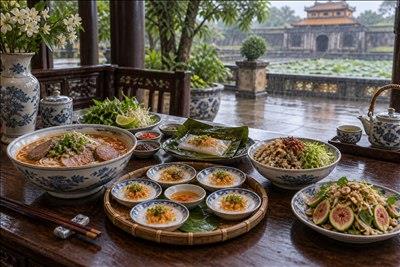 The food of Hue: where the royal kitchen, everyday dishes and small street stalls meet
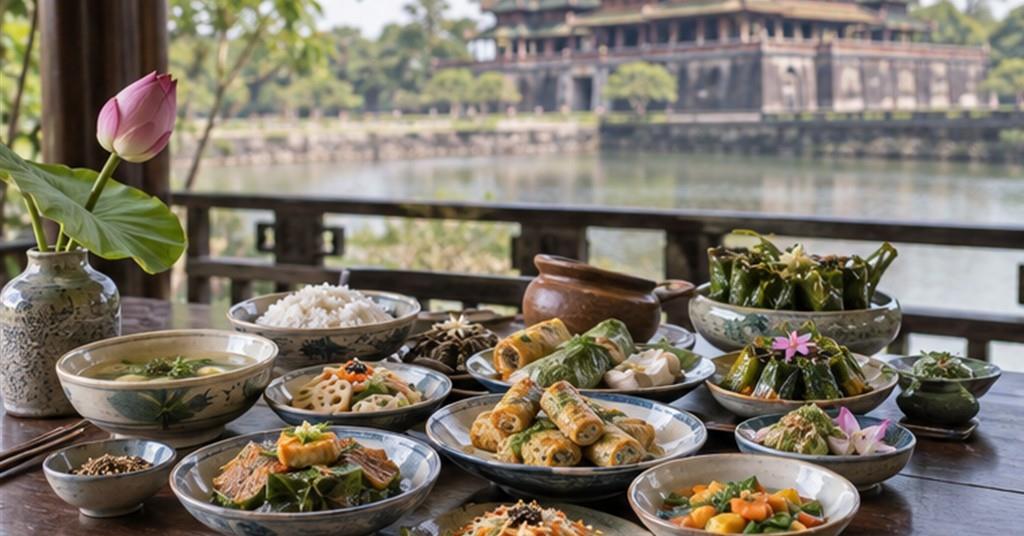 Hue vegetarian food: why is something so plain still so layered in flavour?
Đăng nhập để bình luận: / Sign in to comment: