



One phone-free hour a day: a small gap for returning to real life
A phone-free hour is not a war against technology. It is a small experiment to see how your hands, your attention and your conversations change when the device is out of reach. The value comes from the activity you choose to put in its place, not merely from a dark screen.
A phone is a work tool, a way to stay in touch, a map and a safety aid, so complete abstinence does not suit everyone. A bounded stretch, announced in advance and with an emergency exception, is far more realistic. Some choose the time after dinner, others the first hour of the morning or a stretch at the weekend.
Quick facts
- Trial length: 20 minutes, building up to an hour.
- Placement: put the phone out of reach, not merely face down.
- Replacement activity: reading, cooking, walking, talking or working with your hands.
- Exceptions: emergency contact and on-call work.
- What to assess: how restless you feel, the quality of your attention and whether you can keep it up.
Pick an hour with few consequences
If your work requires responses, do not start during peak hours. Choose a stretch you can flag to the people involved and keep one emergency channel open if you need it. The aim is a first experience of success, not proving your willpower by creating trouble for yourself and others.

Physical distance dampens the reflex
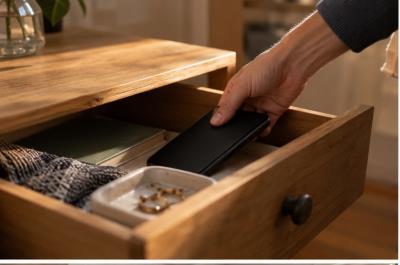
Turning the phone face down still leaves it within reach, and the mind keeps waiting for a buzz. Putting it in a drawer, another room or a bag with a fixed spot makes checking one step harder. Switching off non-essential notifications and using a separate alarm clock removes some of the reasons to carry the device into every activity.

Prepare a replacement that has an ending
A chapter of a book, a recipe for dinner, a walking loop or one drawer that needs sorting is a clearer choice than a vague promise to “relax”. Working with your hands helps attention settle on something real. Do not turn the phone-free hour into a crowded productivity list; resting and looking out of the window is a perfectly valid outcome.

Restlessness is data
In the first few minutes your hand may reach for the phone on its own, or you may worry about missing something. Instead of judging yourself, note what triggered it: waiting, a difficult task, loneliness or simple habit. That data helps you adjust notifications and your surroundings later. If anxiety rises sharply, shorten the stretch and move more slowly.
A shared hour needs agreement
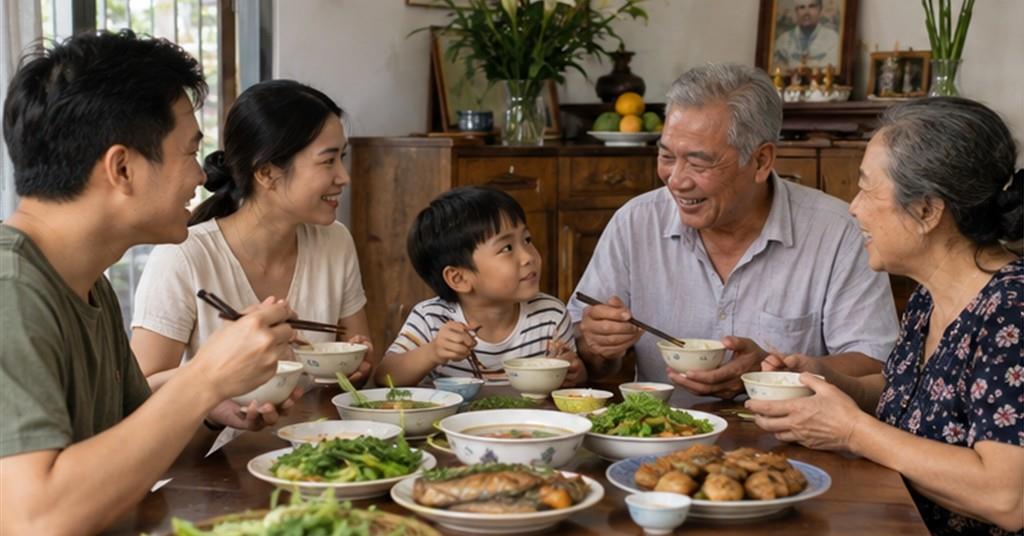
A household can set phones aside during meals or while cooking, but the rule should not become a way of policing anyone's privacy. Agree on the time, where the phones go, the exceptions and how to reach each other. Adults going first is far more persuasive than asking children to put their devices down while you keep checking yours.
How to look at a living tradition
No region or community should be reduced to a single recipe. Ingredients, names and ways of serving shift with the season, the family, religion, occupation and patterns of migration. What is shared shows a history of exchange; what differs shows the capacity to adapt.
When you go and try it, use the right name for the dish and the region if you know them, listen to the people making it, ask before photographing private spaces, and avoid treating the word “authentic” as an absolute stamp. A new version still has value as long as it says what has changed and respects the people who keep the craft alive.
Common misunderstandings
The longer you go without your phone, the better
A suitable length that you repeat matters more than a record; the device still has essential functions.
All you need is strong willpower
Designing your surroundings, switching off notifications and preparing a replacement activity all reduce how much you have to rely on willpower.
Practical suggestions and things to try
- Start with 20 minutes that are easy to manage.
- Tell the people who may need to reach you.
- Put the phone out of reach.
- Prepare one specific activity.
- Keep the emergency exception clear.
- Do not use the rule to control other people.
- After a week, review it and adjust the time slot.
Observation checklist
- What context, season and audience is being talked about?
- Which details are facts, and which are impressions or personal choices?
- How do the ingredients, tools or setting affect the outcome?
- Are there any safety, allergy, cost or privacy risks to check?
- What small thing could you try today and review later?
Important note
Anyone on call, caring for someone dependent on them, or relying on the device for health support should design clear exceptions; safety and the ability to make an emergency call always come before the experiment.
Conclusion
A phone-free hour does not improve life by itself if you simply sit and wait for it to pass. But when the gap is given to a book, a meal, a walk or the person in front of you, it is a reminder that your attention can be rearranged by very small choices.


 One phone-free hour a day: a small gap for returning to real life
 Small rituals that keep a family close inside a busy schedule
 Morning light and your sleep rhythm: building a steadier wake-up schedule
 Repair instead of replacing in a hurry: a small habit for a sturdier home and less waste
 A happy family is not a family that never argues
 Do not only ask your child what they scored — ask whether they were happy today
 Siblings scattered in different places: how do you keep the bond from fading?
 A gentle walk after a meal: how to start in a way that stays safe and comfortable
Đăng nhập để bình luận: / Sign in to comment: