



The Tay table in north-east Vietnam: five-coloured sticky rice, khau nhuc and stilt-house memory
The Tay table in north-east Vietnam is built from sticky rice, forest greens, meat, stream fish, local seasonings and the rhythm of the farming year. Five-coloured sticky rice and khau nhuc are the famous names, but the deeper value lies in how the food connects the family, the guests and the space of the stilt house.
No single menu stands for every Tay community. Cao Bang, Lang Son, Bac Kan, Tuyen Quang and other areas where they live each have their own ingredients, names and tastes. This article looks at the shared outlines in order to understand the culture, while leaving room for the differences of each village and each household.
Quick facts
- Setting: the north-east region and various places where Tay people live.
- Staples: plain rice, sticky rice and, depending on the area, maize.
- Dishes often mentioned: coloured sticky rice, khau nhuc, cured sausage, fish and seasonal greens.
- Occasions: everyday meals, festivals and Tet, weddings and welcoming guests.
- Values: shared labour, family memory and hospitality.
Sticky rice and the colours of a festival
Five-coloured sticky rice usually takes its colours from leaves, roots or other natural sources, but the number of colours and the way they are combined is not absolutely fixed. Soaking, dyeing and steaming each portion separately takes planning, so the grains cook evenly and the colours do not bleed into one another. When the rice appears on a ceremonial tray or on a happy day, its beauty comes just as much from the collective preparation behind it.
Khau nhuc and the journey of a dish
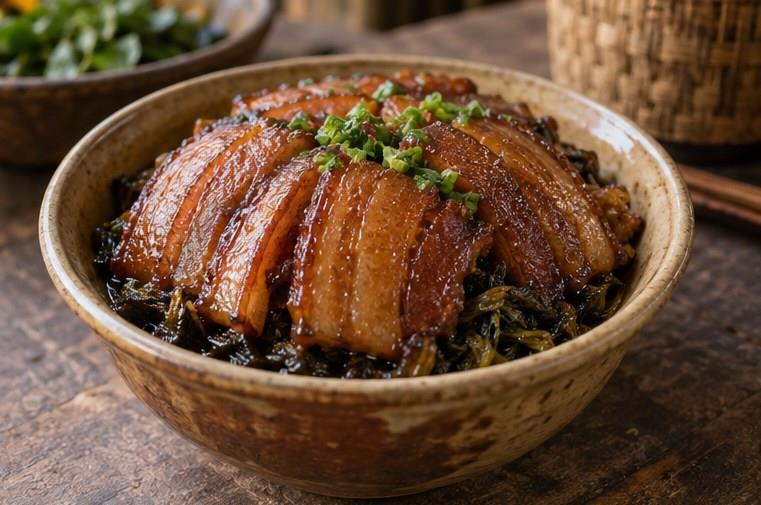
Khau nhuc is a pork dish that passes through several stages: boiling, colouring, frying and then steaming until tender with seasonings. It shows a long history of exchange across the border and of being made local in Tay and Nung kitchens. Every household has its own proportions of seasoning, its own herbs and its own way of packing the bowl, so it makes little sense to look for one true recipe and treat every other version as wrong.
"Forest greens" is not one single thing
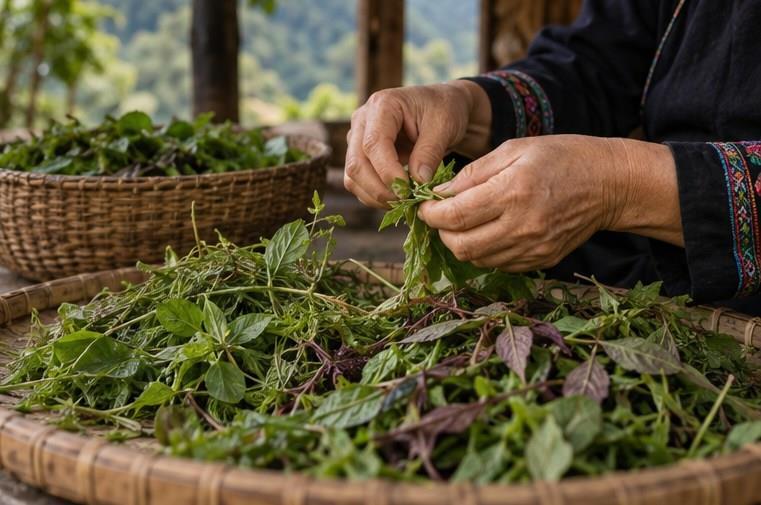
The bunches of leaves on the tray depend on the season, the terrain and knowledge of identification passed on through practice. Some are eaten as vegetables, others give aroma, colour or help preserve food. Visitors should not pick and taste unfamiliar plants themselves; using the correct local name and asking how something is prepared matters more than the romantic notion that everything in the forest is clean and edible.
The hearth and the space of the stilt house
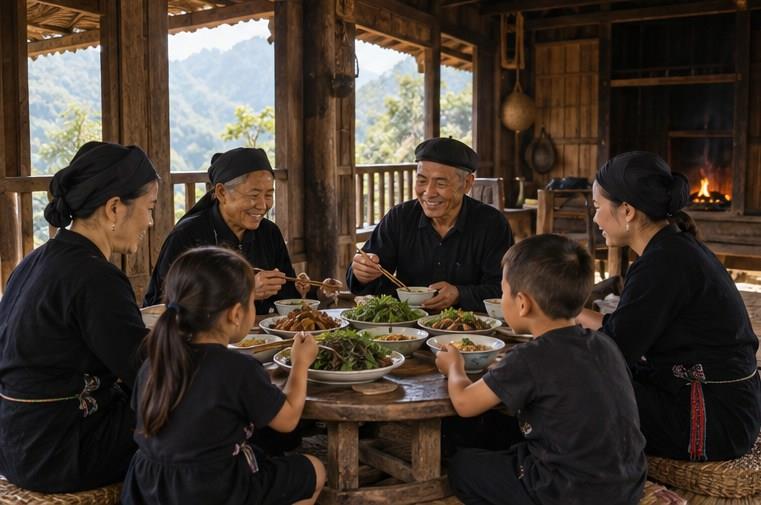
The hearth cooks, warms and dries food, and it is also where the family's stories are carried forward. Where people sit, how the meal is offered and the order in which dishes are passed can reflect age, role and respect for a guest. Today the hearth and the house change with living conditions, but the memory of woodsmoke, steamed sticky rice and a pot of meat remains a strong link between generations.
Preserving something does not mean freezing it
Tourism creates a chance to sell local produce and tell stories, and it can also push a dish towards too much colour, too much quantity, or separation from its context. Sustainable preservation means letting the community decide what is shared, paying the cooks properly and supporting the supply of ingredients, rather than simply staging a tray of food for the camera.
How to look at a living tradition
No region or community should be reduced to a single recipe. Ingredients, names and ways of serving shift with the season, the family, religion, occupation and patterns of migration. What is shared shows a history of exchange; what differs shows the capacity to adapt.
When you go and try it, use the right name for the dish and the region if you know them, listen to the people making it, ask before photographing private spaces, and avoid treating the word “authentic” as an absolute stamp. A new version still has value as long as it says what has changed and respects the people who keep the craft alive.
Common misunderstandings
Every highland dish is meat-heavy and strongly flavoured
Everyday meals often lean on vegetables, beans, bamboo shoots and whatever is in season; a ceremonial tray does not represent daily eating.
Five-coloured sticky rice is the same everywhere
The source of the colours, their meaning, the number of layers and the way it is steamed all change from place to place and from family to family.
Practical suggestions and things to try
- Ask for the dish by the name local people use.
- Ask permission before photographing the kitchen and the cook.
- Do not pick or taste unfamiliar forest plants yourself.
- Taste a small amount before adding any seasoning.
- Mention any allergy to sticky rice, peanuts, sesame or alcohol.
- Buy local produce from makers who are clear about its origin.
- Listen to the stories instead of only collecting photographs of food.
Observation checklist
- What context, season and audience is being talked about?
- Which details are facts, and which are impressions or personal choices?
- How do the ingredients, tools or setting affect the outcome?
- Are there any safety, allergy, cost or privacy risks to check?
- What small thing could you try today and review later?
Important note
Names of dishes and customs should be checked with the community in that particular place; avoid merging the Tay, the Nung and other peoples into a single identity.
Conclusion
What makes the Tay table memorable is not only the colour of the rice or the tenderness of the meat. It is the web that links the fields, the knowledge of plants, the hearth and the etiquette of welcoming a guest — a heritage that stays alive because families are still cooking it every day.



 How to cook mung bean and aloe sweet soup: refreshing, with crisp aloe and no bitterness
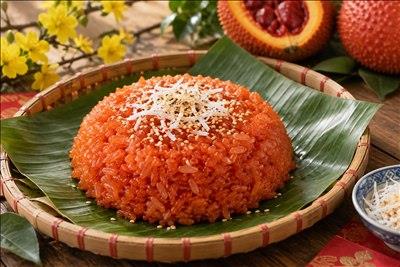 How to cook xoi gac: a beautiful red, chewy separate grains and never claggy
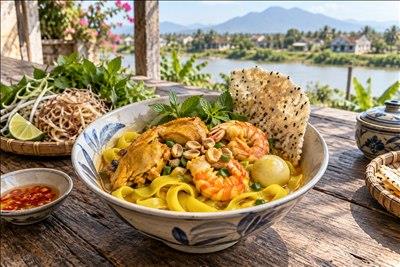 Mi Quang and the kitchens of Quang Nam: a bowl with little broth and a great deal of memory
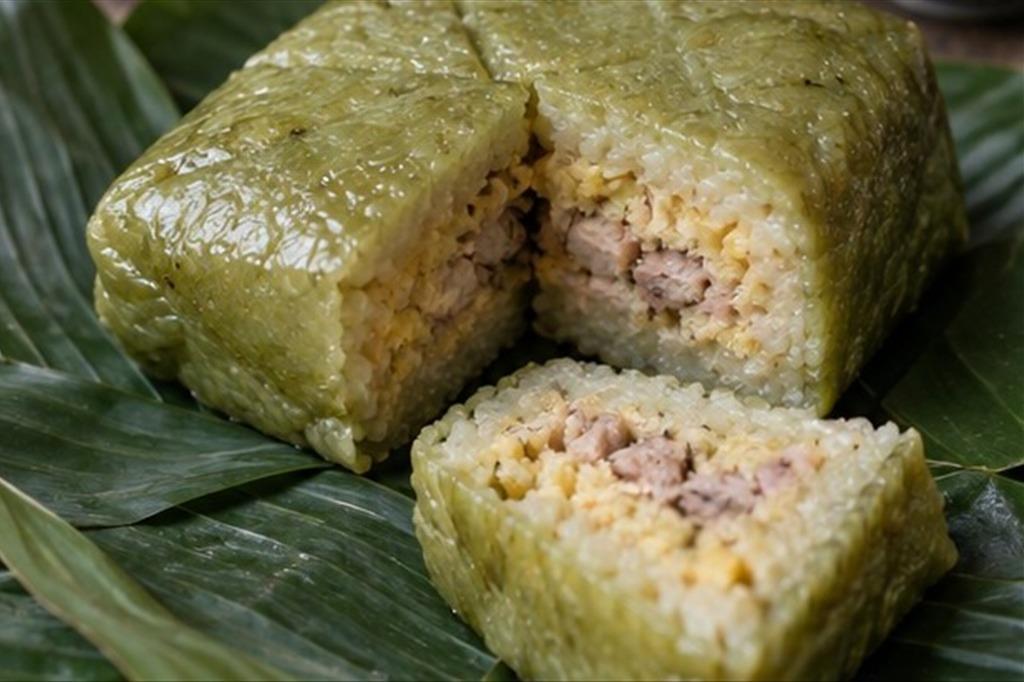 Bo Dau banh chung: the green square cake at the crossroads into Thai Nguyen
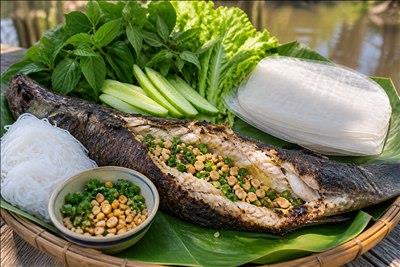 How to cook ca loc nuong trui: evenly done, juicy flesh and no taste of ash
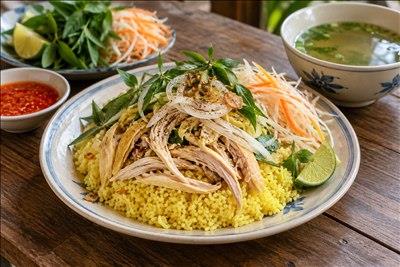 How to make Hoi An chicken rice: fluffy grains, juicy chicken and a crisp onion salad
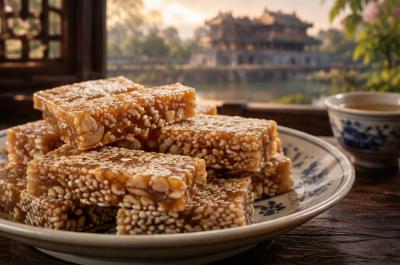 Me xung from Hue: chewy malt, toasted sesame and the slow rhythm of tea
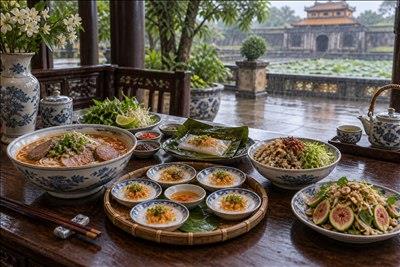 The food of Hue: where the royal kitchen, everyday dishes and small street stalls meet
Đăng nhập để bình luận: / Sign in to comment: