



A gentle walk after a meal: how to start in a way that stays safe and comfortable
A gentle walk after a meal is a simple way to break up sitting time and fit movement into the day. The benefit does not come from walking fast on a full stomach, but from a pace that suits you, repeated regularly, and from your total activity across the week.
Bodies, meals and underlying conditions differ from person to person. Some feel fine walking after a few minutes; others need a longer rest because of reflux, bloating or dizziness. This article is about designing a small habit, not about turning a lifestyle tip into a promise of treatment.
Quick facts
- Intensity: light, still able to speak a full sentence.
- Starting length: 5-10 minutes, increasing gradually if it feels comfortable.
- Timing: flexible, according to the meal and how you personally react.
- Goal: less prolonged sitting, more total movement.
- Stop if: you have chest pain, unusual breathlessness, faintness or increasing pain.
Why small steps last
Tying a walk to a meal gives you a clearer cue than a vague plan to “exercise when there's time”. Five minutes is a low enough bar to start on a busy day, yet repeated it can add up to a real increase in activity. A lasting habit does not require full sportswear; shoes that fit, a safe route and a realistic goal matter more than a good-looking step count in an app.
Choose the timing by how your body feels
After a very large meal, walking fast or uphill can leave you feeling heavy. You can wait a short while, start slowly on level ground and watch for heartburn, nausea or cramping. Anyone using insulin or glucose-lowering medication should understand the risk of a low, carry whatever their treatment plan calls for, and never change medication on their own.
Measuring intensity without a device
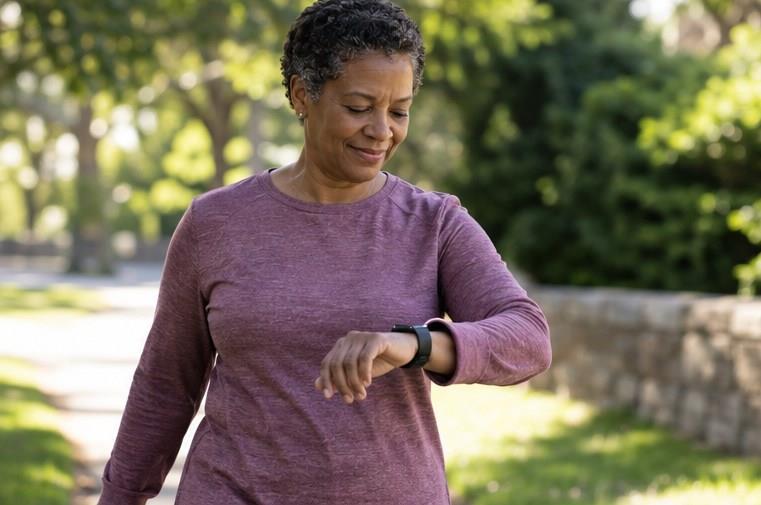
The talk test is useful: if you can still speak a full sentence and your breathing stays under control, the pace is usually light. A watch can help but is not required, and a reading from your wrist is not a diagnosis. The aim of the walk is to finish it feeling comfortable, not to set a record while your digestion is at work.
Build a route with as little friction as possible
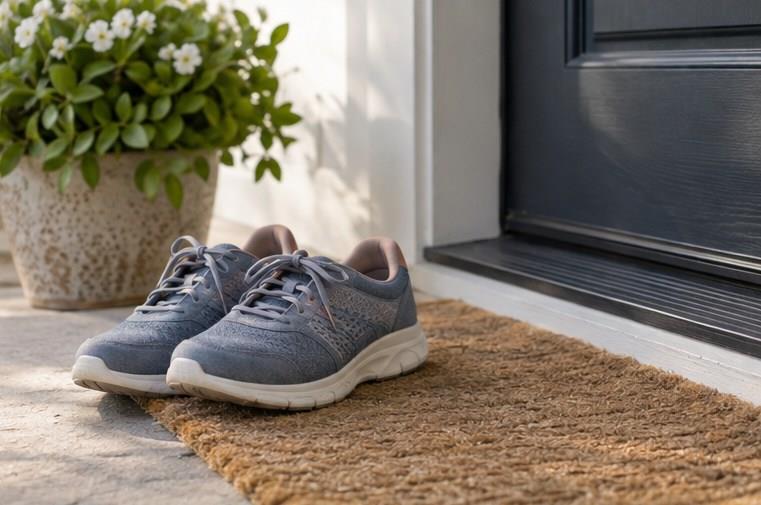
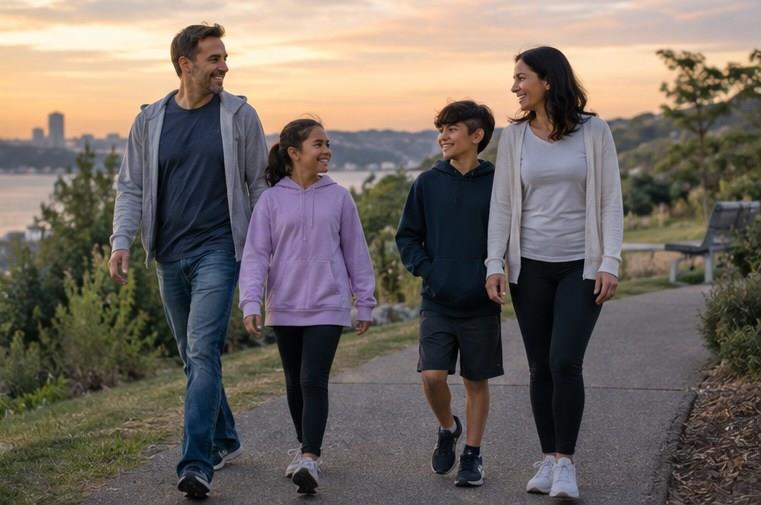
Choose a loop around the house, a corridor, a yard or a stretch of road with a pavement, lighting and little traffic. In heat, pollution or slippery rain you can move indoors. Leaving your shoes near the door and agreeing the plan with the people you live with reduces the number of decisions you have to make after eating.
Build gradually and look at the whole week
If a week of 5-10 minute walks causes no discomfort, add a few minutes or add one more meal to the routine, rather than increasing both speed and duration at once. Walking after meals does not fully replace suitable aerobic, strength and balance work. Look at your total activity, your sleep and your recovery instead of fixating on one session you missed.
Principles for applying this safely
Changes to how you live should start small, build gradually and suit your age, fitness and any existing conditions. Mild tension can appear when a habit changes, but increasing pain, dizziness, breathlessness, weakness or numbness, chest pain or any unusual symptom is a reason to stop and seek medical advice.
This article offers general information; it does not diagnose anything and does not replace a doctor. Anyone who is pregnant, has recently had surgery, has a heart, lung, muscle, bone or joint condition, or takes medication that affects sleep or blood sugar should ask whoever manages their treatment before making any significant change.
Common misunderstandings
You have to walk immediately for it to help
The best timing differs from person to person; a habit that is easy to keep and causes no discomfort is worth more than forcing yourself to a rigid number of minutes.
The faster you walk, the better
After a meal, a light intensity is usually more realistic. Going too fast can cause discomfort and raises the risk for anyone not used to it.
Practical suggestions and things to try
- Start with 5 minutes on level ground.
- Keep to a pace where you can still talk.
- Wear sturdy shoes and watch the surface.
- Walk indoors when the weather is unsuitable.
- Note how you felt rather than only the step count.
- Increase one variable at a time.
- Talk to a doctor if you have an underlying condition or any symptoms.
Observation checklist
- What context, season and audience is being talked about?
- Which details are facts, and which are impressions or personal choices?
- How do the ingredients, tools or setting affect the outcome?
- Are there any safety, allergy, cost or privacy risks to check?
- What small thing could you try today and review later?
Important note
Chest pain, marked breathlessness, fainting, an irregular heartbeat, weakness or numbness, or clear dizziness all need medical assessment. Anyone with diabetes taking glucose-lowering medication needs a personal plan from a healthcare professional.
Conclusion
A walk after a meal is worth trying precisely because it is small and easy to attach to daily life. Success is not walking every single day, but finding a length that leaves your body comfortable, a safe route, and a way back to it after a day you missed.


 A city is clean and safe because of people who start their working day before we do
 One phone-free hour a day: a small gap for returning to real life
 Small rituals that keep a family close inside a busy schedule
 Morning light and your sleep rhythm: building a steadier wake-up schedule
 Repair instead of replacing in a hurry: a small habit for a sturdier home and less waste
 A happy family is not a family that never argues
 Do not only ask your child what they scored — ask whether they were happy today
 Siblings scattered in different places: how do you keep the bond from fading?
Đăng nhập để bình luận: / Sign in to comment: