



The Green Children of Woolpit: legend, or a memory of refugees?
Two chronicles from the late twelfth century relate that villagers at Woolpit in Suffolk found two children with green-tinged skin beside a wolf pit. They wore strange clothes, spoke a language nobody understood, and would eat nothing but green beans. The boy died; the girl gradually took other food, lost the green colour, and spoke of a land of St Martin where it was always twilight. Two relatively early sources set this apart from an anonymous fairy tale, without turning every detail into a verified event.
William of Newburgh wrote in Yorkshire; Ralph of Coggeshall lived closer to East Anglia and said he had his information through people connected to the family that raised the girl. Two accounts that are geographically independent may still rest on a shared source. Their similarities strengthen the historical value of a transmitted story; their differences show it changed as it was retold.

What both chronicles keep
Both have two lost children, an unusual skin colour, an unknown language, beans as the first food and the girl's gradual adaptation. Woolpit takes its name from wolf pits, which gives a concrete location. Ralph's version links the patron to Richard de Calne and says the girl later lived within local society.
William had an interest in "wonders" but declared his own scepticism before telling the tale. Medieval chronicles mixed war, miracles, omens and hearsay by standards quite unlike modern historiography. That an author recorded the story tells us his contemporaries found it credible or worth reflecting on; it does not give us a medical file.
Could the green colour be an illness?
Severe anaemia, poor nutrition or chlorosis have all been used to explain a pale greenish skin. The children eating only one kind of food, and the girl recovering once her diet became varied, fits that to some extent. But "green" may be a word for a grey pallor, an effect of clothing, or a literary marvel.
There is no body, no portrait and no biological sample. A retrospective diagnosis based on one adjective translated several times over is very weak. The boy wasting away and dying may indicate disease or starvation, but it is also the motif that leaves the girl as the only witness able to describe their homeland.
Flemish settlers and a divided village
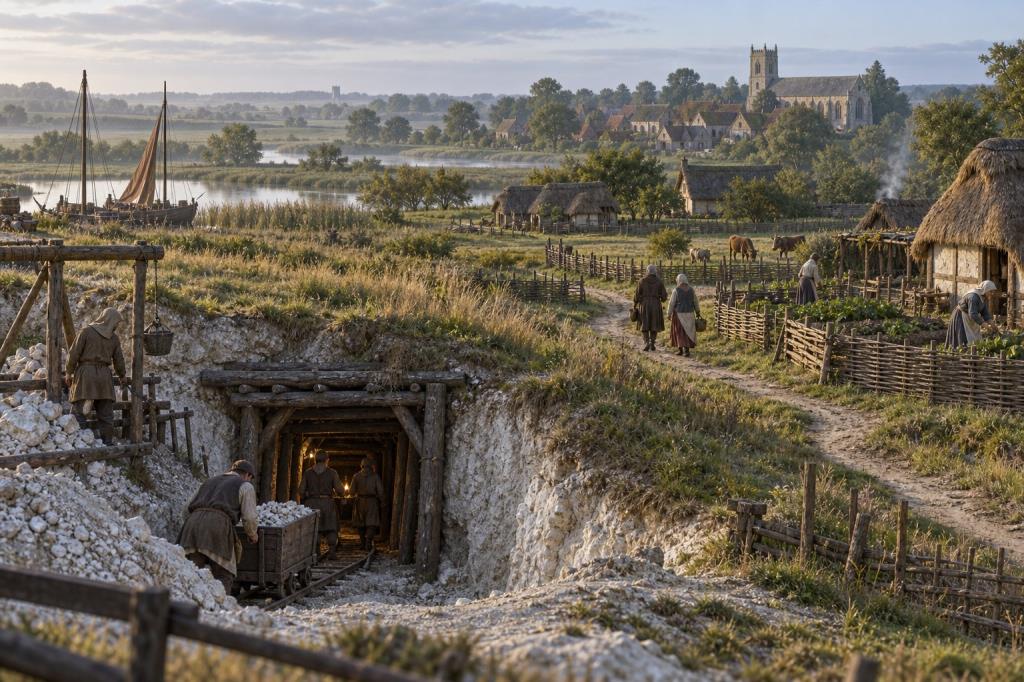
One hypothesis holds that the children were Flemish, from an immigrant community, and were lost after the conflicts under Stephen or Henry II. Flemish would have been unfamiliar to the villagers; different clothing and malnutrition explain part of the rest. St Martin may connect to a local place name or a religious memory.
Critics point out that the geography, the dating and a specific route have never fitted neatly together. Bells leading them through a cave until they emerged at Woolpit resembles a journey into another world. Underground mines or tunnels have been proposed, but no corresponding physical route has been found.
Folk tale, or a historical kernel?
The two options do not exclude each other. An encounter with refugee children could have been retold in the language of an underworld and perpetual twilight; or a folk motif could have been attached to real names and a real village. Legends are often how a community works through strangers, boundaries and the business of belonging.
The girl changing her food, losing her colour and entering society makes a story of transformation. What remains unknown are her real name, her real homeland and how far the authors shaped the account. Woolpit does not need a portal to be mysterious: it only needs two children speaking a language nobody around the wolf pits understood, and a history that failed to preserve their own voices.
From a story to a record that can be checked
A strong mystery does not require every detail to be unknown. The first task is to separate physical evidence, contemporary documents and measurements from illustrations, late recollections and literary retellings. A signal can be genuinely recorded without anyone knowing who sent it; a person can have really existed while the famous nickname was invented by a later generation.
Each kind of source answers a different kind of question. A receiver gives you frequency and timing, not intent. An inscription tells you a unit was stationed somewhere, not the fate of an entire army. A chronicle tells you which version was passed down, not that its author witnessed anything. Reading each source within its limits is what brings the unknown part into focus.
A gap in the record is not a blank slate
When the record is thin, a great many stories can be made to fit. But they are not equal: a hypothesis still has to match the last firm date, the geography, the technology available, the motives involved and whatever should have survived. A conclusion that needs fewer assumptions and explains more of the evidence deserves priority, even when absolute proof is out of reach.
"No evidence" also has to be given a scope. Nothing found in the archives that have been searched is not the same as never having existed; nothing detected again within one week is not the same as a source that never repeats. Stating that scope keeps you clear of both extremes: treating silence as proof of a cover-up, or treating a thin record as grounds for dismissing every account.
A timeline is the best defence against legend
Ordering the sources by date shows which details were there from the beginning and which were added decades later. A velvet mask turns to iron, a prime suspect turns into a stage monster, a technical signal turns into an apocalyptic message. A late detail is not automatically false, but it does have to explain how it came to know something the earliest sources never recorded.
It is also worth separating the date of the event, the date someone realised what it meant, and the date it was published. Data can sit unread for years before it is understood; an artefact can be excavated and then treated by the standards of its day. Those delays decide how much information modern techniques can still recover.
Independent confirmation comes in several forms
Two instruments running the same software can share the same fault; two chronicles can be copying one storyteller. Independence is strongest when different lines of evidence converge: a receiver far away, satellite imagery, an artefact with secure stratigraphy, a letter with an unbroken chain of custody. The fewer single links a conclusion rests on, the better it holds.
Reproduction matters just as much. A microwave oven that recreates perytons under stated conditions is causal evidence; a volcanic model that merely "could produce sound" is not enough for Upsweep unless it also reproduces the upward sweep and the seasonal rhythm. History rarely allows a rerun, so it has to cross-check texts, archaeology and probability instead.
Do not let an illustration become false evidence
There are no photographs of medieval events, and no direct images of many cosmic sources. The artwork in an article helps you picture the setting; it does not assert that a face, a gesture or a composition really looked that way. A caption should describe what the picture is explaining rather than present it as a scene from the site.
Images that travel beyond the article usually lose their caption. That is why illustrations should avoid invented text, over-confident symbols and sensational details with no source behind them. Atmosphere can come from light, empty space and traces; it does not need "evidence" planted in it that history never supplied.
A checklist for the reader
Ask what the earliest source is; whether its author was present; whether the raw data survives; whether an independent group confirmed it; when the famous detail first appears; what the hypothesis predicts; and what evidence would show it to be wrong. If nothing could refute it, it is a flexible story rather than an answer.
Finally, keep "cannot be ruled out" apart from "likely". Countless scenarios cannot be excluded absolutely, because the data is gone, yet history and science can still rank them. Talking in probabilities does not make an article duller; it tells the reader exactly where the solid ground ends.
The margin of error changes with the type of evidence
A recording can pin down frequency and timing quite precisely, yet still fail to identify the source if the sensor network is too sparse. A document can name a person and a place, but the author's intent, the intervening copies and the language of the period all introduce drift. Physical artefacts, which feel like the most objective evidence of all, can still be separated from their stratigraphy, over-restored, or dated from an object that happened to lie beside them. So it is a mistake to sweep every question mark into the single word "mystery". Each case needs its own map of uncertainty: what was measured directly, what was inferred, what a witness remembered, and what was only retold generations later.
When two pieces of evidence contradict each other, the sensible response is not to reach for the more dramatic one. You have to weigh resolution, the gap in time, the chain of custody, and whether the person recording it had an agenda of their own. A receiver in the right place can be worth more than ten people listening by ear; conversely, a clean stream of data with no context is just as easy to over-read. Being open about the level of uncertainty is what lets an account survive the next discovery. It also separates caution from evasion: a good researcher has to be able to say why one possibility is preferred over another, even when nothing can be settled for good.
A name can shape the whole story
Many famous phenomena are known through a catchy nickname. The nickname helps the public remember, but it also smuggles in an interpretation: "the trumpet", "the ghost", "the vanished legion" or "the man in the iron mask" all invite the mind to fill in pictures of its own. After a few hundred retellings, the label is easily mistaken for the original description. The remedy is to go back to the earliest wording, compare the translations and say plainly which name is modern. A single small difference - iron or velvet, vanished or redeployed, a one-off sound or a repeating train - can change the entire set of hypotheses.
The media adds a selection effect of its own: the coincidence is kept, while hundreds of ordinary occasions disappear from memory. Vivid details outlive dry numbers, so the later version tends to sound more complete and more frightening than the original record. That does not mean it is all imagination. It means the phenomenon and the history of the story about the phenomenon both need studying. Once you know where a detail first appeared, you can tell whether it is an independent fact, a new way of phrasing an old one, or decoration added to help the story travel.
What could move the case forward?
For acoustic or radio signals, progress usually comes from synchronised data at several stations, calibrated instruments and an environmental record alongside. Differences in arrival time give you a bearing; the spectrum and the repetition pattern help separate machinery, atmosphere, geology and astronomy. Raw data has to be archived so that another group can rerun the analysis instead of squinting at a processed plot. A single new detection need not solve an old mystery, but it can turn the vague question "what is it?" into specific tests of location, energy, periodicity and mechanism.
In history, progress can be slower: an archive is re-catalogued, private letters surface, organic material is dated, or isotopes reveal where somebody once lived. The technology is only useful when the question and the provenance of the sample are both clear. Testing an object with a broken custody history can produce a very precise number for the wrong subject. Conversely, a small administrative note placed correctly on the timeline can sometimes eliminate an entire major hypothesis. The value lies in connecting a new measurement to an old record, not in how modern the instrument looks.
Why is an answer sometimes still incomplete?
Some cases have a strong answer that still cannot be reconstructed minute by minute. We can identify a class of source, a social cause or a high-probability identity while the individual motives and the detailed sequence of actions are lost. Demanding that an answer cover every detail sets an impossible standard; but accepting a broad label without testing the exceptions is too easy. The balance is to grade the conclusion in layers: what is close to certain, what is well supported, what is still contested, and what there is simply no data to judge.
That unfinished quality is the honest part of research. A case can be closed on mechanism and still open on people, or the other way round. Once the main source is identified, the secondary questions do not become pointless: why did the community react as it did, why did the authorities of the day stay silent, and why does another version keep spreading? A mystery is therefore not only a hunt for a single answer. It is also a way of watching the limits of memory, of instruments, and of the power to keep records - the three things that decide which parts of the world survive for the people who come after.
The strangeness worth keeping
A natural explanation can be stranger than the legend: a dead star used as a clock, an oven in a staff kitchen imitating the cosmos, or a signal that crosses the entire Pacific. In history, what haunts is usually a deliberate silence - a name erased, an order never written down, people without power leaving none of their own words behind.
The best mysteries have clear edges. You know exactly what was recorded, what is merely plausible, and which measurement is still missing. The chill then comes not from exaggeration but from standing right at the edge of the record and seeing how much of the past, or of the universe, has moved out of reach.



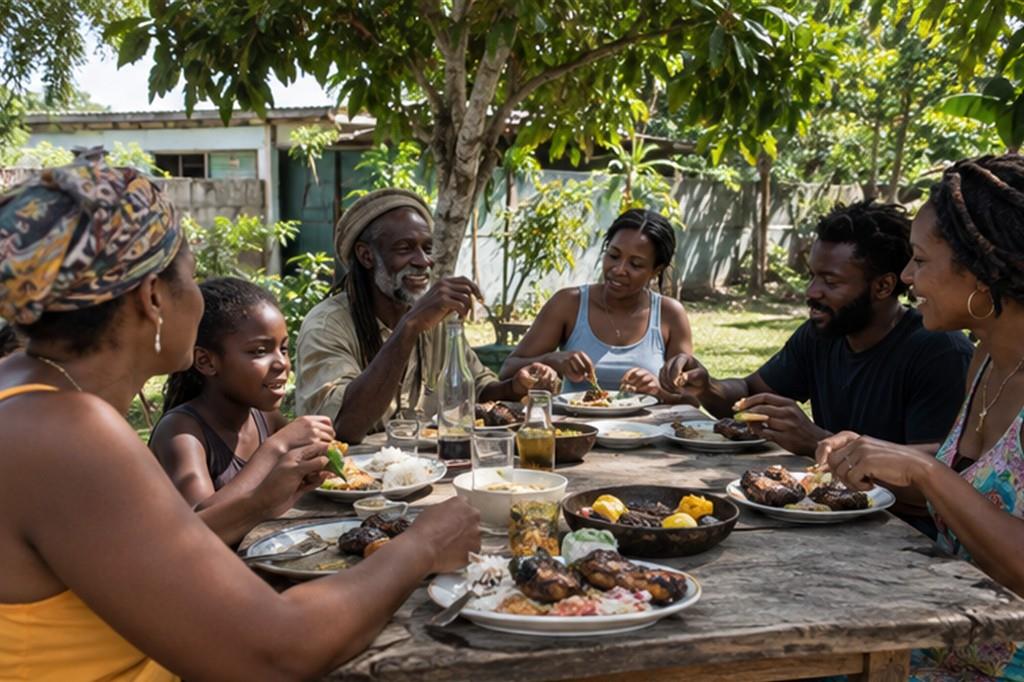 Jamaican jerk: the scent of pimento, the smoke pit and a community's living heritage
 Korean kimchi and banchan: the craft of fermentation and a table built on sharing
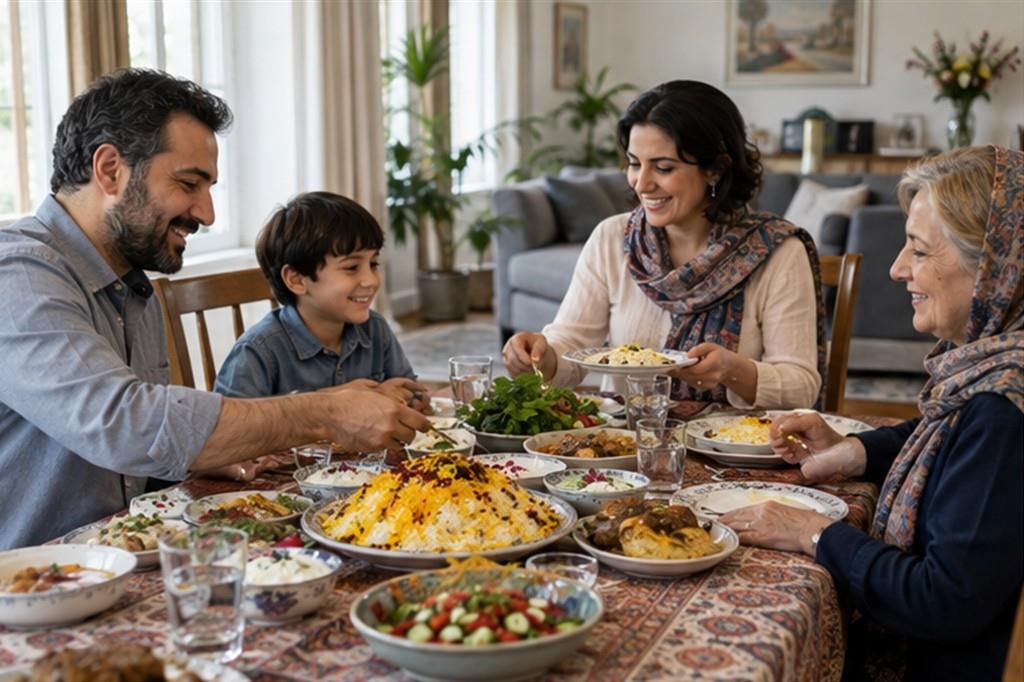 Persian rice and tahdig: saffron, a crisp bottom layer and the sofreh
 Moroccan couscous and tagine: rhythm, hospitality and the flavours of North Africa
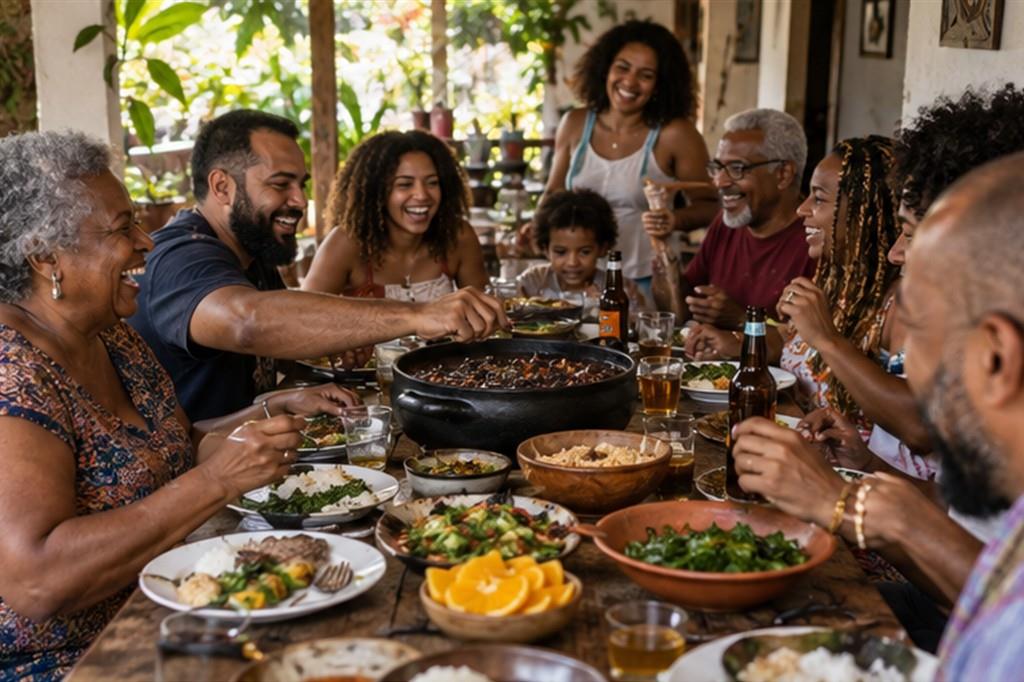 Brazilian feijoada: a pot of black beans, a weekend lunch and a story with many roots
 The Indian thali: a balanced tray that tells a regional story and a way of eating together
 Danish smørrebrød: the open sandwich and the art of composing a lunch
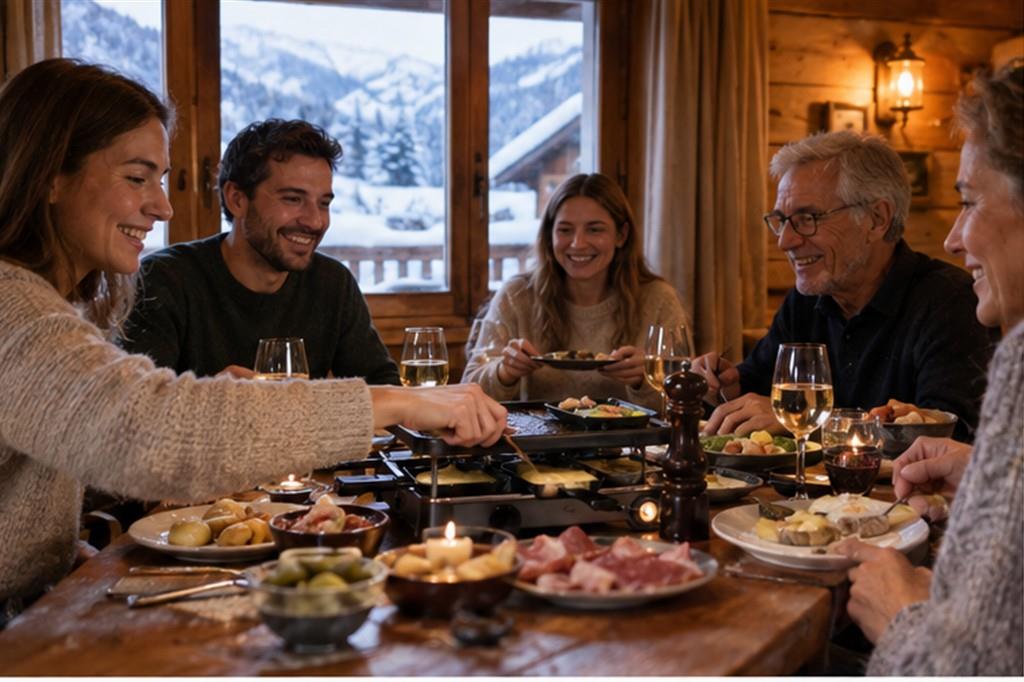 Swiss raclette: melted cheese and a shared table in the cold season
Đăng nhập để bình luận: / Sign in to comment: