



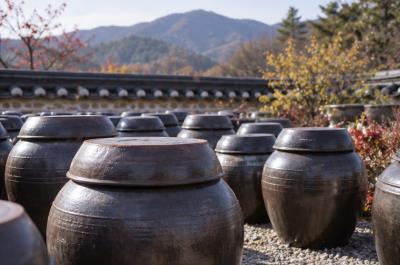
Korean kimchi and banchan: the craft of fermentation and a table built on sharing
Kimchi and banchan keep the Korean table in motion: sour, spicy, salty, fresh, grilled and stewed take their turns around the bowl of rice. Those small plates are not merely “free side dishes”; they hold the labour of preparation, the techniques of preserving and the rules of sharing.
Kimchi has hundreds of variants depending on the vegetable, the season, the region and the household, and banchan change from meal to meal. The image of a table crowded with plates, common in restaurants, does not reflect every everyday meal. What is worth noticing is how the many portions work together and are replenished for the whole table.
Quick facts
- Kimchi: a family of salted and fermented vegetables with many recipes.
- Banchan: small dishes eaten with rice, not a fixed list.
- Flavour base: fermentation, soy sauce, soybean paste, sesame oil, garlic and seasonal ingredients.
- How it is eaten: shared dishes combined with each person's own bowl of rice.
- Note: sodium and allergens vary with the recipe.
Kimjang and the strength of working together
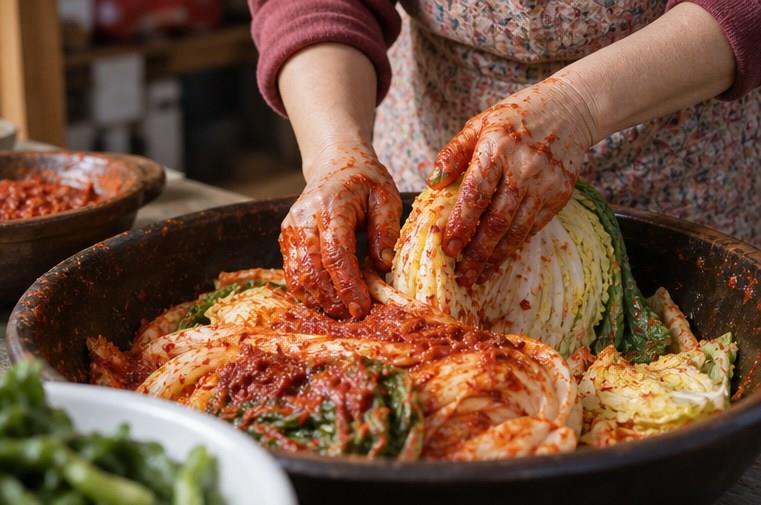
Preparing enough kimchi for the cold season used to be a major undertaking, with the washing, salting, mixing and packing into jars shared out among many hands. The process, called kimjang, strengthened family and neighbourhood ties and passed the skill on. Refrigerators and modern housing have changed the scale, but the memory of doing it together still means something.
Fermentation is a living process
Salt draws out water and creates conditions in which the right microorganisms can grow; temperature and time govern how fast the sourness develops. Fresh kimchi is crisp and bright, while long-aged kimchi turns deeply sour and suits stews or fried rice. A strong smell may be perfectly normal, but it does not remove the need for clean equipment and proper storage.
Banchan give the rice its rhythm
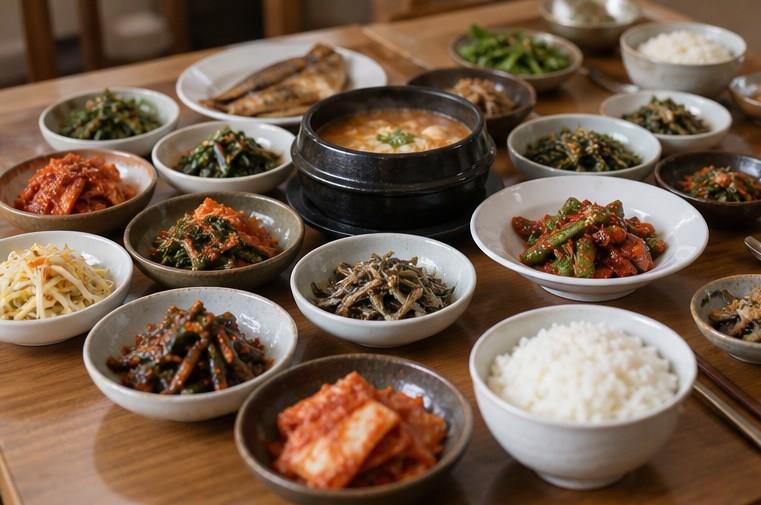
Dressed vegetables, blanched greens, small fish, egg, tofu, braised items and pickles each bring a different texture. Diners alternate between them, the rice and the main dish rather than finishing one plate first. Quantity does not decide quality; a few dishes that are right for the season can make a complete table.
Shared dishes and good manners
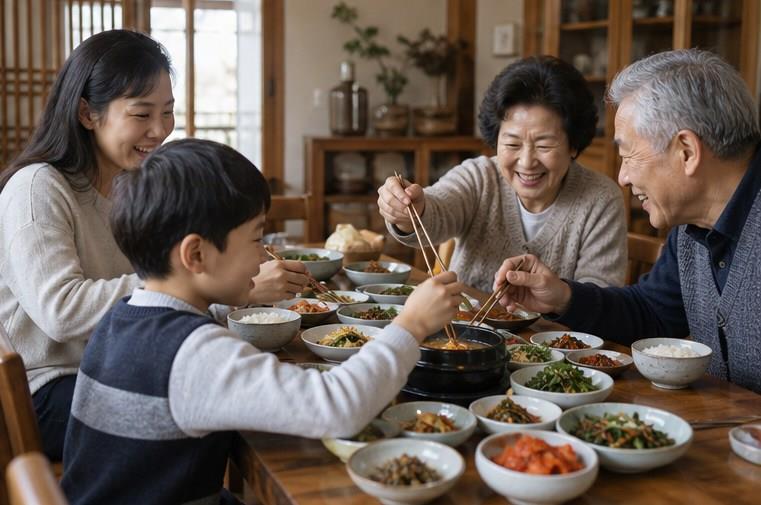
Chopsticks and spoon have different roles, and serving utensils may or may not be used depending on the place. Do not dig through a plate looking for the piece you want, and do not push used chopsticks deep into a shared dish when serving utensils are on the table. Waiting for the eldest to begin is still good manners in many settings.
The table steps out into the world
Industrially made kimchi and Korean restaurants have spread the food widely, and at the same time can standardise its flavour. Migrant communities use local vegetables and adjust the heat, creating new variants. Calling this what it is — adaptation — respects the origins without denying the invention.
How to look at a living tradition
No region or community should be reduced to a single recipe. Ingredients, names and ways of serving shift with the season, the family, religion, occupation and patterns of migration. What is shared shows a history of exchange; what differs shows the capacity to adapt.
When you go and try it, use the right name for the dish and the region if you know them, listen to the people making it, ask before photographing private spaces, and avoid treating the word “authentic” as an absolute stamp. A new version still has value as long as it says what has changed and respects the people who keep the craft alive.
Common misunderstandings
Kimchi is just spicy napa cabbage
Radish, cucumber, spring onion and many other vegetables can all be made into kimchi, and some kinds are barely red or not red at all.
Banchan are just minor side dishes
Many of them take real work of their own and are an essential part of what balances the meal.
Practical suggestions and things to try
- Taste a little before mixing a lot.
- Use the serving utensils when they are provided.
- Ask whether the kimchi contains seafood.
- Watch out for sesame, soy and gluten.
- Keep kimchi cold once it is opened.
- Use the deeply sour portion for cooked dishes to cut down on waste.
- Do not judge a whole cuisine by how many plates a restaurant brings.
Observation checklist
- What context, season and audience is being talked about?
- Which details are facts, and which are impressions or personal choices?
- How do the ingredients, tools or setting affect the outcome?
- Are there any safety, allergy, cost or privacy risks to check?
- What small thing could you try today and review later?
Important note
Kimchi can contain fish, shrimp or molluscs even though it looks mainly like vegetables, and banchan often contain sesame, soy and gluten. Anyone limiting sodium should keep the portions appropriate.
Conclusion
Kimchi and banchan show how preserving food can become a language of community. From the fermenting jar to the small plate in the middle of the table, the value lies in time, in hands, and in the way people leave a portion for one another.


 Korean kimchi and banchan: the craft of fermentation and a table built on sharing
 Persian rice and tahdig: saffron, a crisp bottom layer and the sofreh
 Moroccan couscous and tagine: rhythm, hospitality and the flavours of North Africa
 Brazilian feijoada: a pot of black beans, a weekend lunch and a story with many roots
 The Indian thali: a balanced tray that tells a regional story and a way of eating together
 Danish smørrebrød: the open sandwich and the art of composing a lunch
 Swiss raclette: melted cheese and a shared table in the cold season
 Injera in Ethiopia and Eritrea: the shared platter that binds a community
Đăng nhập để bình luận: / Sign in to comment: