



Georgian khachapuri: cheese bread, the supra table and Caucasus hospitality
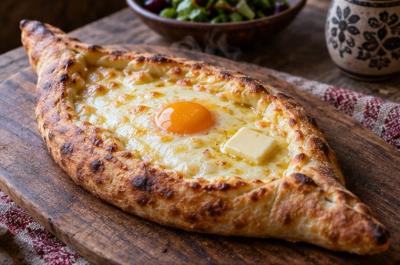
Khachapuri is a family of Georgian cheese breads whose shape and filling change from region to region. The boat-shaped Adjaruli version is the one that travels well in photographs, but it is only one branch of a wider story about dough, dairy, ovens and the hospitality around the supra table.
Georgia sits in the Caucasus, where trade routes and terrain have produced many local traditions. Calling every khachapuri a boat with an egg erases the round forms, the layered ones and those with other fillings. Understanding the dish starts with the name of the region and the setting it belongs to.
Quick facts
- Country: Georgia, in the Caucasus.
- Structure: dough and cheese, in forms that vary by region.
- Well-known variants: Imeruli, Megruli, Adjaruli and many others.
- Settings: home meals, bakeries, restaurants and banquet tables.
- Note: gluten, dairy and egg depending on the version.
One name, many shapes
Imeruli is usually a round loaf with cheese inside; Megruli adds cheese on top as well; Adjaruli is shaped like a boat and finished with egg and butter. That list is far from complete. The differences show how the bread developed according to each region's dairy, ovens, climate and customs.
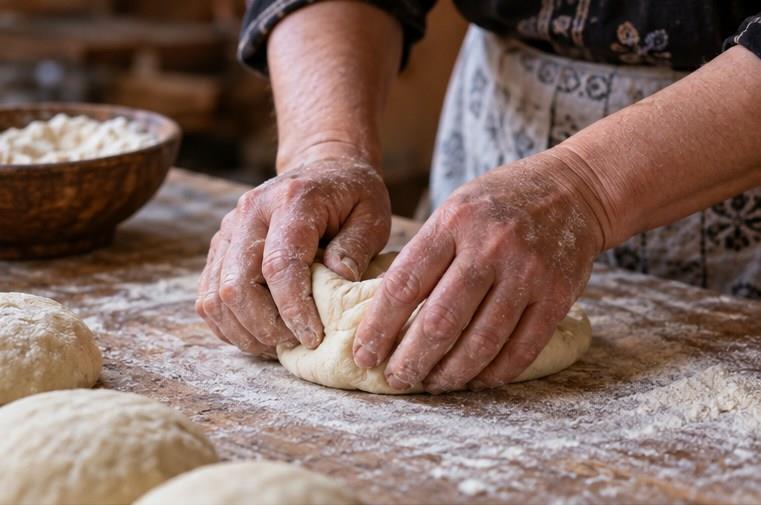
The dough is the foundation, not a container
The dough has to be strong enough to hold the filling yet stay soft after baking. Fermentation builds flavour and lift; rolled too thin it tears, too thick and the bread-to-cheese ratio turns heavy. Bakers adjust water and time to the flour they have, so copying by weights alone, without a feel for the dough, usually gives a poor result.
The cheese makes the character
Local cheeses have their own saltiness, acidity, moisture and melting behaviour. Made in another country, cooks usually blend several cheeses to approach the texture they want. It is fair to call that an adapted version, while avoiding the idea that mozzarella stands in for the whole Georgian cheese tradition.
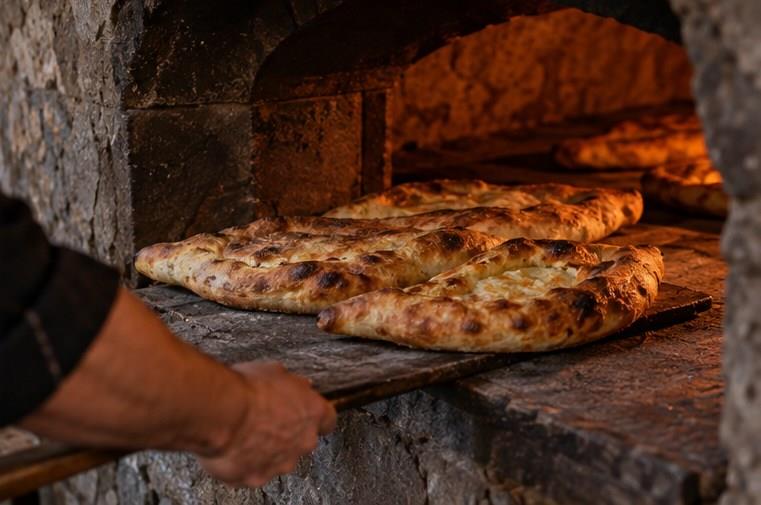
How to eat the boat
With Adjaruli, the egg and butter are usually stirred into the hot cheese, after which you tear off the rim and dip it into the middle. It is rich and at its best while hot. The egg has to be handled appropriately for how far it is cooked and for who is eating; anyone who needs to avoid undercooked egg should ask for it to be cooked through.
Khachapuri at the supra table
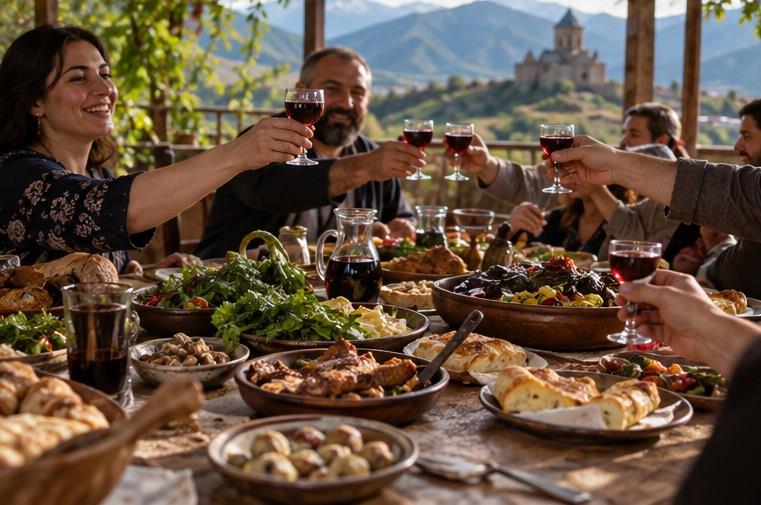
A supra is a feast with food, toasts and someone whose role is to lead the ritual. Khachapuri may appear among many dishes, but the culture of that table cannot be reduced to one bread. Hospitality comes with responsibilities for the guest too: eat within your capacity, listen, and respect the local rhythm of the toasts.
How to look at a living tradition
No region or community should be reduced to a single recipe. Ingredients, names and ways of serving shift with the season, the family, religion, occupation and patterns of migration. What is shared shows a history of exchange; what differs shows the capacity to adapt.
When you go and try it, use the right name for the dish and the region if you know them, listen to the people making it, ask before photographing private spaces, and avoid treating the word “authentic” as an absolute stamp. A new version still has value as long as it says what has changed and respects the people who keep the craft alive.
Common misunderstandings
Khachapuri always has a raw egg in the middle
Only some variants use egg at all; many are round loaves filled with cheese.
It is simply Georgian pizza
The comparison helps you picture it, but it easily hides the dish's own technique, cheeses and history.
Practical suggestions and things to try
- Ask the name of the variant and the region it belongs to.
- Eat it hot, but be careful — the filling holds the heat.
- Declare any dairy, gluten or egg allergy.
- Ask for the egg to be fully cooked if you need that.
- Share a large one so nothing goes to waste.
- Taste before adding salt, because the cheese is already salty.
- Respect the ritual if you are at a supra.
Observation checklist
- What context, season and audience is being talked about?
- Which details are facts, and which are impressions or personal choices?
- How do the ingredients, tools or setting affect the outcome?
- Are there any safety, allergy, cost or privacy risks to check?
- What small thing could you try today and review later?
Important note
The dish usually contains gluten and dairy, and may contain egg that is not fully cooked. Anyone in a higher-risk group should ask for the egg to be cooked through.
Conclusion
Khachapuri stays with you through hot bread, cheese and a generous table, but its depth lies in the regional differences. Learning the name of each variant opens a door into a Georgia wider than the familiar picture of the boat-shaped loaf.


 Georgian khachapuri: cheese bread, the supra table and Caucasus hospitality
 Peruvian ceviche: the sea, lime and the moment freshness decides everything
 Swedish fika: why a cup of coffee can become a social pause
 Polish pierogi: small folds of dough and the memory passed around a kitchen table
 Jamaican jerk: the scent of pimento, the smoke pit and a community's living heritage
 Korean kimchi and banchan: the craft of fermentation and a table built on sharing
 Persian rice and tahdig: saffron, a crisp bottom layer and the sofreh
 Moroccan couscous and tagine: rhythm, hospitality and the flavours of North Africa
Đăng nhập để bình luận: / Sign in to comment: