



Moroccan couscous and tagine: rhythm, hospitality and the flavours of North Africa
Moroccan food is recognised by the steam of a tagine, the loose grains of couscous and the stream of mint tea poured into a small glass, but its real appeal lies in a web of Amazigh, Arab-Andalusian, Jewish, African and Mediterranean influences retold through each region.
The food in this article is seen as a living system: dishes are tied to climate, ingredients, labour, family memory and the ways people sit down together. So this is not a claim that an entire country has only one palate or one set of rituals. Every region, religion, community and household has its own versions, and each deserves respect.
Quick facts
- Emblematic dishes: couscous, tagine, harira, pastilla and many kinds of bread.
- Techniques: rolling semolina into grains, steaming in several rounds, slow braising in an earthenware pot and blending spices.
- Settings: the family kitchen, the souk, eating houses, riads and the tea table where guests are received.
- Social rhythm: in many households couscous is associated with Friday and with family gatherings.
- In 2020 UNESCO inscribed the knowledge and practices around couscous shared by Algeria, Mauritania, Morocco and Tunisia.
How it came about
Morocco lies between the Atlantic, the Mediterranean, the Atlas mountains and the Sahara, at a junction between Africa, Europe and the Arab world. That geography brings grain, olives, dates, citrus, spices, fish and techniques of preservation into very different combinations.
Couscous has deep roots in Amazigh tradition and is kept alive by many North African communities together. Rolling semolina into grains, steaming it over a broth and then loosening it takes a rhythm of the hands and experience; UNESCO stresses that this knowledge is passed on through watching, imitating and practising.
Tagine is both the name of a vessel with a conical lid and the family of slowly cooked dishes made in it. The shape of the lid returns condensed steam to the food, which suits the job of softening meat, vegetables and dried fruit with a controlled amount of liquid.
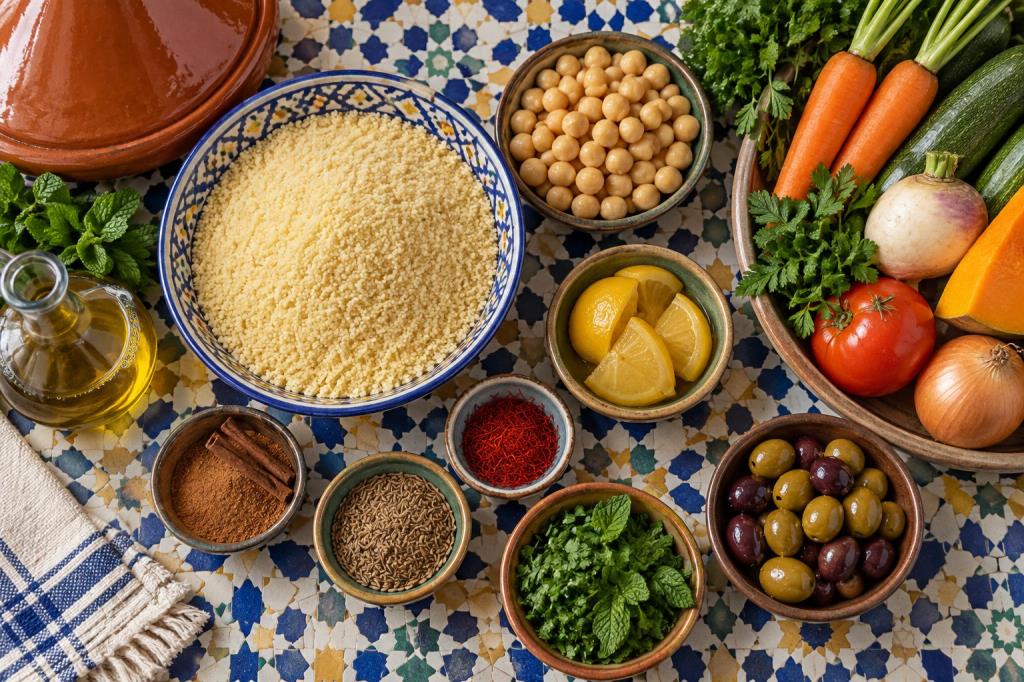
How is a meal put together?
The table may open with salads of raw or cooked vegetables, olives and bread, followed by a tagine or couscous placed in the middle. Bread is used to gather up the sauce, and in many family settings people eat the shared dish from the area nearest them.
Traditional couscous is not simply grain steeped in boiling water. Semolina is moistened, rolled, steamed, loosened and steamed again so the grains swell lightly without clumping; below sits a broth with vegetables, chickpeas and meat, varying with region, season, means and occasion.
The elements that make the character recognisable
- Durum wheat semolina makes the couscous grains.
- The couscoussier separates the level where the grain steams from the one where the broth cooks.
- An earthenware tagine holds the moisture through a slow braise.
- Preserved lemon, olives and dried fruit provide salt, acidity and sweetness.
- Cumin, ginger, cinnamon, turmeric, saffron and ras el hanout are used according to the dish.
- Green tea, mint and sugar make up the familiar ritual of receiving guests.
The list above is a map for observing, not a formula that boxes anything in. An ordinary family meal may be far simpler, while a festival table is elaborate and full of symbolism. The cultural value lies as much in how things are chosen, prepared, divided and offered to one another as in the number of dishes.
Ingredients tell a story of geography
The coast provides fish and seafood; the plains supply grain, olives and vegetables; the valleys give citrus; the mountains are tied to Amazigh produce; the south has dates, saffron and argan oil in the areas that suit them. A spice market reflects both local produce and a history of trade.
A dry climate gives meaning to preserving lemons, drying fruit, curing olives and managing water. The sweet-salt register of a meat tagine with apricots or prunes is not a random mixture but connects to the spice cupboard, to preservation and to the aesthetics of the banquet table.
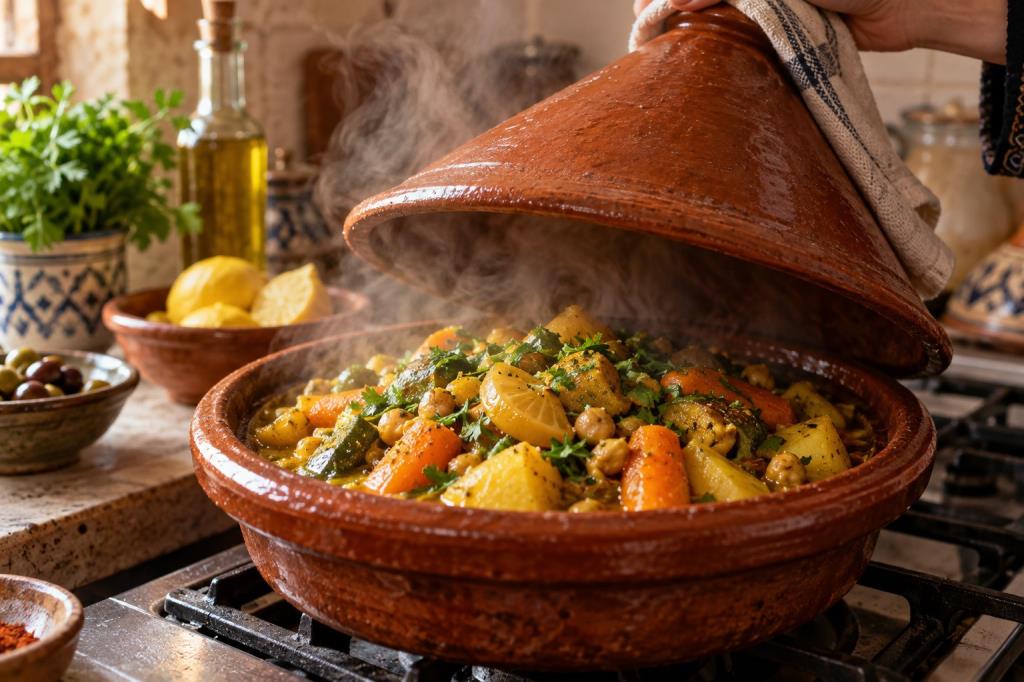
The techniques that build the flavour
For couscous, the cook sprinkles water a little at a time, rubs the grains loose by hand and steams so the vapour passes through them. After each round the grain is turned out, loosened and its moisture adjusted; too much water at once causes clumping, while skipping a round of steaming leaves the texture heavy.
A tagine needs gentle heat and time. The ingredients are arranged to cook in the steam and the juices they release; lifting the lid constantly loses heat, and a high flame can crack the pot and burn the base. An unglazed earthenware pot must be seasoned, used on the right kind of heat source and checked for food safety.
Seen from the kitchen, a traditional technique is usually a community's answer to a very practical problem: making grain easier to eat, using up a harvest, extending how long food keeps, or building layers of aroma from a limited supply of fuel. When modern technology shortens a stage, the flavour may still be good, but the rhythm of the work, the sensory knowledge and the space in which the craft is handed on all change too.
The table, hospitality and good manners
Offering tea is one of the most recognisable expressions of Moroccan hospitality. Green tea with mint is usually made sweet and poured from a height to raise a head of foam, though the amount of sugar and the practice itself vary. Accepting a glass, taking time to talk and watching the host generally matter more than imitating the pouring.
- Wash your hands before eating from a shared dish.
- Eat from the part nearest you; do not dig around or hunt for the best pieces on someone else's side.
- Use the right hand when eating with your fingers, and tear the bread into suitable pieces.
- Accept the tea with thanks; you can say in advance if you would like less sugar.
- Do not assume alcohol is served in every household or venue.
- During Ramadan, respect the community's daily rhythm and its iftar meal.
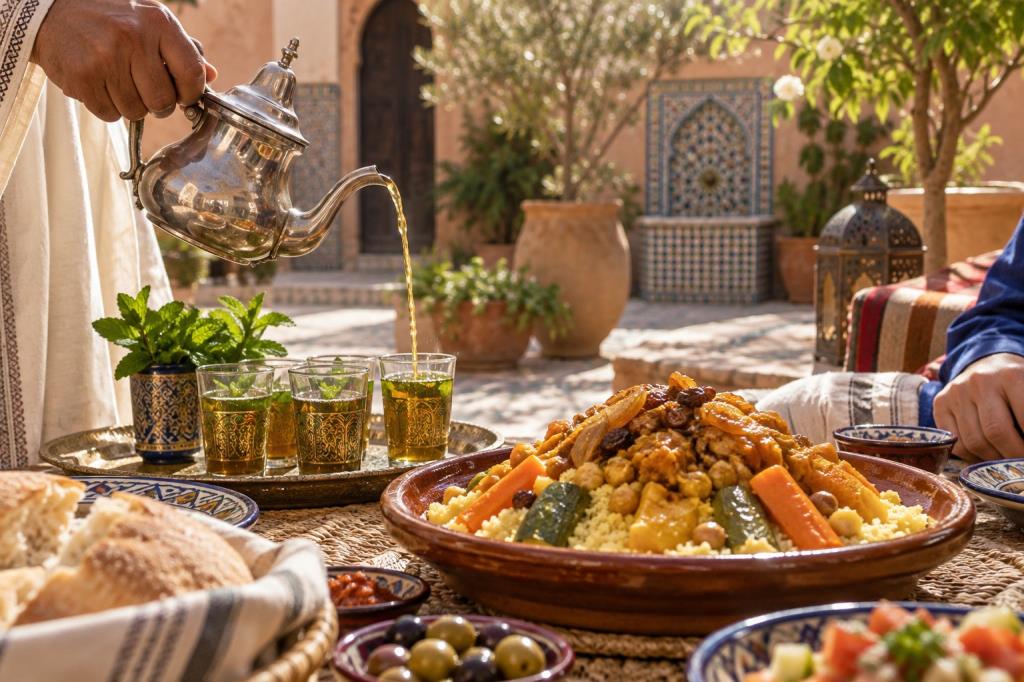
Differences between regions and families
A coastal tagine may use fish, while inland ones commonly use meat, poultry, vegetables, preserved lemon or seasonal dried fruit. Couscous also varies in the grain, the vegetables, the broth, the meat and whether it is served sweet or savoury; some families keep it for Friday, others are more flexible.
Fez, Marrakech, the Rif, the Atlas, Essaouira and the Sahara do not produce the same menu. Moroccan Jewish heritage, Amazigh traditions and Arab-Andalusian influences are present to different degrees; describing the cuisine as “a North African spice blend” skips over those particular histories.
The best approach is to use the name of the region, the community or the specific dish wherever you can. Very broad labels such as “Asian food”, “Middle Eastern cuisine” or “African dishes” are convenient in conversation but easily blur history and diversity. A dish that has crossed borders may also be kept alive by several communities at once; looking for a single “owner” is often less meaningful than understanding the branches along which it grew.
Common misconceptions
Couscous just needs boiling water poured over it
Instant products are convenient, but the traditional technique involves rolling, several rounds of steaming and loosening the grains by hand. The difference lies in texture, aroma and the knowledge held in the labour.
Ras el hanout has one standard recipe
The name refers to a shop's or a family's own selected blend; the ingredients and proportions differ. It should not be used on everything and then called the Moroccan flavour.
Every tagine is sweet and full of meat
There are vegetable, fish and meat tagines; there are sour-salt versions, fragrant and spicy ones, and sweet-salt ones. The dish depends on the locality, the season and the occasion.
A more respectful way to experience it while travelling
- Ask what the city or region is known for instead of only ordering the famous dishes.
- If you are eating from a shared platter, keep to the part nearest you and use your right hand.
- State any nut, gluten or sesame allergy, or a vegetarian requirement, very clearly.
- Do not photograph vendors in the souk without asking first.
- Buy saffron, argan oil and spices from places that state their origin clearly.
- Remember that couscous is a shared heritage across North African borders; do not turn the dish into a contest over origins.
If a host or someone serving shows you a way of eating that differs from your habits, watch first and then follow it as far as you are comfortable. You can politely ask about allergies, dietary needs or how hot something is. Ask permission before photographing people cooking, an altar, a ritual or a private space; prices and judgements about the food also belong in their local context.
Trying it at home without turning the dish into a stereotype
You can learn couscous with a couscoussier or a suitable steamer: moisten the grain gradually, steam it, turn it out onto a tray, separate the grains and repeat. If you use the instant kind, name the method honestly and put your effort into a vegetable broth with real depth.
For a tagine, an ordinary heavy-based pot still makes a good braise, though it does not fully reproduce the exchange of steam inside an earthenware vessel. Use preserved lemon and spices with restraint, and taste for saltiness before adding salt. With mint tea, adjust the sugar to your guests' health and preferences.
A version cooked at home should honestly be called an adaptation when the equipment or the local ingredients are missing. Say clearly what you substituted and how it affects the aroma, the texture and the colour. If you want to go deeper, learn from the cooks, writers and communities attached to that tradition rather than relying on a short video or a commercialised version.
An observation checklist for the five senses
- At which stage does the aroma appear: toasting, grinding, fermenting, steaming or simmering?
- Is the dominant texture crisp, airy, chewy, smooth or juicy?
- Does the depth of flavour sit in the main dish, or does it come from the side dishes and the seasonings on the table?
- What part do the utensils, the crockery and the seating arrangement play?
- Who prepares the food, how is the knowledge passed on, and on what occasion does the meal take place?
Traditional food in modern life
Pressure cookers, packaged couscous and gas stoves shorten the cooking time, while cooperatives and artisans go on producing the grain, the pottery, the oil and the spices. Tourism creates livelihoods but can also turn a ritual into a performance detached from community life.
Conservation can begin with paying a fair price for farm produce, recognising that a decorative tagine is not meant for cooking, and reducing waste at a large banquet. UNESCO treats couscous as a whole made of skills, utensils and the circumstances in which it is eaten, so keeping the makers and the spaces where the craft is handed on matters as much as keeping the recipe.
Preserving heritage does not mean freezing a dish at some imagined moment in time. Young people, migrants, home cooks and restaurants all keep adjusting portions, equipment, sources of ingredients and ways of serving. What matters is recognising the core body of knowledge, acknowledging those who pass the craft on, and creating the conditions for a community to decide for itself how its heritage moves forward.
Terms worth remembering
- Couscous: semolina rolled into grains and steamed; the word also names the finished dish.
- Couscoussier: the two-tier pot for cooking the broth and steaming the grain.
- Tagine: the earthenware pot with a conical lid, and the dishes cooked in it.
- Ras el hanout: a spice blend that varies with whoever mixes it.
- Harira: a soup usually containing tomato, pulses and spices.
- Iftar: the meal that ends the day's fast during Ramadan.
Conclusion
Couscous, tagine and mint tea only acquire real depth when they are seen together with the hands that roll the grain, the pot that holds the steam, the market and the etiquette of welcoming a guest. Moroccan food is therefore not a layer of spice laid over a dish, but a rhythm of living that connects geography, history and sharing.


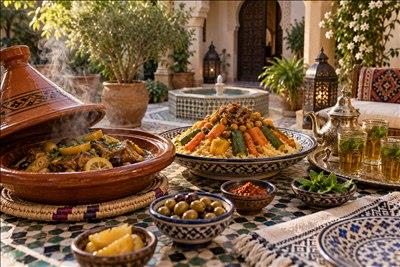 Moroccan couscous and tagine: rhythm, hospitality and the flavours of North Africa
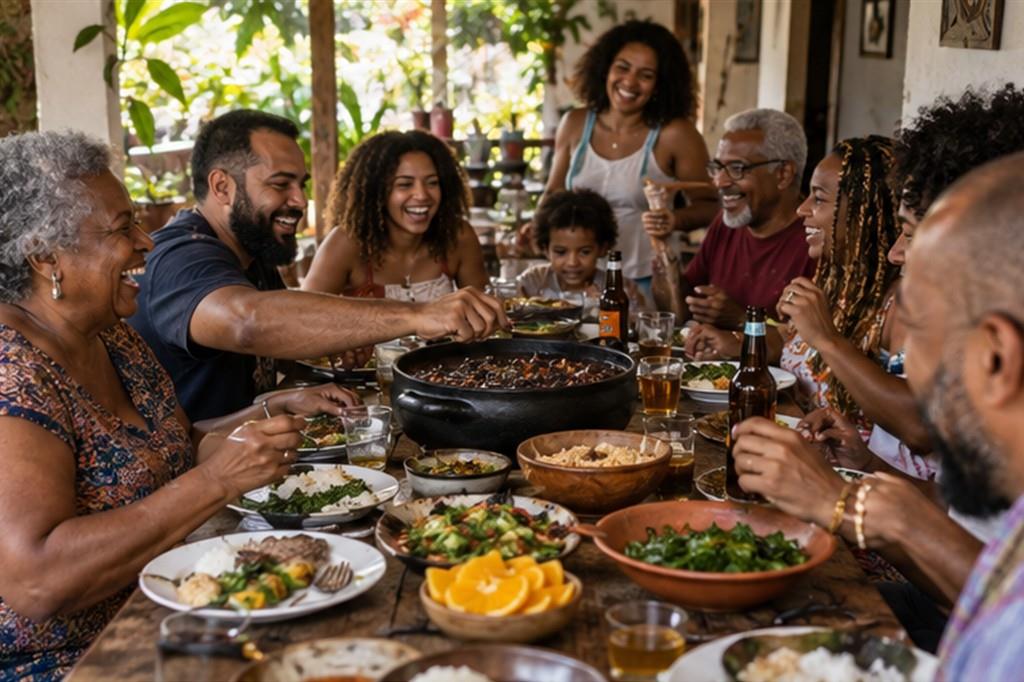 Brazilian feijoada: a pot of black beans, a weekend lunch and a story with many roots
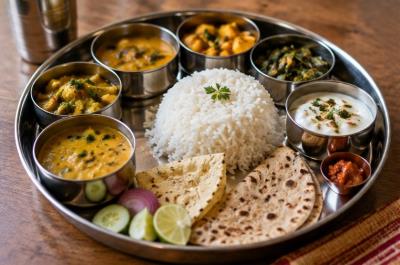 The Indian thali: a balanced tray that tells a regional story and a way of eating together
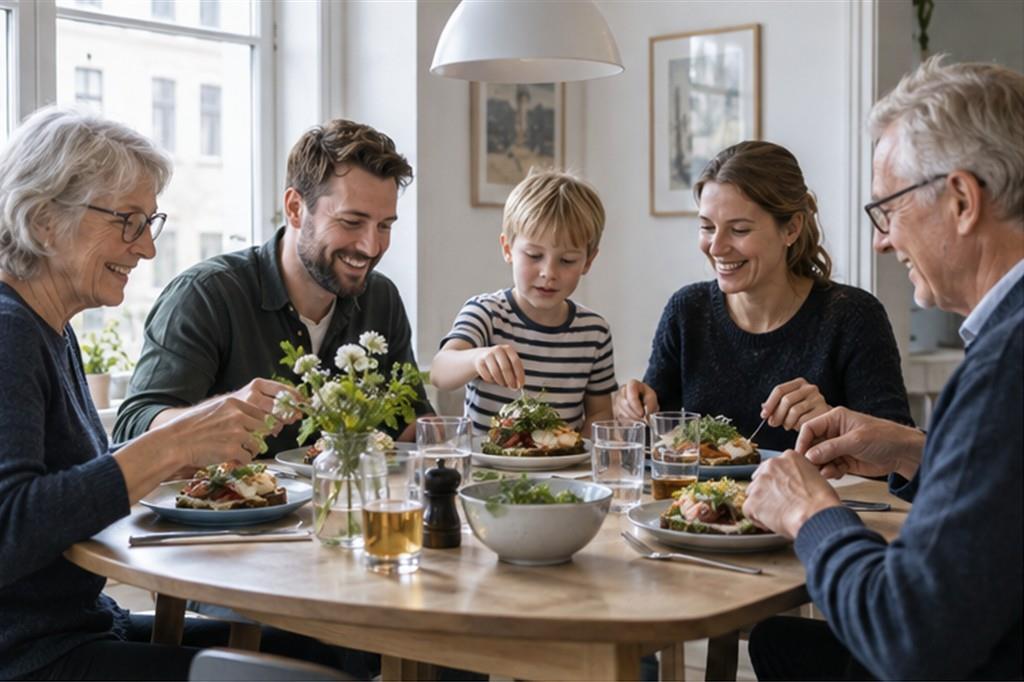 Danish smørrebrød: the open sandwich and the art of composing a lunch
 Swiss raclette: melted cheese and a shared table in the cold season
 Injera in Ethiopia and Eritrea: the shared platter that binds a community
 Italian aperitivo: the pause at the end of the day, between a drink and a conversation
 West African jollof: a pot of red rice, memories of home and a proud argument
Đăng nhập để bình luận: / Sign in to comment: