



Top 10 Outstanding Dishes of Zhejiang, China
Zhejiang is located on the coast, a land of green mountains and blue waters, rich in natural resources, also known as the land of fish and rice. The local people place great importance on their daily meals and dishes. Below are 10 Zhejiang dishes listed among the top culinary delights.
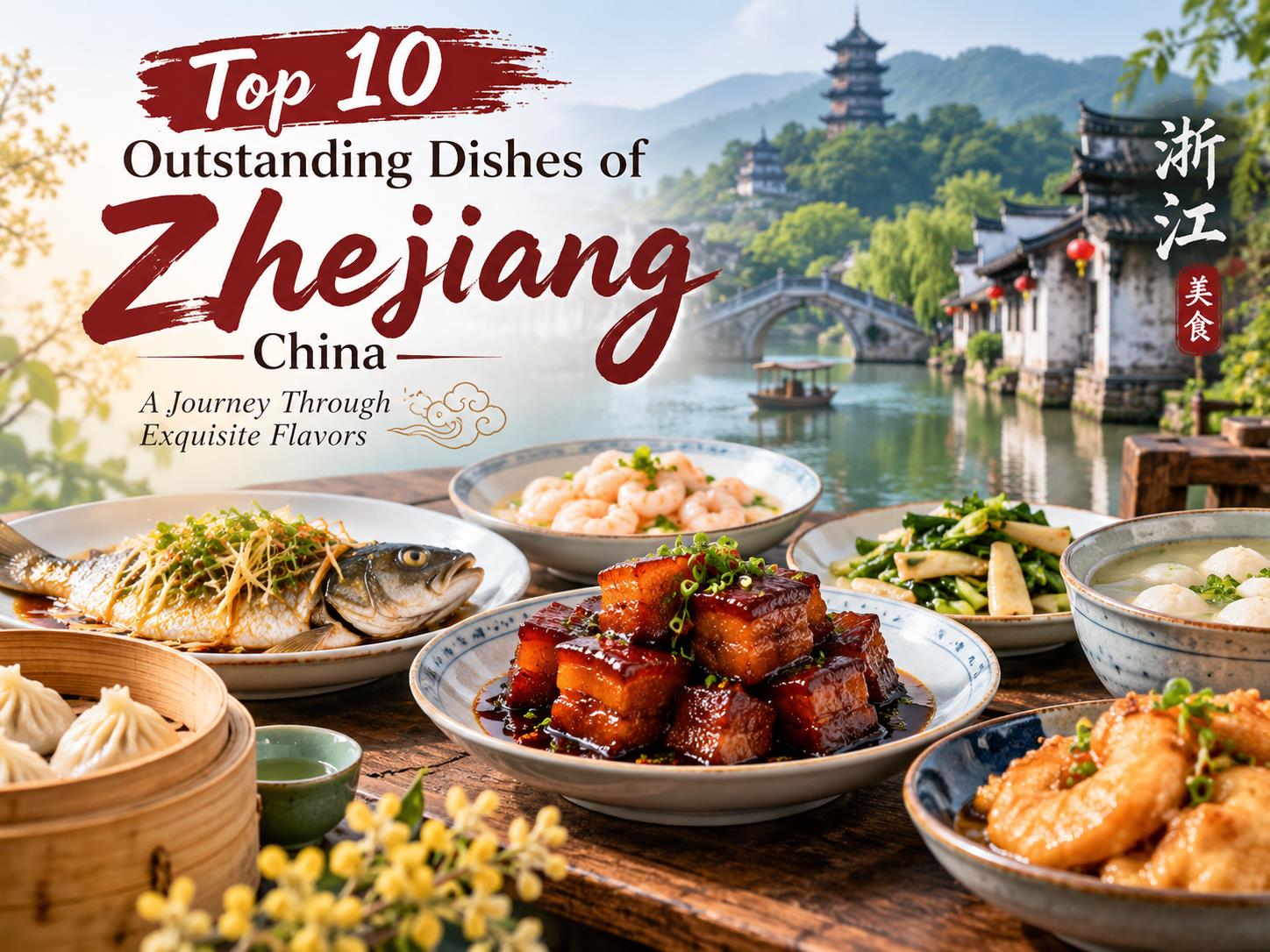
1. Ranked first is Dongpo Pork
Su Dongpo was born during the Song Dynasty (1036-1101). He was one of the Eight Masters of the Tang and Song, a renowned poet, writer, calligrapher, and painter of his era. Not only that, he was also remarkably skilled in the culinary arts. When he offended the emperor and was exiled to Hangzhou, he often cooked for his friends himself. Among the dishes created by Su Dongpo, braised pork was his greatest specialty.

That year, half of West Lake was overgrown with weeds. Upon taking office, Su Dongpo mobilized many laborers to pull up weeds and clean the lake. The mud dredged from the bottom was used to build a long causeway and construct bridges connecting waterways, reviving the beauty of West Lake. Building the long causeway improved the environment, brought irrigation benefits to the people, and enhanced the scenery of West Lake. Later, this became known as Spring Dawn on Su Causeway, one of the Ten Scenes of West Lake.

At that time, the locals praised Su Dongpo for doing a great service for the community. Hearing that he loved braised pork, when spring arrived, they spontaneously brought pork to present to him as a gesture of gratitude. Receiving so much pork, Su Dongpo felt he should share it with the laborers who helped dredge West Lake.
So he asked his servants to cut the meat into square blocks, prepare it according to his recipe, and distribute it along with wine to each laborer's family according to the worker roster. When his household cooked the meat, they misheard send with wine attached as cook with wine added, resulting in braised pork infused with the flavor of wine. Everyone who ate the braised pork brought by Su Dongpo found the flavor unique and delicious.
From then on, people praised the delicious dish, and its fame spread far and wide. Among those who came to study under Su Dongpo, besides learning calligraphy and literature, they also wanted to learn how to make Dongpo Pork. Lou Wai Lou Restaurant learned Su Dongpo's cooking method and served it to the world, while the dish continued to be refined and passed down to this day.
2. Ranked second is Pork Wheat Cake
Pork Wheat Cake is also known as Meatball Wheat Cake. Its preparation is similar to how vegetable-stuffed wheat cakes are usually made.

The only difference is that the size of the cake is slightly smaller. Minced pork is used as the filling. When eating this cake, people use three chopsticks: the left hand uses one chopstick to hold the cake on the plate, while the right hand uses a pair of chopsticks to pick up pieces, which are then dipped in soy sauce or vinegar according to personal taste.
3. Ranked third is Juyuan Green Crab
Sanmen has a 200-year history of green crab farming. Sanmen green crabs are large, vigorous, brightly colored, with sweet and tender meat, making them famous across Fujian, Zhejiang, and Shanghai, attracting many food lovers.

Sanmen's Juyuan Green Crab thrives in temperatures from 7 to 37°C and salinity levels of 2.6 to 55‰. It is a carnivorous, burrowing species that emerges at night. Sanmen green crab meat is rich in protein, low in fat, and contains 18 amino acids. Besides culinary uses, the green crab is also a highly valuable medicinal resource.
4. Jiaxing Zongzi
Jiaxing Zongzi is a famous specialty of the Jiaxing region and a traditional delicacy with a long history. Jiaxing Zongzi is made from glutinous rice that stays soft without turning mushy, rich without being greasy, fragrant with rice aroma, and perfectly balanced between sweet and savory. In particular, the fresh meat filling is renowned.


Jiaxing Zongzi is delicious, easy to make, and convenient to eat, making it deeply loved by tourists and earning it the nickname Oriental Fast Food.
5. West Lake Vinegar Fish
West Lake Vinegar Fish is a classic traditional dish from Hangzhou, Zhejiang. This dish uses West Lake grass carp as its main ingredient. Before preparation, the fish is usually starved in a cage for 1 to 2 days to allow it to discharge intestinal impurities and eliminate any muddy taste.

Cooking this dish requires strict heat control, cooking for just about 3 to 4 minutes. Once cooked, a layer of glossy sweet and sour sauce is poured over it; the pectoral fins stand straight, the fish meat is tender, offering a crab-like texture along with a uniquely appetizing, sweet-and-sour freshness.
6. Ningbo Tangyuan
As one of Ningbo's famous local snacks and a representative traditional Chinese delicacy, tangyuan has a long history. It is said that tangyuan originated during the Song Dynasty.

At that time, people across regions enjoyed a new treat made with fruit preserves as filling and wrapped in round glutinous rice dough. It tasted sweet and fragrant, offering a delightful experience. Because these glutinous rice balls float and sink while cooking in the pot, they were called fuyuanzi (floating balls), which was later called Yuanxiao in some places. Unlike northerners, Ningbo locals have a traditional custom of eating tangyuan with their families on Spring Festival morning.
7. Wushan Crispy Cake
Wushan Crispy Cake is also known as Dai Jiu Jia (Great Savior) or Coir Raincoat Cake. It has a history of 700 to 800 years and is regarded as the Number One Pastry of Wushan.

The cake is golden in color, multi-layered, pointed at the top and round at the bottom resembling Mount Jin, dusted with powdered white sugar. It is crispy without crumbling, rich without feeling greasy, and sweet and fragrant in taste.
8. Nanhu Water Caltrop
Nanhu Water Caltrop is a famous specialty of Jiaxing, which made Nanhu (South Lake) famous; some even refer to it as golden caltrop, wonton caltrop, or monk caltrop.

While ordinary water caltrops have sharp horns, Jiaxing's Nanhu water caltrops have rounded corners, green skins, smooth curved edges, thin skins, and tender, juicy, sweet, and fragrant flesh, far superior to many other varieties. Nanhu water caltrops are not only eaten fresh or cooked in dishes, but are also used to make pastries, brew wine, refine sugar, and more. Cooks choose young, bright-green caltrops for boiling fresh as they taste wonderful; for cooked dishes, mature yellowish-brown caltrops are selected, washed, and cooked, yielding a rich flavor and pleasant texture.
As for why these water caltrops lack sharp horns, a local legend says that when Emperor Qianlong toured Jiangnan and visited Jiaxing, local residents presented him with water caltrops from Nanhu, which still had sharp horns at the time. While tasting them, Qianlong was accidentally pricked by a sharp tip, so he decreed that Nanhu water caltrops must no longer grow sharp horns. The following year, the water caltrops in Nanhu indeed grew without sharp horns.
9. Jinhua Ham
Jinhua Ham has an attractive appearance, tender meat, a unique aroma, and an alluring taste, possessing the four qualities of color, aroma, flavor, and form—hence acquiring the title Four Perfections. In ancient times, it was presented as a royal tribute embodying the finest essence of cured meat.

Jinhua Ham is made from the hind leg of the Two-End-Black pig. The tender meat undergoes salting, shaping, flipping, sun-drying, and air-drying over many months. Legend has it that during the Southern Song Dynasty's resistance against the Jin, general Zong Ze was considered the pioneer of ham-making. It is said he processed pork from his hometown and brought it to court as a gift to the emperor. Seeing the meat inside bright red like fire, the emperor named it Jinhua Ham.
10. Pian Er Chuan Noodles
This is a famous noodle dish topped with ingredients like preserved potherb mustard, bamboo shoots, and sliced lean pork. The dish has a history of over 100 years. It was first created by the historic Kui Yuan Guan restaurant in Hangzhou, distinguished by extremely fresh vegetables and bamboo shoots that diners adore.

Legend has it that when Su Dongpo served as an official in Hangzhou, he remarked: Eating without meat makes one thin; living without bamboo makes one vulgar. Preserved greens, bamboo shoots, pork... the ingredients used to make these noodles were said to be meticulously researched. These three ingredients are sliced and boiled in boiling water, giving rise to the name Pian Er Chuan.
Translated by Dieu Yec - Ola88


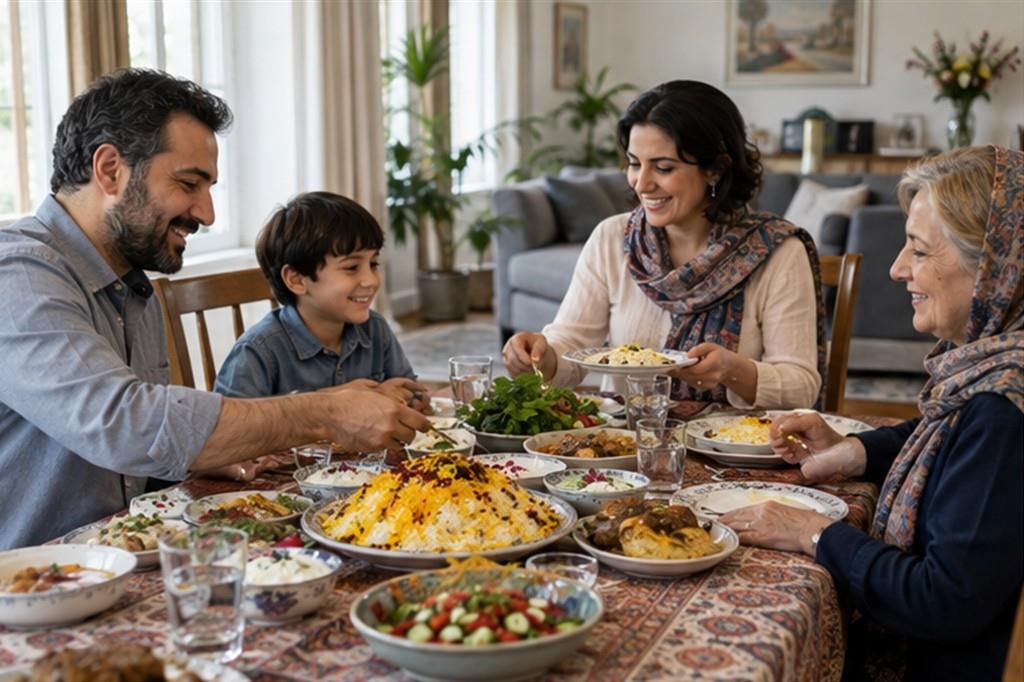 Persian rice and tahdig: saffron, a crisp bottom layer and the sofreh
 Moroccan couscous and tagine: rhythm, hospitality and the flavours of North Africa
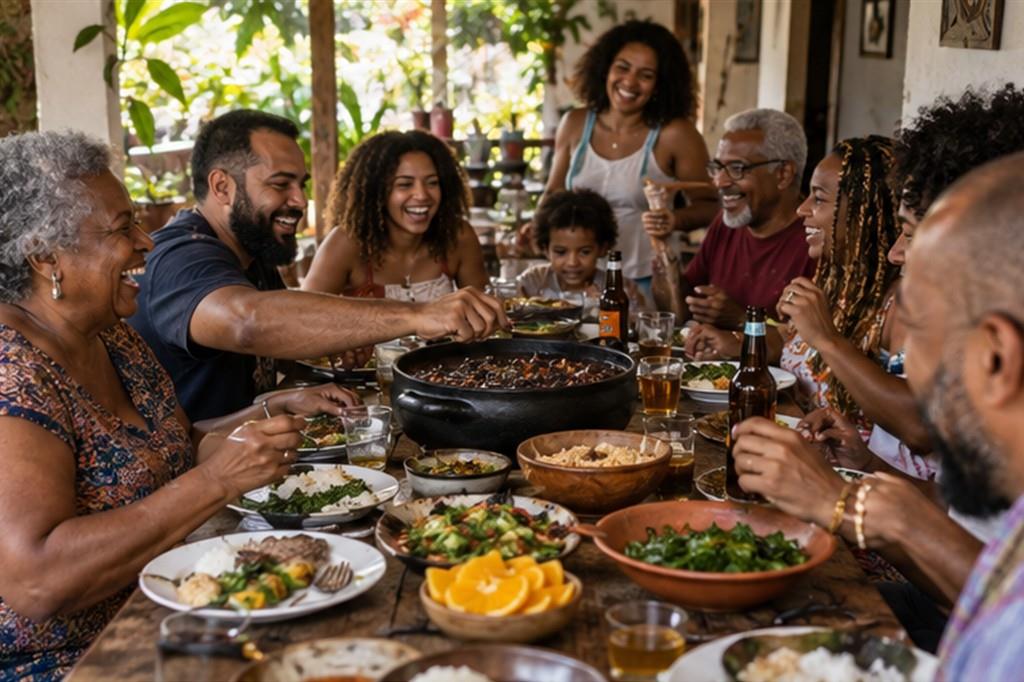 Brazilian feijoada: a pot of black beans, a weekend lunch and a story with many roots
 The Indian thali: a balanced tray that tells a regional story and a way of eating together
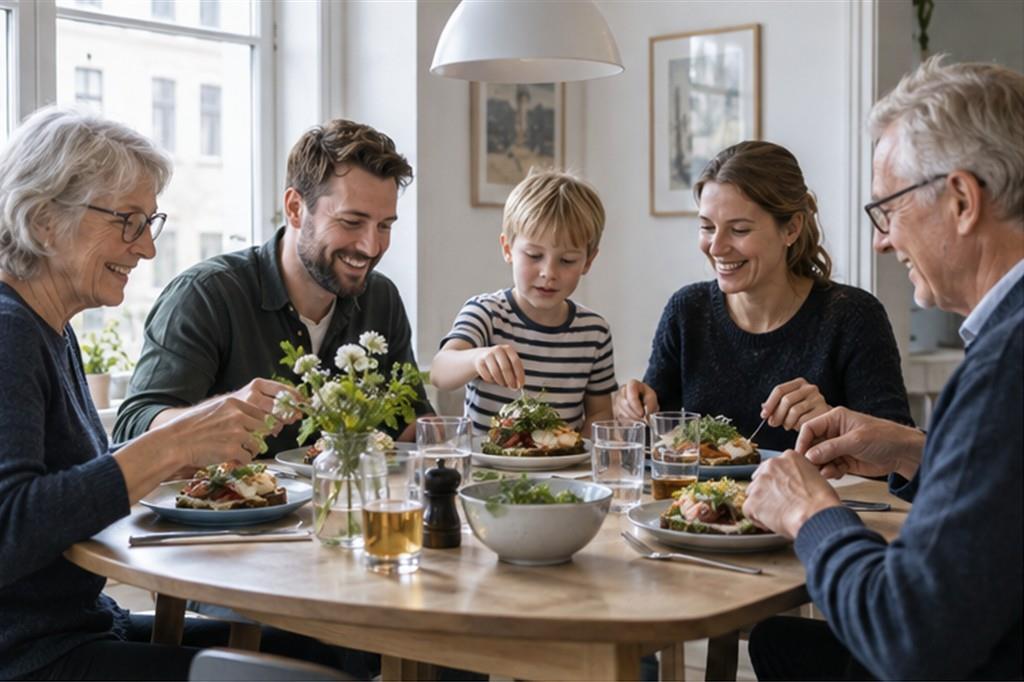 Danish smørrebrød: the open sandwich and the art of composing a lunch
 Swiss raclette: melted cheese and a shared table in the cold season
 Injera in Ethiopia and Eritrea: the shared platter that binds a community
 Italian aperitivo: the pause at the end of the day, between a drink and a conversation
Đăng nhập để bình luận: / Sign in to comment: