



Rongorongo: The Undeciphered Message of Easter Island
On a handful of surviving Rapa Nui wooden tablets are rows of human, bird, and object glyphs read by rotating the tablet in a unique way, yet their overall meaning remains lost to time.
The rongorongo tablets were documented by outsiders in the 19th century. Many artifacts were lost or taken from Rapa Nui; very few original tablets survive, scattered across museums around the world.

Verifiable Facts
1. The symbols are typically inscribed in rows on wood, depicting humans, animals, plants, and geometric shapes.
This fact helps narrow the scope of speculation: a decipherment is only credible if it aligns with the entire corpus of artifacts, dating, glyph sequence, and the archaeological or archival context. Finding a few seemingly plausible words is not enough to prove the entire system.
2. The reading method is commonly described as reverse boustrophedon: at the end of each row, one must rotate the tablet 180 degrees to read the next.
This fact helps narrow the scope of speculation: a decipherment is only credible if it aligns with the entire corpus of artifacts, dating, glyph sequence, and the archaeological or archival context. Finding a few seemingly plausible words is not enough to prove the entire system.
3. Rapa Nui oral tradition speaks of experts who studied and recited the tablets, but that lineage of transmission was broken.
This fact helps narrow the scope of speculation: a decipherment is only credible if it aligns with the entire corpus of artifacts, dating, glyph sequence, and the archaeological or archival context. Finding a few seemingly plausible words is not enough to prove the entire system.
4. Some repetitive sequences may relate to genealogies, lunar calendars, chants, or rituals.
This fact helps narrow the scope of speculation: a decipherment is only credible if it aligns with the entire corpus of artifacts, dating, glyph sequence, and the archaeological or archival context. Finding a few seemingly plausible words is not enough to prove the entire system.
5. Copies and later reproductions must be separated from authentic original artifacts when analyzing dating and carving techniques.
This fact helps narrow the scope of speculation: a decipherment is only credible if it aligns with the entire corpus of artifacts, dating, glyph sequence, and the archaeological or archival context. Finding a few seemingly plausible words is not enough to prove the entire system.
Why Has It Not Been Deciphered Yet?
- A small corpus, many damaged tablets, and incomplete provenance documentation.
- No surviving, verified traditional readers left to provide a decipherment key.
- It remains unclear whether this is a full writing system encoding spoken language or a mnemonic aid system.
In historical cryptanalysis, a lack of data is often more perilous than a lack of computational power. Computers can test millions of keys, but they cannot independently choose the correct language, the correct reading direction, and the proper rules unless those premises are established beforehand.
Main Hypotheses
Hypothesis 1
An independent writing system recording the ancient Rapa Nui language.
Hypothesis 2
A mnemonic device for chants, genealogies, and ritual calendars.
Hypothesis 3
A symbol system developed or transformed after contact with European script; dating each tablet is crucial to testing this.
What Is Often Exaggerated
Rongorongo is an authentic heritage of Rapa Nui, but full "translations" are currently not recognized. Discussions should respect indigenous knowledge and avoid portraying the island merely as a backdrop for mystery.
A prudent approach separates three layers: what the artifacts directly show, what researchers deduce with sound evidence, and what is merely popular imagination. These three layers can together make a compelling narrative, provided they are not conflated.
Conclusion
The value of a mystery lies not in selecting the most sensational explanation, but in the ability to test a hypothesis against independent data. Until a key, a bilingual text, or a replicable methodology emerges, this case must still be considered lacking a consensus solution.



 Korean kimchi and banchan: the craft of fermentation and a table built on sharing
 Persian rice and tahdig: saffron, a crisp bottom layer and the sofreh
 Moroccan couscous and tagine: rhythm, hospitality and the flavours of North Africa
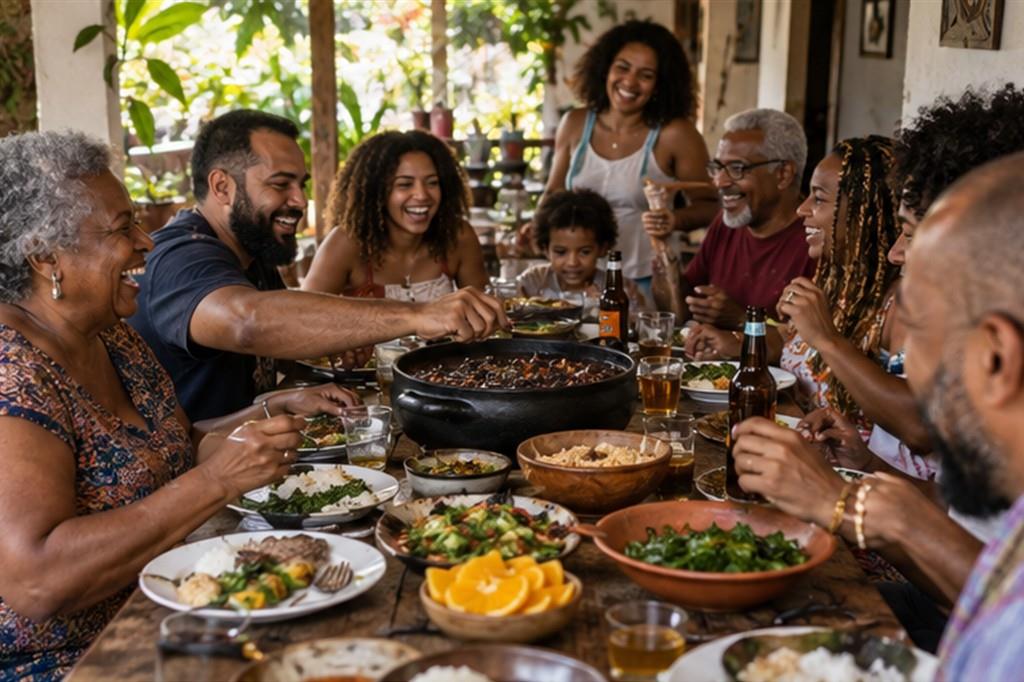 Brazilian feijoada: a pot of black beans, a weekend lunch and a story with many roots
 The Indian thali: a balanced tray that tells a regional story and a way of eating together
 Danish smørrebrød: the open sandwich and the art of composing a lunch
 Swiss raclette: melted cheese and a shared table in the cold season
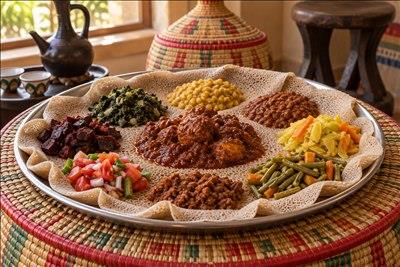 Injera in Ethiopia and Eritrea: the shared platter that binds a community
Đăng nhập để bình luận: / Sign in to comment: