



Stonehenge: How did Stone Age people transport and erect the stones?
Stonehenge was not built in a single go. The ritual landscape on Salisbury Plain developed over many stages from approximately 3000 to 1600 BC, with circular ditches, burial pits, bluestones, and later, large sarsen stones with lintels.
The sarsen stones mostly came from West Woods, about 25 km away; the bluestones have geological origins in western Wales, over 200 km away. That distance was a major logistical challenge but not evidence of lost technology. Agricultural societies had time, labor, wood, braided fibers, and knowledge of the terrain.
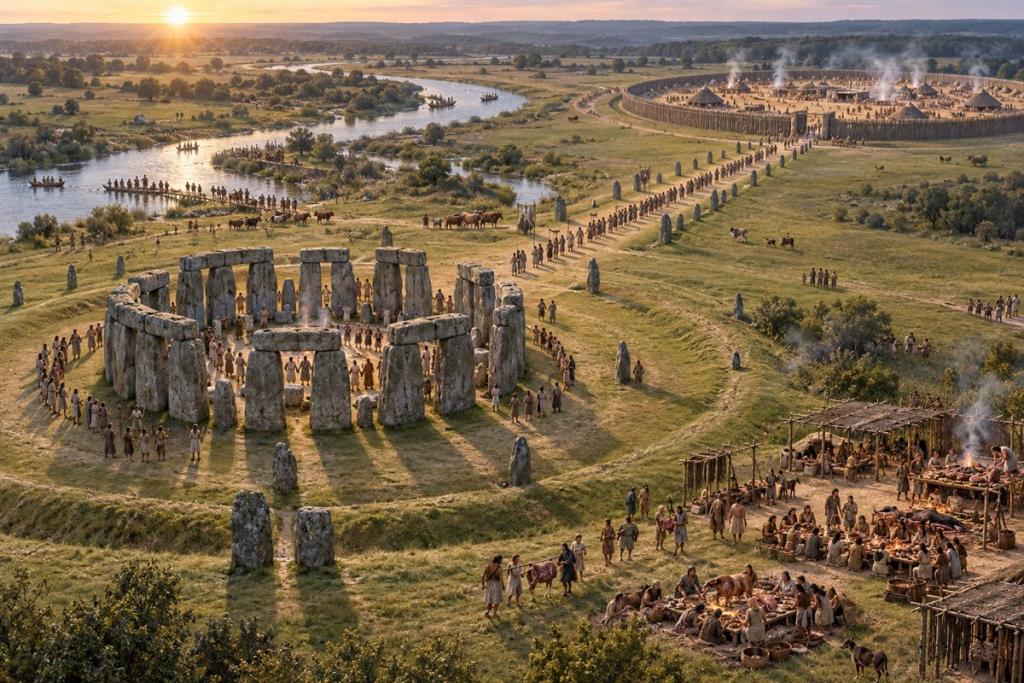
Dragging stones and traversing terrain
Sleds on wooden tracks, rollers, lubricants, and multiple pulling teams are methods that have been tested. Bluestones could have traveled partly by land or sea; the exact route is still debated. Each method must be cross-referenced with slopes, rivers, wood types, and archaeological evidence, not just proven to work on a modern flat field.
Erecting and placing lintels
The construction team could have dug pits with a sloped side, dragged the base of the stone in, used ropes and A-frames to gradually lift it, and then packed it with rubble. Lintels were raised using wooden scaffolding or layered lifting platforms. The mortise-and-tenon joints and head-of-lintel connections show that stonemasons understood how to lock structures, a technique similar to carpentry logic applied to stone.
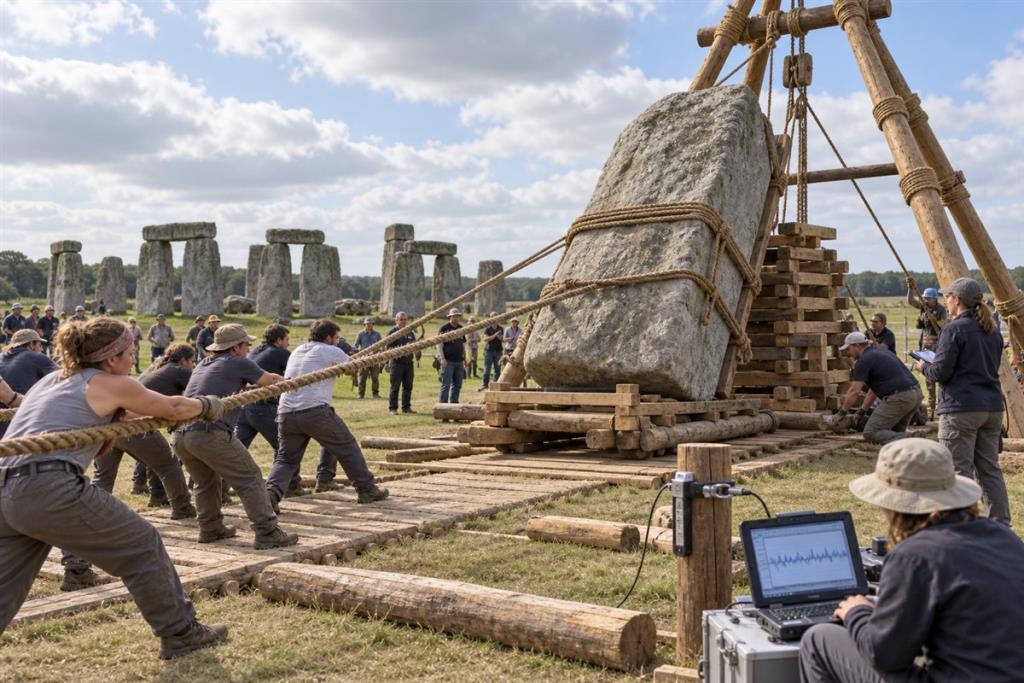
Why put in such great effort?
The main axis aligns closely with the summer solstice sunrise and winter solstice sunset, but Stonehenge also connects to the avenue, the River Avon, the Durrington Walls settlement, and burials. It may have simultaneously served as a gathering place, a memorial to ancestors, and a marker for seasonal cycles. One should not reduce the entire structure to a single-function “observatory.”
Unclosed gaps
We do not yet know who made the decisions, how labor was mobilized seasonally, or which route each block took. Isotope analysis, DNA, and stone sourcing show that people and materials moved across a wide network. The answer is increasingly social: Stonehenge was a product of cooperation across many generations.
How to read an archaeological mystery?
A surprising object often brings up three different questions: how was it made, how was it used, and what did it mean? Experiments can prove a technique is feasible, but they do not prove that ancient people chose that exact technique. To go from “possible” to “likely,” results must match tool marks, materials, terrain, dating, and the context of discovery.
Context is an irreplaceable part. An object found in a grave tells a different story than the same object in a workshop; a stone row in situ contains information about orientation and spacing that an item moved to a museum has lost. Therefore, documented excavation, in-situ preservation, and data publication are more important than quickly choosing an attractive solution.
Three levels of certainty
Known are facts confirmed by multiple measurements or independent records. Well-founded are models that explain many traces but still have competing alternatives. Speculative are ideas that have not yet provided testable evidence. This article keeps these three layers separate so that the unknown is not turned into a definitive statement.
Numbers also need a margin of error. Carbon dating measures organic material, not directly the intent of the creator; stone sourcing indicates geological origin, not the transport route; 3D models record the current shape after centuries of weathering. A good conclusion must clearly state what the data actually measures.
What could create a new breakthrough?
Tomography, 3D scanning, residue analysis, isotope measurement, mechanical simulation, and experimental archaeology are opening up parts that were previously unobservable. However, technology is only useful when samples have clear origins, procedures are published, and independent groups can verify them. A beautiful image on the internet does not replace a scientific report.
The answer in the future may not be a single function. Objects and structures live through many generations, being repaired, moved, and reinterpreted. Accepting a multi-stage history is often closer to reality than forcing every trace into a single moment of mystery.
Why are supernatural explanations unnecessary?
Saying that ancient people could not build a structure often reflects an underestimation of their skills, time, and social organization. Ropes, wood, stone, metal, and simple mathematics can create great results when hundreds of people coordinate over many seasons. The part worth exploring is how knowledge was passed down and how communities convinced each other to invest the effort.
“Unknown” is a valid conclusion, not a blank space to fill with any story. A good hypothesis must create predictions: what to look for, where, and what measurements could refute it. It is the ability to be tested that turns a mystery into research rather than just an anecdote.
The role of conservation and local communities
Artifacts are not just data for researchers but also the heritage of living communities. Surveys, sampling, and exhibitions need to respect local laws, indigenous knowledge, and conservation limits. Visitors also contribute by not touching, climbing, moving stones, or buying items of unknown origin. Preserving the context today is exactly so that future generations can test the questions that current technology cannot yet answer.



 Korean kimchi and banchan: the craft of fermentation and a table built on sharing
 Persian rice and tahdig: saffron, a crisp bottom layer and the sofreh
 Moroccan couscous and tagine: rhythm, hospitality and the flavours of North Africa
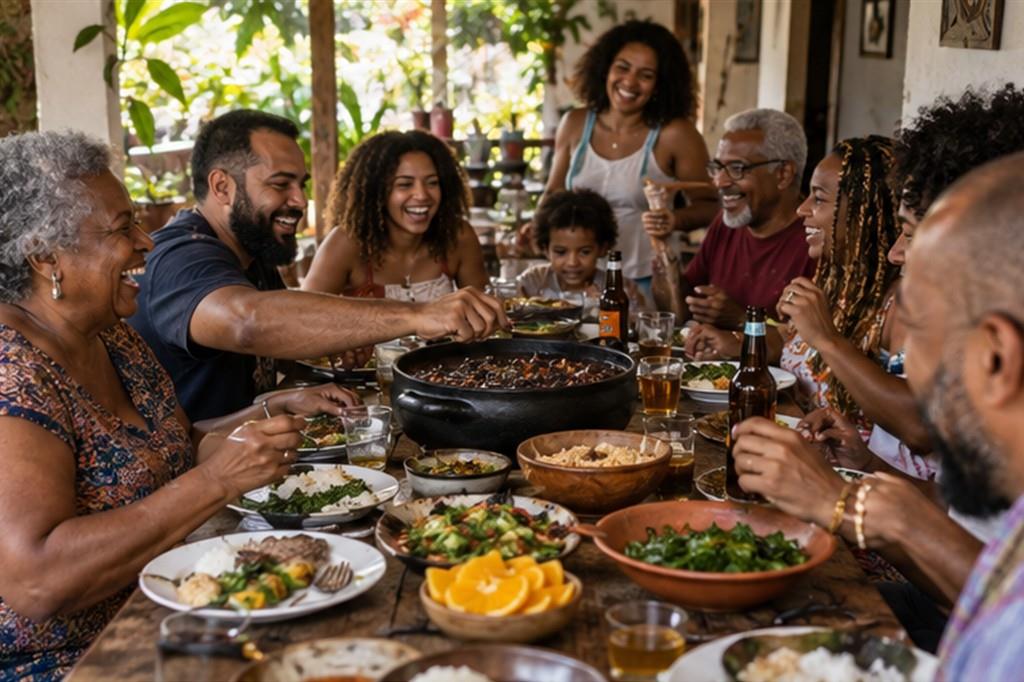 Brazilian feijoada: a pot of black beans, a weekend lunch and a story with many roots
 The Indian thali: a balanced tray that tells a regional story and a way of eating together
 Danish smørrebrød: the open sandwich and the art of composing a lunch
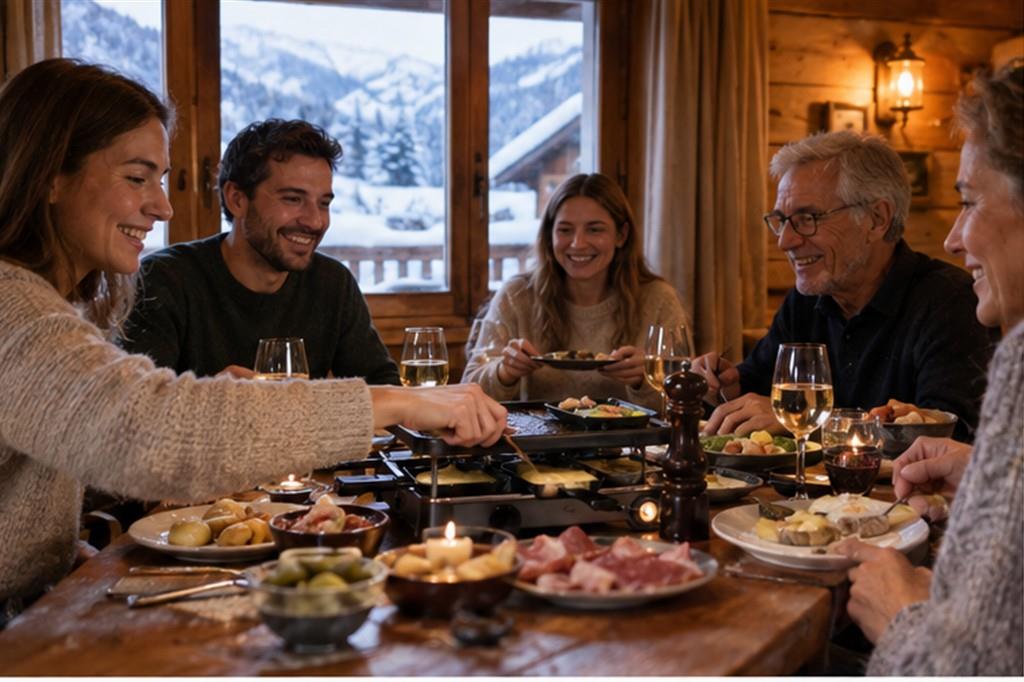 Swiss raclette: melted cheese and a shared table in the cold season
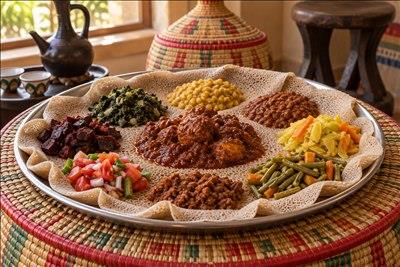 Injera in Ethiopia and Eritrea: the shared platter that binds a community
Đăng nhập để bình luận: / Sign in to comment: