



Dyatlov Pass: How Much Can a Slab Avalanche Explain?
On the night of February 1 to 2, 1959, nine hikers left their tent on the slopes of Kholat Syakhl in freezing cold. The tent was cut from the inside; bodies were found in several groups from the edge of the forest to a snow ravine. Recent snow science has made a natural scenario more concrete.
The group led by Igor Dyatlov was winter-experienced. When the search team arrived, boots, warm coats, and many items were still in the tent. Footprints leading down to the forest indicate that at least part of the group walked on foot, rather than being blown away or carried by a mysterious force.
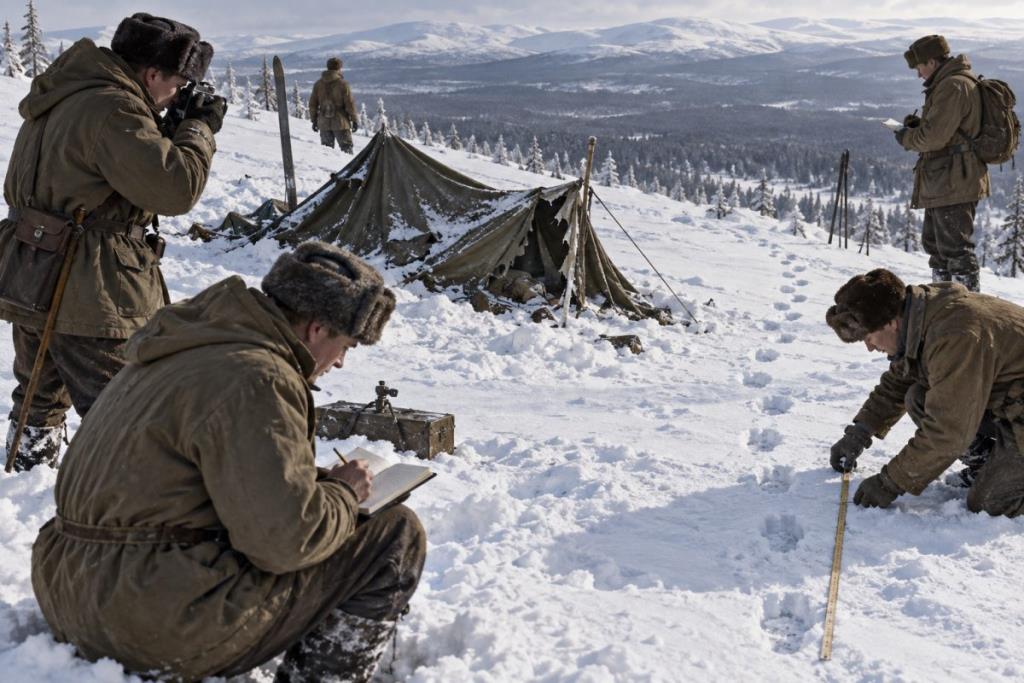
Why did they leave the tent?
If a snow slab pressed against the tent, injuring several people and creating fear of a subsequent slide, cutting the fabric on the lower side is a logical response. They might have intended to take shelter in the forest, build a fire, and then return. Two people were found near a cedar tree, three lay in the direction of returning to the tent, and four were in a deep ravine.
The severe chest and skull injuries of the last group are often called impossible by natural means. However, the compressive force of snow in the ravine and the initial slide could have contributed. Clothing transferred from the deceased to the living is a survival behavior in hypothermia, not proof of an attack in itself.
The slope debate
The campsite was once considered too flat for an avalanche. But local slope, weak snow layers, and wind loading differ from the average figures on maps. The group had cut into the slope to create a platform, altering the snow layers above.
A 2021 study simulated a small snow slab sliding after several hours. Katabatic winds moved snow onto the area above the tent, explaining the delay. The force on people lying on skis could cause injuries without burying the entire camp.
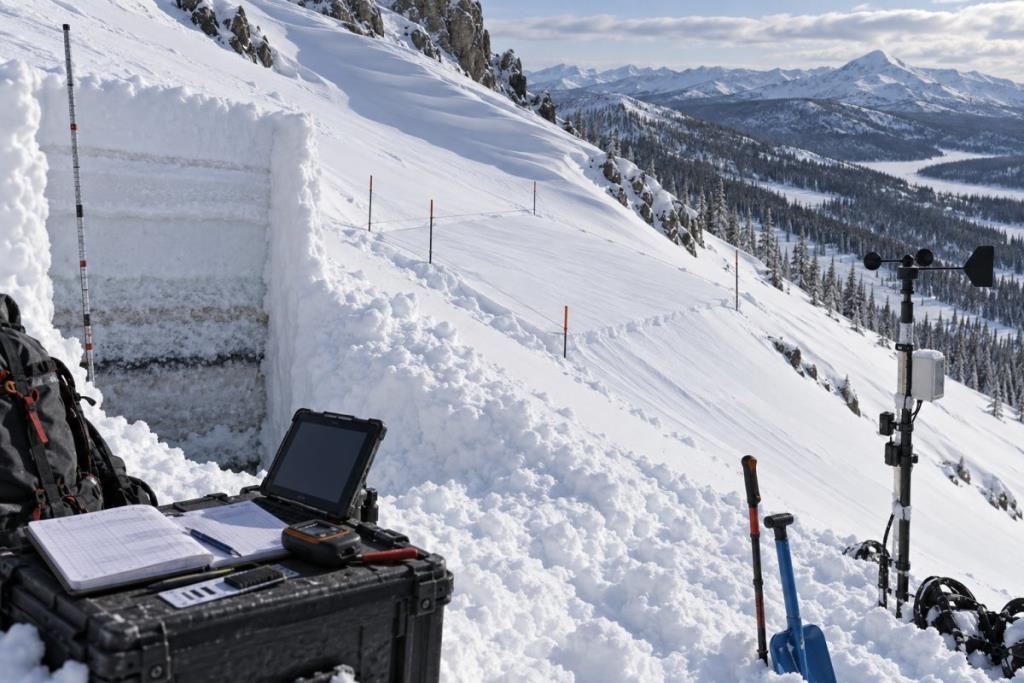
Is the model a complete solution?
No. It proves a physically plausible scenario, not a recreation of every action. A small slide could have its tracks erased by wind before searchers arrived, but the initial level of injury, why the group didn't take more gear, and how they separated remain unknown.
Radiation on a few pieces of clothing could be related to previous work; skin color, fireballs, and bizarre details are often exaggerated. There is no credible evidence for Yeti, UFOs, or secret weapons. Unresolved questions do not put those ideas on par with testable mechanisms.
Hypothermia alters decisions
In deep cold, shivering, clumsiness, impaired judgment, and confusion can progress quickly, especially without boots and outer coats. An experienced group is still prone to mistakes after being awakened, injured, and losing shelter. A person returning to the tent could fall before arriving even if the distance on a map does not look large.
The phenomenon of paradoxical undressing sometimes occurs in stages of severe hypothermia, but it is not needed to explain every item of clothing at Dyatlov. The living taking clothes from the dead is more direct and logical. Each body needs to be placed in the order of discovery, snow layers, and movement paths.
The value of a scientific hypothesis
The avalanche model is strong because it provides measurable conditions: local slope, weak layers, wind speed, and snow load. It also has debatable points. Unlike supernatural hypotheses, the model allows field surveys to refute or reinforce it, and can be modified as new data emerges.
How to distinguish facts from speculation
A strong fact needs records near the time of occurrence, physical evidence with clear origins, or multiple independent measurements. Late accounts, details appearing only in popular books, and unverified images are ranked lower. "Not fully explained" does not mean all hypotheses have equal value.
The article prioritizes scenarios that explain multiple traces simultaneously with few assumptions, while keeping unknown parts clear. If a new discovery emerges, the first questions should be who confirmed it, what the identification method was, and whether the data was published for independent verification.
Conclusion
Dyatlov Pass still has minute-to-hour gaps, but it is no longer an "impossible" mystery. A small snow accident could have forced the group to leave the tent; hypothermia, darkness, trauma, and terrain then turned life-saving decisions into tragedy.



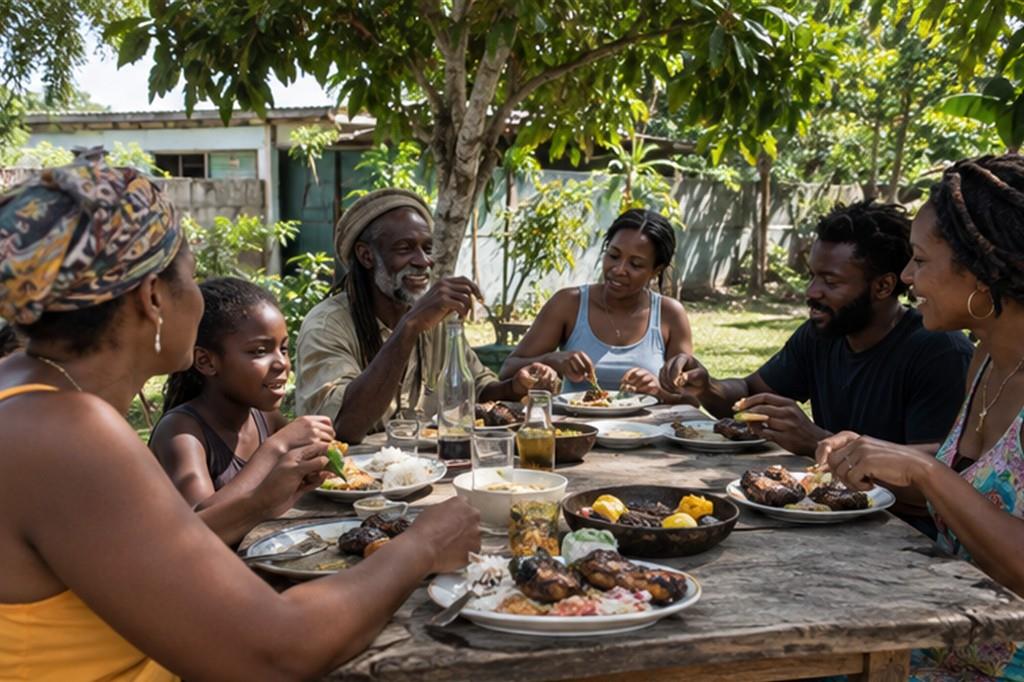 Jamaican jerk: the scent of pimento, the smoke pit and a community's living heritage
 Korean kimchi and banchan: the craft of fermentation and a table built on sharing
 Persian rice and tahdig: saffron, a crisp bottom layer and the sofreh
 Moroccan couscous and tagine: rhythm, hospitality and the flavours of North Africa
 Brazilian feijoada: a pot of black beans, a weekend lunch and a story with many roots
 The Indian thali: a balanced tray that tells a regional story and a way of eating together
 Danish smørrebrød: the open sandwich and the art of composing a lunch
 Swiss raclette: melted cheese and a shared table in the cold season
Đăng nhập để bình luận: / Sign in to comment: