



Amelia Earhart's disappearance: the final signals and the ocean around Howland Island
On the morning of July 2, 1937, Amelia Earhart's voice signals to the Coast Guard cutter Itasca grew increasingly stronger, indicating that the Lockheed Electra was nearing Howland Island. However, the two parties failed to establish two-way communication, the tiny island did not appear in sight, and at 8:43, the final message was recorded.
Earhart and navigator Fred Noonan had completed about 35,400 km of their round-the-world flight. The leg from Lae, New Guinea to Howland was over 4,100 km over the ocean. Howland is only about three kilometers long, low, and difficult to spot; a small error after nearly twenty hours of flight could push the target beyond the horizon.
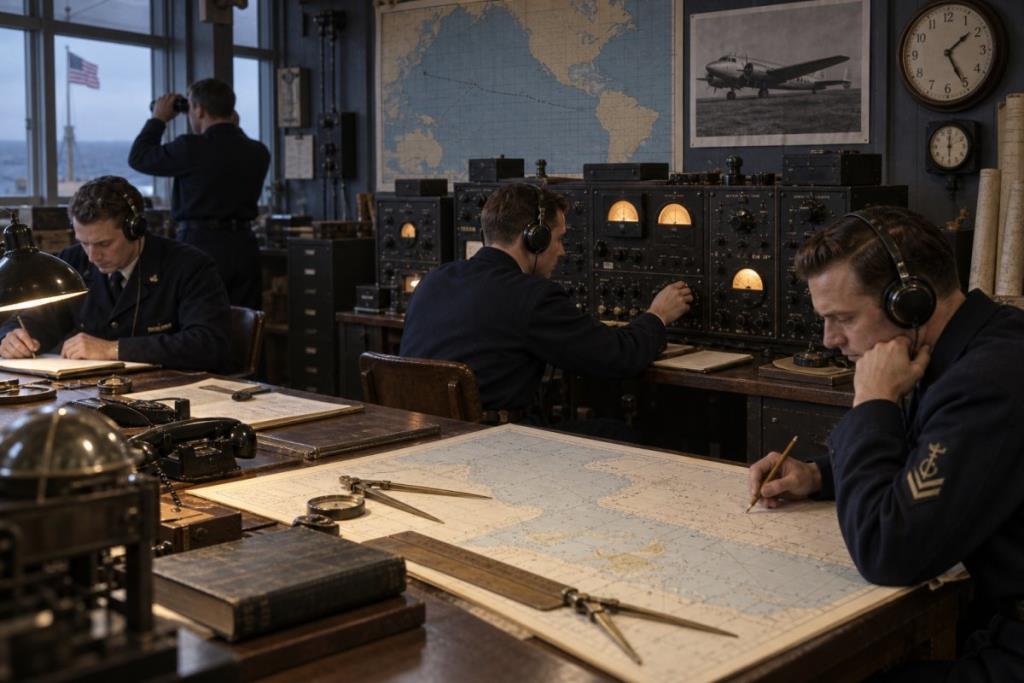
The issue was not just a "broken compass"
Noonan had experience in celestial and aerial navigation, but clouds, dawn, wind, and an imprecise final position created cumulative errors. The Itasca emitted smoke to mark its position, but the wind kept the smoke low. The frequency and communication timing plans did not match; Earhart apparently could not hear the ship's messages, even though the Itasca heard her voice very clearly.
The final line about the 157–337 line of position is often separated from navigation techniques. This is a northwest-southeast line that Noonan could determine from the Sun. The aircraft flew along that line to find Howland, but did not know which side of the island it was on. If fuel ran out during the search, the final area remained very vast.
The crash-at-sea hypothesis
The US National Air and Space Museum considers failing to find Howland, running out of fuel, and ditching in the Pacific Ocean to be the most plausible explanation based on known facts. The strong signal did not indicate an exact direction, and the deep ocean floor around the island made the small aircraft wreckage very difficult to find with the technology of that era.
The US government's search lasted until July 18, mobilizing ships and aircraft but finding no confirming traces. Post-disappearance radio reports once raised hopes, but the verification of sources and the aircraft's transmission capability in each scenario remain debated.
Nikumaroro and capture stories
The hypothesis that Earhart landed on the Nikumaroro reef is based on the direction of the line of position, some artifacts, and interpretations of old bones. No artifact has yet been proven by serial number to belong to the Electra. Hypotheses of Japanese capture or a spy mission still lack official documentation, physical evidence, and a sufficiently reliable chain of witnesses.
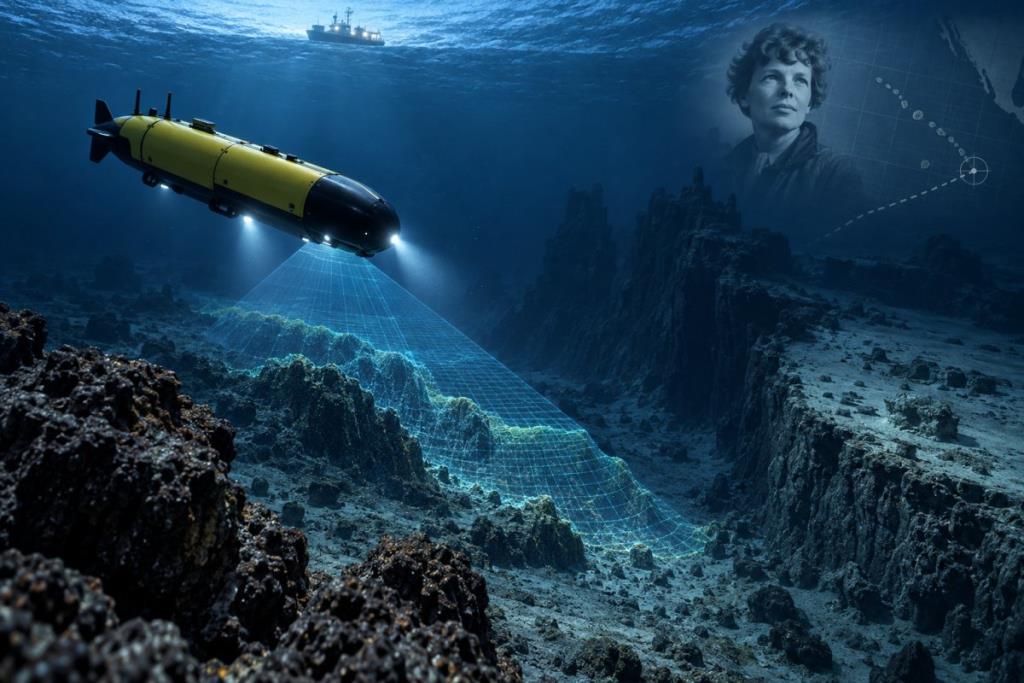
Private teams have scanned many areas of the seabed. A sonar image resembling an airplane was once widely publicized, but "resembling" is not identification; only close-up images, structural features, or serial numbers can verify it. The ocean contains terrain and objects that create countless familiar shapes.
The most certain thing
Earhart left Lae, neared Howland, communication methods were misaligned, and she was searching for the island as fuel dwindled. There is no professionally accepted evidence regarding the location of the aircraft or where the two perished. Any claim of "found" must undergo independent verification.
Why is the seabed near Howland still a challenge?
The aircraft is small compared to the vastness of the ocean, could have broken up upon impact with the water, and lies on terrain thousands of meters deep. Side-scan sonar creates images from acoustic reflections, not photographs; rocks, terrain shadows, and man-made objects can all take on shapes resembling wings or a fuselage. A target needs to be rescanned from multiple directions and then filmed up close.
Earhart's fame provides financial incentives for premature claims. Therefore, the standards for identification must be high: engine type, twin tails, dimensions, structure, and if possible, the serial number. Until that sequence is complete, a sonar image should only be referred to as a target to be verified.
How to distinguish facts from speculation
A strong fact requires records from around the time of the event, physical evidence with a clear provenance, or multiple independent measurements. Late accounts, details appearing only in popular books, and unverified images are ranked lower. "Not fully explained" does not mean all hypotheses carry equal weight.
This article prioritizes scenarios that explain multiple clues simultaneously with the fewest assumptions, while keeping the unknowns clear. If a new discovery emerges, the first questions should be who verified it, what the identification method was, and whether the data has been published for independent review.
Conclusion
The Earhart mystery is a problem of navigation and deep-sea search, requiring no conspiracy to be compelling. The crash-at-sea explanation currently requires the fewest assumptions, but only the discovery and identification of the Electra will turn high probability into a historical conclusion.



 Jamaican jerk: the scent of pimento, the smoke pit and a community's living heritage
 Korean kimchi and banchan: the craft of fermentation and a table built on sharing
 Persian rice and tahdig: saffron, a crisp bottom layer and the sofreh
 Moroccan couscous and tagine: rhythm, hospitality and the flavours of North Africa
 Brazilian feijoada: a pot of black beans, a weekend lunch and a story with many roots
 The Indian thali: a balanced tray that tells a regional story and a way of eating together
 Danish smørrebrød: the open sandwich and the art of composing a lunch
 Swiss raclette: melted cheese and a shared table in the cold season
Đăng nhập để bình luận: / Sign in to comment: