



Southern Vietnamese sour fish soup: no fishy smell, vegetables still crisp
A good canh chua ca loc has a clean sourness from tamarind, a gentle sweetness that is nothing like sugar water, fish that is tender but still in whole steaks, and vegetables that are fresh and crisp. The hard part is adding things in the right order: the fish needs enough heat to be safe, while okra, taro stem, bean sprouts and herbs only need a brief cooking. The recipe below serves five or six and balances the taste step by step, instead of seasoning everything at once and then struggling to fix it.
Quick facts
- Serves: 5-6 people.
- Preparation: 35 minutes.
- Cooking: 25-30 minutes.
- Difficulty: medium.
- Yield: about 2.5 litres of soup.
Ingredients
- 800 g of cleaned snakehead, cut into 3 cm steaks.
- 60-80 g of ripe tamarind, or the equivalent, depending on how sour it is.
- 250 g of just-ripe pineapple, cut into pieces.
- 3 tomatoes, cut into wedges.
- 150 g of okra, cut on the diagonal.
- 200 g of prepared taro stem.
- 150 g of bean sprouts, washed and drained very well.
- 50 g of rice paddy herb, sawtooth coriander and spring onion.
- 35-45 ml of fish sauce, 20-30 g of sugar and 8-10 g of salt.
- 2.7 litres of water; chopped garlic, cooking oil, chilli and pepper optional.
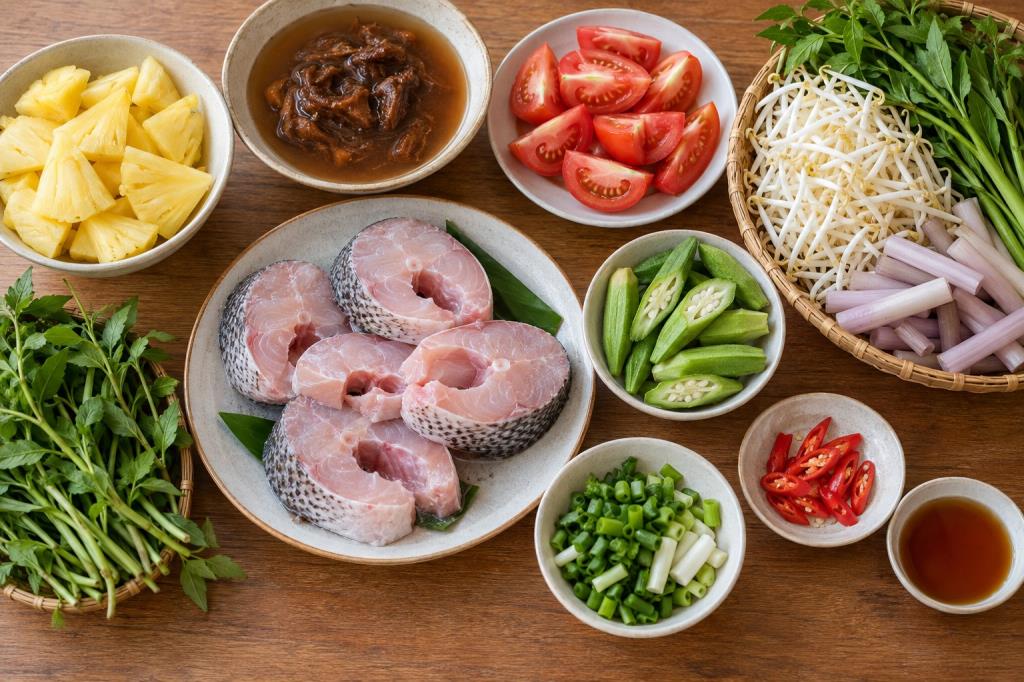
Choosing fish and vegetables at the right freshness
Fresh snakehead has bright skin, springy flesh, red gills and a mild natural smell. If you buy it ready cut, the surface should be moist and glossy, with no cloudy liquid and no dry brown edges. Steaks of roughly even thickness cook at the same rate. The head gives sweetness and the body is easier to eat; you can use both, but put the head into the pot about 1-2 minutes earlier.
The pineapple should be just ripe, for sweetness and a bit of bite; do not use one that has gone soft. Young okra has a small tip and snaps crisply. The taro stem should be firm, not bruised and soggy; the bean sprouts white, crisp and with no sour smell. Rice paddy herb and sawtooth coriander give the characteristic aroma, so choose green leaves and cut them only just before cooking so the essential oils are not lost.
Cleaning the fish without a long soak in acid
Remove the gills, the guts, the black membrane in the belly and the clotted blood along the bone. Rinse it quickly in cool water, rub it very lightly with a little salt and rinse again, then pat it dry. Do not leave the fish soaking in lime juice or vinegar, as the acid makes the surface of the flesh opaque and it falls apart when it meets boiling water. Marinate the fish for 10 minutes with a teaspoon of fish sauce, a little pepper and crushed spring onion whites.
The utensils for raw fish have to be kept apart from the board for vegetables that are eaten as they are. After preparing the fish, wash your hands, the knife, the board and the worktop before cutting the herbs. Frozen fish should be thawed in the fridge, not left on the stove. The liquid that comes out of the fish is not used in the soup and has to be dealt with so it never touches cooked food.
Preparing the taro stem so it does not itch
Strip off the outer fibres and cut it on the diagonal about 1 cm thick. Toss it gently with a little salt, leave it for 10 minutes, then squeeze it very lightly, rinse it two or three times and wring it out. You can blanch it for 20-30 seconds and rinse it quickly in cool water if the stems are very sappy. Wear gloves if your skin is sensitive, and do not taste it raw to check.
Do not squeeze it hard, or the pieces are crushed and lose their structure. If you have no taro stem, you can add more okra and bean sprouts, but the soup will lack its characteristic spongy texture. Taro stem and taro corm are not the same ingredient; do not substitute one for the other directly without adjusting the cooking time and the amount of liquid.
Step 1: extract a smooth tamarind water with no seeds
Soak the tamarind in 350 ml of hot water for about 10 minutes. Mash it with a spoon so the pulp dissolves, then strain it through a sieve; pour a little more water through the residue and press it lightly. Do not blend it with the seeds and skin, which give an astringent taste and sediment. Keep the tamarind water aside rather than pouring it all into the pot, so you still have control over the sourness.
The sourness of tamarind varies with the variety and the age of the fruit. Start with about two thirds of the tamarind water, taste it once the pineapple and tomato are in, and only then add more. If you are using concentrated tamarind from a jar, you need considerably less; read the ingredients, because the product may contain sugar or salt, which affects the final seasoning.
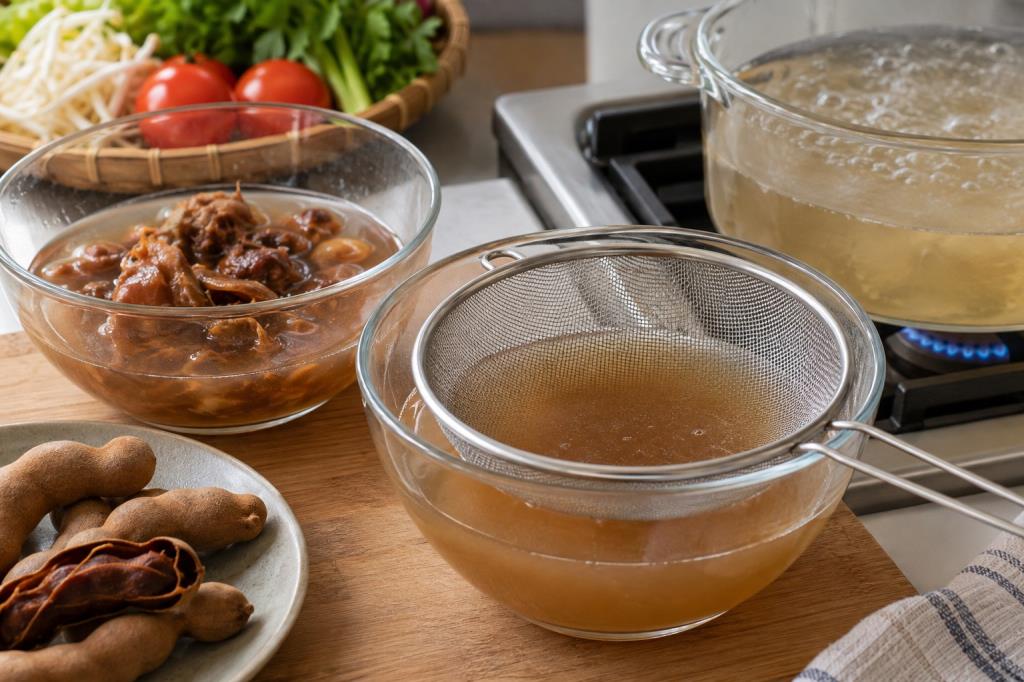
Step 2: build a clear, fragrant base
Boil the remaining 2.35 litres of water with the pineapple for 5 minutes so the sweetness goes into the liquid. Add two thirds of the tamarind water, the salt and about 15 g of sugar. The pot only needs a moderate boil, and do not stir it hard. For a better colour, fry half the garlic in a teaspoon of oil, add half the tomato and stir for 1 minute, then tip that into the pot. Keep the other half of the tomato for the final stage so the wedges hold their shape.
At this point the base should be a little more sour than you want and not yet sharp, with only a light sweetness, because the fish and vegetables will change it. Do not add much fish sauce while the pot is at a hard boil, as the aroma escapes and it is difficult to judge. Skim any scum from the pineapple or the tomato so the liquid stays bright.
Step 3: add the fish without breaking it
Once the water is boiling steadily, put in the head and the thicker steaks first, then the rest. Wait for it to come back to the boil, then lower the heat and keep small bubbles for 8-12 minutes, depending on thickness. Do not stir with chopsticks; if you need to, tilt the pot or use a ladle to spoon liquid over any fish that sits above the surface. Skim gently at the surface, but do not lift out fragments of flesh that are still cooking.
The fish is ready when the thickest part has turned opaque, separates into large flakes and reaches at least 63C. Put the thermometer into the middle of the flesh, away from the bone. If the head is cooking more slowly, put the lid on ajar for 2 minutes rather than raising the heat. As soon as the fish is done, turn the heat right down so the vegetables that go in afterwards do not leave the fish cooking too long.
Step 4: add the vegetables in an order that keeps them crisp
Add the okra first, then the taro stem and the remaining tomato after a minute. When the pot comes back to the boil, add the bean sprouts, turn everything over exactly once with a wide ladle and switch the heat off after 30-45 seconds. The residual heat will carry on cooking the sprouts and the vegetables. If you like the pineapple softer, cook it all from the start; if you like it crisp, keep some back for the tomato stage.
The rice paddy herb, sawtooth coriander and spring onion go in after the heat is off. Fried garlic can be sprinkled on each bowl to keep its aroma and to avoid making the whole pot oily. Leave the chillies whole for a light aroma, or slice them and serve them separately if someone does not eat chilli. Do not boil the herbs for minutes on end, or the leaves turn grey and the fresh smell disappears.
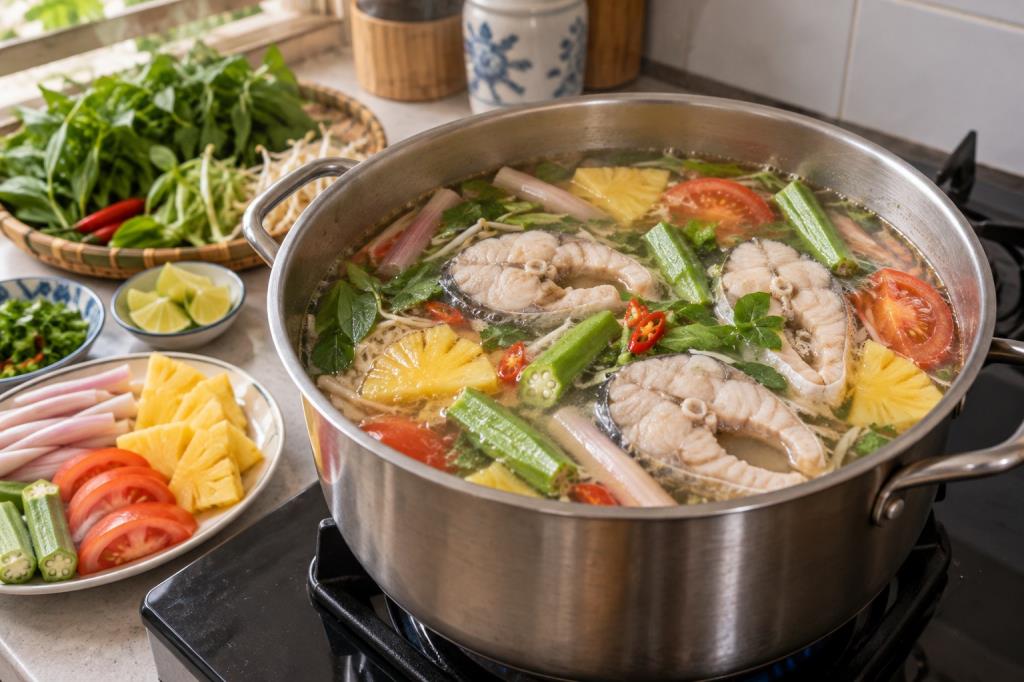
Step 5: balance all four elements, sour, sweet, salty and fragrant
Spoon out a little of the liquid with a piece of pineapple in it, let it cool for a few seconds and taste. If it lacks sourness, add tamarind water two spoonfuls at a time; if the sourness is sharp, add hot water and sugar a teaspoon at a time rather than a large amount of sugar. Add the fish sauce last, 5 ml at a time. It is right when the sourness arrives first, the sweetness follows, the salt sits underneath and the rice paddy herb finishes it.
If you season while the liquid is too hot, your tongue judges salt and sweetness less accurately. You also need to taste it with a piece of pineapple or tomato, because the liquid on its own can seem bland. The soup is eaten with rice and neat fish sauce, so it does not need to be very salty. Note down how much tamarind of the brand you are using you actually needed, so it is easier to repeat next time.
Ten small tips for a good pot of soup
- Cut the fish into even steaks and do not soak it in acid for long.
- Strain the tamarind water through a sieve instead of tipping the pulp in.
- Split the tomato into two additions, for the base and for well-shaped wedges.
- Add the fish once the water is boiling so the surface sets quickly.
- Keep it at a gentle simmer and do not stir with chopsticks.
- Add the okra before the taro stem, bean sprouts and herbs.
- Turn the heat off as soon as the bean sprouts have met the heat.
- Add the fish sauce last so its aroma comes through.
- Fry the garlic separately and sprinkle it on each bowl if you want less oil in the liquid.
- Taste again once the pineapple, tomato and vegetables are all in.
Common mistakes and how to rescue them
The soup is sharply sour
Too much tamarind went in, or there is not enough liquid and natural sweetness. Ladle out some of the liquid, add hot water and pineapple, cook for a few minutes and then add sugar a little at a time. Do not neutralise it with bicarbonate of soda, which changes the smell, creates foam and leaves the vegetables soft and badly coloured.
The soup is as sweet as a dessert
Do not rush to add a lot of tamarind. Add hot water, a little salt and fish sauce first, and only then increase the tamarind water a spoonful at a time. The sweetness sometimes comes from over-ripe pineapple or from a tamarind product that already contains sugar, so read the ingredients before you cook.
The fish has broken up and the liquid is cloudy
The pot has been at a rolling boil or has been stirred too much. Lower the heat, stop handling it and lift the pieces that are just cooked into a bowl with a wide ladle. Strain the liquid if there are too many fragments, then cook the vegetables separately and put the fish back when you serve. Next time use a wide pot so the steaks do not overlap.
The vegetables are soft and the taro stem has collapsed
The vegetables went in too early, or the pot carried on boiling long after it was finished. Lift the vegetables out to stop them cooking further, and add a few fresh bean sprouts and herbs when you serve. For a large pot at a party, cook the base and the fish first, divide it into smaller pots and add the vegetables for each round of servings.
Sensible substitutions
You can replace snakehead with basa, red tilapia or prawns, but the cooking times differ. Basa is fatty and soft, so stir it as little as possible; prawns only need cooking until they change colour and firm up. Without rice paddy herb, sawtooth coriander still keeps part of the sour-soup aroma, though it is not quite the same. Tamarind is the easiest base to control; lime should only be used for a very small adjustment in the bowl, never boiled in the pot.
Cooking for a crowd
When you double it, use a wide 6-7 litre pot or split it between two pots so the fish has room. Increase the tamarind, sugar and fish sauce by about 1.7 times first and then taste, rather than mechanically doubling them. Prepare the vegetables on separate trays and add them batch by batch close to serving time. This keeps the bean sprouts crisp and the taro stem spongy, and stops the fish cooking further while you wait for your guests.
Serving and presentation
Canh chua ca loc is eaten with white rice and a small dish of fish sauce with chilli. Lift the fish with a wide ladle, then take the vegetables and pour the liquid so every bowl has all the components. Scatter fried garlic, rice paddy herb and sawtooth coriander on top. If the meal already includes a salty braised dish, keep the soup lighter so the two complement each other rather than both being heavy.
Preparing ahead while keeping the vegetables fresh
You can make the tamarind water and prepare the pineapple, okra and taro stem a few hours in advance and keep them separately in the fridge. Keep the fish in a sealed container on a low shelf. The base can be cooked in advance, but the fish and vegetables are best cooked close to the meal. If you have to cook early, lift the fish out as soon as it is done and leave out the bean sprouts and herbs; reheat the base to a boil, add the vegetables and only then put the fish back.
Storing and reheating safely
Separate the fish and vegetables from any leftover liquid if you can, divide it into shallow containers and chill it within 2 hours. Use it within 3-4 days, although the vegetables are at their best in the first day or two. When reheating, bring the portion to 74C and add fresh herbs only after the heat is off. Do not leave a large pot cooling overnight at room temperature.
Allergies and people at higher risk
The dish contains fish and fish sauce. Someone with a fish allergy cannot simply leave out the pieces of fish, because the protein has gone into the liquid. Pregnant women, older people, young children and anyone with a weakened immune system should have the fish cooked right through, use clean utensils and avoid any dipping sauce that has touched raw food. Anyone limiting sodium needs to reduce both the fish sauce and the salt.



 How to cook mung bean and aloe sweet soup: refreshing, with crisp aloe and no bitterness
 How to cook xoi gac: a beautiful red, chewy separate grains and never claggy
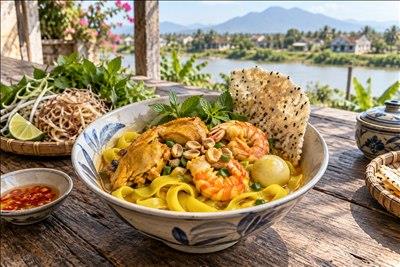 Mi Quang and the kitchens of Quang Nam: a bowl with little broth and a great deal of memory
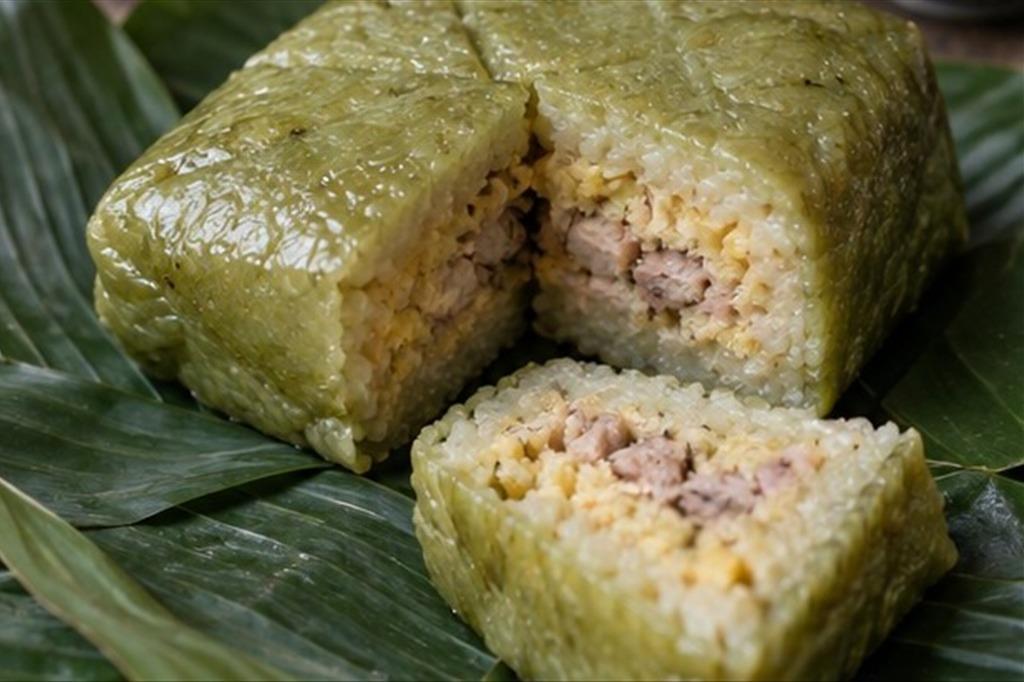 Bo Dau banh chung: the green square cake at the crossroads into Thai Nguyen
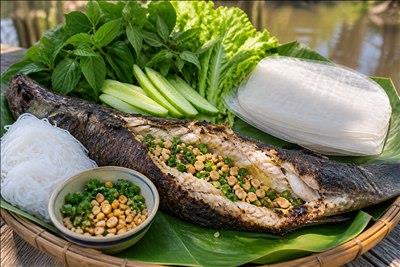 How to cook ca loc nuong trui: evenly done, juicy flesh and no taste of ash
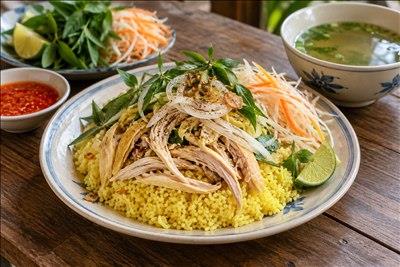 How to make Hoi An chicken rice: fluffy grains, juicy chicken and a crisp onion salad
 Me xung from Hue: chewy malt, toasted sesame and the slow rhythm of tea
 The food of Hue: where the royal kitchen, everyday dishes and small street stalls meet
Đăng nhập để bình luận: / Sign in to comment: