



How to cook thit kho tau: tender rich pork, a clear sauce and eggs that stay soft
A good thit kho tau has square pieces of pork that keep their shape, tender lean meat and fat that has turned translucent without being cloying; the eggs take on colour outside while the yolks stay moist; and the braising liquid is an amber brown, clear and plentiful enough to spoon over rice. This recipe uses 1 kg of pork for six people and braises it in fresh coconut water without becoming sickly sweet.
Quick facts
- Serves: 6 people.
- Preparation: 35 minutes, plus 30 minutes marinating.
- Braising: 90-120 minutes.
- Difficulty: easy to medium.
- Suitable pot: a heavy-based pot 24-26 cm wide.
Ingredients
- 1 kg of pork belly, or 700 g of belly mixed with 300 g of shoulder.
- 6 duck or hen eggs.
- 800 ml of unsweetened fresh coconut water.
- 300-500 ml of boiling water, depending on the width of the pot.
- 45 ml of fish sauce; 12-15 g of salt.
- 35 g of sugar for the colour and to balance the taste.
- 4 shallots, 3 cloves of garlic, 1 teaspoon of pepper.
- 1-2 chillies, optional; spring onion to finish.
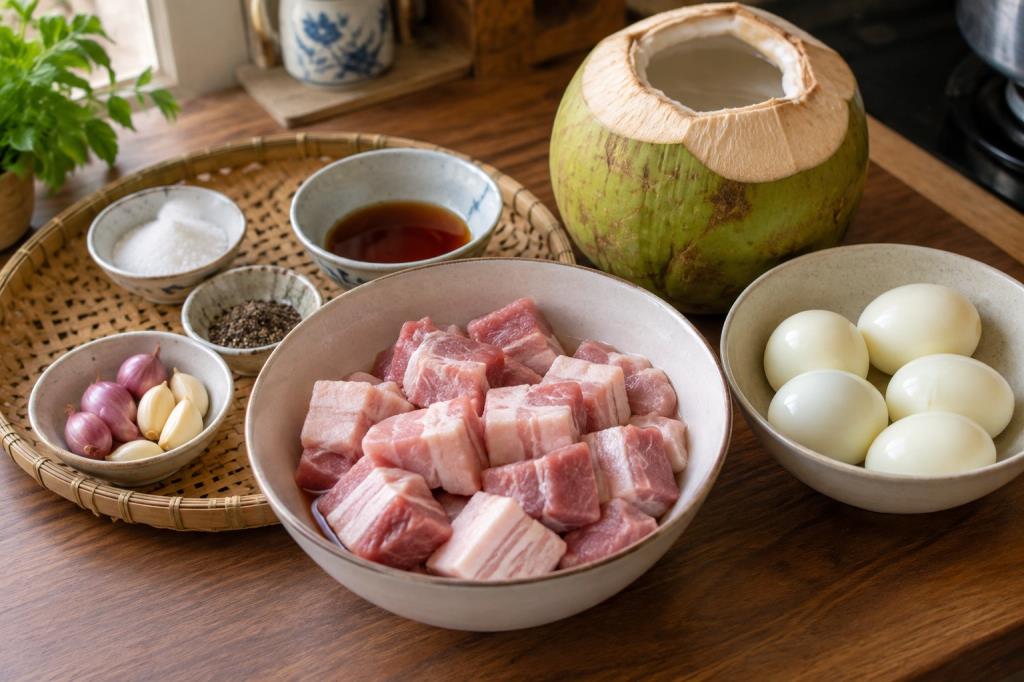
Choosing the pork and cutting it properly
Good belly has even layers of lean and fat, thin skin, a fresh pink colour and no weeping liquid. If your family finds it too rich, mix in some shoulder rather than using only lean meat; meat that is too lean dries out after a long braise. Cut it into pieces of about 4 cm, as they will shrink. Small 2 cm pieces take up the seasoning quickly but fall apart and dry out.
Rinse the pork quickly and pat it thoroughly dry. You can blanch it for 2 minutes if there are a lot of bone fragments, but a long blanch is not needed. Marinate it with the chopped shallot and garlic, 30 ml of fish sauce, 10 g of sugar and the pepper for 30 minutes in the fridge. Do not leave raw pork out in the kitchen for hours to help it soak up more.
Boiling the eggs so the yolks have no green ring
Put the eggs into a pot of cold water, bring it to the boil and then lower the heat for 9-10 minutes for hen eggs, or 11-12 minutes for large duck eggs. Transfer them straight to cool water and peel them once cold. The green ring around the yolk appears when they are boiled too long or cooled too slowly; it makes little difference to safety but leaves the egg dry and less attractive.
Prick 3-4 very shallow holes in the white with a toothpick, or make one shallow score, if you want more flavour to get in. Do not fry the eggs if you want a soft skin; frying makes a tough membrane and keeps the seasoning from going deep. Keep the eggs cold while you deal with the pork.
Step 1: cook the caramel to the amber point
Put 20 g of sugar and 1 tablespoon of water in a clean dry pot. Heat it over a medium flame and do not stir it with a spoon once the sugar begins to melt; just tilt the pot gently. When the colour goes from gold to a coppery amber and it smells of caramel, add 80 ml of hot water very carefully and stir until it dissolves. Stop earlier than you think, because the residual heat keeps darkening it.
Caramel that goes black or starts smoking will be bitter and coconut water cannot rescue it; start again. Do not pour cold water into caramel, as it spits violently and the sugar seizes. Wear an oven glove, use a pot with high sides and stand to one side of the opening.
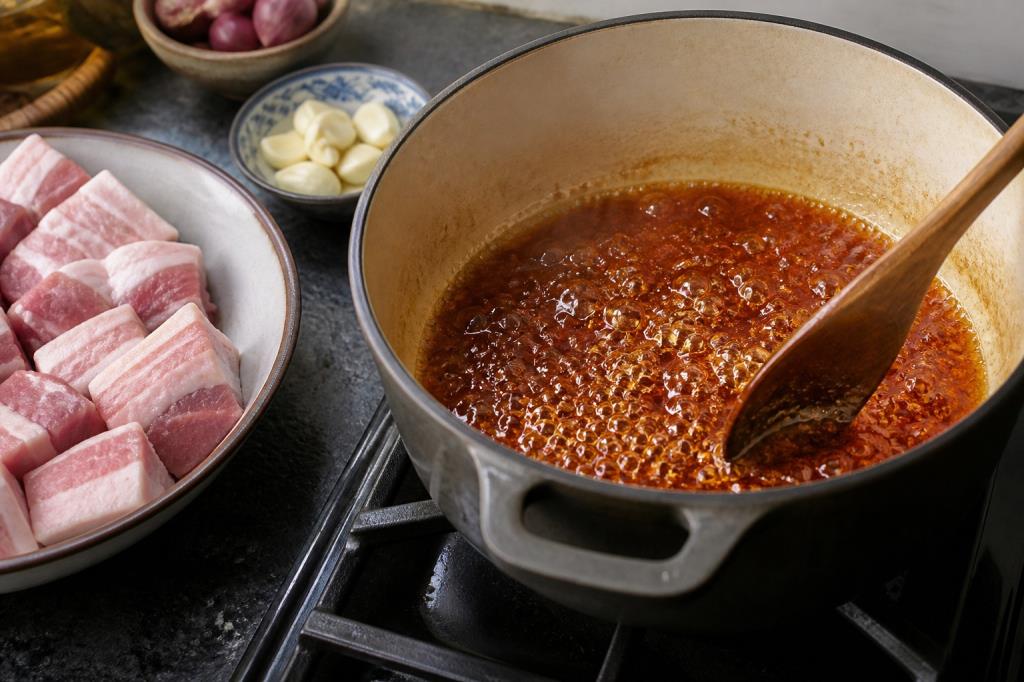
Step 2: firm up the pork without frying it dry
Put the marinated pork into the caramel and stir it over a medium heat for 5-7 minutes until the outside is firm and evenly coloured. The point is to set the shape of the pieces and build aroma, not to fry them golden and crisp. If the pork gives off a lot of liquid, raise the heat briefly to drive off the steam and then lower it again; do not add more oil.
Pour in the coconut water and enough boiling water to come almost to the top of the pork. Bring it to the boil and skim the scum and the floating fat during the first 10 minutes. Then turn the heat right down and leave the lid ajar. A rolling boil knocks the pieces together, clouds the liquid and makes the lean meat contract and toughen.
Step 3: braise the pork first, add the eggs later
Braise the pork for 45-60 minutes before adding the eggs. Sit the eggs in the gaps and do not keep stirring with chopsticks; use a ladle from time to time to spoon the liquid over the parts that sit above the surface. Eggs added at the start and left for two hours turn rubbery in the white, dry in the yolk and concentrate the saltiness.
Carry on braising for another 35-50 minutes. The pork is ready when a chopstick goes into the lean part with light pressure and the skin is soft and translucent but the piece still holds together. Add the remaining 15 ml of fish sauce in the last 10 minutes. If the liquid drops quickly, top it up with a little boiling water at a time; do not add more coconut water at the end, as its sweetness will not have time to blend in.
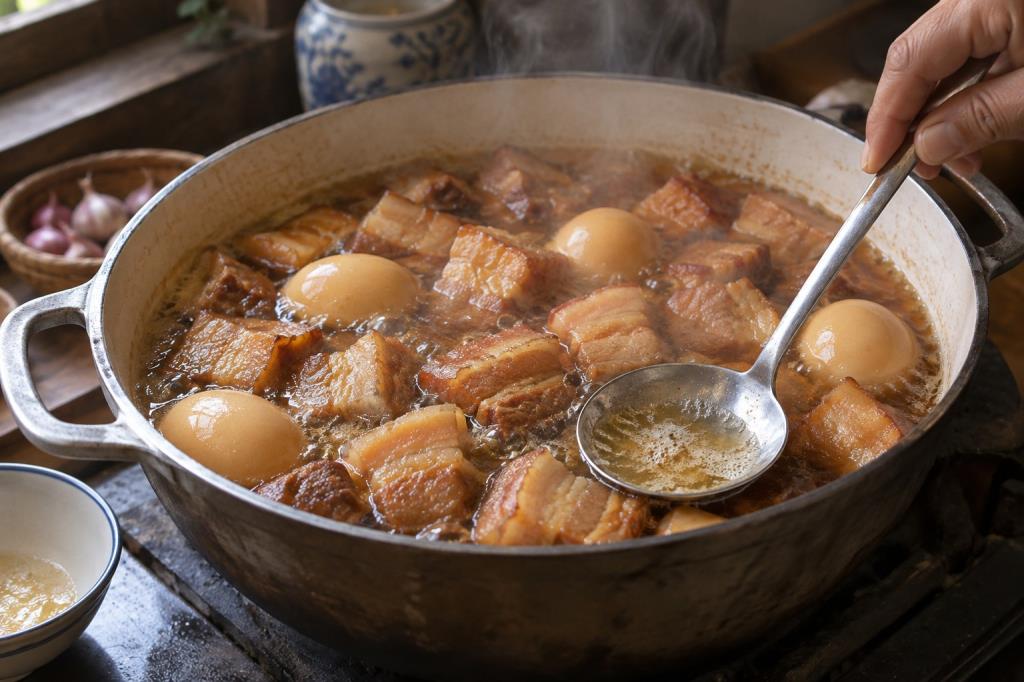
How to balance the taste once it is braised
Spoon out a little of the liquid, let it cool for a few seconds and taste it. Very hot liquid makes it hard to judge saltiness accurately. It should be balanced between salty and sweet, taste of pork and coconut water, and not like caramel. It is eaten with plain rice and pickled greens, so it can be stronger than a soup, though not as salty as a dipping sauce.
If it is too salty, add boiling water and some coconut water and cook it for another 10 minutes; do not drop in a potato to soak up the salt, because it also soaks up the liquid and turns it into a different dish. If it is too sweet, add hot water and a few millilitres of fish sauce, and never put lime or vinegar straight into the pot.
Eight small tips for a good-looking, good-tasting dish
- Cut the pork evenly so it all cooks at the same rate.
- Marinate it in the fridge, not at room temperature for long.
- Use fresh coconut water with no added sugar.
- Stop the caramel at amber and avoid black.
- Skim at the start, and take off only some of the fat, not all of it.
- Braise on a low heat with the lid ajar so the liquid stays clear.
- Add the eggs once the pork is halfway to tender.
- Add the fish sauce at the end to keep its aroma.
Common mistakes and how to rescue them
The pork is tender but falling apart
The heat was too high, the pieces were too small, or it was stirred too much. Turn off the heat and lift the pork out with a wide ladle; reduce the liquid separately and pour it back. Next time use a wide pot so the pork sits in a single layer and only shake the pot gently.
The lean meat is tough and the fat is not translucent
The pork has not had enough time at a low temperature, or the liquid has dried up. Add boiling water, leave the lid ajar and braise for another 20-30 minutes. Do not raise the heat to soften it faster, as the lean meat only contracts more.
The braising liquid is cloudy and greasy
Let the pot settle for 5 minutes and skim off the excess fat. You can make the dish a day ahead, chill it so the fat sets on top and lift some of it off; reheating it slowly gives a beautifully clear liquid. Do not strain it through a cloth while the pork is still in the pot, as the pieces break up easily.
The eggs are bland or rubbery
Bland eggs are usually added too late; spoon the liquid over them and let them soak in the pot for another 30 minutes with the heat off. Rubbery eggs come from braising too long or boiling too hard, and cannot be made completely soft again.
Serving and presentation
Ladle the pork and eggs into a deep bowl, spoon the liquid over and add pepper and spring onion. Serve it with rice and pickled bean sprouts, pickled shallots or pickled greens to balance the richness. If you are serving a crowd, halve a few of the eggs just before bringing it to the table; do not cut them all early, as the yolks draw in liquid and the cut faces dry out.
Storing and reheating safely
Do not leave a large pot cooling on the stove for hours. Divide it into shallow containers and refrigerate within 2 hours; use it within 3-4 days. When reheating, take out only the portion you are going to eat and heat it to 74C, stirring gently so the heat is even. It is better not to reheat the whole pot at every meal. The pork and the liquid can be frozen; frozen eggs usually change texture and the white goes rubbery, so keep them separate and eat them soon.
Allergies and adjusting to taste
Fish sauce contains fish. Coconut water is not a preservative and the dish still needs to be refrigerated on schedule. Anyone who needs to limit sodium should reduce both the fish sauce and the salt from the start; do not automatically swap in soy sauce, which is also high in sodium and may contain soy and wheat.
Cooking it a day ahead makes it better
Thit kho tau lends itself to being made in advance, because resting lets the flavour spread evenly. It does need to be cooled quickly, though, rather than left in a large pot on the stove overnight. Once it is braised, move the eggs to their own container, divide the pork and the liquid between shallow containers and chill them. The next day the layer of fat set on top is very easy to lift off; the gelatine underneath melts again on reheating and gives the sauce a naturally glossy body.
Reheat the pork over a low heat until it is hot through, then add the eggs for the last 10-15 minutes. If the liquid sets like jelly in the fridge, that is usually collagen from the skin and connective tissue, not a sign that the dish has gone off. Only throw it out if there is a strange sour smell, unusual bubbling or sliminess, or if it has been left at room temperature too long. When serving, one piece of pork, one egg and enough sauce per person makes the richness easier to manage.


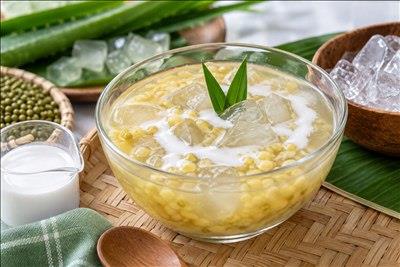 How to cook mung bean and aloe sweet soup: refreshing, with crisp aloe and no bitterness
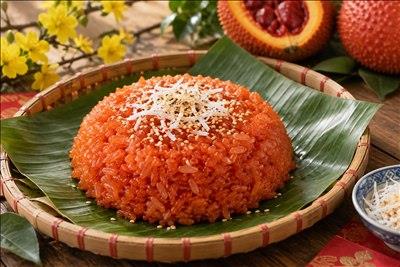 How to cook xoi gac: a beautiful red, chewy separate grains and never claggy
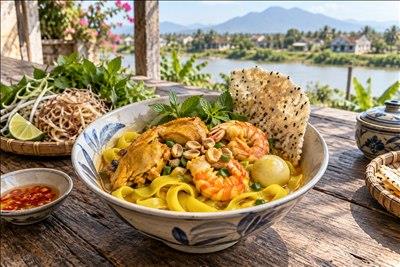 Mi Quang and the kitchens of Quang Nam: a bowl with little broth and a great deal of memory
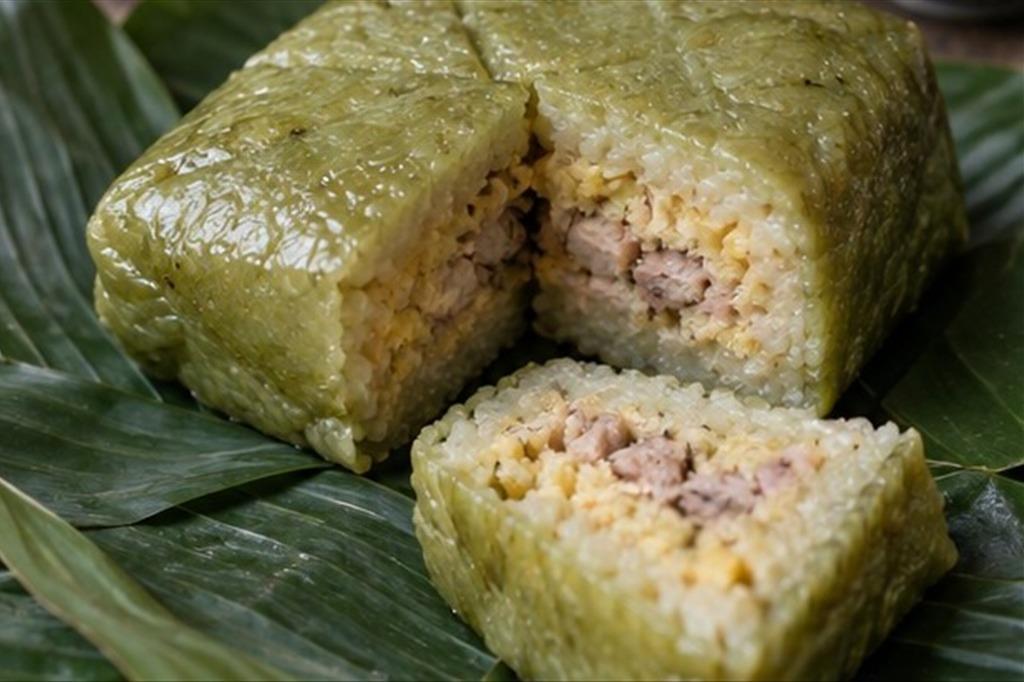 Bo Dau banh chung: the green square cake at the crossroads into Thai Nguyen
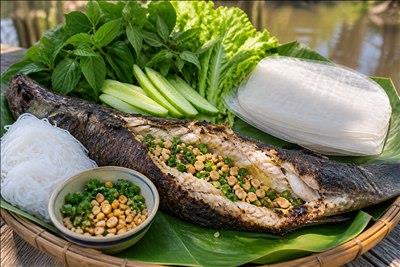 How to cook ca loc nuong trui: evenly done, juicy flesh and no taste of ash
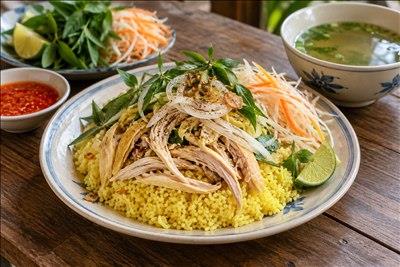 How to make Hoi An chicken rice: fluffy grains, juicy chicken and a crisp onion salad
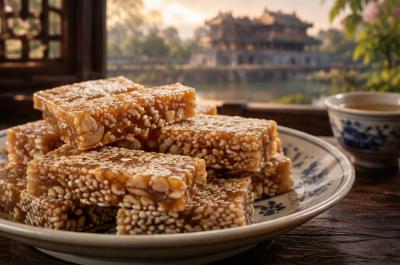 Me xung from Hue: chewy malt, toasted sesame and the slow rhythm of tea
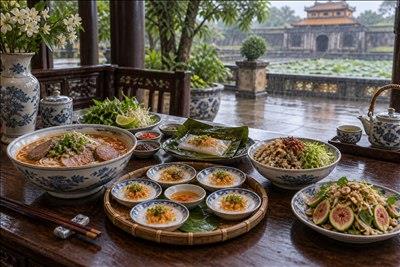 The food of Hue: where the royal kitchen, everyday dishes and small street stalls meet
Đăng nhập để bình luận: / Sign in to comment: