



How to cook chicken braised with ginger: warm and fragrant, tender meat and skin that stays put
Chicken braised with ginger is an easy home dish, but three things go wrong very easily: the meat dries out, the skin turns flabby, or the ginger is sharply hot without being fragrant. The trick lies in choosing the right cut, cutting the ginger two ways, searing the chicken first and then braising it with just enough liquid. This recipe serves four or five, with a balanced salty sweetness and a clear warmth of ginger that does not overwhelm the taste of the meat.
Quick facts
- Serves: 4-5 people.
- Preparation: 25 minutes.
- Marinating: 25-30 minutes in the fridge.
- Braising: 30-40 minutes.
- Difficulty: easy to medium.
Ingredients
- 1.2 kg of chicken thighs, or free-range chicken cut into 4-5 cm pieces.
- 80-100 g of mature ginger, some chopped and some cut into strips.
- 4 shallots, 3 cloves of garlic, 3 spring onion whites.
- 45 ml of fish sauce, added in two stages.
- 25 g of sugar: 15 g for the caramel and 10 g for the marinade.
- 250-300 ml of hot water or unsweetened fresh coconut water.
- 1 tablespoon of cooking oil, 1 teaspoon of pepper.
- Fresh chilli, spring onion and coriander to taste.
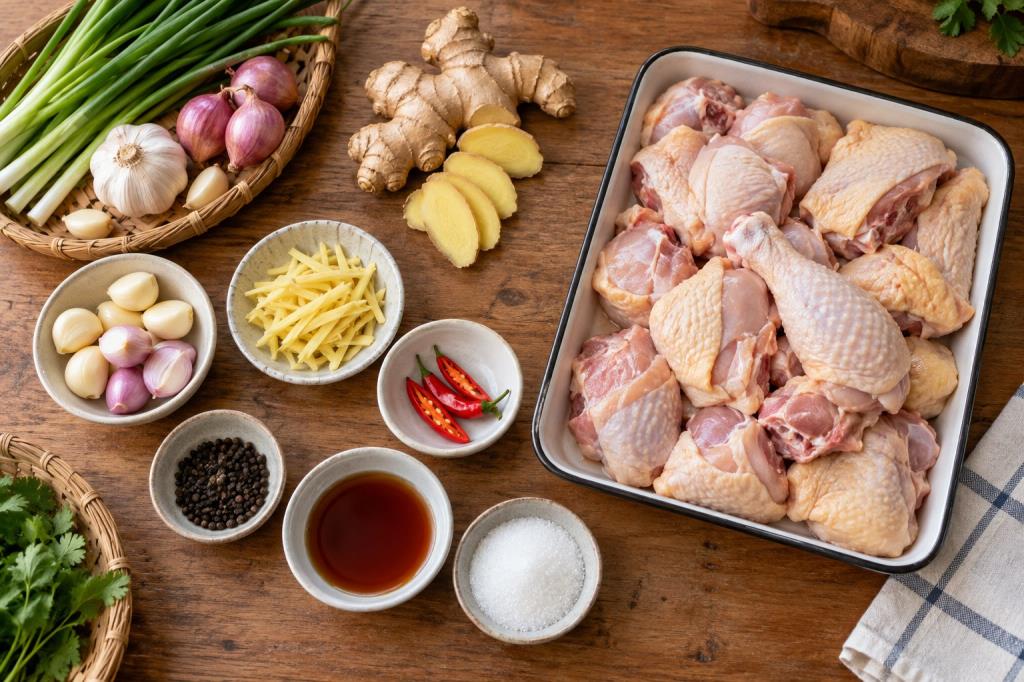
Choosing chicken that braises tender without falling apart
Thighs, drumsticks and wings have connective tissue, skin and a moderate amount of fat, so they stand up to a long braise better than breast. If you are using a whole free-range bird, cut the large bone-in pieces fairly evenly and set the breast aside; add the breast about 8-10 minutes later. Chicken with dry skin, natural colour, springy flesh and no odd smell gives a cleaner sauce.
Frozen chicken should be thawed completely in the fridge, on the lowest shelf. Do not rinse raw chicken under a strong tap: the splashing can spread bacteria across the sink and the worktop. If there are bone fragments on the surface, wipe each piece with a damp paper towel and pat it dry, then wash your hands, the knife and the board with a suitable detergent before moving on to the herbs.
Preparing the ginger for layers of aroma
Mature ginger has a deeper smell and less moisture, which suits braising better than young ginger. Scrape the skin thinly or wash it very well; there is no need to peel deeply. Chop about a third for the marinade, cut a third into fine strips to fry with the shallot, and cut the rest into slightly thicker batons to add during the braise. The chopped ginger builds the base smell, the strips become fragrant quickly, and the batons keep a light bite and a warm aroma when you eat them.
If there are young children in the family, reduce the chopped ginger rather than leaving it out altogether. You can blanch the ginger batons in boiling water for 20 seconds to soften the heat, but drain them before cooking. Do not blitz all the ginger into a puree: the small fibres cling to the meat, burn easily during searing and cloud the sauce.
Marinating the chicken for the right length of time
Mix the chicken with 30 ml of fish sauce, 10 g of sugar, the chopped ginger, half the shallot and garlic, the crushed spring onion whites and half a teaspoon of pepper. Use a bowl wide enough for the seasoning to coat everything, cover it and refrigerate for 25-30 minutes. If the pieces are large, make a shallow cut in the thickest part of the meat without going down to the bone. Mix it again once halfway through.
There is no need to marinate from morning until evening. The salt in the fish sauce draws moisture to the surface, which dries the meat out and makes it harder for the skin to firm up. If you need to prepare ahead, cut the chicken, the ginger and the shallot separately and keep them cold; only mix in the seasoning about half an hour before cooking. The raw marinade goes into the pot and is cooked right through, and is never used as a dipping sauce.
Step 1: make a golden-brown caramel
Put 15 g of sugar and a tablespoon of water into a heavy-based pot. Heat it over a medium flame and lower it once the sugar has dissolved and turned honey-coloured. Stop at a lighter amber than you would for braised fish, because the chicken skin will add more colour as it sears. Add two spoonfuls of hot water very carefully to stop the caramelisation.
If you would rather not make caramel yourself, you can use ready-made braising caramel, but read the ingredients and start with a small amount. Do not substitute a lot of brown sugar: it gives colour but brings its own molasses note and easily makes the dish sweet. Burnt black caramel has to be thrown away; the bitterness clings to the chicken skin and becomes more obvious as the sauce reduces.
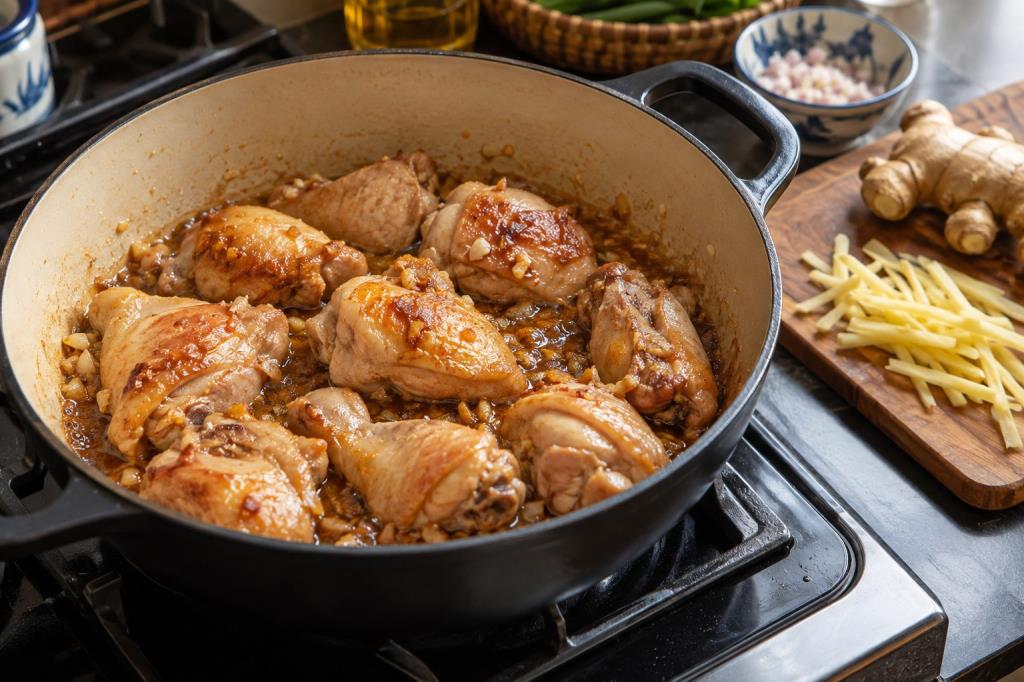
Step 2: sear the chicken and wake up the ginger
Add the oil, the remaining shallot and garlic and the ginger strips to the caramel base and stir for 30-45 seconds until fragrant. Push the aromatics to the edge and lay the chicken skin side down on the base of the pot. Keep a medium heat for 3-4 minutes so the skin tightens and turns slightly golden, then turn each piece. Do not tip the whole bowl of marinade in at the start, as the steam turns searing into boiling.
Once both sides are seared, pour in the marinade and stir gently to coat everything with colour. The aim is not to fry the chicken through or make it fully crisp, only to create a surface layer that gives aroma and produces less scum. If the pot is small, work in two batches and combine them. Packing it too full makes the temperature drop, the chicken gives off liquid and the skin softens before it has a chance to colour.
Step 3: braise on a low heat and add the ginger at the right moment
Add 250 ml of hot water or coconut water, enough to come about halfway up the pieces. Boil for 2-3 minutes, skim any scum, then lower the heat and leave the lid ajar. Add the ginger batons after 10 minutes so they keep their fresh smell. Braise thighs for about 25-35 minutes; if there is breast, add it later or lift it out earlier.
Tilt the pot from time to time and spoon the liquid over; do not stir hard, or the skin comes away. Chicken is safe when the thickest part reaches at least 74C, measured away from the bone. Do not rely entirely on the pink colour near the bone, as the pigment varies; the temperature and the state of the meat are more reliable signs. Once the chicken is up to temperature, add the remaining 15 ml of fish sauce and braise for another 5 minutes.
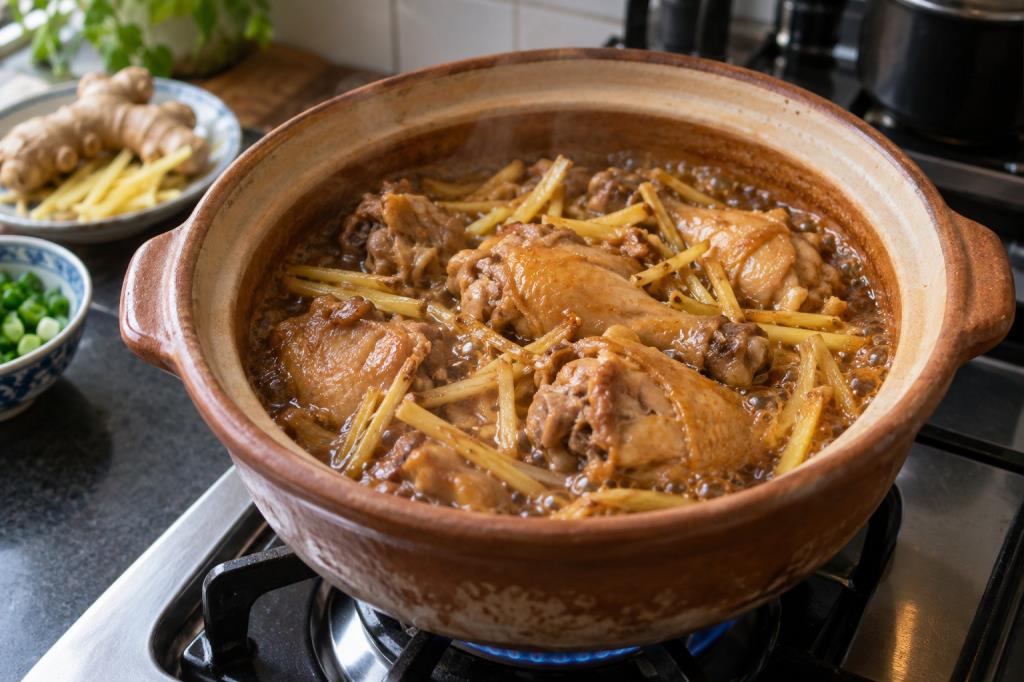
Step 4: adjust the body of the sauce and finish
Take the lid off and raise the heat to medium for a few minutes so the liquid reduces to a light gloss around the pieces. Toss it by shaking the pot, or turn each piece with tongs. If the seasoning is already strong enough, lift the chicken out first and reduce the sauce on its own, so the meat does not carry on cooking while you do it. The sauce does not need to be as thick as syrup, because the gelatine from the skin thickens it further as it cools.
Taste a spoonful of the liquid after letting it cool for a few seconds. If it is salty, add hot water 30 ml at a time and bring it back; if it is bland but there is little liquid left, add fish sauce a teaspoon at a time. If it is sweet, do not add lime juice directly, as the acidity changes the character of the dish; add a little water and fish sauce to rebalance it instead. Scatter the pepper, spring onion and a few strips of fresh ginger just before you turn the heat off.
Ten small tips that are easy to apply
- Prefer thighs and wings if you want a long braise with the meat still moist.
- Cut the pieces evenly so they come up to temperature together.
- Pat the chicken dry so the skin sears properly.
- Split the ginger into chopped, strips and batons for several layers of aroma.
- Marinate in the fridge; do not leave a bowl of raw chicken out in the kitchen.
- Stop the caramel at a light amber.
- Sear the skin side first and do not pack the pot too tightly.
- Top up with hot water so the pot does not lose heat.
- Braise at a gentle simmer with the lid ajar to control the liquid.
- Adding the last of the fish sauce at the end makes the aroma clearer.
Common mistakes and what to do about them
The chicken is dry and crumbly
The breast has been braised as long as the thigh, or the pot has boiled too hard. Lift the breast out as soon as it comes up to temperature and let it rest in the hot sauce rather than carrying on cooking. Next time add the breast later and cut it into larger pieces. Adding more liquid cannot fully restore meat that has lost its moisture.
The skin has come off or gone flabby
The chicken was not patted dry, the pot was too crowded, or it was stirred too much. Handle it less, use wide tongs and reduce the sauce uncovered at the end. If you want firmer skin, lift the pieces out and briefly sear the skin side in a clean pan before spooning the sauce over, but do not do it so long that the meat dries out.
The ginger is bitter or sharply hot
The chopped ginger was too fine and burnt while frying, or all the ginger went in too early. Strain out any obviously burnt fragments, and add water and onion to round the flavour out. Next time fry the ginger for under a minute and hold the batons back until the middle of the braise.
The sauce is greasy
Let the pot rest for 5 minutes and skim off the fat with a ladle, but keep a very thin layer to carry the aroma. You can cook it a day ahead, chill it and lift off some of the fat that sets on top. Do not add extra oil if you are using thighs with the skin on, as the chicken releases its own fat.
Variations that keep the dish recognisable
You can add soaked and squeezed-out shiitake in the last 15 minutes, or a few slices of fresh turmeric for a warmer colour. If you use lemongrass, reduce the ginger and treat it as chicken braised with lemongrass and ginger rather than a pure ginger dish. With skinless chicken, add a spoonful of oil when searing and shorten the braise. Do not add potato at the start, as the starch clouds the sauce and the potato falls apart before the chicken is tender.
Scaling the recipe up
For 2.4 kg of chicken, use a wide pot or split it between two pots rather than stacking the pieces in layers. Increase the fish sauce and sugar by about 1.7 times first, then taste and top up, because evaporation does not scale linearly. The safe temperature still has to be checked in the thickest pieces. If you halve the recipe, use a smaller pot so the liquid comes halfway up the chicken without having to add too much.
Serving and planning the meal
Ginger chicken goes with white rice, boiled greens, cucumber or a winter melon soup. A lightly seasoned vegetable dish balances the strong, rich flavour. To serve, arrange the pieces in a shallow bowl and spoon the sauce and ginger over; keep the chilli separate if there are young children. A warmed ceramic bowl keeps the dish hot for longer without any further cooking.
Storing and reheating
Divide it into shallow containers and refrigerate within 2 hours. Use it within 3-4 days or freeze it in portions. To reheat, add a little water, cover it partly and bring the whole portion to 74C, stirring gently so the pieces heat evenly. Do not reheat the whole pot repeatedly. If it smells sour, feels slimy or has been at room temperature too long, throw it out rather than tasting it.
Allergies and substitutions
Fish sauce contains fish. Anyone limiting sodium should use less fish sauce from the start, and should not automatically switch to soy sauce, which still contains sodium and may contain soy and wheat. The coconut water is optional and has no preservative effect. Utensils that have touched raw chicken must be washed before they are used for cooked food.


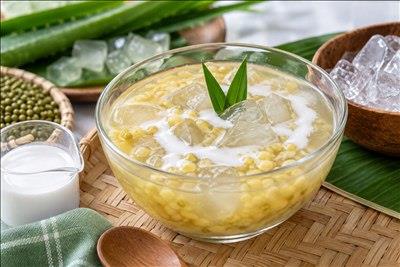 How to cook mung bean and aloe sweet soup: refreshing, with crisp aloe and no bitterness
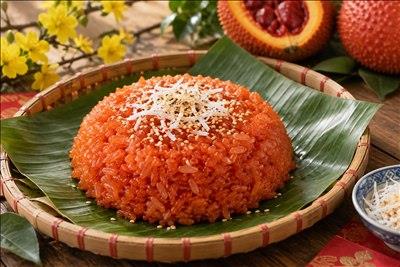 How to cook xoi gac: a beautiful red, chewy separate grains and never claggy
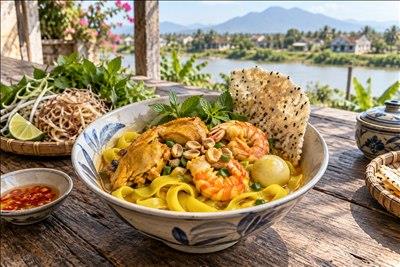 Mi Quang and the kitchens of Quang Nam: a bowl with little broth and a great deal of memory
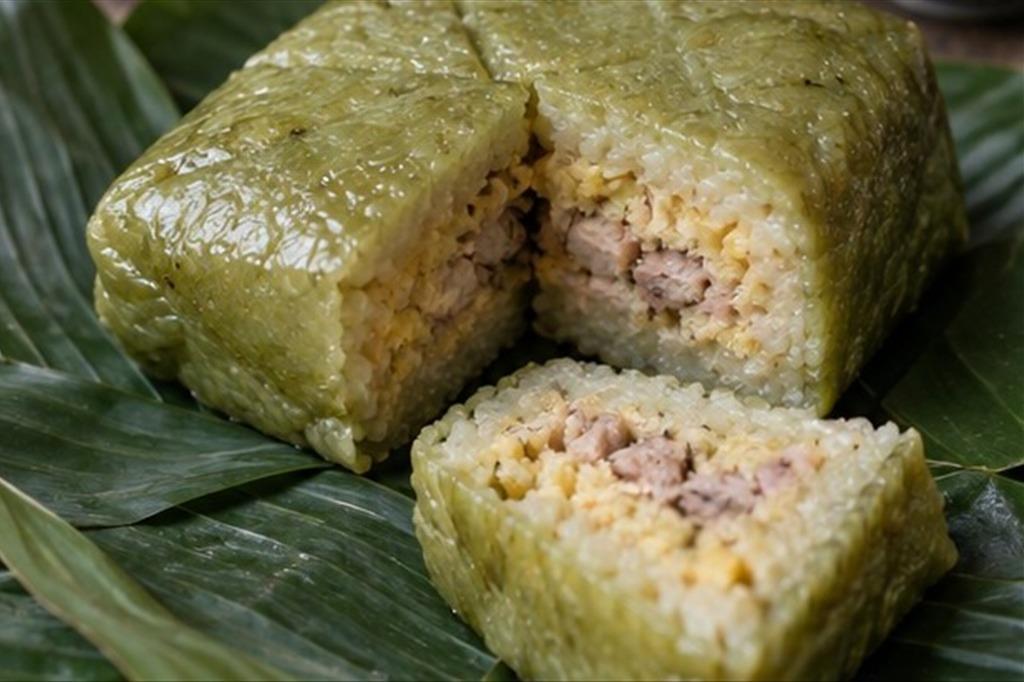 Bo Dau banh chung: the green square cake at the crossroads into Thai Nguyen
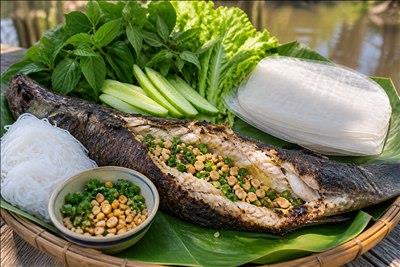 How to cook ca loc nuong trui: evenly done, juicy flesh and no taste of ash
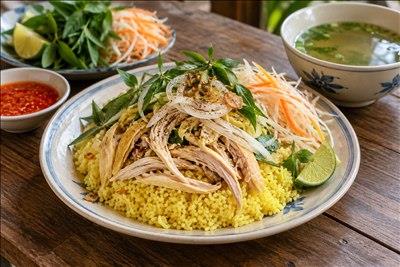 How to make Hoi An chicken rice: fluffy grains, juicy chicken and a crisp onion salad
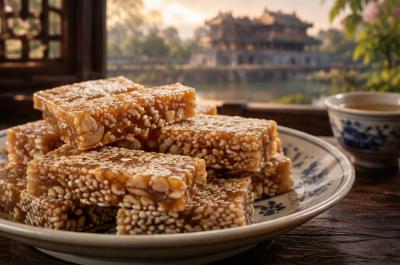 Me xung from Hue: chewy malt, toasted sesame and the slow rhythm of tea
 The food of Hue: where the royal kitchen, everyday dishes and small street stalls meet
Đăng nhập để bình luận: / Sign in to comment: