



Cao Bang banh cuon: a thin rice sheet eaten with a bowl of hot broth on the frontier
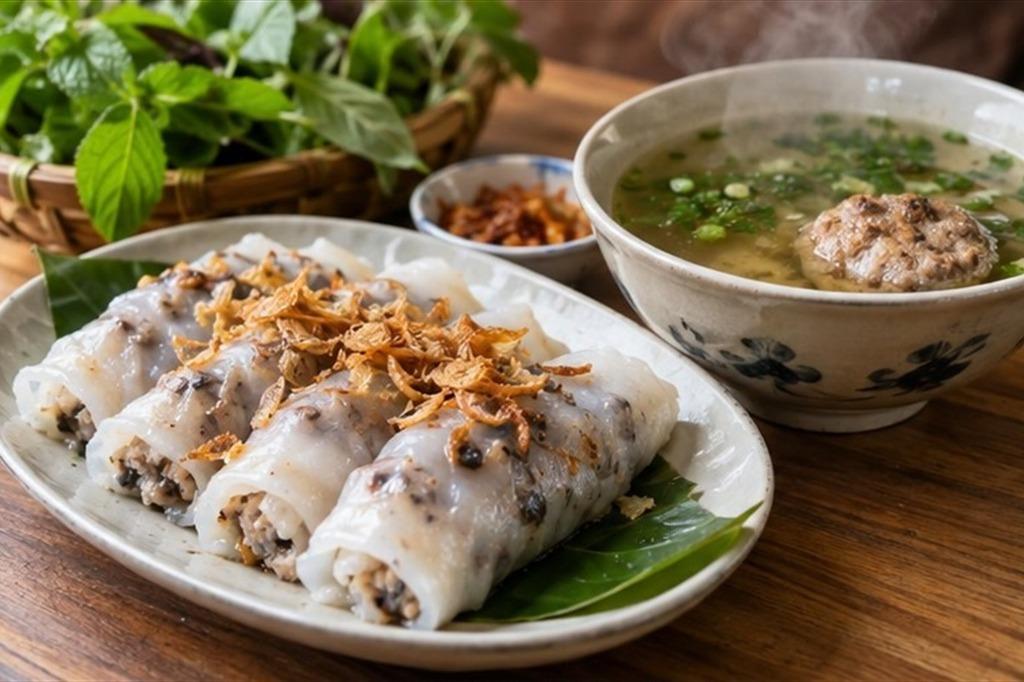
Cao Bang banh cuon surprises anyone used to dipping it in fish sauce: here it is eaten with a bowl of hot bone broth, which may hold pork roll, minced pork and herbs. The thin, soft sheet meeting the clear, warm broth makes a breakfast suited to the mountain climate.
The method and the accompaniments differ from shop to shop, family to family and district to district. In some places the sheet has a pork filling, in others an egg is added, and some bowls of broth come with a slice of pork roll. What is worth remembering is not a fixed list of toppings but the relationship between a freshly steamed sheet and a bowl of hot broth.
Quick facts
- Locality: Cao Bang.
- The base: rice batter spread thin over a cloth.
- The characteristic way of eating: with a bowl of hot bone broth.
- Accompaniments: minced pork, pork roll, egg or herbs, depending on the place.
- The experience: eat it the moment the sheet comes off the steamer.
The batter decides how thin and how soft it is
The rice is soaked, ground and mixed with the right amount of water. Too thick and the sheet comes out heavy; too thin and it tears. Resting time and temperature matter as well. The cook turns the ladle quickly over the stretched cloth, puts the lid on so the steam cooks it, then lifts the almost translucent sheet with a bamboo stick.
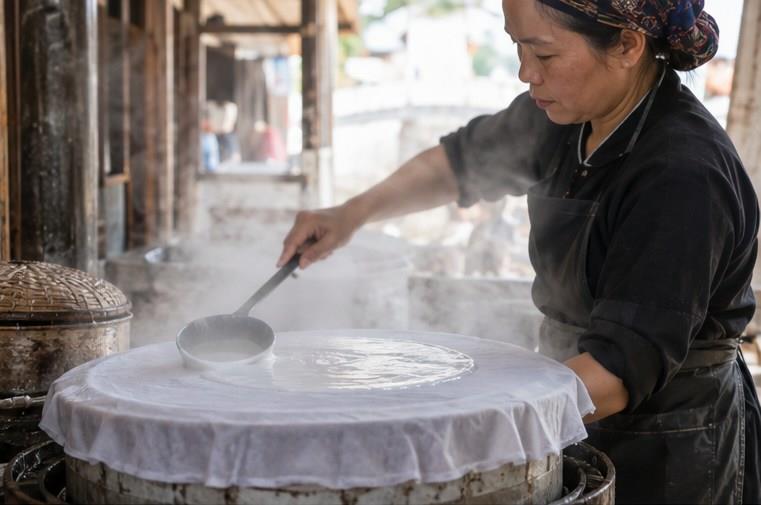
Just enough filling to keep the sheet from feeling heavy
Minced pork with wood-ear mushroom is the familiar filling, cooked through and seasoned moderately. Too much filling makes the sheet break and drowns the taste of the rice; too wet and the sheet goes soggy. Some places add an egg to the sheet, giving richness and changing the texture. Guests who do not eat egg or meat should ask beforehand.
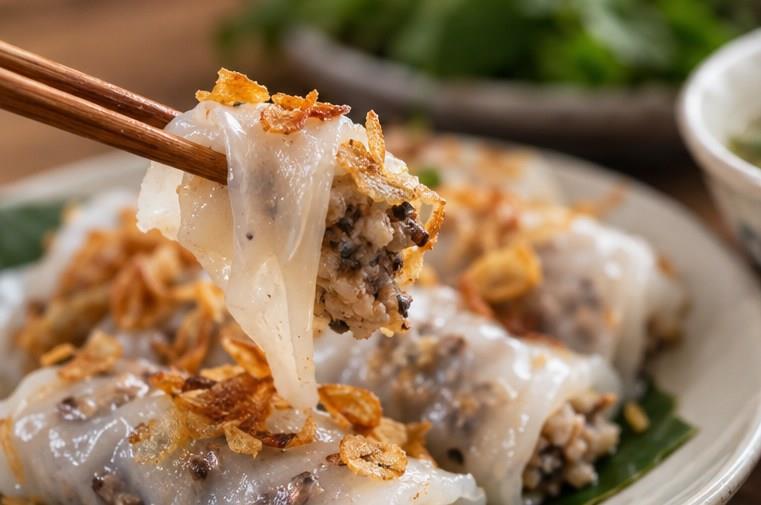
The bowl of broth is what identifies it
The broth is usually built on simmered bones, kept hot and seasoned lightly. Pork roll or meatballs may sit in the bowl; spring onion, coriander and chilli are added to taste. A clear broth does not automatically prove long simmering, and a cloudy one is not necessarily worse; what matters is a clean smell, a balanced taste and the temperature at which it is served.

The way of eating sets its own rhythm
Some people pick up each piece and dip it into the broth, others ladle the broth over or alternate between the two. The thin sheet takes in a little liquid while staying soft. Try one piece plain before adding pickled bamboo shoot with chilli or other seasonings, since sourness and heat easily overrun the taste of the rice and the sweetness of the broth.
Breakfast in a mountain climate
The heat rising from the steamer and the bowl of broth brings warmth on a cold morning. Shops usually work to a continuous rhythm: steam, roll, ladle the broth and serve at once. When tourism is busy, keeping pre-made sheets too long can dry the surface; choosing a shop that steams to order lets you see the texture as it should be.
Why does a dish come to identify a region?
A speciality is not made by a list of ingredients alone. Climate decides the season, soil affects the quality of the produce, and markets, roads and the rhythm of work shape how it is prepared. Techniques repeated across generations give a dish its own “voice”, even though every household keeps different proportions and knacks. So a local version should be seen as a living tradition, not a closed recipe.
Fame brings its own problems. As demand grows, a product may be made in a hurry, given a longer shelf life, or labelled with a place name despite having no connection to the craft village. Buyers can help protect its value by asking where it was made, reading the ingredients, choosing transparent producers and accepting a price that reflects the work. An unusually cheap gift is sometimes a sign to look more closely rather than a bargain.
Tasting so as to recognise the structure of the flavour
Do not rush to add a lot of dipping sauce, chilli or sugar at the first bite. Look at the natural colour, smell the main aroma, feel whether it is soft, chewy, crisp or firm, and only then try it with what comes alongside. This helps you recognise the role of each element and understand why local people arrange the dish as they do. Temperature matters too: something just cooked smells and feels different from the same thing gone cold or carried a long way.
There is no single yardstick for taste. Someone used to sweetness may find central dishes salty; someone who likes it light may find fermented food too strong. Instead of ranking the “best”, ask which village, shop or household this version comes from, and whether it was made to eat straight away or to take away as a gift. A specific question opens a more interesting story than an absolute verdict on a whole region.
Things that are easily misunderstood
Cao Bang banh cuon differs only in its dipping sauce
The bowl of hot broth changes the way you eat, the temperature and how the sheet feels; it is not merely swapping one dipping sauce for another.
Any version without the same toppings is not authentic
The accompaniments change from shop to shop and place to place; the thin sheet together with the bowl of broth is the real link.
Suggestions for trying it
- Choose a shop that steams the sheets to order.
- Taste the broth before adding any seasoning.
- Ask about the filling and toppings if you have an allergy.
- Eat the sheets while they are still warm and soft.
- Order a modest portion, since the sheets keep absorbing liquid.
- Do not touch the shop's steaming equipment.
- Combine the meal with a look at Cao Bang's markets and farm produce.
Buying it and taking it home as a gift
Prefer products that carry the maker's name, an address, a production date, a use-by date and clear storage instructions. For goods sold loose, ask when they were made, how they were transported and what signs would show they are no longer good. Attractive packaging helps on a long journey but does not replace the quality inside; equally, a rustic look does not automatically prove something is handmade or safe.
Buy an amount that suits the distance and how well you can keep it. Fresh items containing meat, seafood, broth or raw vegetables need temperature control; dried goods and sweets still have to be kept away from damp, heat and insects. If you are flying or crossing an area with quarantine rules, check the airline's rules and those of your destination. Do not vacuum-seal something unsuitable and then assume it can sit at room temperature.
A note on food safety
The bone broth, the meat, the pork roll and the eggs must be cooked through and held hot properly. The sheets carry a lot of moisture, so eat them at once rather than leaving them at room temperature. Anyone allergic to egg or avoiding meat should ask, since these may be present both in the sheet and in the bowl of broth.
Anyone allergic to prawn, crab, legumes, sesame, peanut, dairy, egg or anything else needs to ask specifically, since these can be in the filling, the broth and the dipping sauce. Young children, older adults, pregnant people and those with weakened immunity should favour food that is cooked through, stored properly and eaten soon. If something smells odd, is unusually slimy, has swollen packaging, or has been out at room temperature for an unknown length of time, the safe choice is not to eat it.
Conclusion
Cao Bang banh cuon shows how a familiar dish can change its whole rhythm once it travels to another region. The freshly steamed sheet and the bowl of hot broth together tell a story about climate, rice and the morning habits of the frontier.


 Cao Bang banh cuon: a thin rice sheet eaten with a bowl of hot broth on the frontier
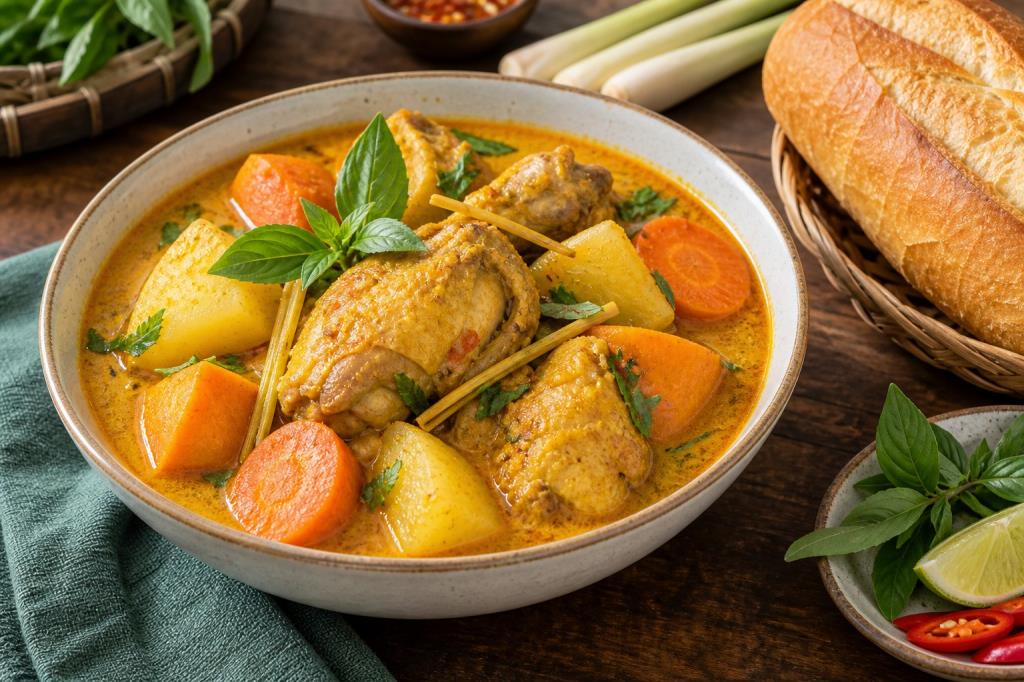 How to cook Vietnamese chicken curry: gently rich, tender meat and potatoes that hold together
 The coastal kitchen of central Vietnam: grilled fish, fermented sauce and getting through the storm season
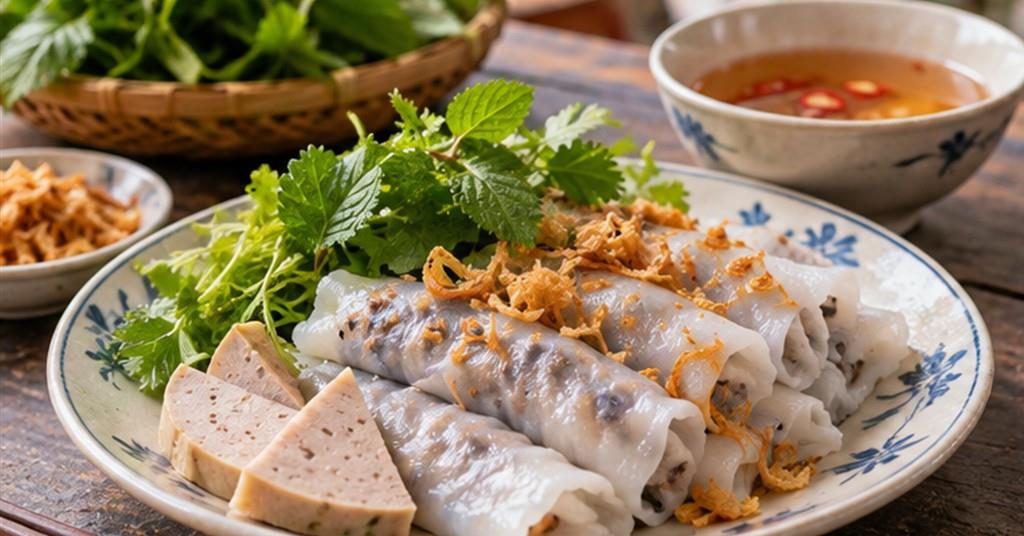 Bánh cuốn across the three regions: the same thin sheet, a different way of eating it
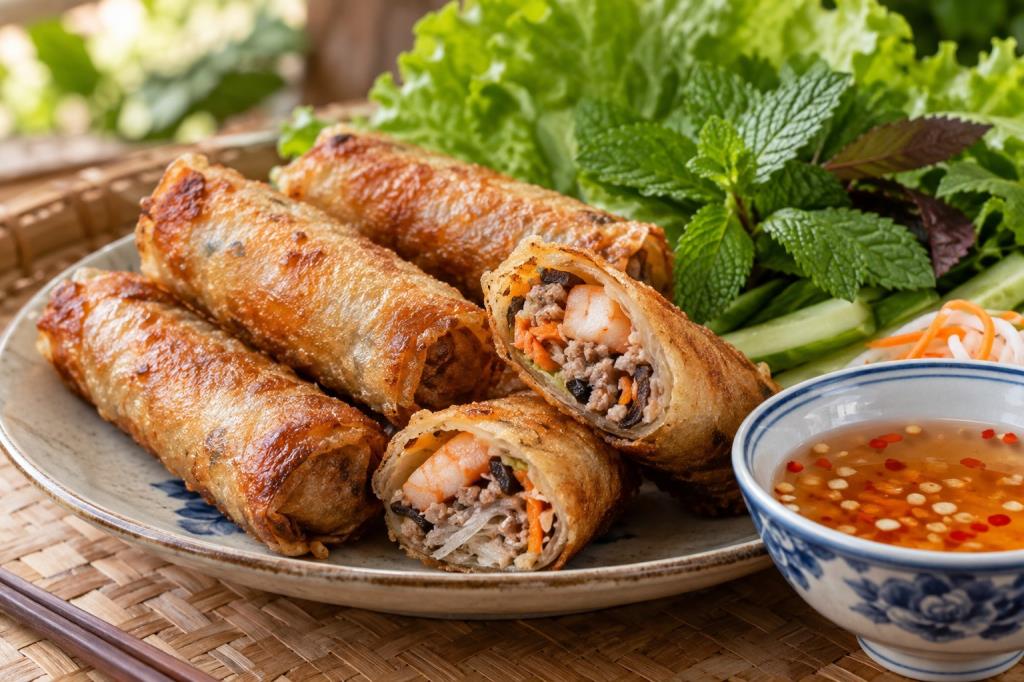 How to make cha gio that stays crisp, with an evenly cooked filling and no split wrappers
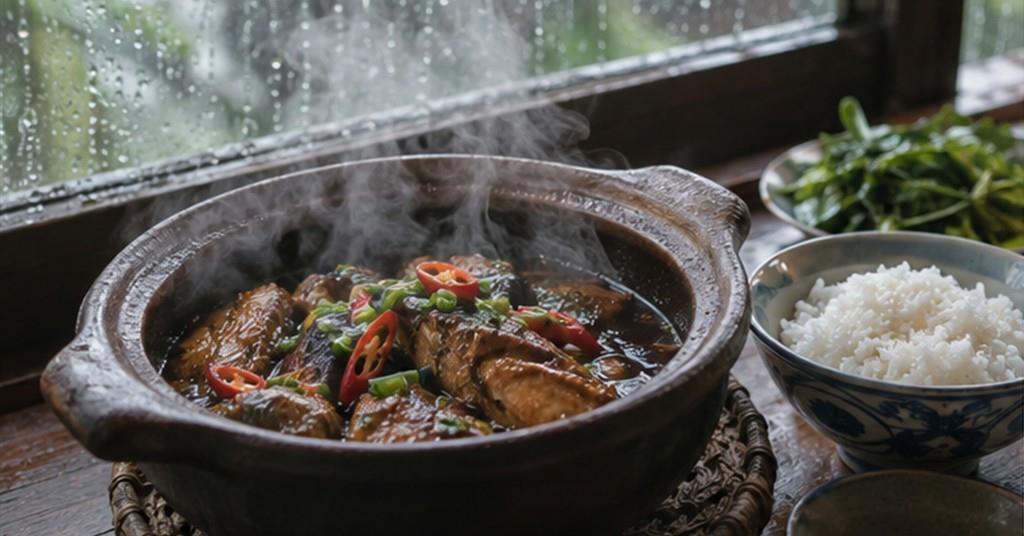 What is it about a Vietnamese rainy-season meal that people far from home never forget?
 Banh cay from Thai Binh: from toasted sticky rice and malt syrup to a sweet beside the teacup
 How to make fresh spring rolls with prawn and pork: neat, firm and without tearing
Đăng nhập để bình luận: / Sign in to comment: