



Repair instead of replacing in a hurry: a small habit for a sturdier home and less waste
A button that has come off, a loose chair leg or a cupboard handle that rattles is not necessarily the end of the object. Repair extends the life of what you own and teaches you your home, but a good decision has to balance safety, cost, time and whether the repair is realistically within reach.
The “fix everything yourself” movement can easily turn into another kind of pressure. Some things need only a needle and thread; others involve mains electricity, gas, structural parts or batteries and need a technician. The aim is not to keep every object forever, but to insert one clear-headed step of assessment before buying new or throwing away.
Quick facts
- Good places to start: clothes, buttons, simple hinges and light wooden furniture.
- Do not do it yourself when: mains electricity, gas, a swollen battery or a dangerous structural part is involved.
- What you need: a small toolbox, good light and a clean work surface.
- The rule: diagnose first, buy parts afterwards.
- The outcome: safe and usable matters more than flawless.
Three questions before you start
Which function has failed, is the cause visible, and what happens if the repair goes wrong? A split seam is nothing like a burnt wire. Photograph the current state, find the product code and check the warranty before opening anything; opening it yourself can void the warranty or create further damage.
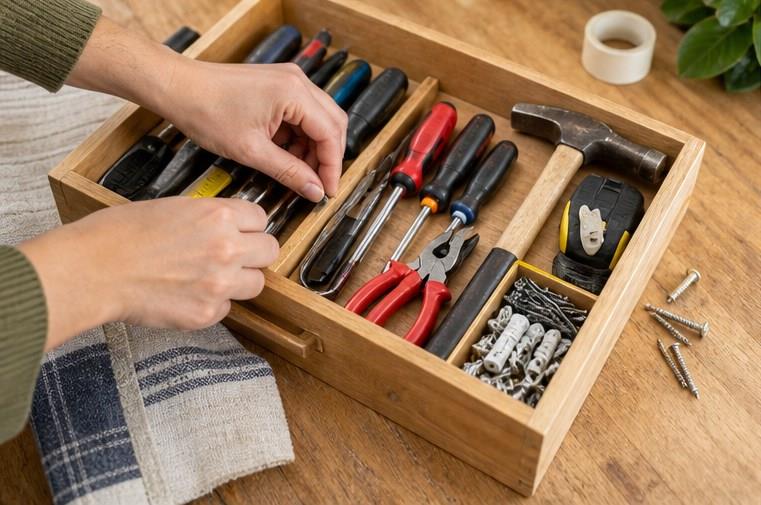
A toolbox that is just enough
A needle and thread, scissors, screwdrivers in the right sizes, pliers, a ruler, masking tape and a box for screws cover a great many small jobs. Cheap tools in the wrong size chew up screw heads and slip. Buying one item at a time as you actually need it, keeping everything dry and out of reach of children, works better than a big set nobody keeps track of.
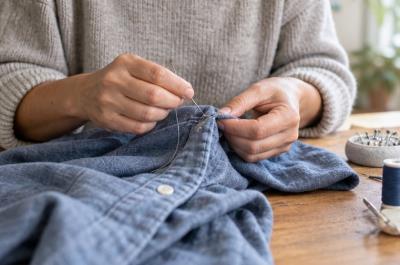
Mending clothes to learn the rhythm of your hands
Sewing on a button, closing a split seam and patching from the inside are low-risk exercises. Choose thread close in colour, secure the end and do not pull so tight that the fabric puckers. A visible patch can become an aesthetic of its own; a repair does not have to pretend the thing was never broken.

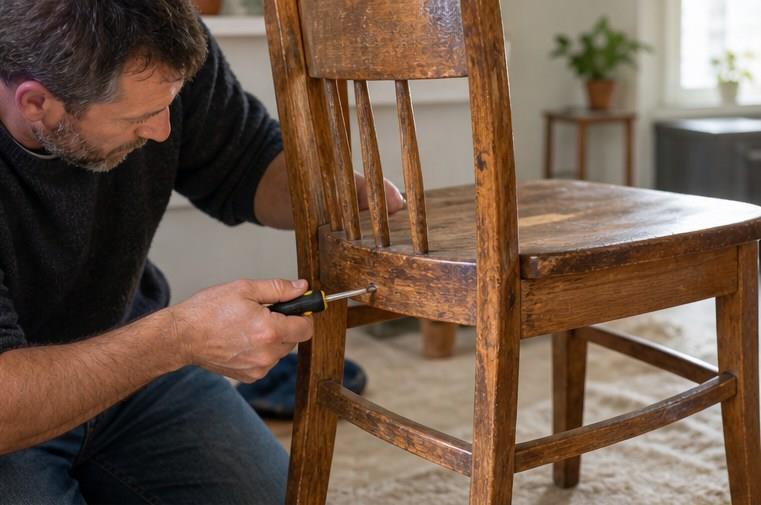
With wooden furniture, find where the load goes
A wobbly chair may come from a loose screw, an open joint or cracked wood. Tightening only helps while the thread is still sound; glue needs a clean surface and enough time in the clamp. If the crack is in a load-bearing part, do not keep sitting on it to test. An experienced carpenter can judge whether the piece is still safe to save.
Knowing when to stop is a skill too
An appliance that smells of burning, has a swollen battery, an unusually hot casing, exposed wiring, or anything involving gas must be taken out of use and safely disconnected. Do not puncture a battery and do not keep switching it on to test. Use a reputable repair service or a proper collection point; protecting people matters more than any waste-reduction goal.
How to look at a living tradition
No region or community should be reduced to a single recipe. Ingredients, names and ways of serving shift with the season, the family, religion, occupation and patterns of migration. What is shared shows a history of exchange; what differs shows the capacity to adapt.
When you go and try it, use the right name for the dish and the region if you know them, listen to the people making it, ask before photographing private spaces, and avoid treating the word “authentic” as an absolute stamp. A new version still has value as long as it says what has changed and respects the people who keep the craft alive.
Common misunderstandings
Repairing is always cheaper than buying new
Parts, labour and how reliable the thing will be afterwards all have to be counted; in some cases a replacement uses less energy and is safer.
A how-to video is enough to repair a dangerous appliance
A video cannot assess the specific state of your item, your skill level or the electrical standards in your home.
Practical suggestions and things to try
- Photograph the state of things before dismantling.
- Keep the screws in labelled groups.
- Use the right size of screwdriver.
- Work under good light.
- Check the warranty first.
- Stop when electricity, gas or a damaged battery is involved.
- Note down the repair and which parts were replaced.
Observation checklist
- What context, season and audience is being talked about?
- Which details are facts, and which are impressions or personal choices?
- How do the ingredients, tools or setting affect the outcome?
- Are there any safety, allergy, cost or privacy risks to check?
- What small thing could you try today and review later?
Important note
Do not attempt fixed wiring, gas appliances, microwave ovens, swollen lithium batteries or load-bearing parts without the relevant expertise. Disconnect the power and call an appropriate technician.
Conclusion
Repair is a way of slowing down before the reflex to buy something new. One stitch or one screw in the right place can add years to an object's life; and knowing when to stop shows that living sustainably always travels together with understanding safety.



 Letters, photographs and keepsakes: learning gratitude for earlier generations through family memory
 Easing neck and shoulder tension at a desk: adjusting your setup and changing position
 A city is clean and safe because of people who start their working day before we do
 One phone-free hour a day: a small gap for returning to real life
 Small rituals that keep a family close inside a busy schedule
 Morning light and your sleep rhythm: building a steadier wake-up schedule
 Repair instead of replacing in a hurry: a small habit for a sturdier home and less waste
 A happy family is not a family that never argues
Đăng nhập để bình luận: / Sign in to comment: