



The Phaistos Disc and the 241 Mysterious Symbols of the Minoan Civilization
A small clay disc found at the palace of Phaistos bears 241 tokens stamped in a spiral, but the text is too short and there is almost no comparative material.
Archaeologist Luigi Pernier discovered the disc at Phaistos on July 3, 1908. The Heraklion Archaeological Museum dates it to circa 1700–1650 BCE and records 241 tokens, divided into 61 groups on both sides.
Verifiable Facts
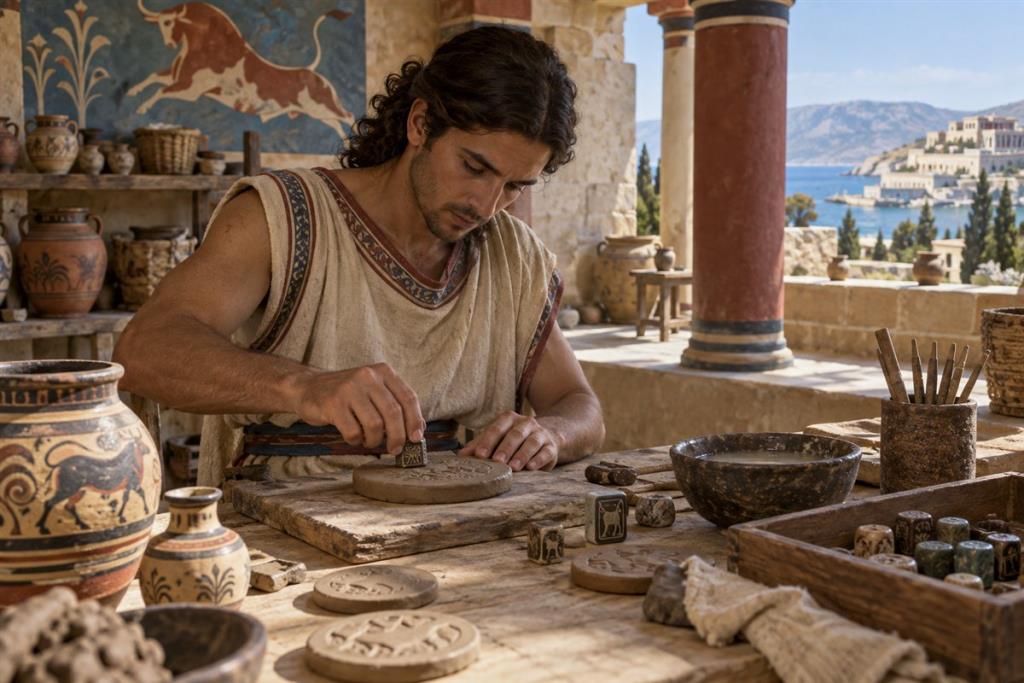
1. The symbols were pressed with small seals while the clay was still wet, a particularly rare technique in the Aegean world at that time.
This fact helps narrow down the scope of speculation: a decipherment is only credible when it fits the entire artifact, date, order of symbols, and archaeological or archival context. Finding a few words that seem to make sense is not enough to prove the entire system.
2. A stroke with five dots helps researchers deduce the reading direction from the rim to the center, but the reading direction does not automatically reveal the sound or meaning.
This fact helps narrow down the scope of speculation: a decipherment is only credible when it fits the entire artifact, date, order of symbols, and archaeological or archival context. Finding a few words that seem to make sense is not enough to prove the entire system.
3. About 45 different types of signs depict people, birds, plants, tools, and ships.
This fact helps narrow down the scope of speculation: a decipherment is only credible when it fits the entire artifact, date, order of symbols, and archaeological or archival context. Finding a few words that seem to make sense is not enough to prove the entire system.
4. Some groups of symbols repeat like a refrain, leading the museum to suggest the possibility that this is a hymn or a prayer.
This fact helps narrow down the scope of speculation: a decipherment is only credible when it fits the entire artifact, date, order of symbols, and archaeological or archival context. Finding a few words that seem to make sense is not enough to prove the entire system.
5. There is no second artifact long enough using this exact set of signs to test any translation.
This fact helps narrow down the scope of speculation: a decipherment is only credible when it fits the entire artifact, date, order of symbols, and archaeological or archival context. Finding a few words that seem to make sense is not enough to prove the entire system.
Why has it not been deciphered yet?
- The text has only 241 signs, so the statistical sample is too small.
- The underlying language is unknown and its relationship to Linear A, Linear B, or Cretan hieroglyphs remains unclear.
- There are no bilingual texts or certain proper names to serve as anchors.
In historical cryptography, a lack of data is often more dangerous than a lack of computing power. Computers can try millions of keys, but they cannot automatically choose the right language, the right reading direction, and the right rules if those premises have not been established.
Main Hypotheses
Hypothesis 1
A hymn or religious ritual due to the repetitive structure.
Hypothesis 2
A list, calendar, or game presented in a spiral.
Hypothesis 3
A local script or an artifact imported from elsewhere; the origin of the clay and context are still being studied.
What is often exaggerated
The Phaistos Disc is a well-documented archaeological artifact, but there is no consensus translation. Claims of having read the entire text are usually based on self-selecting a language and assigning meanings after looking at the pictures.
A cautious approach is to separate three layers: what the artifact directly shows, what researchers reasonably infer, and what is merely popular imagination. These three layers can together make an engaging story, as long as they are not conflated.
Conclusion
The value of a mystery does not lie in choosing the most thrilling solution, but in the ability to test a hypothesis with independent data. Until a key, a parallel text, or a repeatable method emerges, this file must still be considered as having no agreed-upon solution.


 Korean kimchi and banchan: the craft of fermentation and a table built on sharing
 Persian rice and tahdig: saffron, a crisp bottom layer and the sofreh
 Moroccan couscous and tagine: rhythm, hospitality and the flavours of North Africa
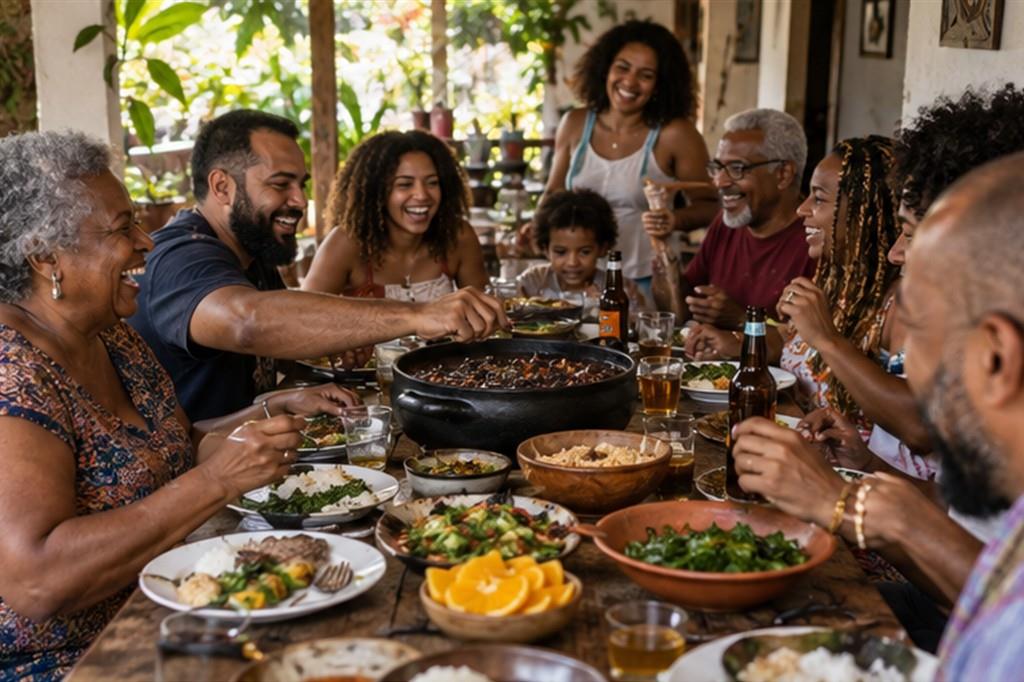 Brazilian feijoada: a pot of black beans, a weekend lunch and a story with many roots
 The Indian thali: a balanced tray that tells a regional story and a way of eating together
 Danish smørrebrød: the open sandwich and the art of composing a lunch
 Swiss raclette: melted cheese and a shared table in the cold season
 Injera in Ethiopia and Eritrea: the shared platter that binds a community
Đăng nhập để bình luận: / Sign in to comment: