



The Longyou caves: who carved these enormous underground halls?
In 1992, pumping out a pond in Longyou county, Zhejiang province, revealed a large man-made rock chamber. Neighbouring ponds concealed further halls, each with supporting pillars, staircases, sloping walls and rows of parallel chisel marks covering every surface.
The scale of the excavation is striking: hundreds of thousands of cubic metres of material may have been removed. Yet calling them "mystery caves" does not mean nothing is known. The geometry, the geology, the tool marks and the relationship to the landscape are all data; what is missing is a secure text saying who ordered the work and what it was ultimately for.
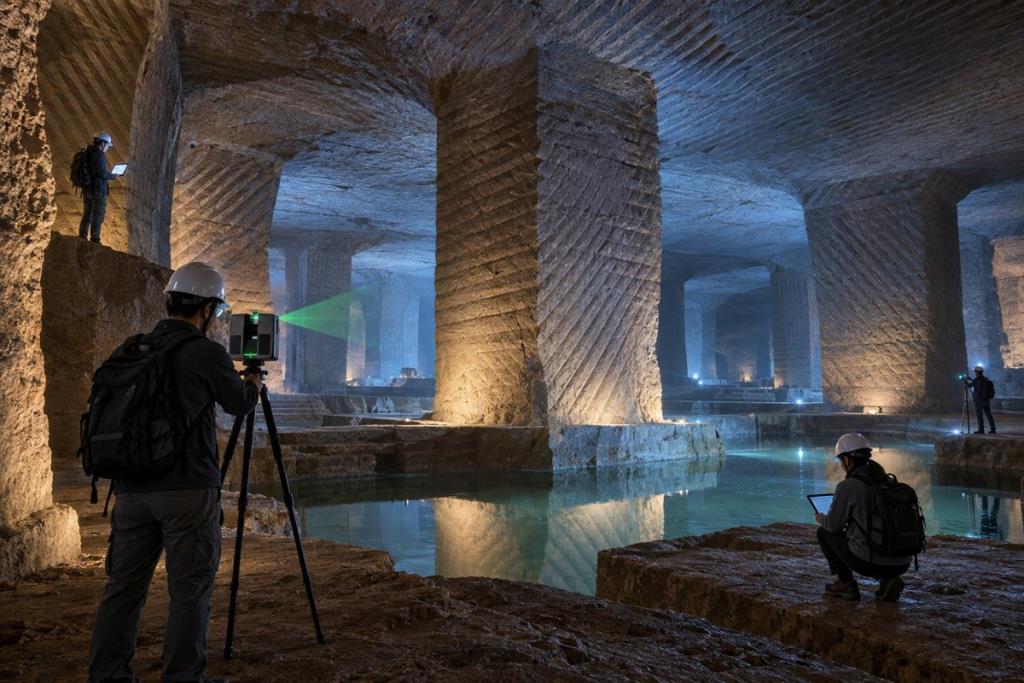
Chisel marks are the signature of labour
The evenly spaced diagonal grooves may result from a surface finishing technique, from the way work gangs were organised, or from an aesthetic choice. Comparing the direction of the marks, the size of the tools and the order of cuts at the corners can reconstruct the phases. Such uniformity does not require modern machinery; standardised labour also produces repeating patterns.
Where did the excavated stone go?
This is an important archaeological question. The material may have been used for construction, for levelling ground, or transported by waterway, but the rock composition would need comparing with buildings in the surrounding area. Volume estimates depend on a model of the hill's original shape and on the parts of the caves not yet surveyed.
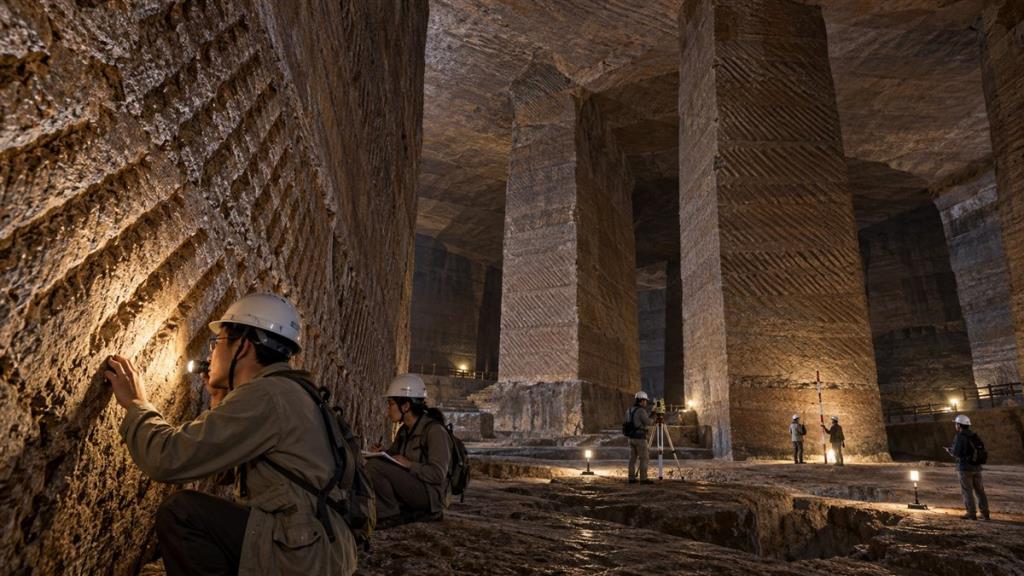
A quarry, a store, a tomb, or a ritual space?
A quarry explains the removed material, but the decorated surfaces and the elaborate layout seem to exceed the needs of pure extraction. A store or a military structure would have to account for ventilation, water and access. A tomb would need burial evidence. The function may well have changed after the excavation phase.
That the chambers have remained stable relates to the choice of rock layer, the pillars left in place and the water that once filled them - not to "extraterrestrial concrete". To establish a date, research needs organic material locked in the sediments, comparative tool marks and published excavation records.
How should an archaeological mystery be read?
A surprising object usually raises three separate questions: how it was made, how it was used, and what it meant. An experiment can show that a technique was feasible, but it cannot by itself prove that ancient people chose that particular technique. To move from "possible" to "probable", the result has to match tool marks, materials, terrain, dating and the context of discovery.
Context is the part that cannot be replaced. An object found in a grave tells a different story from the same object in a workshop; a row of stones still in place holds information about orientation and spacing that a piece moved into a museum has lost. This is why documented excavation, conservation in situ and the publication of data matter more than quickly picking an attractive answer.
Three levels of certainty
Established means a fact confirmed by several independent measurements or records. Well founded means a model that explains many of the traces while rival options remain. Speculation means an idea that has not yet produced testable evidence. This article keeps the three layers apart so that what is unknown does not turn into an assertion.
Numbers need margins of error too. Carbon dating measures organic material, not directly the intentions of the maker; stone sourcing gives a geological origin, not the transport route; a 3D model records the present shape after centuries of weathering. A good conclusion states plainly what the data actually measures.
What could produce a breakthrough?
Tomography, 3D scanning, residue analysis, isotope measurement, mechanical simulation and experimental archaeology are opening up things that could not previously be observed. Technology, however, is only useful when the sample has a clear provenance, the procedure is published and an independent team can check the work again. A beautiful image online does not replace a scientific report.
The future answer may not be a single function. Objects and monuments live through many generations, being repaired, moved and reinterpreted. Accepting a history with several phases is usually closer to reality than forcing every trace into one secret moment.
Why is no supernatural explanation needed?
Saying that ancient people could not have built something usually reflects an underestimate of their skill, their time and their social organisation. Rope, timber, stone, metal and simple mathematics can produce enormous results when hundreds of people work together across several seasons. What deserves exploring is how knowledge was passed on and how a community persuaded itself to invest that effort.
"Not yet known" is a valid conclusion, not an empty space to be filled with any story at all. A good hypothesis produces predictions: which traces to look for, where, and what measurement could refute it. It is exactly this testability that turns a mystery into research rather than an anecdote.
The role of conservation and local communities
Artefacts are not only data for researchers; they are also the heritage of communities living today. Survey, sampling and display have to respect local law, indigenous knowledge and the limits of conservation. Visitors play a part too, by not touching, climbing, moving stones or buying objects of unclear origin. Preserving the context today is precisely what allows a later generation to test the questions that present-day technology cannot yet answer.



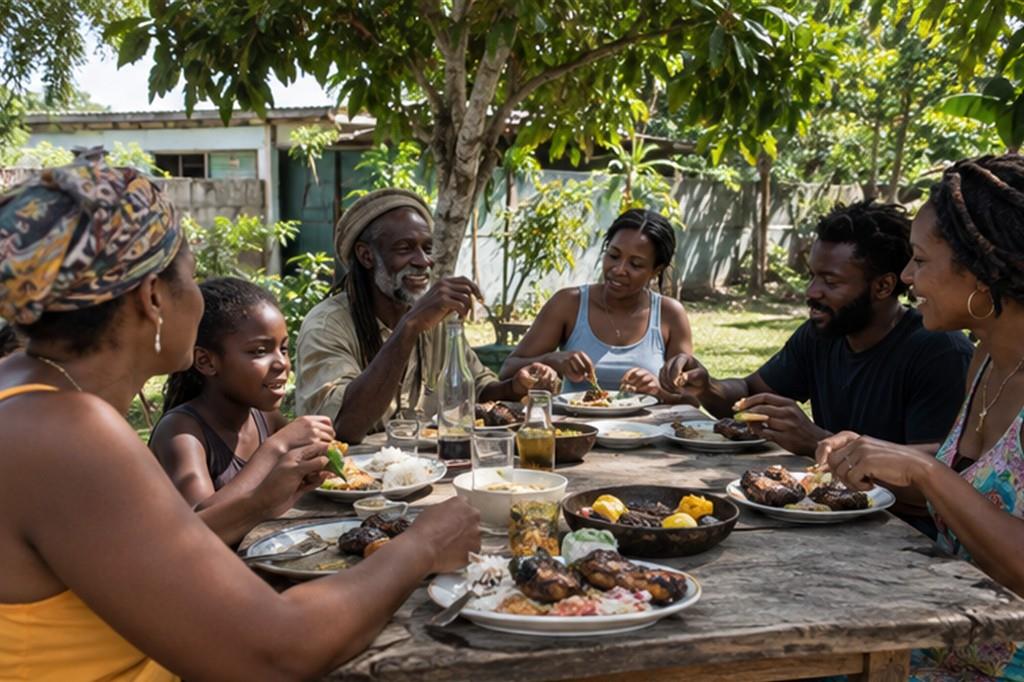 Jamaican jerk: the scent of pimento, the smoke pit and a community's living heritage
 Korean kimchi and banchan: the craft of fermentation and a table built on sharing
 Persian rice and tahdig: saffron, a crisp bottom layer and the sofreh
 Moroccan couscous and tagine: rhythm, hospitality and the flavours of North Africa
 Brazilian feijoada: a pot of black beans, a weekend lunch and a story with many roots
 The Indian thali: a balanced tray that tells a regional story and a way of eating together
 Danish smørrebrød: the open sandwich and the art of composing a lunch
 Swiss raclette: melted cheese and a shared table in the cold season
Đăng nhập để bình luận: / Sign in to comment: