



The Kraken: from ship-swallowing tentacles to a giant squid filmed in the deep
The Kraken is a rare case of a "monster" with a relative made of flesh and bone. Giant squid of the genus Architeuthis, metres long, really do live in the deep sea, leaving drifting carcasses, beaks in the stomachs of sperm whales and sucker marks on whale skin. But the distance from a rarely encountered animal to a creature as wide as an island that can drag a ship under is a gap filled in by maps, sailors' tales and fear of the ocean.
The Kraken in Nordic descriptions
Early modern Scandinavian texts describe an enormous creature that floats like an island, creates whirlpools or has innumerable arms. The name Kraken is usually connected to a Norwegian word for something bent or twisted. Those descriptions are not logbooks of measurements; they sit in works of natural history from a time when the boundary between report, legend and classical authority was still loose.
A sailor only ever sees the part above the surface. Whales, dense shoals of fish, seaweed, animal carcasses and large squid can all supply details. As the size travels from port to port, each teller enlarges the scale without any instrument to check it. The presence of a real animal in the story does not make every attribute real; it merely provides a biological core with the power to convince.
Architeuthis enters science
During the nineteenth century, a number of large squid carcasses washed ashore in Newfoundland and elsewhere, allowing zoologists to describe the anatomy. Architeuthis has eight arms, two very long feeding tentacles, a hard beak and enormous eyes. Specimens turned the "giant squid" from a story into a group of animals that could be measured, preserved and compared. Size is still often exaggerated, because tentacles are elastic and carcasses stretch as they are measured.
The Smithsonian notes that the largest scientifically recorded individual approaches 13 metres, while many specimens are smaller. Most of that length lies in two slender tentacles, not in a body as wide as a ship. Mass and pulling power therefore cannot be inferred directly from total length. A ten-metre squid is astonishing, but it is not a living island.
Why did it take so long to see a living squid?
Architeuthis lives at great depth, where light is faint and pressure is high. Dead animals or individuals caught in nets are far easier to encounter than one hunting in its own habitat. In 2004 a Japanese team took the first photographs of a living giant squid in the wild; in 2012 a deep-sea camera recorded video of one in its own environment. Those achievements required bait, lighting that caused little disturbance, and patience.
The footage reveals a fast and precise predator, not a mass of tentacles lying in wait for ships. It uses its two long tentacles to seize prey and draw it back to the eight arms and the beak. Very large eyes help it detect contrast in the dark, possibly including the silhouette of a sperm whale. Many parts of its life cycle - mating, eggs and movement - have still not been observed in full.
Sperm whales eat giant squid; squid beaks in their stomachs and sucker scars are evidence of the predator-prey relationship. Large scar rings are easily read as evidence of an evenly matched battle, but a scar can grow with the whale's body after it forms. The real facts remain dramatic without turning the squid into a hunter of ships.
The colossal squid is not a second Kraken
Mesonychoteuthis hamiltoni - the colossal squid - lives in Antarctic waters, has a heavier body and bears rotating hooks on its arms. It is not the same as Architeuthis. Popular culture often blends the two, taking the tentacle length of one and the mass of the other to build a maximal animal. Clear classification helps us see that the ocean holds several giant evolutionary lines, with no need for one "super squid" carrying every record.
The chance of a squid attacking a large wooden ship is very low. Encounters with small boats or equipment can happen, but there is no mechanism and no physical record of a warship being dragged down. The whirlpool said to follow the creature's dive is likewise exaggerated in proportion to an imagined body.
Has the Kraken been explained?
We can say that the giant squid is a plausible source of inspiration; we cannot say that every Kraken story is a misjudged size report about Architeuthis. The legend also borrows from whales, from sea geography and from storytelling tradition. The "solution" here is a converging family of causes, not a species label pinned to every old chart.
The best part is that science has not made the deep sea any less mysterious. Even with the Kraken reduced to measurable dimensions, Architeuthis remains an animal approaching 13 metres that humans only filmed in the wild in the twenty-first century. The monster does not swallow ships; the truth is still large enough to remind us that the dark part of the ocean holds a great deal of behaviour nobody has yet witnessed.
How to read a cryptid case file
A good case file separates at least four layers: folk tradition, first-hand testimony, physical evidence and later interpretation. Tradition tells you how a community used the figure; testimony tells you what the teller believes they experienced; physical evidence lets you test species and dates; interpretation shows how the press, books or films joined the pieces together. Mixing the four layers creates a sense of "centuries of evidence" even when the famous details may have appeared very late.
The word "witness" should not be used as a certificate of accuracy. Someone can be entirely sincere and still be wrong about size, distance or species. At night the brain prioritises spotting a threat over measuring it precisely. Eyeshine, sudden movement, the lack of anything to judge scale against, and a memory retold many times all reshape the picture. Sincerity and accuracy are two independent questions.
What steps are missing between a trace and a new species?
A photograph or a footprint needs its raw data first: the original file, the camera settings, the location, the time, a wide shot of the surroundings and the name of whoever holds the sample. Only then come scale measurements, checks for editing, a search for reference objects and a comparison with the local fauna. Images compressed by social media lose the detail; a dark silhouette does not contain enough anatomy to classify anything. "Unidentified" is a state of the viewer, not the scientific name of a creature.
Hair, droppings, tissue or bone are stronger when the chain of custody is clear. DNA work needs contamination controls, several gene regions and independent laboratories. A sequence that does not match the database may reflect poor data, a known species with no reference sequence, or contamination - it is not automatically a monster. Describing a new species requires an accessible type specimen, a diagnostic description and comparison with its relatives.
A population leaves an ecological footprint
A large animal does not only leave a moment in front of a camera. It eats, defecates, breeds, travels, falls ill and dies. A population able to sustain itself across generations needs many individuals, puts pressure on prey or vegetation, and leaves biological material across the landscape. When weighing a hypothesis, ask whether the habitat holds enough energy, how large the home range would be, and why camera traps set for other species record nothing.
"The area is simply too large" is a reasonable explanation for slow discovery, but it is not an unlimited shield. Each additional year of survey without a good sample lowers the probability of a large population. New large species are still described, yet local people usually already knew them well, and there were specimens or repeated observations; what is new is the scientific classification, not a creature that left no trace at all.
Reading tracks without being led by their shape
Prints in snow and mud change after the animal has passed. Sun widens the melting edges; mud slumps; hind feet overlap fore feet; people or other animals step on top. A photograph taken at an angle stretches the shape. So you need a sequence of prints, a scale bar lying in the same plane, a shot from directly above, the depth, the type of ground and prints of known species nearby. A track that "looks like a human foot" may be two bear prints overlapping.
Hoaxes leave characteristics of their own: shapes repeated almost exactly, uniform pressure, a stride that does not match the body, or the absence of natural slippage. But a skilled forger can carve in the details. A conclusion should not rest on a track being "too sophisticated to fake"; it has to show that the history of the site made interference difficult and that other lines of evidence converge.
The press and the clustering effect
After a prominent news story, reports usually rise. This can happen because people are paying more attention, because they now have a word for an older experience, because pranksters join in, or because the criteria for identification loosen. The reports are no longer fully independent, since later witnesses have seen the pictures and know which details are expected. If dozens of sightings occur in a single week, compare the descriptions from before the press standardised them rather than simply counting the total.
The media prefers one named individual to many unrelated events. A sick animal, a bird call, a faked track and a distant light can all be bundled into the journey of a single monster. A timeline and a map make this testable: how fast would the creature have to travel, do the descriptions change from region to region, and which features appear only after a particular article or book.
Legend is not a faulty version of science
A folk entity may teach the rules of moving through a forest, mark a dangerous place, express a moral relationship or carry a historical memory. Asking "which species is it" is sometimes the wrong question. When outsiders take an indigenous name and attach descriptions from another community to build a global cryptid, they can strip away the language and the right to tell the story from the place it came from.
Respect does not mean every detail has to be read biologically. It means recording the name of the teller, their consent, the language, the ceremonial context and the permitted use of the story. Science can examine specimens; anthropology can investigate meaning; the two do not have to erase each other. A responsible article tells the reader which layer it is standing on.
A good hypothesis has to risk being wrong
If a creature only appears when no camera is present, leaves DNA that cannot be distinguished, and always moves elsewhere after a search, the hypothesis has protected itself from every test. A useful model says in advance: which season, which habitat, which traces, which kind of DNA, and which observation would make us abandon it. Failure after a properly designed survey is information, not a reason to grant the animal further invisible powers.
It is also better to rank possibilities than to split the world into believers and sceptics. A misidentified local animal is highly probable; an unusually large individual is possible; an unknown large species is less likely; supernatural abilities have no testable mechanism at all. New evidence can change the ranking. Speaking in probabilities keeps the door open for discovery without giving every story the same weight.
An illustration is not a photograph of the scene
The images in this article help reconstruct the setting of an observation, the research methods and the atmosphere of the legend. They are not evidence about the appearance of a creature or about a historical moment. The compositions deliberately keep the silhouette vague and avoid turning details the record has not confirmed into an apparent photograph. Readers should rely on sources, samples and data - not on how convincing a painting looks.
The more beautiful an illustration is, the more easily it replaces the memory of the original evidence. That is why the captions state which idea the picture is describing, and why the article does not use constructed images to fill gaps in the evidence. The eerie quality comes from the questions still open; it does not need a sharply drawn monster that is created first and then used backwards as confirmation.
A checklist before believing a new find
Look for the original file; the date, time and location; who collected the sample; the chain of custody; whether the expert works in the relevant field; whether the result has been peer reviewed; whether an independent group reproduced it; and whether the authors published their negative results too. Check whether the headline is stronger than the content. "Unidentified" is not "a new species"; "cannot be ruled out" is not "demonstrated".
Finally, ask what evidence should exist if the story were true. That question turns absence from a feeling into a prediction. It also keeps the wonder in its proper place: there are sightings that cannot be reconstructed, traditions that cannot be shrunk to an animal, and wild regions still left to explore - but a gap does not automatically take the shape we would like it to have.



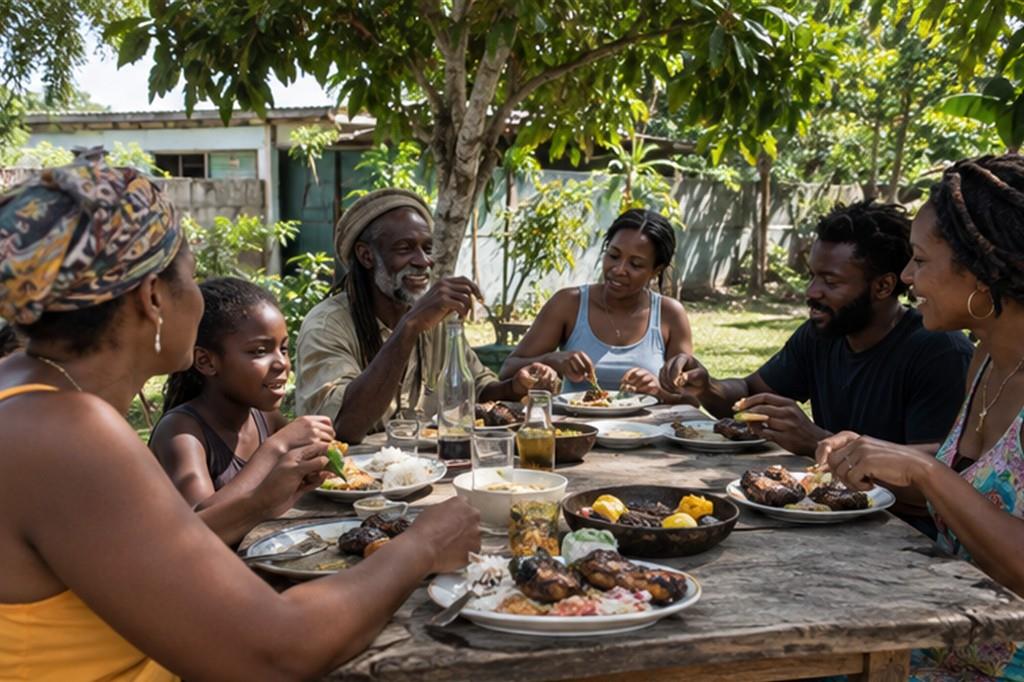 Jamaican jerk: the scent of pimento, the smoke pit and a community's living heritage
 Korean kimchi and banchan: the craft of fermentation and a table built on sharing
 Persian rice and tahdig: saffron, a crisp bottom layer and the sofreh
 Moroccan couscous and tagine: rhythm, hospitality and the flavours of North Africa
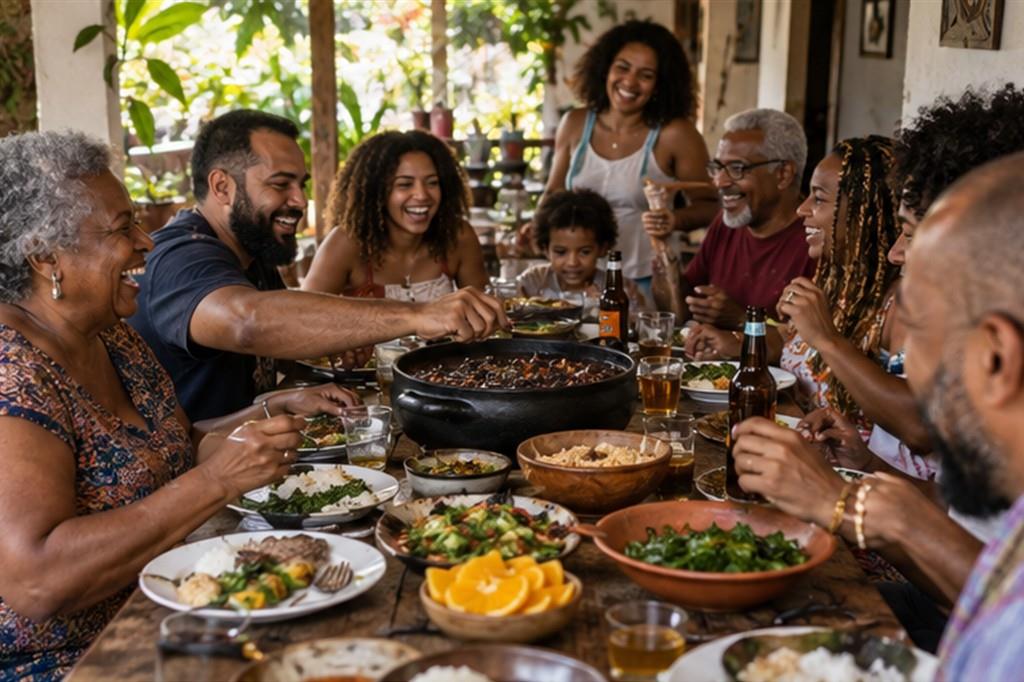 Brazilian feijoada: a pot of black beans, a weekend lunch and a story with many roots
 The Indian thali: a balanced tray that tells a regional story and a way of eating together
 Danish smørrebrød: the open sandwich and the art of composing a lunch
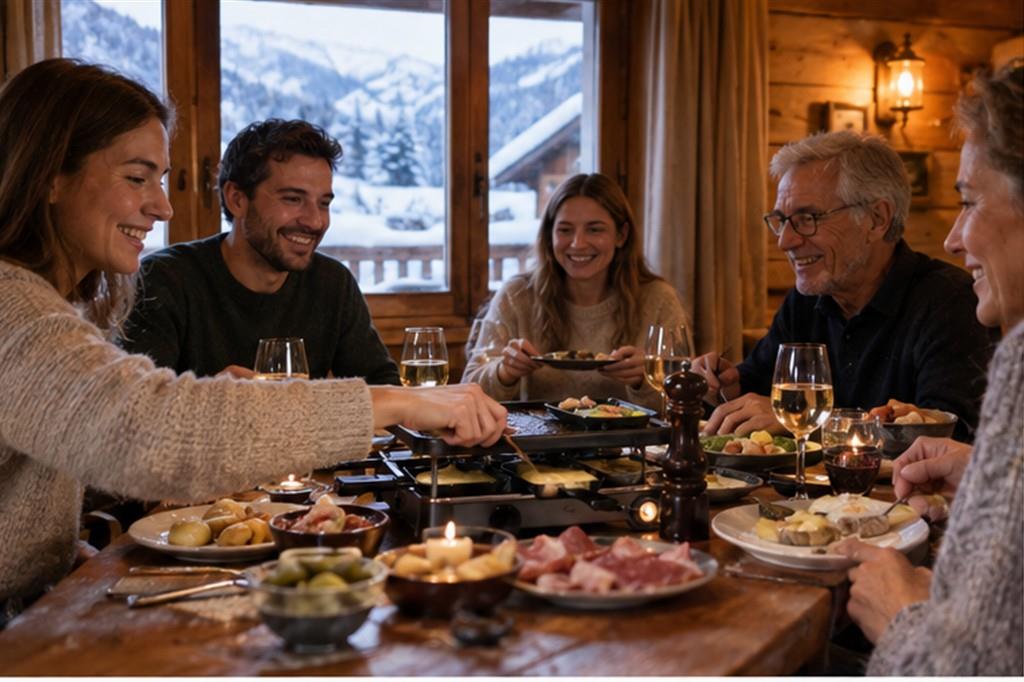 Swiss raclette: melted cheese and a shared table in the cold season
Đăng nhập để bình luận: / Sign in to comment: