



The ivory-billed woodpecker: the "kent" call, blurry video and a bird that refuses to vanish
The ivory-billed woodpecker was once the largest woodpecker north of Mexico, living in the old-growth forests and swamps of the south-eastern United States. The last widely accepted sighting in the US was in 1944. A claimed rediscovery in Arkansas in 2004 raised hopes worldwide, but the video, the audio and the observations did not convince every specialist. To this day the US Fish and Wildlife Service continues to weigh the data rather than finalising the removal of the species from the list.
A real species lost along with its old-growth forest
Campephilus principalis measured about 48-51 cm, with a large pale bill and a black body marked by striking white patches on the wings. It needed bottomland forest with big dead or dying trees in which to find grubs. Logging, specimen collecting and habitat destruction shrank the population. The films and recordings made by James Tanner at the Singer Tract in the 1930s are a rare historical standard.
Unlike a cryptid, the question here is not whether the species ever existed. We have specimens, nests and sound recordings. The question is whether a few individuals survived in the vast swamps after science lost track of them. Rare species are genuinely hard to detect; but a large bird with a distinctive call that has to forage on tree trunks also leaves more traces than an animal living entirely out of sight.
Arkansas 2004 and the video that divided everyone
Tim Gallagher and Bobby Harrison reported seeing the bird at the Cache River National Wildlife Refuge; a Cornell team then published multiple observations, sound recordings and the brief Luneau video. They interpreted the white patches, the size and the flight style as an ivory-bill. The 2005 paper in Science called it a rediscovery and drove efforts to protect the habitat.
Other ornithologists reanalysed the material and argued that the video fits a pileated woodpecker - a far commoner species - when the wing angle and the light reveal its white underside. No frame clearly shows the bill, the crest and the back pattern at the same time. The disagreement does not imply bad faith on either side; data sitting at the edge of resolution can support two similar models.
The "kent" call and the double knock
The historical ivory-bill produced a nasal call like a toy horn, and the double knock typical of the genus Campephilus. Autonomous recorders in the swamps have captured many similar sounds. Ducks, squirrels, distant gunshots, two branches knocking together and human voices can all produce a close match. The strongest recording needs a behavioural sequence, several directional microphones and simultaneous imagery.
One problem is the search effect: when thousands of hours of audio are scanned, some passages will resemble the template by chance. The background rate, the selection algorithm and blind testing all have to be reported. Sound is an excellent tool for guiding a search; to announce a living species, it should lead researchers to an individual that can be observed repeatedly or sampled for environmental DNA.
Why is the extinction decision so difficult?
In 2021 the USFWS proposed delisting the ivory-bill as extinct. After public comment and new data, the agency left the species out of its final decision in 2023 and continued its analysis. This is not a confirmation of the rediscovery. It reflects the legal and conservation consequences of declaring extinction while the evidence is still disputed.
Decide too early and the habitat may lose protection; keep a species on the list forever and resources may be tied up. The decision has to weigh probability, cost and the value of forests that still hold countless other species. Protecting the swamps does not become pointless even if the ivory-bill has gone.
A bird between hope and image noise
New reports keep appearing, but none has produced an image of the quality needed to identify a large bird. Modern cameras raise expectations: what is needed is multiple frames, a location, behaviour, sound and preferably a feather or droppings. A blurry video may be enough to launch a survey; it is not enough to end the argument.
What is eerie about the ivory-bill is that the line between "not yet found" and "no longer there to find" has real consequences. If it survives, time is desperately short; if it is extinct, the warning about forest loss stands unchanged. The story forces science both to be sceptical of weak data and to avoid closing the door before the best possible test has been completed.
"Still alive" is a hypothesis that has to pay for itself in evidence
A species that once existed is quite different from a creature that has never had a specimen. Bones and historical footage give us an identification standard, but they also create a bias: the observer knows exactly which silhouette they hope to see. When a species has become extremely rare, survival for a while after the last specimen is genuinely possible. The further the hypothesis is stretched towards the present, the more it has to explain why generations have left no carcass, droppings, hair or clear photograph.
The "extinction" date in a book is usually the date of the last specimen, the last accepted sighting, or the date an agency made a declaration - three different markers. The last biological individual may have died somewhere between them. Research should say which marker it is using, so that an administrative year does not turn into a mystical instant when a whole species vanished.
Distinguishing a failed survey from evidence of absence
Finding nothing on one short trip says very little. The value rises when a survey covers the right habitat, in the right season, using methods with a known detection probability, and is repeated over several years. A camera mounted high will miss a ground bird; a microphone on the wrong frequency will miss the call; eDNA taken from a watercourse not connected to the habitat can come back negative even if the animal is there.
When the design is sensitive enough, a run of negative results becomes evidence in itself. The probabilities matter: if an individual has a 20% chance of being recorded in each campaign, ten independent empty campaigns are a great deal less likely. "Absence of proof is not proof of absence" is logically correct, but it does not mean absence can never weaken a hypothesis.
How have camera traps changed the hunt?
Infrared cameras run for months and store the time, the location and a sequence of frames. They have recorded many species more often than people have met them directly. Night images, though, distort motion, produce eyeshine and shift colours; a single frame easily turns a familiar animal into something strange. Consecutive video gives far better information about gait and proportion.
The data has to be archived in its original form, together with the configuration, the mounting height and a reference image taken at the site. If only a cropped picture is shared, the viewer has no idea how far the subject was from the lens. A good system uses two crossed cameras, collects DNA along the trail, and lets local experts make the identification before anything goes online.
eDNA is powerful, but it is not magic
Animals leave cells, hair, droppings and fluids in soil and water. Metabarcoding can identify many species from a single sample. Detection depends on the primers, the reference database, temperature, water flow and density. A negative result has to come with the number of samples and the controls; a positive one has to rule out contamination from the laboratory, a museum or food products.
For an extinct species with many bones in the ground, ancient DNA can generate a false positive for modern life. Fragment length, chemical damage, the sediment layer and RNA all help tell them apart. A very short fragment that is "98% similar" is not enough; raw data and independent replication are what turn a signal into a discovery.
Which way does size in a photograph usually go wrong?
Without anything for scale, a viewer assumes the subject and the background are the same distance away. A cat on a wall close to the lens can look the size of a sheep far away; a bird near the lens looks broader than an aeroplane; waves in a line join into one long back. Digital zoom blurs the edges and the brain completes the shape. Size is only trustworthy when the focal length and distance are known, or when there is a structure in the same plane.
A witness's estimate is also anchored by the question. Asking how tall the animal was after calling it a beast produces a larger number than asking which branch it reached. A good interview uses maps, sight lines and landmarks before showing the teller any pictures of candidates.
A population cannot consist of a final individual alone
The story usually imagines one old animal living discreetly. But for a species to persist for decades you need males, females, young and genetic diversity. More individuals means more road crossings, more deaths, more animals caught in traps and more traces left. A tiny population also faces inbreeding, natural disasters and swings in the sex ratio.
An energy analysis asks how many animals the environment can support. A large predator needs prey and leaves bite marks; a bird that feeds in trees needs food trees and nest sites; a primate needs routes to move along. Ecological traces can be looked for even before a body is seen, and they are usually harder to fake consistently than a photograph.
Why do "Lazarus" species not vindicate every legend?
The coelacanth, the takahe and a number of other rediscovered species show that the scientific record is incomplete. But before a rediscovery there is usually a plausible habitat, a new specimen or clear signs; afterwards, verifiable individuals appear. Each case has its own probability. A small species surviving unnoticed on an island does not give a super-shark in every ocean the same chance.
Precedent should teach us how to search, not serve as a card that exempts anyone from evidence. If a hypothesis makes predictions and can be surveyed, then survey it. When the results come back empty, the belief has to be updated rather than claiming the species has learned to avoid every piece of technology.
Legend and biological classification call for two ways of reading
A local name may refer to an animal, an ancestor, a spirit, a place or a moral rule, depending on the sentence. Translating it as "monster" and then using it as a zoological report can be both wrong and hurtful. Sources published by the community itself, the original language and the rights over images should take priority.
Science can still test a photograph or a sample said to be an animal. The result does not "refute" a sacred meaning. Conversely, respecting a culture does not require treating every detail as anatomy. The two readings can coexist as long as an article states its question clearly and does not use one as a prop for the other.
The media turns many causes into a single character
A memorable name lets the press bundle footprints, cries, dead livestock and blurry photographs together. After the first story, people pay more attention and reports increase; pranksters join in as well. Later accounts are not independent, because everyone has seen the same illustration. Maps and timelines make it testable whether one animal could have moved that way at all.
When one piece of evidence is explained, the legend does not necessarily collapse, because the other pieces continue to hold each other up. This is the structure of a "flexible file": any counter-example is called a fake case, while the real case is still out there somewhere. To avoid it, every claim needs criteria for success and for failure set out before the test.
A checklist for assessing a new find
Ask where the original file is; whether the time and coordinates are verified; who holds the sample; whether there is a wide shot; the chain of custody; whether the expert works in the right field; whether the data has been peer reviewed; whether an independent team reproduced it; and by what method local species were excluded. "I don't know it" is not the same as "science has never known it".
Then ask what evidence would have to exist if the hypothesis were true: fresh teeth, fresh droppings, a nest, a carcass, young, predation marks or DNA. Focusing on predictions keeps an article open without being endlessly vague. A real discovery grows stronger under testing; a myth that survives only on weak data keeps retreating from the standard.
What are the pictures in this article for?
The illustrations reconstruct the landscape, the methods and the way a silhouette might appear; they are not photographs of an event. The creature is kept distant or indistinct so that no false "evidence" is created. The captions say what the picture explains; they do not confirm that a historical encounter took that exact form.
A beautiful image easily replaces the memory of the original data. Readers should therefore open the sources, look for specimens and consider the limits of the equipment. The sense of mystery comes from the distance between what is known and what is not; it does not need a sharply drawn scene standing in for an answer.



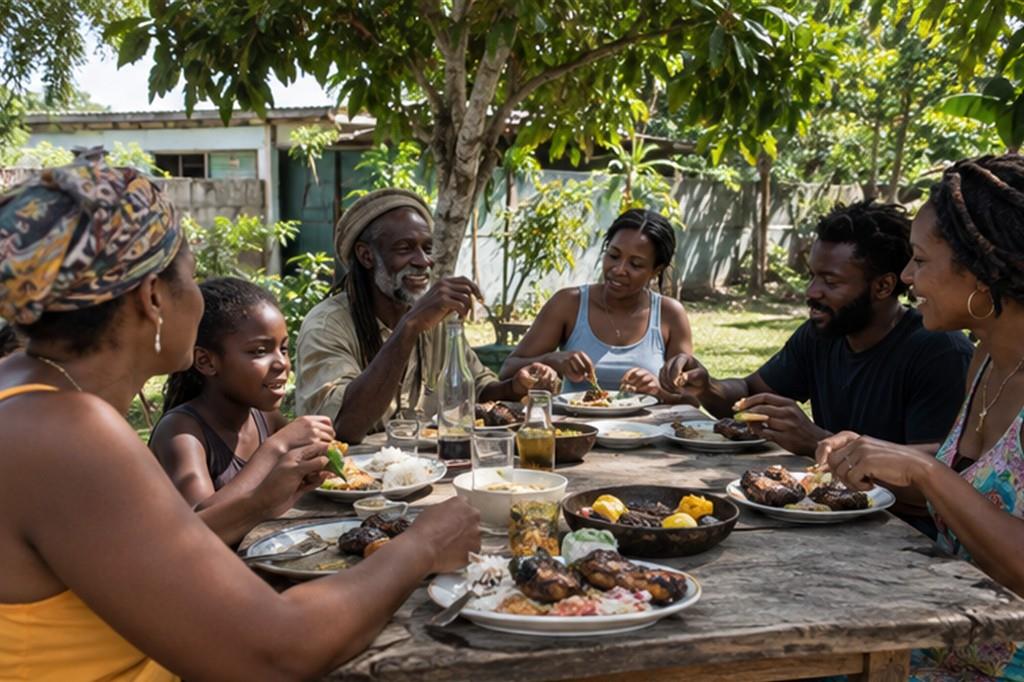 Jamaican jerk: the scent of pimento, the smoke pit and a community's living heritage
 Korean kimchi and banchan: the craft of fermentation and a table built on sharing
 Persian rice and tahdig: saffron, a crisp bottom layer and the sofreh
 Moroccan couscous and tagine: rhythm, hospitality and the flavours of North Africa
 Brazilian feijoada: a pot of black beans, a weekend lunch and a story with many roots
 The Indian thali: a balanced tray that tells a regional story and a way of eating together
 Danish smørrebrød: the open sandwich and the art of composing a lunch
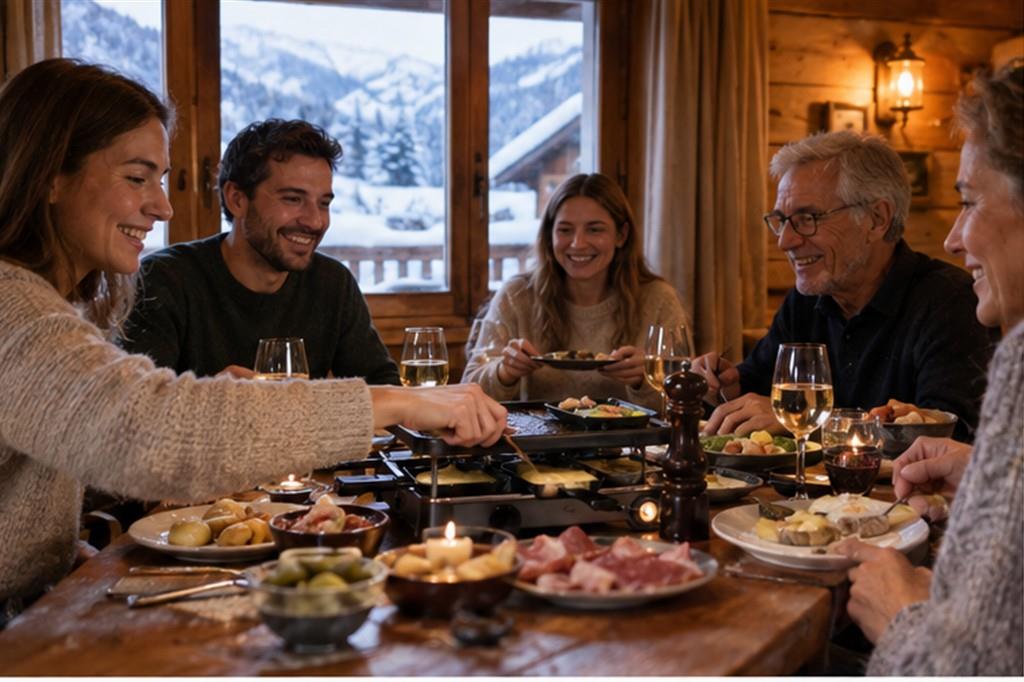 Swiss raclette: melted cheese and a shared table in the cold season
Đăng nhập để bình luận: / Sign in to comment: