



SS Waratah: 211 People Missing off South Africa in 1909
On the evening of July 26, 1909, the SS Waratah left Durban for Cape Town with 211 passengers and crew. The following morning, the ship Clan MacIntyre exchanged signals with the Waratah near the mouth of the Mbashe River. That was the last confirmed sighting; no distress signals, bodies, or definitive wreckage were ever found.
The Waratah was a new passenger-cargo ship of the Blue Anchor Line, approximately 150 meters long, operating on the UK–Australia route via South Africa. The nickname “Australia’s Titanic” appeared later and is somewhat misleading: the Waratah disappeared three years before the Titanic, under different conditions and design.
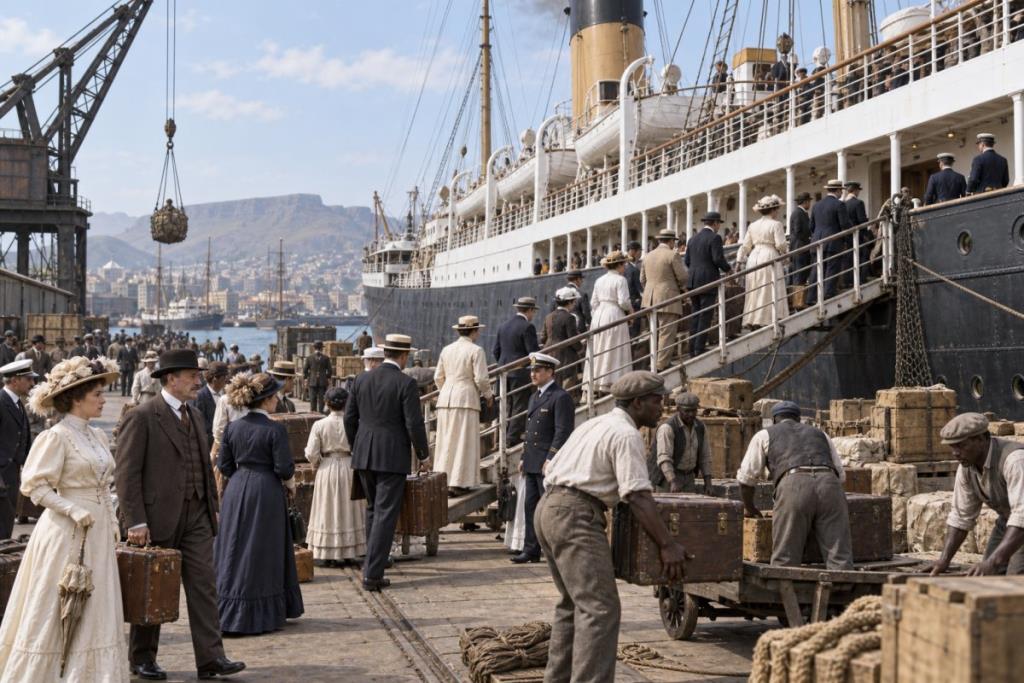
Warnings before the final voyage
Some passengers remarked that the ship rolled heavily or listed for a long time when changing direction. Engineer Claude Sawyer left the ship at Durban due to concerns about its stability and recounted a premonitory dream; while the technical aspects are worth considering, the dream is not evidence. Others, however, found the ship to be operating normally.
The way large amounts of cargo were stowed affected the center of gravity. A lengthy investigation examined the design, stability, and testimony, but there was no shipwreck to measure damage or reconstruct the final load. The lack of physical evidence has allowed conflicting accounts to persist.
July 27 and the storm
After the meeting with the Clan MacIntyre, the weather off the Eastern Cape deteriorated rapidly. Captain Harlow saw a large ship in the distance, much smoke, and then two flashes of light; the Guelph received a lamp signal where only the last letters resembling “TAH” could be read. Both are unconfirmed identifications.
The Agulhas Current running against southwest winds can create very steep seas and abnormally large waves. A ship with limited stability margins, encountering shifting cargo or water ingress, could capsize so quickly that it would not have time to transmit a signal. This is a plausible sequence, though not a conclusion.
Why was there no debris?
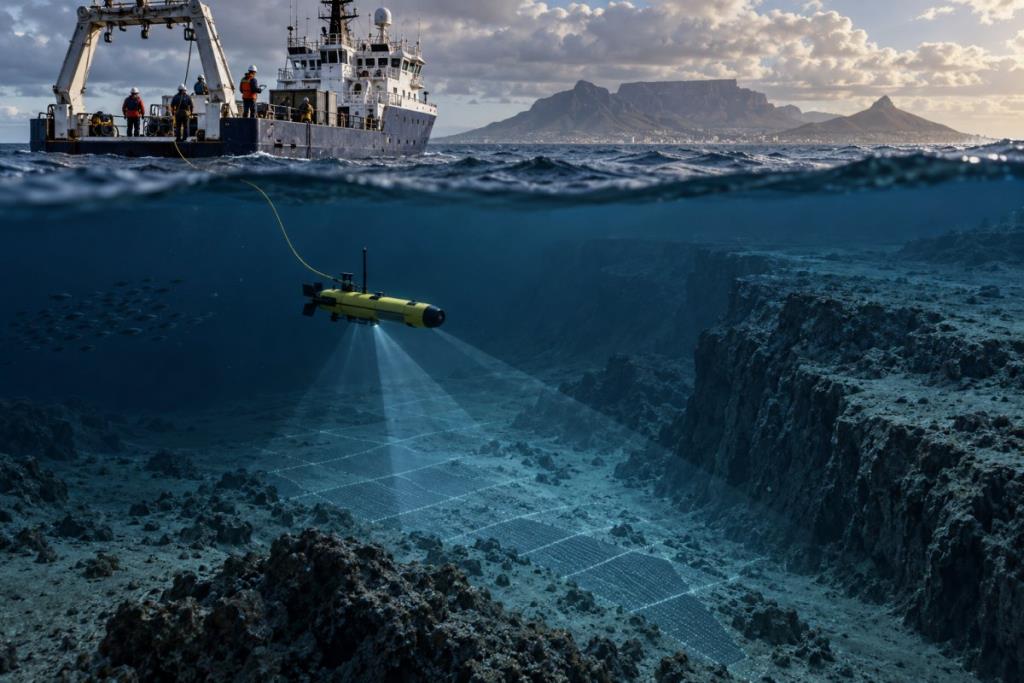
The ship may have sunk far offshore in deep waters, with floating debris carried away by strong currents and the initial search spread across a wide route. It is unknown whether the Waratah continued south or turned back. Each assumption creates a different strip of the seabed for modern sonar.
In 1999, a wreck once hoped to be the Waratah was later identified as the Nailsea Meadow, sunk in 1942. This case demonstrates that sonar targets need verification through structure, dimensions, and artifacts before an announcement is made.
Ship stability is not a fixed number
A ship may pass inspections in port but react differently as fuel is consumed, water tanks change, cargo shifts, or the deck holds water. The long roll cycles that concerned passengers could be related to a high center of gravity, but sensory accounts do not replace loading data. Only a shipwreck would allow for the inspection of watertight doors and damage patterns.
The Wild Coast has few observation points and strong currents. If the Waratah capsized quickly, light objects could have dispersed far before search vessels arrived. Wooden fragments washed ashore years later cannot be attributed to the ship without manufacturing marks or material records.
How should a sonar target be verified?
Surveyors compare length, width, number of boilers, propeller shafts, and deck layout with historical blueprints. ROVs capture identifying details without disturbing the site. The Nailsea Meadow mistake serves as a reminder that initial similarity is a screening step, not a final result.
Distinguishing facts from speculation
A strong fact requires records from near the time of the event, physical evidence with a clear provenance, or multiple independent measurements. Late accounts, details appearing only in popular books, and unverified images are ranked lower. “Not fully explained” does not mean all hypotheses have equal value.
This article prioritizes scenarios that explain multiple traces simultaneously with fewer assumptions, while keeping the unknowns clear. If a new discovery emerges, the first questions should be who confirmed it, what the identification method was, and whether the data has been published for independent verification.
Conclusion
Extreme weather combined with stability issues is the most fitting explanation, but it is impossible to choose between capsizing, flooding, structural failure, or a combination of these. The SS Waratah has yet to be found; the wreck is the crucial missing piece of evidence.



 Jamaican jerk: the scent of pimento, the smoke pit and a community's living heritage
 Korean kimchi and banchan: the craft of fermentation and a table built on sharing
 Persian rice and tahdig: saffron, a crisp bottom layer and the sofreh
 Moroccan couscous and tagine: rhythm, hospitality and the flavours of North Africa
 Brazilian feijoada: a pot of black beans, a weekend lunch and a story with many roots
 The Indian thali: a balanced tray that tells a regional story and a way of eating together
 Danish smørrebrød: the open sandwich and the art of composing a lunch
 Swiss raclette: melted cheese and a shared table in the cold season
Đăng nhập để bình luận: / Sign in to comment: