



Rendlesham Forest: "Britain's Roswell" and the lights among the pines
Over three nights at the end of December 1980, American servicemen at RAF Woodbridge and Bentwaters reported strange lights in Rendlesham Forest. The memo written by Lieutenant Colonel Charles Halt, an audio recording made in the forest and the witness accounts together form an unusual file. But the Orford Ness lighthouse, bright stars and memories that grew over time can explain many - though not necessarily all - of the details.
The core sequence of events
On the first night a group went into the forest believing an aircraft had come down. They saw lights among the trees, but local police found no object. Two nights later Halt led a team that took measurements, made a recording and described red, blue and white lights. The "Unexplained Lights" memo was written in early January 1981 and is far closer to the event than the books and interviews that appeared many years afterwards.
What does the evidence closest to the event say?
Three depressions in the ground and some radiation readings are often called landing traces. The readings, however, were not taken under a strict background-control procedure, the instrument had limited sensitivity, and a forest contains many natural marks. The audio tape confirms that the group really was following lights; it does not by itself establish the distance or the structure of the source.
The competing explanations
The Orford Ness lighthouse rotates on a cycle matching the rhythm of the flashes on parts of the tape. A low Sirius on the horizon and a bright meteor have been proposed for other phases. A composite explanation - several sources across several nights - is more plausible than forcing everything into one object.
What is still open?
The original file proves there was a military investigation, not that a craft landed. What remains open is which light triggered the initial search, and why the witnesses interpreted it so differently from one another. Reconstructing the sightlines, the trees as they stood in 1980 and the lighthouse rhythm is worth more than arguing from present-day memory.
What does "unidentified" actually mean?
UFO, or UAP, describes a state of identification, not an origin. A light is called "unidentified" because the data is missing, not because it demonstrates technology beyond physics. When a file contains only a few seconds of video, no distance and a single witness, the correct conclusion is usually that there is not enough information. That is a productive limit: it stops a writer from turning a gap into an answer of their choosing.
Three labels need separating: unidentified at the time of the report; unresolved after investigation; and genuinely anomalous in its properties once geometry, sensors, weather and aviation have all been checked. Many famous cases are only secure at the first label. An agency using the word "unidentified" does not thereby certify every detail the media later repeats.
A credible witness can still see wrongly
Pilots, police officers and scientists have observational skills relevant to their work, so their accounts deserve careful recording. But expertise does not supply the distance to a point of light with nothing to judge it against. Even a good pilot can mistake a star, a balloon or an aircraft flying head-on when the source shows no shape and its angular speed is small.
Credibility reduces the chance of deliberate invention; it does not eliminate perceptual error. A good interview happens privately, early, and uses open questions. Once a witness has seen the press coverage, memory can absorb another person's shape, colour or sequence of events. A late similarity is far weaker than statements written down before the story spread.
Distance is the variable that changes every meaning
A dot with a fixed angular diameter may be a small object near the camera or a large one very far away. Without stereo vision, reliable radar or a reference in the same plane, a size "like a football field" is only an impression. Velocity depends on distance too: slow angular motion far away becomes a huge speed; a nearby object drifting on the wind can sweep across the frame.
At night the eye loses depth. The autokinetic effect makes a stationary point of light appear to move when there is no background. A viewer turning their head, or a moving car, creates parallax and the sensation that the light is following them. None of this says witnesses imagined the light; it explains why a real light acquires false properties.
Radar is not an absolute camera
Radar measures reflections and uses algorithms to turn signals into tracks. Clouds, birds, interference, ground returns, anomalous propagation and real targets can all appear. A jumping track does not necessarily mean an object accelerated; the system may have joined two reflections into one, or changed its altitude solution. The type of radar, the filter settings and the raw data determine its value.
A multi-sensor case is strong when radar, camera and eye all point at one object in the same second. If radar shows a target but the pilot only sees a different light several minutes later, joining them has to be demonstrated. The phrase "both radar and witnesses saw it" sometimes hides a time gap wide enough for the two events to be unrelated.
Infrared cameras invite the wrong intuition
A thermal image shows contrast in radiation, not the colours and edges the eye sees. White-hot or black-hot modes can invert the impression. Blooming makes a small source swell; stabilisers and a rotating gimbal make the background turn, creating the impression that the target is rotating. Losing track lock can look like an object darting out of frame.
Calculating motion requires focal length, gimbal angle, aircraft attitude, distance and wind. Compressed video posted online strips much of the metadata. Good analysis produces a range of values with error bars rather than choosing one distance and announcing a velocity. If several ordinary solutions still fit, an extraordinary property has not been demonstrated.
Atmospheric optics change colour and shape
Air is not a uniform pane of glass. Temperature differences bend rays; turbulence makes stars twinkle; mist and low cloud scatter a lamp into a blob. Near the horizon, light travels through a long column of air and turns red or green and distorts strongly. A vehicle headlight beyond a ridge can rise into view where nobody thinks there is a road.
Temperature inversions matter especially in deserts, valleys and over the sea. A cold layer near the ground beneath warmer air acts as a duct, carrying light beyond the horizon. When a source is deformed by refraction and has no background scene, it can split, merge, stretch or vanish as the air layers shift.
Stars, planets, satellites and meteors
Venus and Sirius generate many reports because they are bright, low and change colour in the atmosphere. If the viewer moves, they seem to follow. Satellites move steadily and then fade as they enter Earth's shadow; a train of satellites can look like a formation. A low-angle meteor appears to fly horizontally for a long time and to land just behind the nearest hill, though it is hundreds of kilometres away.
Planetarium software can reconstruct the position of celestial objects by the minute and by coordinates, but it only helps if the time of the observation is accurate. "About nine o'clock" can be wrong enough to move the candidate elsewhere. A contemporaneous log is far stronger than a time recalled years later.
Aircraft, flares and balloons
An aircraft flying head-on holds its relative position, has very bright landing lights, and then abruptly "turns" when its heading changes. Several aircraft following a corridor create a chain. Parachute flares drift, descend slowly and go out one after another; seen beyond a ridge they can appear stationary. Balloons reflect sunlight after sunset or carry lights, and change direction with the wind layers.
Any comparison has to use actual activity schedules, not just the remark that "there is a base nearby". Conversely, the military not announcing an exercise does not prove none took place. Flight records, NOTAMs, bearings and timings are needed. A plausible but unverified explanation is still only a hypothesis.
Ground traces and samples need a chain of custody
Depressions, scorched plants or discoloured soil prove that something acted on the ground; they do not prove a flying object. Vehicles, landing legs, heat, chemicals and post-event interference all have to be excluded. Investigators should photograph the wider scene before walking in, take control samples in a ring, record the humidity and seal everything with named handovers.
A piece of metal is only strong when it can be traced from its original position to the laboratory. A rare alloy may still be industrial; unusual isotope ratios need several independent laboratories and contamination controls. A sample that surfaces years later with a hazy ownership history cannot be repaired by modern analytical equipment.
What do declassified documents prove?
A stamped memo shows that an agency received, forwarded or discussed a report. It does not guarantee that what the reporter described was real. Security agencies have to examine unknown objects because of the risk from aircraft, reconnaissance or airspace violations; that interest does not mean they concluded anything about extraterrestrials.
The surviving files are not the whole picture. Paperwork may be destroyed on schedule, scattered across units, or still classified. A documentary gap makes conclusions harder but is not in itself evidence of concealment. Claiming a cover-up requires active traces, orders and a chain of behaviour - not merely the absence of one expected folder.
How the media makes a case grow
An event usually has a small "core": a time, a place, a few witnesses. Then the press gives it a name, illustrations supply a shape, and books connect the rumours. Details absent from the first statements gradually get told as part of the original. A timeline of sources is the single most useful tool for seeing this process.
A famous photograph may also belong to a different phase, or even a different case. Repeated long enough, it becomes a shared visual memory. A responsible article states clearly which images are reconstructions, which are original footage and which have been verified; it does not use artwork as evidence.
A good case has to be capable of failing
A scientific hypothesis makes predictions. If it is a vehicle headlight, the line of sight has to cross a road and appear with the traffic; if it is plasma, there should be a spectrum and an electric field; if it is an aircraft, radar and optics should give compatible trajectories. If every result is explained away by "it is deliberately hiding", the hypothesis has stopped being testable.
Investigators should write down in advance what would change their minds. For instance, three independent cameras giving the same coordinates, a spectrum matching no familiar source, and a continuous radar track would upgrade a case. Conversely, reproducing the phenomenon with a specific source has to lower the probability of anything exotic. Updating belief is a strength, not a failure.
A checklist for when you see a strange light
Note the time by the clock, your GPS position, the compass bearing and the elevation angle measured against your hand or a landmark. Film the wide scene before zooming, keep the original file, and record a spoken description while you are looking. If it is safe, move a few dozen metres sideways to create parallax. Ask other witnesses separately, and do not show them the video first.
Check astronomy, flights, satellites, weather, lightning and terrain. Report it to the aviation safety authority if there is a hazard, but do not shine lasers at it or chase it. One calm data point with coordinates is worth more than a long shaky video. Above all, "not known" is a valid answer until there is a measurement.
Why is a mystery still worth something once it is explained?
A good explanation does not impoverish the story. It reveals how subtly the human eye, technology and the environment interact. Open cases help improve sensors and safety reporting; solved cases help build a library of errors. Both are needed, so that we neither call everything anomalous nor dismiss every witness.
The most durable strangeness lies in the gap between experience and measurement. People can genuinely see something overwhelming while the cause remains nature, or familiar technology in a rare geometry. Holding on to both the respect and the evidential standard is the most honest way to tell it.


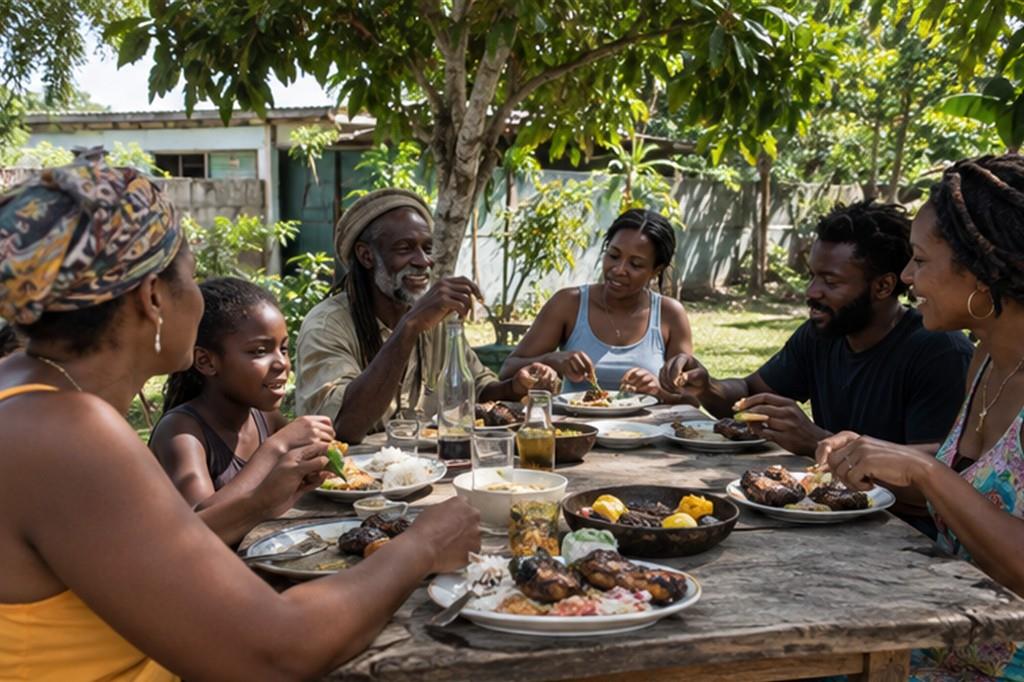 Jamaican jerk: the scent of pimento, the smoke pit and a community's living heritage
 Korean kimchi and banchan: the craft of fermentation and a table built on sharing
 Persian rice and tahdig: saffron, a crisp bottom layer and the sofreh
 Moroccan couscous and tagine: rhythm, hospitality and the flavours of North Africa
 Brazilian feijoada: a pot of black beans, a weekend lunch and a story with many roots
 The Indian thali: a balanced tray that tells a regional story and a way of eating together
 Danish smørrebrød: the open sandwich and the art of composing a lunch
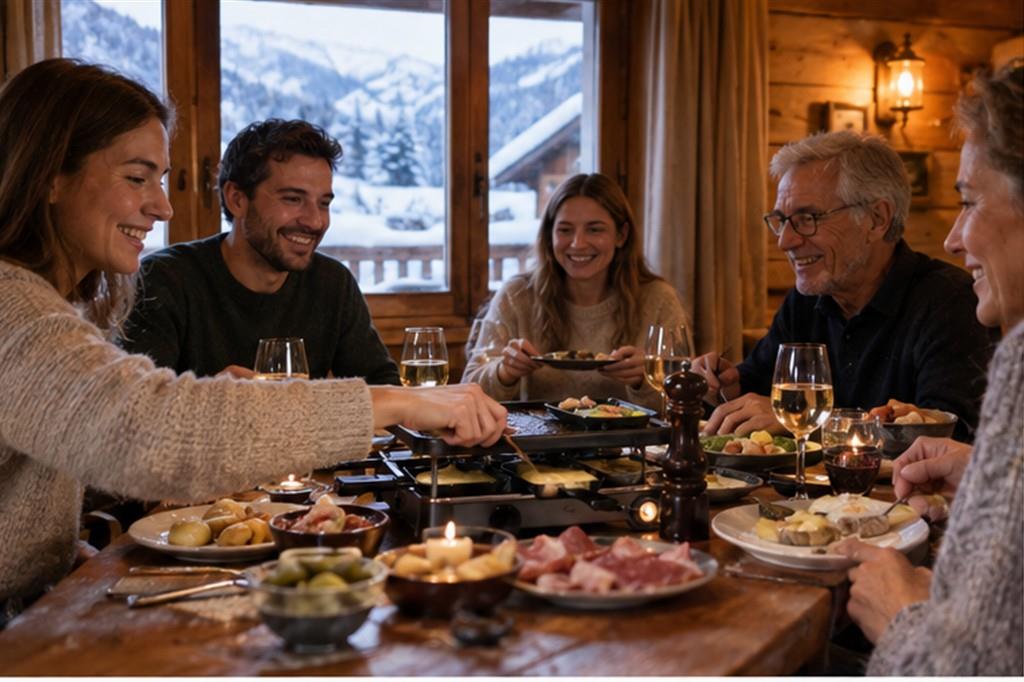 Swiss raclette: melted cheese and a shared table in the cold season
Đăng nhập để bình luận: / Sign in to comment: