



Nan Madol: Who Built Over 100 Islets with Basalt Columns?
Nan Madol consists of more than 100 artificial islets off the coast of Pohnpei, separated by canals and encircled by massive basalt walls. The truly fascinating question is not what extraterrestrials did, but how an island society organized labor, stone transport, and political power.
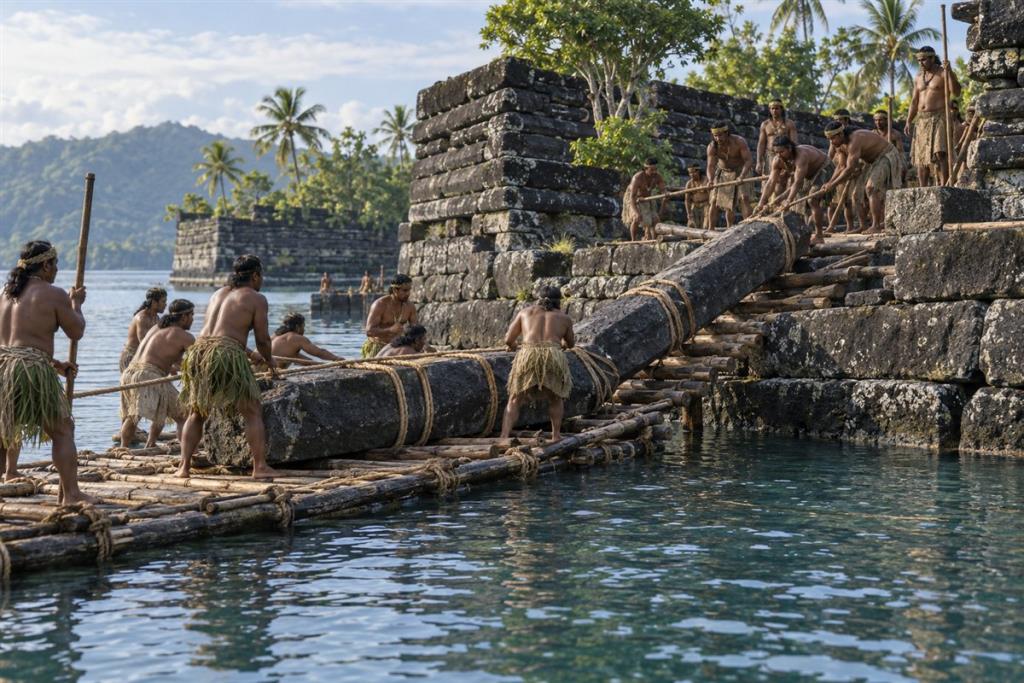
Palaces, temples, burial complexes, and residential quarters were constructed primarily between 1200 and 1500, associated with the Saudeleur dynasty. Naturally formed basalt columns resembling tree logs were stacked crisscross horizontally and vertically, combined with coral rubble to create foundations and retaining walls across the coastal reef flats.
What Does the Scale of the Site Reveal About Pohnpeian Society?
The nucleated monumental architecture demonstrates an ability to mobilize food provisions, specialized artisans, and transport logistics over extended periods. Rather than being identical clusters of dwellings, the islets served distinct functions: some were designated for ritual ceremonies, others for elite residences, food preparation, or mortuary interments. This specialization reflects a sophisticated political and religious hierarchy.
How Were the Basalt Megaliths Transported?
The quarry sources of the stone are located across various areas of Pohnpei rather than immediately adjacent to the site. Rafts, canoes, water routes, and staged land transfers are plausible hypotheses, yet no single comprehensive transport method has been definitively proven for every stage. Experimental reconstructions must account accurately for sheer weight, buoyancy, tidal variations, and requisite manpower, rather than merely demonstrating that a lighter mock-up can be moved.
How Radiometric Dating Reshaped the Narrative
Uranium–thorium dating conducted on coral building materials incorporated into a royal tomb has placed the inception of large-scale monumental stone architecture around the late 12th or early 13th century. This provides one of the crucial direct chronological benchmarks for the emergence of centralized political authority in the Pacific. Establishing a concrete timeline firmly weakens sensationalist theories attributing the complex to a lost prehistoric civilization.
A Living Heritage, Not an Abandoned Relic
Nan Madol remains deeply intertwined with the oral traditions, customary land tenure, and traditional Nahnmwarki leadership of Pohnpei. UNESCO inscribed the site on the World Heritage List in 2016 while concurrently placing it on the List of World Heritage in Danger due to siltation of waterways, mangrove overgrowth, severe storms, and masonry collapse. Scientific research must continually align with indigenous voices and conservation imperatives.
Unresolved Questions
- The detailed operational logistics of individual stone quarrying and transport campaigns remain unknown.
- The precise functional roles and construction sequences of many smaller islets still require systematic survey.
- Indigenous oral traditions safeguard vital historical records and should not be detached from their Pohnpeian context to indulge sensationalist speculation.
Conclusion
Nan Madol stands as a monumental achievement of the Pohnpeian people and their ancestors, requiring no external civilization to explain its existence. The enduring mysteries lie in ancient engineering techniques, socio-political organization, and the evolution of political power—questions that archaeological inquiry continues to investigate and verify.



 Korean kimchi and banchan: the craft of fermentation and a table built on sharing
 Persian rice and tahdig: saffron, a crisp bottom layer and the sofreh
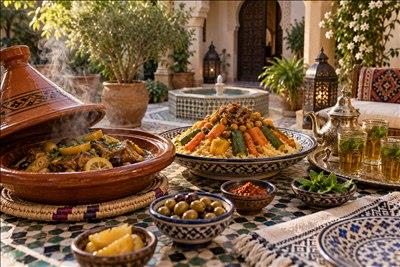 Moroccan couscous and tagine: rhythm, hospitality and the flavours of North Africa
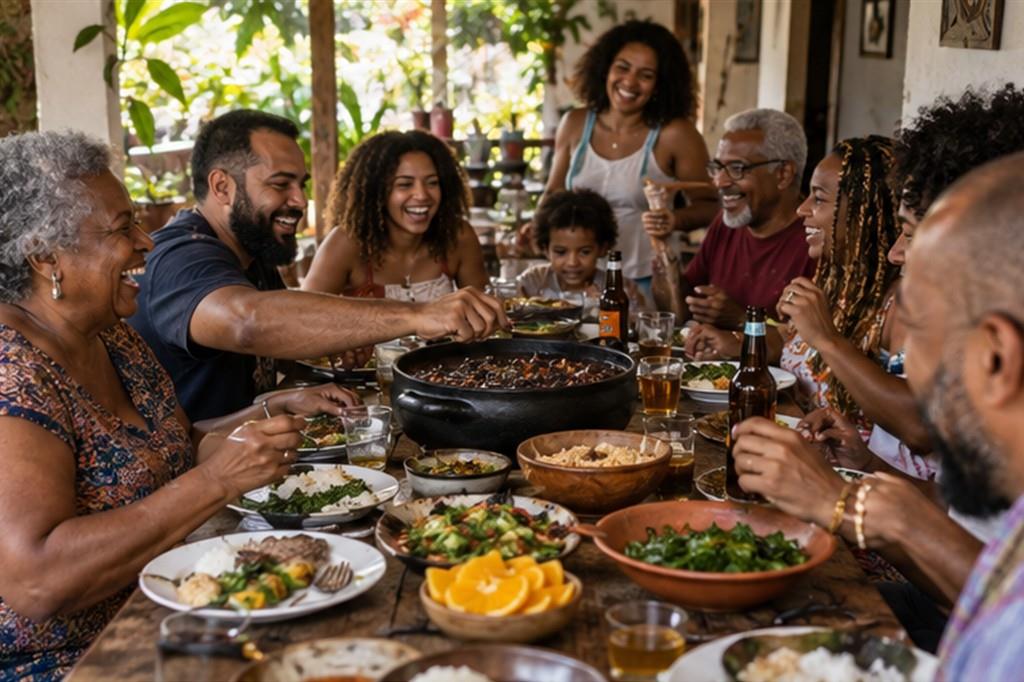 Brazilian feijoada: a pot of black beans, a weekend lunch and a story with many roots
 The Indian thali: a balanced tray that tells a regional story and a way of eating together
 Danish smørrebrød: the open sandwich and the art of composing a lunch
 Swiss raclette: melted cheese and a shared table in the cold season
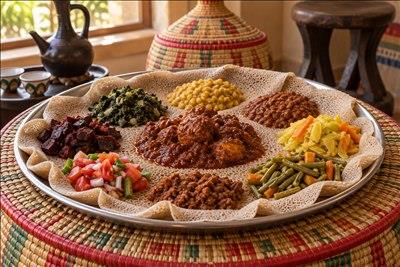 Injera in Ethiopia and Eritrea: the shared platter that binds a community
Đăng nhập để bình luận: / Sign in to comment: