



Mapinguari: guardian of the Amazon, or a memory of the giant ground sloth?
In many Amazonian stories, Mapinguari is a creature or an entity that protects the forest, with a terrifying cry, a powerful smell, skin that is hard to pierce and sometimes feet that point backwards. Late in the twentieth century, some researchers suggested that the accounts might reflect a surviving giant ground sloth. The hypothesis is seductive because the Amazon still yields new species - but it also risks turning a network of indigenous traditions into a hunt for a "living fossil" shaped by Western expectations.
There is no single Mapinguari
The name Mapinguari is used across different regions and languages with descriptions that do not fully match. Some versions have one eye, a mouth in the belly and backwards feet; others resemble a large hairy animal that stands on two legs and snaps trees. Within indigenous cultures it may relate to the boundaries of the forest, to hunting conduct and to a power that does not belong to Western zoological classification at all.
Pooling every attribute into one body produces a creature that no individual account fully describes. Good research has to identify the community, the teller, the original word and the circumstances. A hunter saying "like a Mapinguari" may be using a cultural category for an unfamiliar experience, not claiming to have met a Pleistocene sloth.
David Oren's hypothesis
The ornithologist David Oren collected accounts in the south-western Amazon and in 1993 proposed that certain features - a large body, hair, claws, rearing up, unusual tracks and a smell - might fit a surviving mylodontid ground sloth. Giant ground sloths really did exist in South America; their skin contained small bony plates and their feet carried large claws, which makes for an attractive set of similarities.
But matching descriptions after the candidate is already known invites selective reading. A mouth in the belly, one eye or backwards feet are not sloth anatomy; the features that do fit may be common to any large mammal or to folkloric imagery. Oren's paper was a hypothesis in need of a specimen, not an announcement of a discovery. The searches brought back no new bones, tissue, droppings or clear photographs of a living sloth.
What do the fossils tell us about timing?
Large ground sloths survived to the end of the Pleistocene and, in some places, into the early Holocene. Evidence at Campo Laborde in Argentina shows people hunting and butchering a Megatherium around 12,600 years ago. That proves humans and giant sloths did meet, which makes it possible that a very distant memory or motif has an ecological basis. It does not bring the species forward into the present by more than ten further millennia.
A population of large mammals in a forest needs range, food and reproduction; it would leave droppings, hair, carcasses and effects on the vegetation. The Amazon is vast and many of its species remain undescribed, but most new species are small, hard to distinguish or confined to a narrow habitat. Size does not guarantee discovery, yet it sharply increases both the ecological cost and the quantity of traces.
Modern candidates for some of these experiences are sometimes said to include a bear. No bear is native to the Amazon; more plausible are a giant anteater rearing up, a tapir, a herd of peccaries, or the calls of other forest animals. None of these candidates has to account for the supernatural elements if those belong to the function of folklore rather than to a report of morphology.
Respecting indigenous knowledge does not mean reading it literally
There are two extremes to avoid: treating the accounts as worthless superstition, or turning them into secret coordinates for a species that outsiders want to find. Indigenous knowledge can hold ecological observation, ethical rules, history and a relationship with the forest inside the same story. Translating it into a list of heights, claws and teeth destroys that structure.
Anthropological work on Mapinguari shows that a "real or fake" debate does not capture how communities understand the entity. A future survey would need consent, co-authorship, benefits for the community and protection for sensitive locations. Any biological sample would have to be curated by proper procedures and published independently.
What is still open?
There is no scientific evidence that giant ground sloths live in the modern Amazon. Even so, the origin and diversity of the Mapinguari traditions remain a rich question, and a few reports of unidentified animals may deserve separate investigation. The right conclusion is neither "everyone saw a sloth" nor "it is all invented".
Mapinguari stands at the intersection where palaeontology, anthropology and conservation easily talk past one another. Keeping the boundaries clear between fossils, testimony and modern specimens leaves the story just as strange, without appropriating a culture or manufacturing evidence. The guardian of the forest may matter most precisely because it refuses to sit neatly inside the box marked "cryptid".
How to read a cryptid case file
A good case file separates at least four layers: folk tradition, first-hand testimony, physical evidence and later interpretation. Tradition tells you how a community used the figure; testimony tells you what the teller believes they experienced; physical evidence lets you test species and dates; interpretation shows how the press, books or films joined the pieces together. Mixing the four layers creates a sense of "centuries of evidence" even when the famous details may have appeared very late.
The word "witness" should not be used as a certificate of accuracy. Someone can be entirely sincere and still be wrong about size, distance or species. At night the brain prioritises spotting a threat over measuring it precisely. Eyeshine, sudden movement, the lack of anything to judge scale against, and a memory retold many times all reshape the picture. Sincerity and accuracy are two independent questions.
What steps are missing between a trace and a new species?
A photograph or a footprint needs its raw data first: the original file, the camera settings, the location, the time, a wide shot of the surroundings and the name of whoever holds the sample. Only then come scale measurements, checks for editing, a search for reference objects and a comparison with the local fauna. Images compressed by social media lose the detail; a dark silhouette does not contain enough anatomy to classify anything. "Unidentified" is a state of the viewer, not the scientific name of a creature.
Hair, droppings, tissue or bone are stronger when the chain of custody is clear. DNA work needs contamination controls, several gene regions and independent laboratories. A sequence that does not match the database may reflect poor data, a known species with no reference sequence, or contamination - it is not automatically a monster. Describing a new species requires an accessible type specimen, a diagnostic description and comparison with its relatives.
A population leaves an ecological footprint
A large animal does not only leave a moment in front of a camera. It eats, defecates, breeds, travels, falls ill and dies. A population able to sustain itself across generations needs many individuals, puts pressure on prey or vegetation, and leaves biological material across the landscape. When weighing a hypothesis, ask whether the habitat holds enough energy, how large the home range would be, and why camera traps set for other species record nothing.
"The area is simply too large" is a reasonable explanation for slow discovery, but it is not an unlimited shield. Each additional year of survey without a good sample lowers the probability of a large population. New large species are still described, yet local people usually already knew them well, and there were specimens or repeated observations; what is new is the scientific classification, not a creature that left no trace at all.
Reading tracks without being led by their shape
Prints in snow and mud change after the animal has passed. Sun widens the melting edges; mud slumps; hind feet overlap fore feet; people or other animals step on top. A photograph taken at an angle stretches the shape. So you need a sequence of prints, a scale bar lying in the same plane, a shot from directly above, the depth, the type of ground and prints of known species nearby. A track that "looks like a human foot" may be two bear prints overlapping.
Hoaxes leave characteristics of their own: shapes repeated almost exactly, uniform pressure, a stride that does not match the body, or the absence of natural slippage. But a skilled forger can carve in the details. A conclusion should not rest on a track being "too sophisticated to fake"; it has to show that the history of the site made interference difficult and that other lines of evidence converge.
The press and the clustering effect
After a prominent news story, reports usually rise. This can happen because people are paying more attention, because they now have a word for an older experience, because pranksters join in, or because the criteria for identification loosen. The reports are no longer fully independent, since later witnesses have seen the pictures and know which details are expected. If dozens of sightings occur in a single week, compare the descriptions from before the press standardised them rather than simply counting the total.
The media prefers one named individual to many unrelated events. A sick animal, a bird call, a faked track and a distant light can all be bundled into the journey of a single monster. A timeline and a map make this testable: how fast would the creature have to travel, do the descriptions change from region to region, and which features appear only after a particular article or book.
Legend is not a faulty version of science
A folk entity may teach the rules of moving through a forest, mark a dangerous place, express a moral relationship or carry a historical memory. Asking "which species is it" is sometimes the wrong question. When outsiders take an indigenous name and attach descriptions from another community to build a global cryptid, they can strip away the language and the right to tell the story from the place it came from.
Respect does not mean every detail has to be read biologically. It means recording the name of the teller, their consent, the language, the ceremonial context and the permitted use of the story. Science can examine specimens; anthropology can investigate meaning; the two do not have to erase each other. A responsible article tells the reader which layer it is standing on.
A good hypothesis has to risk being wrong
If a creature only appears when no camera is present, leaves DNA that cannot be distinguished, and always moves elsewhere after a search, the hypothesis has protected itself from every test. A useful model says in advance: which season, which habitat, which traces, which kind of DNA, and which observation would make us abandon it. Failure after a properly designed survey is information, not a reason to grant the animal further invisible powers.
It is also better to rank possibilities than to split the world into believers and sceptics. A misidentified local animal is highly probable; an unusually large individual is possible; an unknown large species is less likely; supernatural abilities have no testable mechanism at all. New evidence can change the ranking. Speaking in probabilities keeps the door open for discovery without giving every story the same weight.
An illustration is not a photograph of the scene
The images in this article help reconstruct the setting of an observation, the research methods and the atmosphere of the legend. They are not evidence about the appearance of a creature or about a historical moment. The compositions deliberately keep the silhouette vague and avoid turning details the record has not confirmed into an apparent photograph. Readers should rely on sources, samples and data - not on how convincing a painting looks.
The more beautiful an illustration is, the more easily it replaces the memory of the original evidence. That is why the captions state which idea the picture is describing, and why the article does not use constructed images to fill gaps in the evidence. The eerie quality comes from the questions still open; it does not need a sharply drawn monster that is created first and then used backwards as confirmation.
A checklist before believing a new find
Look for the original file; the date, time and location; who collected the sample; the chain of custody; whether the expert works in the relevant field; whether the result has been peer reviewed; whether an independent group reproduced it; and whether the authors published their negative results too. Check whether the headline is stronger than the content. "Unidentified" is not "a new species"; "cannot be ruled out" is not "demonstrated".
Finally, ask what evidence should exist if the story were true. That question turns absence from a feeling into a prediction. It also keeps the wonder in its proper place: there are sightings that cannot be reconstructed, traditions that cannot be shrunk to an animal, and wild regions still left to explore - but a gap does not automatically take the shape we would like it to have.



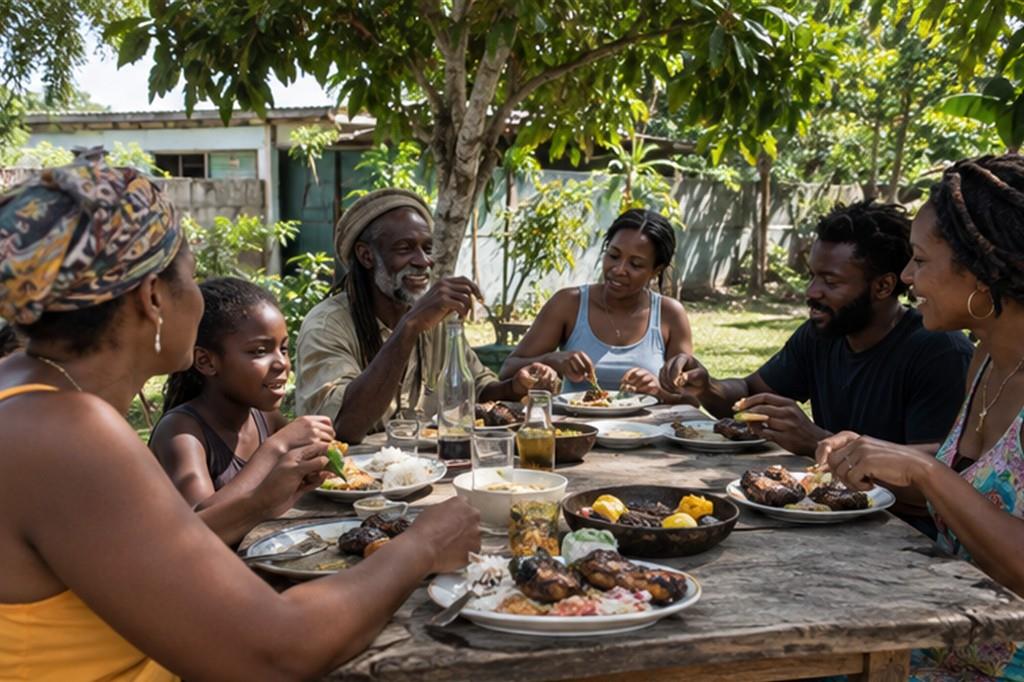 Jamaican jerk: the scent of pimento, the smoke pit and a community's living heritage
 Korean kimchi and banchan: the craft of fermentation and a table built on sharing
 Persian rice and tahdig: saffron, a crisp bottom layer and the sofreh
 Moroccan couscous and tagine: rhythm, hospitality and the flavours of North Africa
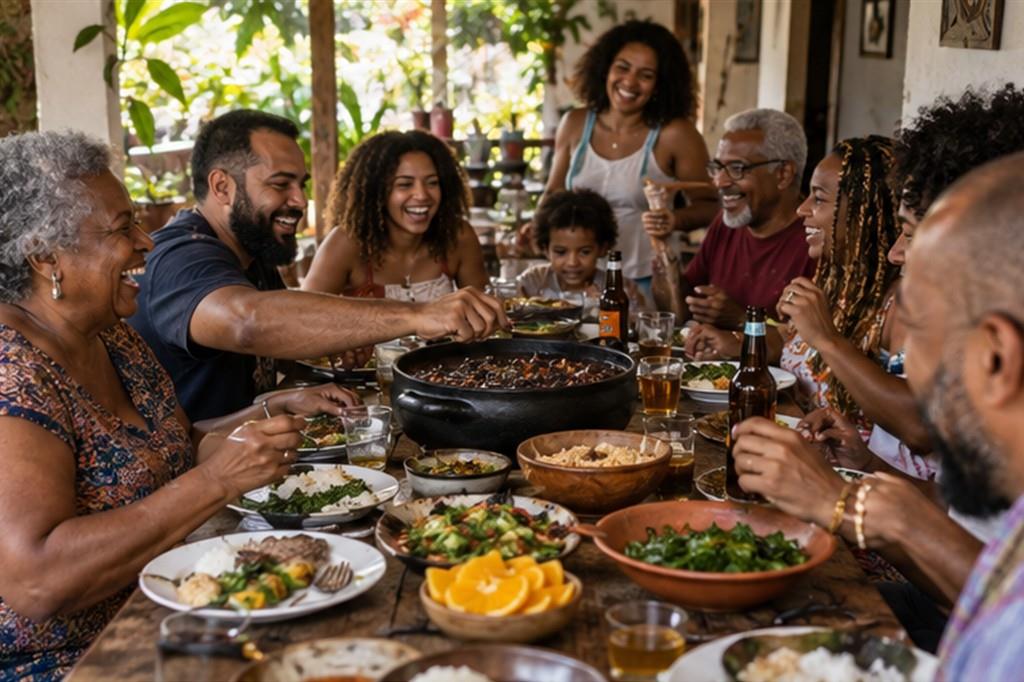 Brazilian feijoada: a pot of black beans, a weekend lunch and a story with many roots
 The Indian thali: a balanced tray that tells a regional story and a way of eating together
 Danish smørrebrød: the open sandwich and the art of composing a lunch
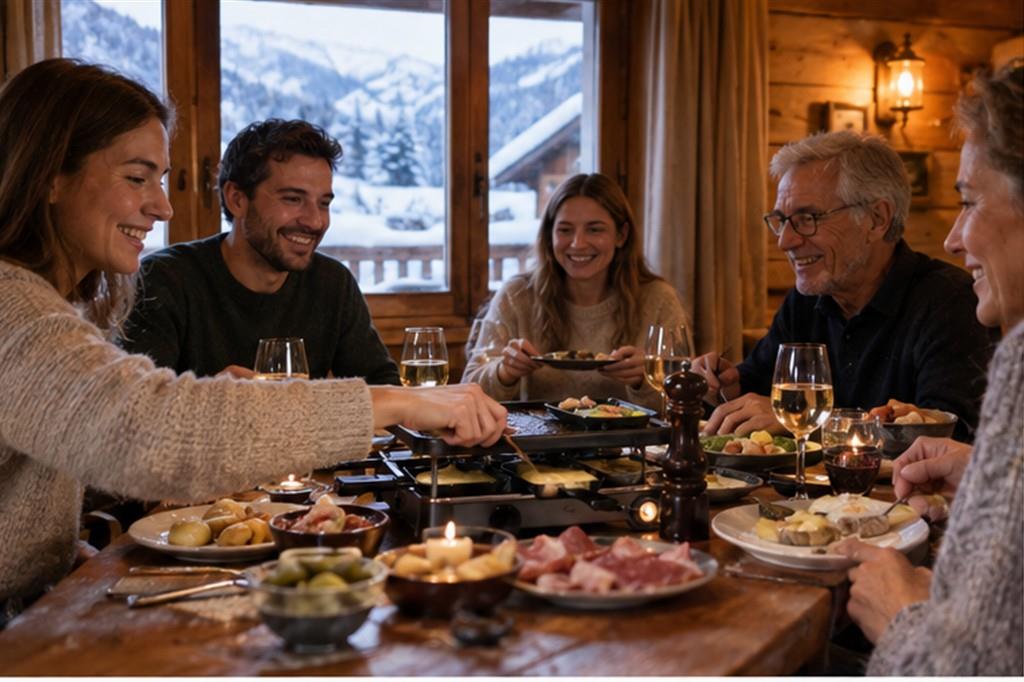 Swiss raclette: melted cheese and a shared table in the cold season
Đăng nhập để bình luận: / Sign in to comment: