



Trang Bang dew-dried rice paper: a supple sheet made by daytime sun and night dew
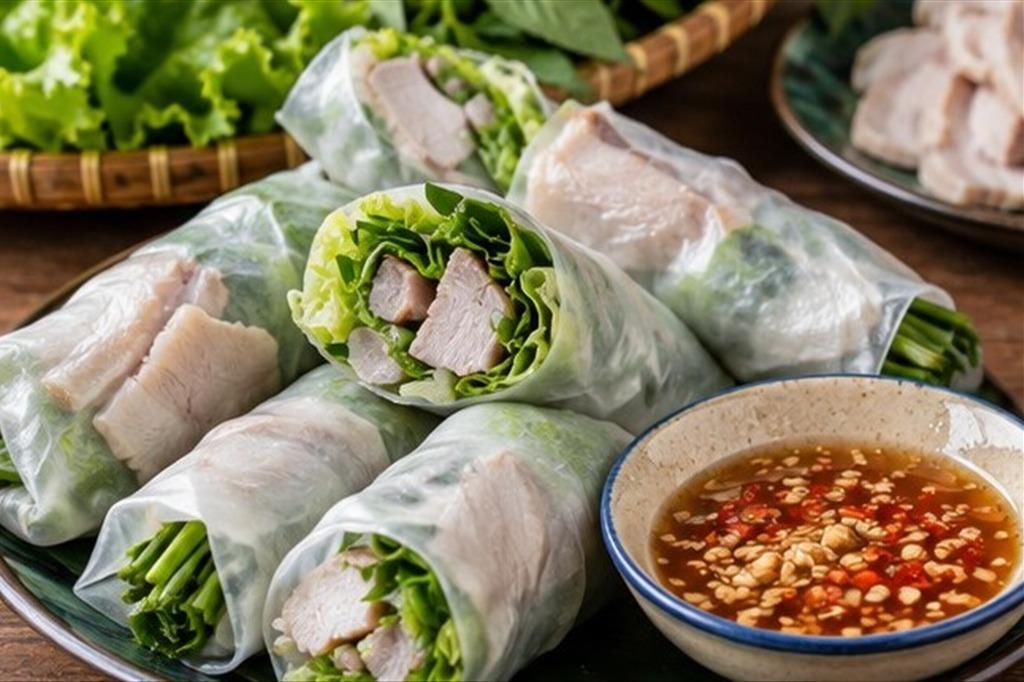
Trang Bang dew-dried rice paper is soft and pliable, slightly translucent, with a characteristic surface that comes from passing over the fire and then meeting the night dew. The sheet is the base for rolls of boiled pork, garden greens and dipping sauce, where its suppleness has to be enough to hold many components without tearing.
The Trang Bang rice-paper craft depends on sunny days, dewy nights and the experience of the makers. The dew-drying stage has been recognised as a traditional-craft heritage. Even so, today's weather is changeable and a workshop may adjust its process; what has to be kept is the quality and the transparency.
Quick facts
- Locality: Trang Bang, Tay Ninh.
- Base ingredients: rice, water and salt, according to each workshop's recipe.
- Characteristic technique: spreading, sun-drying, a light toasting, then catching the dew.
- Character: soft and pliable, lightly fragrant, ready to roll without dipping in water.
- How to eat it: rolled with boiled pork and local greens, dipped in fish sauce.
The sheet begins with rice batter
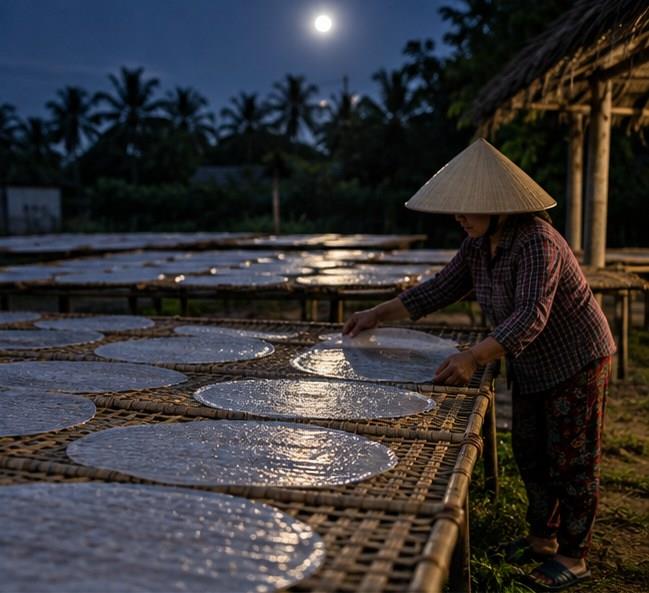
The rice is soaked, ground and mixed until the batter is fine enough. The maker spreads an even round over the cloth, steams it through, then moves the sheet onto a rack. Too thick and it will not be pliable; too thin and it tears. The sun dries the sheet to the right point for toasting, but one dried completely crisp will be hard to soften again.
A light toasting makes the surface
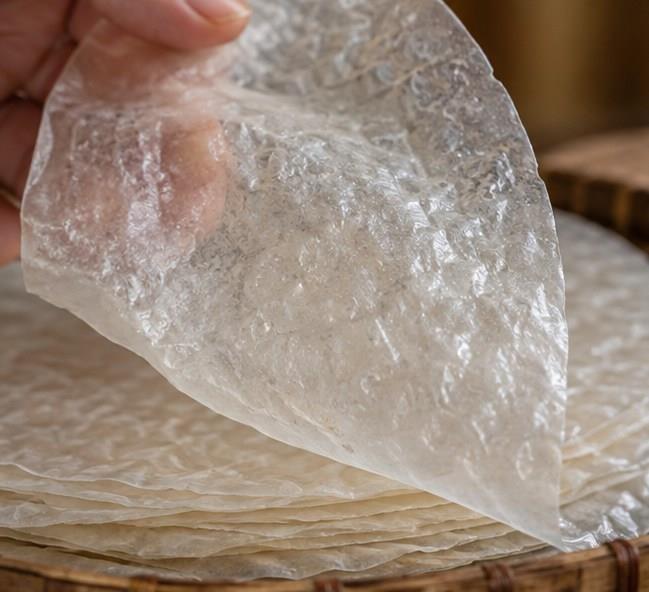
The sheet passes over heat so that small blisters rise on the surface and it takes on the smell of toasted rice. The flame must be quick and even, with no large scorch marks. This stage is not meant to make it crisp like a grilled rice cracker but to prepare a structure that will draw moisture from the dew and turn supple.
The night dew is the decisive moment
When the humidity is right, the sheets go out on racks for a period the maker watches closely. Too little dew and they stay stiff; too long and they turn wet, sticky and hard to keep. The experience of reading the wind, the temperature and the surface of the sheet decides when to gather them in — a skill that cannot be reduced to a fixed number.
The platter comes with many layers of greens
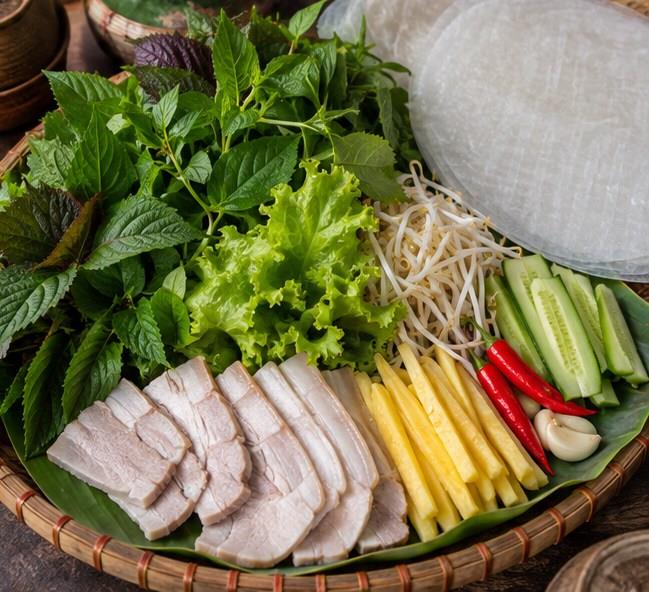
The boiled pork is only one part; the basket of greens, with their fragrance, sourness, astringency and crunch, gives the depth. Not every leaf called a wild green is the same, or even edible. A shop has to identify them, grow or gather them lawfully, and wash them properly. The sheets are set in the middle so each person makes a roll to their own size.
Storing a sheet that has already softened
After the dew, the sheets hold more moisture than dry rice paper, so they must be sealed and used within a shorter period. Left open they dry out; left warm they easily mould or turn sour. If a sheet has dried slightly, follow the workshop's instructions rather than spraying it with water yourself, which makes it soggy and unhygienic.
Why does a dish come to identify a region?
A speciality is not made by a list of ingredients alone. Climate decides the season, soil affects the quality of the produce, and markets, roads and the rhythm of work shape how it is prepared. Techniques repeated across generations give a dish its own “voice”, even though every household keeps different proportions and knacks. So a local version should be seen as a living tradition, not a closed recipe.
Fame brings its own problems. As demand grows, a product may be made in a hurry, given a longer shelf life, or labelled with a place name despite having no connection to the craft village. Buyers can help protect its value by asking where it was made, reading the ingredients, choosing transparent producers and accepting a price that reflects the work. An unusually cheap gift is sometimes a sign to look more closely rather than a bargain.
Tasting so as to recognise the structure of the flavour
Do not rush to add a lot of dipping sauce, chilli or sugar at the first bite. Look at the natural colour, smell the main aroma, feel whether it is soft, chewy, crisp or firm, and only then try it with what comes alongside. This helps you recognise the role of each element and understand why local people arrange the dish as they do. Temperature matters too: something just cooked smells and feels different from the same thing gone cold or carried a long way.
There is no single yardstick for taste. Someone used to sweetness may find central dishes salty; someone who likes it light may find fermented food too strong. Instead of ranking the “best”, ask which village, shop or household this version comes from, and whether it was made to eat straight away or to take away as a gift. A specific question opens a more interesting story than an absolute verdict on a whole region.
Things that are easily misunderstood
Dew-dried rice paper is left outside all night
The time depends on the weather and is watched by the maker; leaving them too long can make them wet.
Any leaf by the roadside can be eaten with it
Greens have to be correctly identified, come from a clean source and be prepared safely.
Suggestions for trying it
- Choose a sealed pack where the sheets are soft but not wet and slimy.
- Check the production date and the shelf life.
- Open only as much as you will use.
- Do not dip it in water if it is already pliable enough.
- Fill each roll moderately so it does not tear.
- Ask the names of unfamiliar greens before eating them.
- Keep the sheets away from heat and follow the storage instructions.
Buying it and taking it home as a gift
Prefer products that carry the maker's name, an address, a production date, a use-by date and clear storage instructions. For goods sold loose, ask when they were made, how they were transported and what signs would show they are no longer good. Attractive packaging helps on a long journey but does not replace the quality inside; equally, a rustic look does not automatically prove something is handmade or safe.
Buy an amount that suits the distance and how well you can keep it. Fresh items containing meat, seafood, broth or raw vegetables need temperature control; dried goods and sweets still have to be kept away from damp, heat and insects. If you are flying or crossing an area with quarantine rules, check the airline's rules and those of your destination. Do not vacuum-seal something unsuitable and then assume it can sit at room temperature.
A note on food safety
After the dew the sheets hold moisture, so use them within the stated period and throw them away if they mould, turn sour or become slimy. Raw greens must be identified, washed and stored safely. The pork must be cooked through and held at a suitable temperature; anyone allergic to something in the dipping sauce should ask clearly.
Anyone allergic to prawn, crab, legumes, sesame, peanut, dairy, egg or anything else needs to ask specifically, since these can be in the filling, the broth and the dipping sauce. Young children, older adults, pregnant people and those with weakened immunity should favour food that is cooked through, stored properly and eaten soon. If something smells odd, is unusually slimy, has swollen packaging, or has been out at room temperature for an unknown length of time, the safe choice is not to eat it.
Conclusion
Trang Bang dew-dried rice paper is the product of three things that cannot be separated: rice batter, fire and weather. Rolled around pork and greens, the supple sheet shows how a traditional craft turned daytime sun and night dew into a culinary structure that belongs to Tay Ninh.



 Trang Bang dew-dried rice paper: a supple sheet made by daytime sun and night dew
 Cham meals on the south-central coast: sun, wind, the farming year and layers of exchange
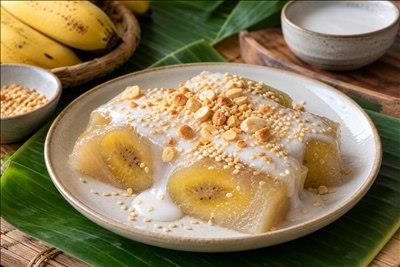 How to make steamed banana cake: chewy translucent batter and coconut sauce that does not split
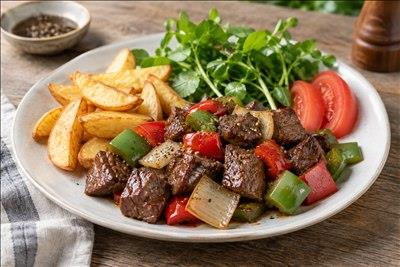 How to make bo luc lac: tender juicy beef, a well-judged sauce and crisp potatoes
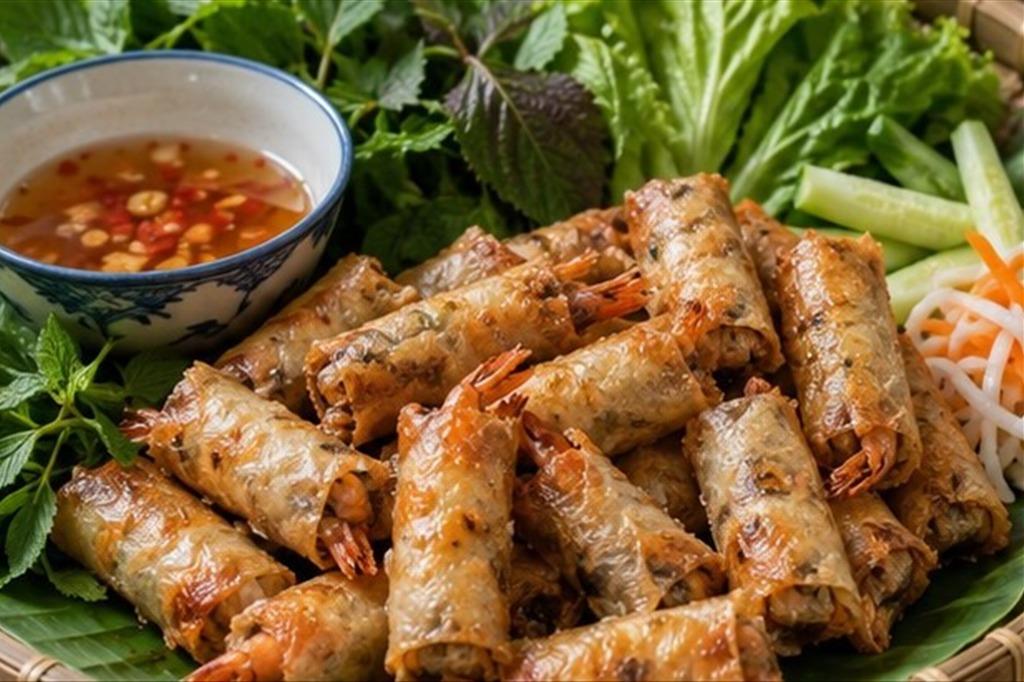 Binh Dinh cha ram tom dat: small crisp rolls from the coast
 How to make seafood fried rice: separate grains, wok aroma and never soggy
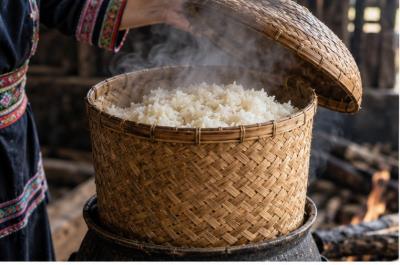 Thai kitchens in the northwest: upland sticky rice, folded grilled fish and cham cheo beside the stilt house
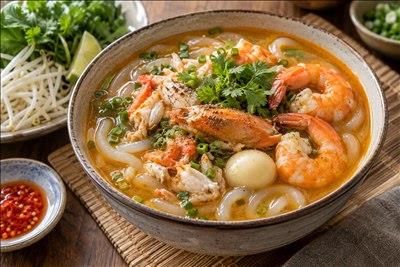 How to cook banh canh cua: a sweet broth, just enough body and plenty of toppings
Đăng nhập để bình luận: / Sign in to comment: