



The Franklin Expedition: From Two Lost Ships to Inuit Oral History
In 1845, 129 men under the command of Sir John Franklin boarded HMS Erebus and HMS Terror to search for the Northwest Passage. After a few sightings in Baffin Bay, the expedition vanished from European contact. Nearly 170 years later, the two shipwrecks were finally found, yet the story of their final months continues to be pieced together from paper, bone, artifacts, and Inuit knowledge.
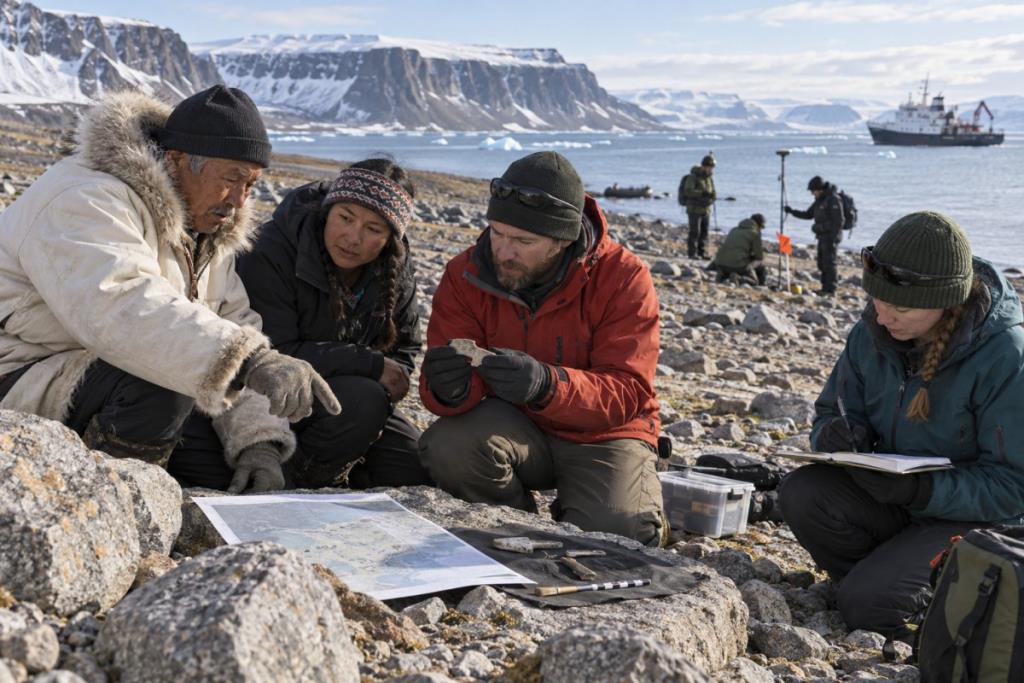
Both ships were reinforced for ice, stocked with years of provisions, and equipped with the cutting-edge technology of the Royal Navy. However, the Arctic was not the uninhabited blank space suggested by many European maps. Inuit communities understood the currents, the ice, and the travel routes, passing down accounts of encounters and the locations of sunken ships across generations.
The Note at Victory Point
The most important written record was discovered beneath a cairn on King William Island. The entry written in 1847 stated that all was well, even though Franklin had died in June of that year. An addendum added in April 1848 revealed that the ships had been trapped in the ice since September 1846, 24 men had died, and the remaining 105 survivors had deserted the ships under the command of Francis Crozier, setting out toward the Back River.
These few lines laid the chronological backbone of the tragedy, yet they do not explain the causes of death. Scurvy, disease, starvation, cold, exhaustion, and lead exposure have all been examined. Elevated lead levels in certain samples do not automatically prove that tinned food was the primary cause; sailors of that era could have accumulated lead long before embarking on the voyage.
Inuit Accounts Were Never a Mere Footnote
The Inuit spoke of a ship sinking in the waters south of King William Island, of exhausted men dragging lifeboats, and of objects salvaged from the vessels. Nineteenth-century searchers occasionally recorded these stories, but often interpreted them through their own prejudices. When modern searches began treating local testimonies as navigational evidence, the picture changed dramatically.
In 2014, HMS Erebus was identified in Queen Maud Gulf; in 2016, HMS Terror was located in Terror Bay. The position of the Terror closely matched the area preserved in Inuit oral tradition. These discoveries were not the triumph of isolated technology, but the convergence of modern surveys, history, toponymy, and Indigenous knowledge.
What Have the Wrecks Resolved So Far?
The frigid water has remarkably preserved cabins, personal effects, and wooden structures. Divers map the sites, collect select samples, and conserve artifacts after bringing them to the surface. Each object can shed light on daily life or the moment of desertion, yet underwater sites have been affected by structural collapse, currents, and final human use.
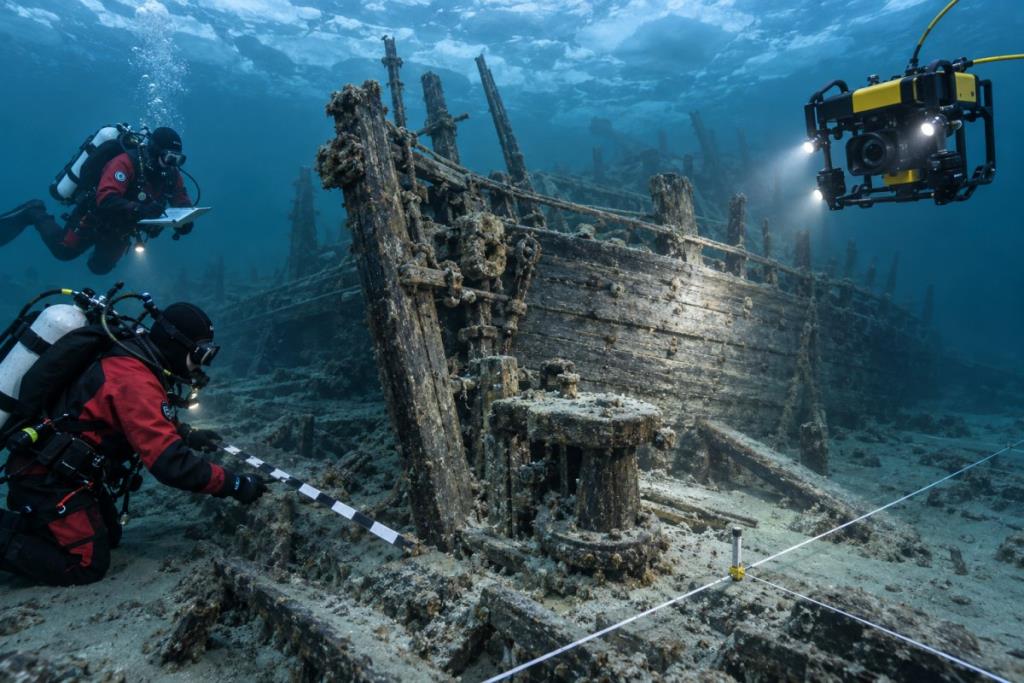
A major lingering question is how the Terror arrived at its final resting place after the crew abandoned ship in 1848. A party may have returned to sail her, or the vessel may have drifted unmanned before sinking. Erebus might also have seen further reoccupation for a time. As of yet, no final logbook has been found to distinguish among these scenarios.
Avoiding an Overly Simplistic Narrative
Cut marks indicative of cannibalism in desperate circumstances have been documented on several bones and extensively studied, but the entire fate of 129 men should not be reduced to a sensationalized headline. The catastrophe unfolded over multiple years and hundreds of kilometers, likely involving separate groups that met differing fates.
Archaeology Must Walk Hand in Hand with Conservation
A wooden or metallic artifact newly brought out of cold saltwater will deteriorate rapidly without prompt desalination and stabilization. For this reason, the archaeological team cannot simply "open every cabin" in a single season. They record imagery, construct 3D models, and retrieve only those objects backed by a long-term conservation plan; this deliberate pace is vital for preserving the data.
The site is co-managed with the Inuit Heritage Trust, demonstrating that this heritage does not belong exclusively to the British imperial narrative. This approach rectifies a long-standing oversight: Victorian relief expeditions searched for Franklin while ignoring or dismissing the testimony of the very people who had inhabited the land for generations.
Distinguishing Fact from Speculation
Strong evidence demands contemporary records, artifacts with clear provenance, or multiple independent physical measurements. Late-collected anecdotes, details appearing solely in popular literature, and unverified images hold far less weight. "Unexplained" does not imply that every hypothesis possesses equal validity.
This article favors scenarios that reconcile multiple physical traces with minimal assumptions, while openly acknowledging the unknowns. When new findings emerge, the primary questions should always be: who verified it, what identification methodology was applied, and whether the primary data has been published for independent scrutiny.
Conclusion
The Franklin expedition is no longer a case of "two ships vanishing without a trace." We know where the vessels lie and have a timeline for their desertion. The remaining mystery cuts deeper: how the different groups moved, who returned to the ships, what interplay of illness, environment, and command decisions doomed them all, and what records still await discovery in the unexplored cabins.



 Korean kimchi and banchan: the craft of fermentation and a table built on sharing
 Persian rice and tahdig: saffron, a crisp bottom layer and the sofreh
 Moroccan couscous and tagine: rhythm, hospitality and the flavours of North Africa
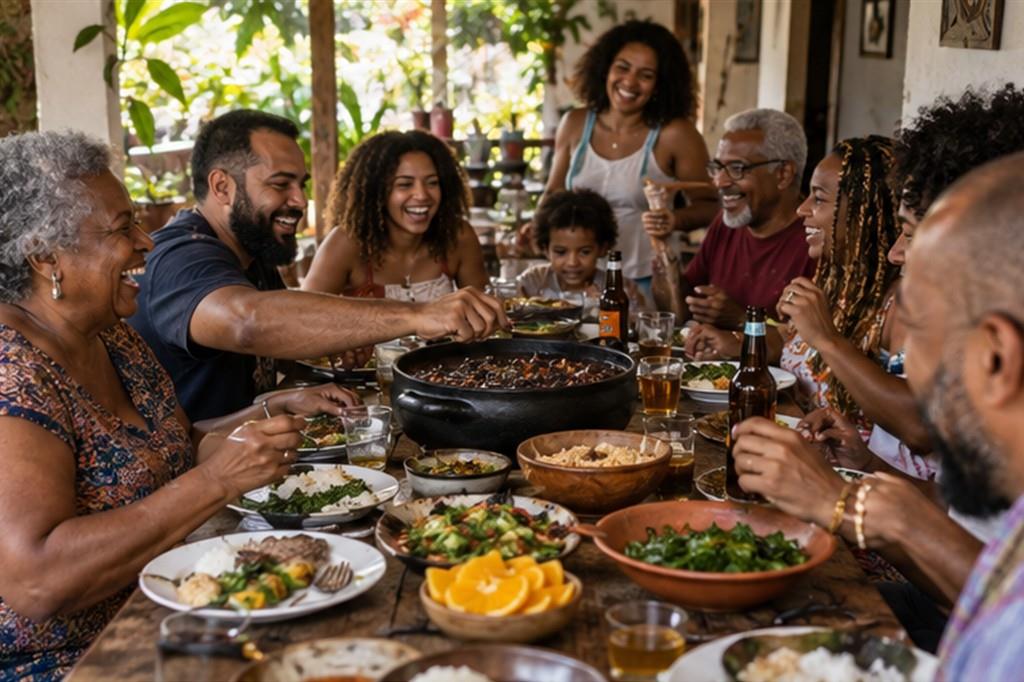 Brazilian feijoada: a pot of black beans, a weekend lunch and a story with many roots
 The Indian thali: a balanced tray that tells a regional story and a way of eating together
 Danish smørrebrød: the open sandwich and the art of composing a lunch
 Swiss raclette: melted cheese and a shared table in the cold season
 Injera in Ethiopia and Eritrea: the shared platter that binds a community
Đăng nhập để bình luận: / Sign in to comment: