



Mexican corn and the tortilla: how nixtamalisation feeds an entire cuisine
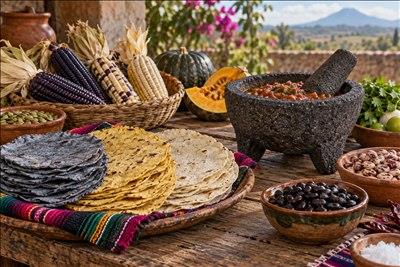
In Mexico, corn is not only an ingredient but a farming calendar, an indigenous memory and the foundation of a whole range of dishes. Nixtamalisation — cooking and steeping the kernels in an alkaline solution — turns corn into masa that is pliable, fragrant and nutritionally richer.
The food in this article is seen as a living system: dishes are tied to climate, ingredients, labour, family memory and the ways people sit down together. So this is not a claim that an entire country has only one palate or one set of rituals. Every region, religion, community and household has its own versions, and each deserves respect.
Quick facts
- Central ingredient: many varieties of white, yellow, green, red and purple corn.
- Core technique: nixtamalisation, rinsing the kernels and grinding them into masa.
- Familiar products: tortilla, tamal, tlacoyo, sope, tostada and atole.
- Where the knowledge lives: the milpa, the market, the mill, the tortilla shop and the family kitchen.
- What it means: food, identity, ritual and seed sovereignty.
How it came about
Corn was domesticated in Mesoamerica over a very long history and became a pillar of daily life. In the milpa system, corn is usually seen in relation to beans, squash and other plants; this is not merely a list of crops but an ecology of knowledge adjusted to each locality.
Nixtamalisation was the technical turning point. The kernels are cooked and steeped with food-grade lime or a traditional alkaline source, then rinsed and ground. The FAO notes that the process loosens the hull, changes water absorption, starch structure and flavour, and makes niacin more available to the body.
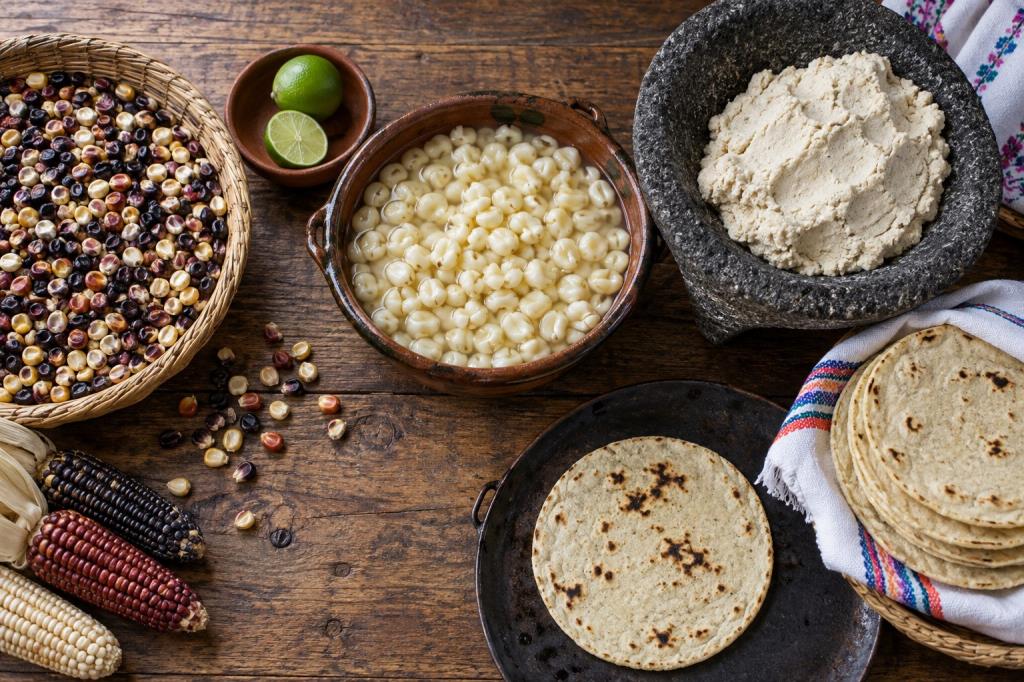
From masa, cooks create many shapes and methods: pressed thin and baked on a comal, wrapped around a filling and steamed, formed into a thick base or fried crisp. Each branch connects to a region, a type of corn, a time of day and the purpose of the meal.
How is a meal put together?
A tortilla can appear as an accompaniment, as the tool you pick food up with, as a wrapper or as the dish itself. A family meal of beans, salsa, vegetables, eggs, meat or a stew becomes complete thanks to hot tortillas, taken one at a time so they stay soft and fragrant.
Salsa is not one bottled sauce but a world of fresh and dried chillies, tomatoes, tomatillos, seeds, herbs and techniques of toasting and grinding. Alongside masa, the heat, acidity, smokiness and richness are balanced to suit the dish rather than simply to raise the burn.
The elements that make the character recognisable
- Native varieties differ in colour, aroma, pliability and use.
- Food-grade lime creates the alkaline conditions for nixtamalisation.
- A metate or a mill grinds the nixtamal into masa.
- The comal bakes the tortillas and toasts the ingredients for salsa.
- Beans, squash, chillies and wild greens add both flavour and nutrition.
- A cloth or a basket keeps the tortillas warm and soft through the meal.
The list above is a map for observing, not a formula that boxes anything in. An ordinary family meal may be far simpler, while a festival table is elaborate and full of symbolism. The cultural value lies as much in how things are chosen, prepared, divided and offered to one another as in the number of dishes.
Ingredients tell a story of geography
Mexico has many ecological zones, from dry highlands to humid tropics; corn varieties and farming methods adapt to altitude, rainfall, soil and what the community needs. The colours are not decoration: each variety has properties that affect pliability, the smell as it toasts and which dishes it suits.
The milpa shows that ingredients do not exist in isolation. Beans can add protein, squash covers the soil, and local edible plants and insects widen the diet. Markets and exchange networks bring produce from many altitudes into the cities, making Mexican food both local and cross-regional at once.
The techniques that build the flavour
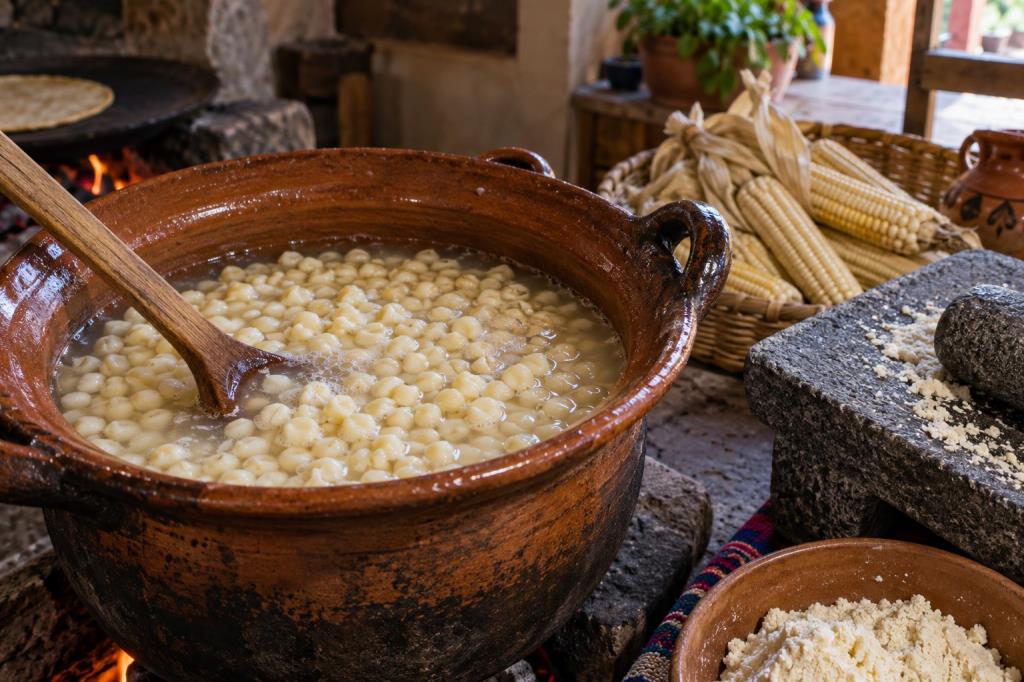
Nixtamal needs the right food-grade lime, the right amount of water, the right heat and the right resting time. Kernels left too firm are hard to grind, while overly harsh treatment can cost structure and aroma. After rinsing, the nixtamal is ground while still moist enough; good masa holds together when pressed but is not wet and sticky.
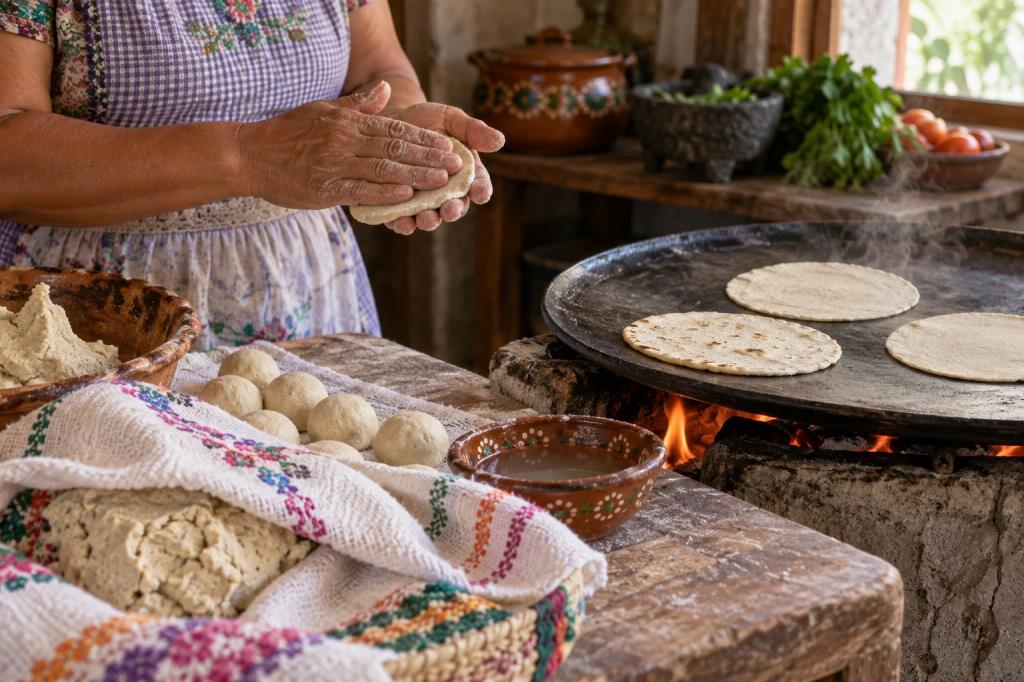
The tortilla is pressed evenly, laid on a hot comal and turned in rhythm. When it puffs, steam has separated two thin layers, though how much it puffs also depends on the masa, the thickness and the heat. Experienced makers judge by the toasted smell, the colour of the surface and the feel in their hands rather than by a clock.
Seen from the kitchen, a traditional technique is usually a community's answer to a very practical problem: making grain easier to eat, using up a harvest, extending how long food keeps, or building layers of aroma from a limited supply of fuel. When modern technology shortens a stage, the flavour may still be good, but the rhythm of the work, the sensory knowledge and the space in which the craft is handed on all change too.
The table, hospitality and good manners
Hot tortillas are usually passed around or set out in a shared basket. Each person takes one at a time, tearing or folding it to gather the food. In many settings, eating with your hands is entirely normal; what matters is clean hands, a tidy technique and following the host's rhythm.
- Take only as many tortillas as you need and close the cloth or basket lid so the rest stay warm.
- Do not waste masa or tortillas; the work behind them starts in the seed and the field.
- Taste a little salsa before adding a lot.
- Ask what is in a stew and what fat it was cooked in if you have dietary restrictions.
- At a market, watch how people queue, order a portion and pay at that stall.
- Respect the corn varieties and local dish names instead of calling everything wrapped in a tortilla a taco.
Differences between regions and families
The centre of the country has a dense corn tortilla culture; in many parts of the north, wheat tortillas are more prominent; Oaxaca is known for tlayuda and for the diversity of its corn; Yucatan has techniques, seasonings and dishes tied to its own Maya history.
Even corn tortillas differ in diameter, thickness, colour and smell. Masa freshly ground at a mill, industrial dried masa flour and packaged tortillas all serve different rhythms of life; convenience should not be equated with a lack of culture, but the differences in texture and in the production chain are worth understanding.
The best approach is to use the name of the region, the community or the specific dish wherever you can. Very broad labels such as “Asian food”, “Middle Eastern cuisine” or “African dishes” are convenient in conversation but easily blur history and diversity. A dish that has crossed borders may also be kept alive by several communities at once; looking for a single “owner” is often less meaningful than understanding the branches along which it grew.
Common misconceptions
A tortilla is just a wrapper for the filling
It has its own corn aroma, temperature and structure; it balances the sauce and sets the proportions of each mouthful. A cold, dry tortilla can throw the whole dish out of rhythm.
Every Mexican dish is fiercely hot
Chillies are used for their aroma, colour, sweetness, smokiness and varying degrees of heat. Many dishes let the diner adjust with salsa, while the base flavour can be very gentle.
Nixtamalisation is just a way of boiling corn
It is a deliberate physico-chemical change affecting the hull, the pliability, the aroma and the nutritional value. Using the wrong kind of lime or an arbitrary ratio is not safe.
A more respectful way to experience it while travelling
- Look for a tortilla shop that makes them the same day and ask which corn they use.
- Taste the tortilla before covering it with too much sauce or filling.
- Do not call Tex-Mex and Mexican cuisine the same thing, even though their histories overlap.
- Ask permission before photographing vendors or the work going on in a market.
- Buy native corn products through chains that respect farmers and seed sources.
- If you learn nixtamalisation, use food-grade lime and a trustworthy set of instructions.
If a host or someone serving shows you a way of eating that differs from your habits, watch first and then follow it as far as you are comfortable. You can politely ask about allergies, dietary needs or how hot something is. Ask permission before photographing people cooking, an altar, a ritual or a private space; prices and judgements about the food also belong in their local context.
Trying it at home without turning the dish into a stereotype
The safest approach is to use nixtamalised masa harina from a reputable maker, add water as directed, let the dough rest, then press and bake. If you want to start from whole kernels, learn the proper procedure for food-grade lime, proportions and rinsing; never substitute construction chemicals.
Keep freshly baked tortillas in a clean cloth so the moisture redistributes. Serve them with beans, vegetables, salsa and one simple main dish to feel the part the tortilla plays. If you use a different flour or a different type of corn from the traditional one, treat it as an adaptation and describe it honestly.
A version cooked at home should honestly be called an adaptation when the equipment or the local ingredients are missing. Say clearly what you substituted and how it affects the aroma, the texture and the colour. If you want to go deeper, learn from the cooks, writers and communities attached to that tradition rather than relying on a short video or a commercialised version.
An observation checklist for the five senses
- At which stage does the aroma appear: toasting, grinding, fermenting, steaming or simmering?
- Is the dominant texture crisp, airy, chewy, smooth or juicy?
- Does the depth of flavour sit in the main dish, or does it come from the side dishes and the seasonings on the table?
- What part do the utensils, the crockery and the seating arrangement play?
- Who prepares the food, how is the knowledge passed on, and on what occasion does the meal take place?
Traditional food in modern life
Mechanised tortilla shops have made it possible to feed urban populations, while many households still prefer freshly ground nixtamal masa. Current debates revolve around hybrid varieties, genetically modified corn, seed rights, the price of tortillas and whether smallholders can survive.
Projects to conserve native corn, restaurants tied to farmers and young people relearning nixtamalisation all show that heritage can live inside a new economy. The value lies not only in the finished tortilla but in a community's right to keep its seed, its land and its knowledge.
Preserving heritage does not mean freezing a dish at some imagined moment in time. Young people, migrants, home cooks and restaurants all keep adjusting portions, equipment, sources of ingredients and ways of serving. What matters is recognising the core body of knowledge, acknowledging those who pass the craft on, and creating the conditions for a community to decide for itself how its heritage moves forward.
Terms worth remembering
- Nixtamal: corn kernels cooked and steeped in an alkaline solution.
- Masa: the moist dough ground from nixtamal.
- Comal: a flat griddle.
- Milpa: the Mesoamerican farming system built around corn and its companion plants.
- Molino: the mill or machine that grinds nixtamal.
- Tortilleria: a place that makes and sells tortillas.
Conclusion
Following a tortilla from kernel to comal shows that cooking is technology, ecology and memory all at once. Nixtamalisation does not merely improve the grain; it creates the material foundation for countless dishes and keeps the link alive between the growers, the millers, the bakers and the Mexican table.


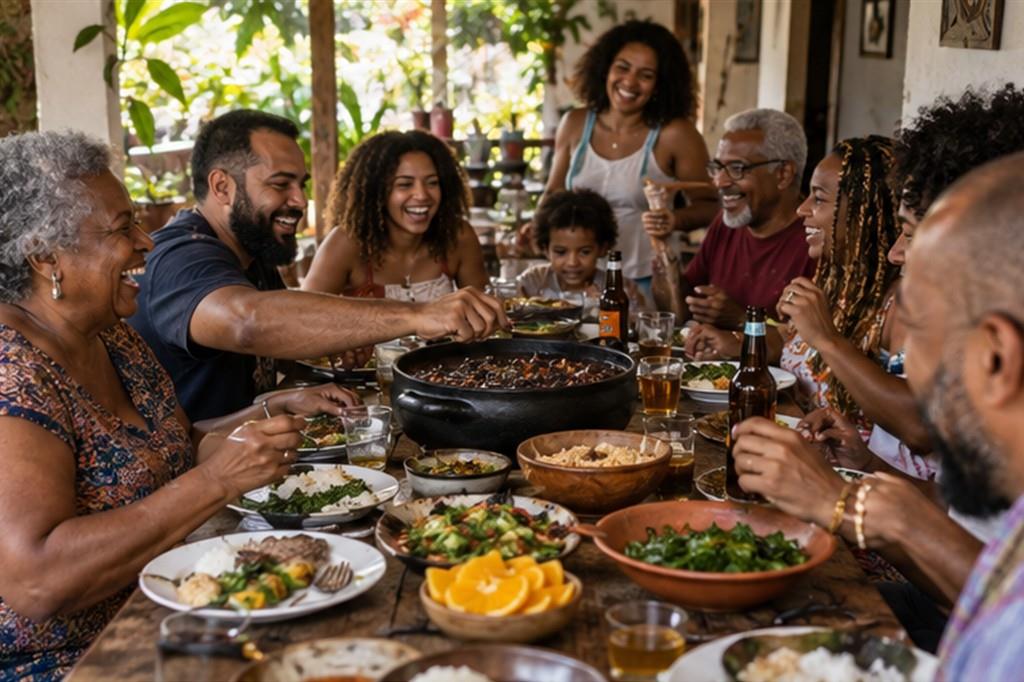 Brazilian feijoada: a pot of black beans, a weekend lunch and a story with many roots
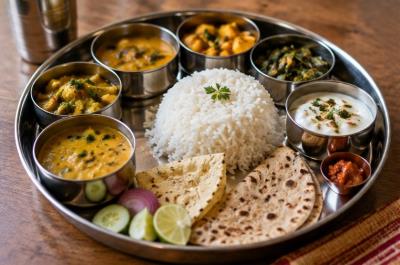 The Indian thali: a balanced tray that tells a regional story and a way of eating together
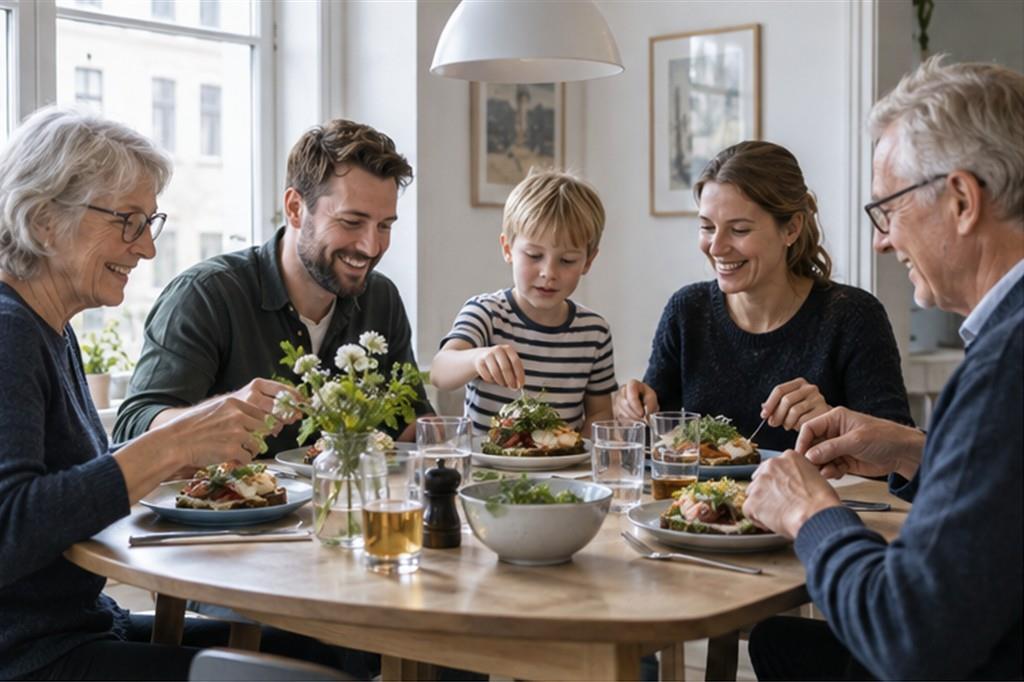 Danish smørrebrød: the open sandwich and the art of composing a lunch
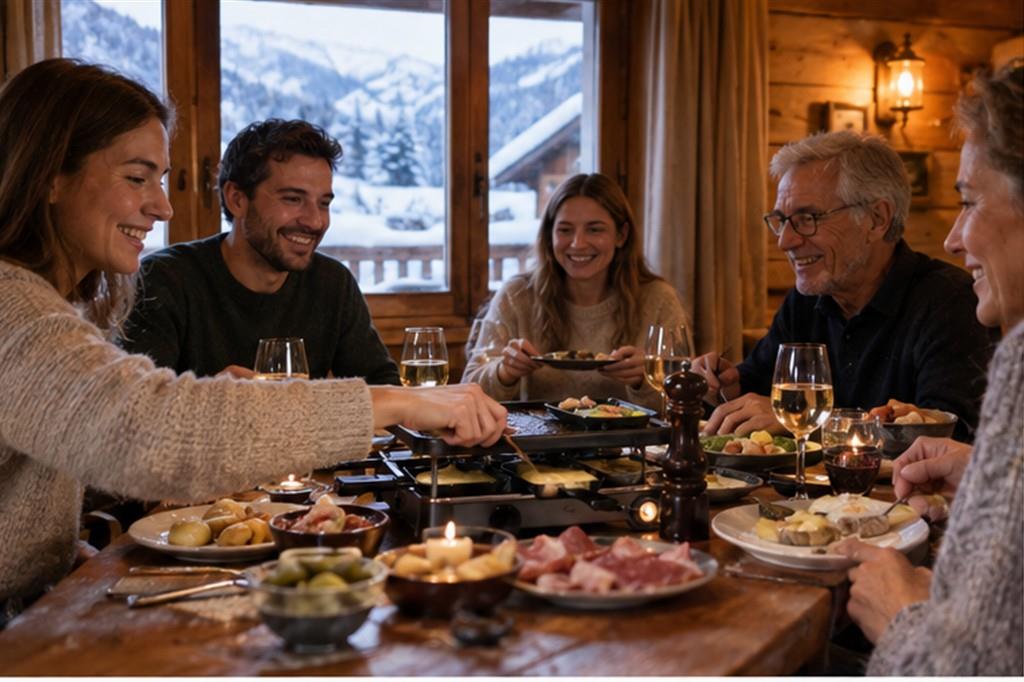 Swiss raclette: melted cheese and a shared table in the cold season
 Injera in Ethiopia and Eritrea: the shared platter that binds a community
 Italian aperitivo: the pause at the end of the day, between a drink and a conversation
 West African jollof: a pot of red rice, memories of home and a proud argument
 Mexican corn and the tortilla: how nixtamalisation feeds an entire cuisine
Đăng nhập để bình luận: / Sign in to comment: