



How to cook ca kho to: deep flavour, whole pieces of fish and a glossy sauce
A good ca kho to is more than fish with an attractive brown colour. The pieces have to stay whole, the flesh just cooked and still moist, the sauce lightly glossy but not thick and gluey, and the balance of salt and sweetness carried by pepper, onion and a touch of chilli. The recipe below serves four or five, uses snakehead or basa, and explains the caramel, the arrangement of the fish and the heat control clearly enough for a first-time cook.
Quick facts
- Serves: 4-5 people.
- Preparation: 35 minutes.
- Marinating: 30 minutes in the fridge.
- Braising: 35-50 minutes depending on the fish.
- Equipment: a clay pot or heavy-based pan 22-24 cm across.
Ingredients
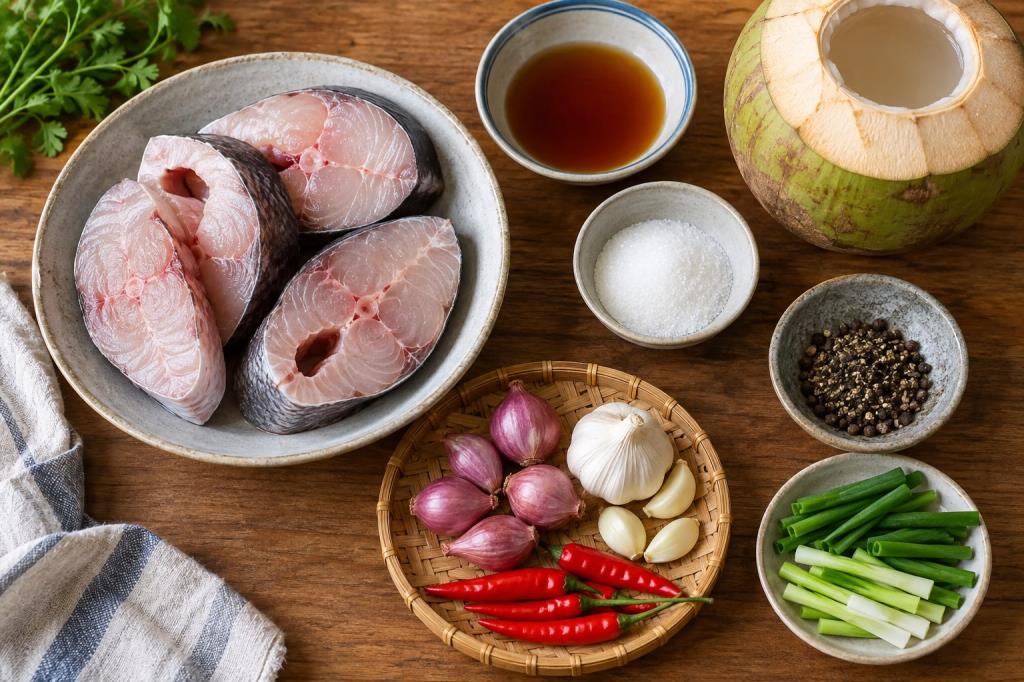
- 1 kg of cleaned snakehead, cut into steaks 3-4 cm thick; basa, iridescent shark or mackerel work too.
- 120-150 ml of unsweetened fresh coconut water and 100 ml of hot water.
- 45 ml of fish sauce, added in two stages.
- 30 g of sugar, 20 g of which goes into the caramel.
- 4 shallots, 3 cloves of garlic, 3 spring onion whites.
- 1-2 chillies, 1 teaspoon of crushed black pepper.
- 1 tablespoon of cooking oil; spring onion to finish.
- Optional: 100 g of pork belly in small pieces if you want a richer sauce.
Which fish braises without falling apart?
Snakehead has firm flakes and little fat, and suits the southern style of braising. Choose a fish with naturally bright skin, springy flesh, red gills and no sour smell. Basa and iridescent shark are fattier and soften quickly, so they need a gentle hand. Mackerel is firm, strongly flavoured and takes less time. Whichever you use, cut the steaks fairly evenly so they cook at the same rate. Steaks that are too thin break when you turn them, and steaks that are too thick never take up the seasoning in the middle.
If you are buying fish already cut, look for a cut face that is still moist and glossy, with bright red blood rather than greyish brown. Frozen fish should be thawed in the fridge overnight, in a container so nothing drips onto other food. Do not thaw it on the worktop for hours, and do not put it straight into warm water: the outside softens while the core is still cold, and the texture falls apart.
Cleaning the fish without stripping the flavour
Remove the gills, the guts and the black membrane in the belly, and scrape the clotted blood away from the backbone. Rinse it quickly in cool water, rub it lightly with a little salt if you like and rinse again, then pat it thoroughly dry with kitchen paper. Do not leave the fish soaking in brine, vinegar or lime juice: the acid makes the surface go opaque, it firms up unevenly and it breaks apart during braising. With a smooth-skinned fish, cleaning off just enough of the slime and drying it well is what matters most.
Marinate the fish with 30 ml of fish sauce, 10 g of sugar, half the chopped shallot and garlic, the crushed spring onion whites, half a teaspoon of pepper and a few slices of chilli. Mix it by tilting the bowl or lifting each piece with a clean hand; do not squeeze it. Cover it and refrigerate for 30 minutes, turning it once halfway through. There is no need to marinate for hours: salt draws water out of the flesh, leaving the fish dry and the marinade more fishy.
Step 1: cook the caramel to the amber point
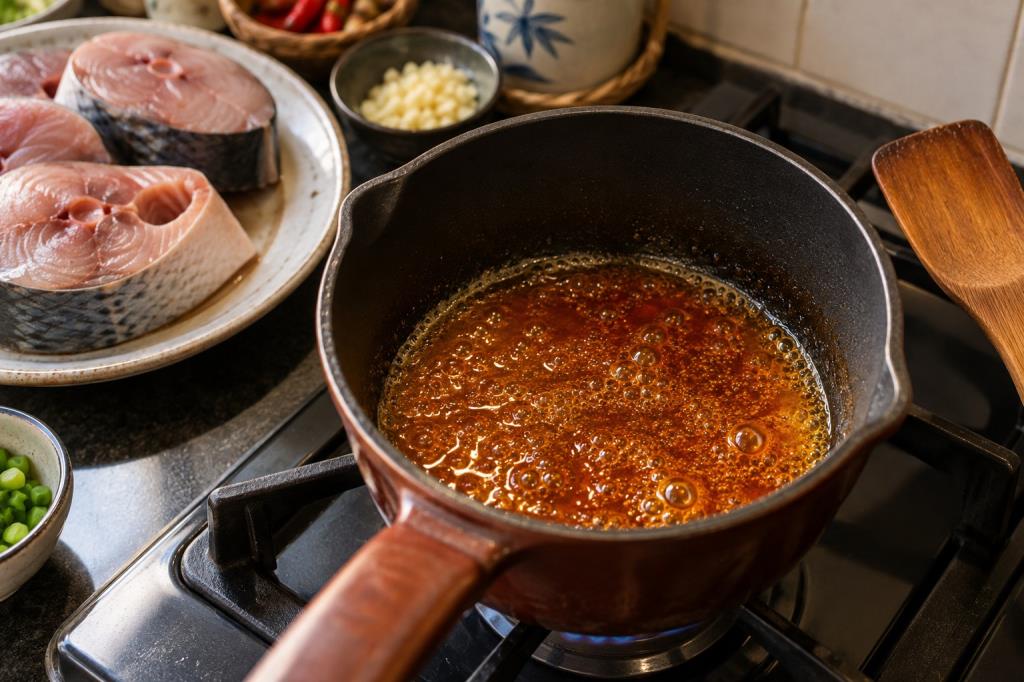
Put 20 g of sugar and a tablespoon of water in a dry pot or clay pot. Heat it over a medium flame until the sugar dissolves, then lower it; tilt the pot to let the colour spread evenly rather than stirring continuously while the sugar is crystallising. When the colour goes from honey gold to a coppery amber and the bubbles get smaller, add a tablespoon of hot water very carefully. The caramel will boil violently for a few seconds, so stand to one side of the pot and use a long-handled tool.
The good stopping point is just before the caramel turns blackish brown. The residual heat of the pot will keep darkening it. If it smells burnt or tastes bitter, throw it out and start again; neither sugar nor coconut water will take the burnt taste away. With a new clay pot, or one whose resistance to thermal shock you are unsure of, make the caramel in a small pan and pour it into a pot you have warmed through.
Step 2: arrange the fish and set the surface
Fry the remaining shallot and garlic in a tablespoon of oil right on top of the caramel base. If you are using pork belly, stir it for 4-5 minutes until the outside is firm before you add the fish. Lay the steaks in a single layer, with the skin against the side of the pot where possible, and pour all the marinade over them. Give them a medium heat for 2-3 minutes a side, but only if the pieces are firm enough. With soft basa, do not turn them at all; spoon the hot liquid over the top instead.
Setting the surface does not mean frying the fish dry. The aim is to fix the outside so the pieces hold their shape and to build a light aroma. If the pot is so small that the fish is stacked several layers deep, change to a wider one. Pieces squeezed against each other cook unevenly, and trying to stir them so they take up the seasoning is what breaks them. A pot just wide enough for a single layer is always the easiest to control.
Step 3: add the liquid and braise in two stages
Pour in the coconut water and the hot water until it comes about two thirds of the way up the fish; it does not need to be completely covered. Bring it to a clear boil for 2 minutes, then lower it until only small bubbles form around the edge. Braise it uncovered for the first 15 minutes so the fishy smell escapes and the liquid reduces naturally. Then put the lid on ajar and carry on for 20-30 minutes. Every 7-10 minutes, spoon the liquid over the fish; do not stir round the pot with chopsticks.
Snakehead is ready when the flesh separates into large flakes under light pressure but has not yet come away from the bone. Fatty fish like basa needs less time. If you have a food thermometer, the thickest part should reach at least 63C; you still need to look at the fish, because braising it too long dries it out even though it is safe. Add the remaining 15 ml of fish sauce in the last 5-7 minutes so the aroma comes through, then add the pepper, the chilli and the spring onion whites.
Step 4: reduce the sauce without making the fish salty
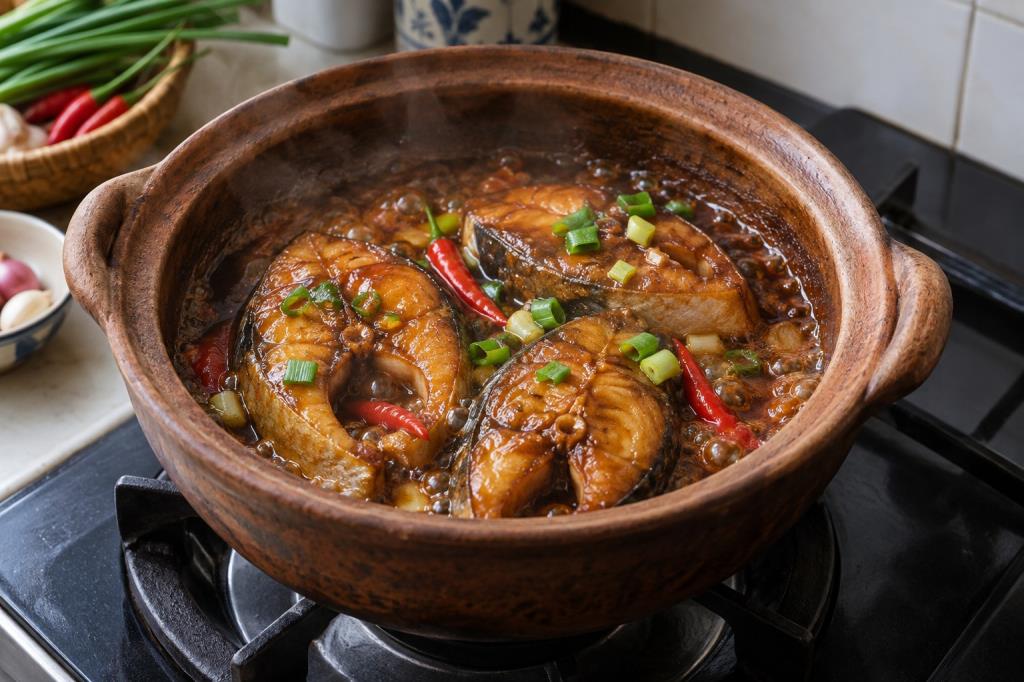
As soon as the fish is cooked, taste the liquid for strength. If it is already right but there is too much of it, lift the fish onto a warm plate with a wide spatula and reduce the liquid on its own over a medium heat for a few minutes. That way the fish does not dry out or break. If the liquid is already salty, do not reduce it any further: add a little hot water or unsweetened coconut water at a time, bring it back and taste. Do not fix saltiness by adding a lot of sugar, which makes the dish cloying without lowering the sodium at all.
The sauce is right when it leaves a thin glossy coat on the back of the fish and runs slowly off the ladle while still being loose enough to spoon over rice. Once the heat is off, let the pot rest for 8-10 minutes before serving. Resting lets the heat even out, the sauce cling and the pieces hold together when you lift them. Scatter the spring onion at the very end so it stays green and fragrant rather than cooking until it turns grey.
Eight small tips for braised fish that looks and tastes good
- Pat the fish really dry before marinating so the seasoning is not diluted.
- Cut the steaks evenly and avoid mixing head and tail pieces of very different thickness.
- Marinate in the fridge, and only for as long as it needs.
- Stop the caramel at amber, without waiting for blackish brown.
- Use hot water when topping up so the pot temperature does not drop suddenly.
- Lay the fish in one layer and spoon the liquid over instead of stirring it.
- Add the last of the fish sauce when the fish is nearly done, to keep its aroma.
- Let the dish rest before you serve it, and use a spatula or a wide ladle.
Common mistakes and how to rescue them
The fish has broken up
The usual causes are fish thawed too quickly, steaks that are too thin, a pot at a rolling boil, or too much stirring. Stop stirring, lower the heat and spoon the liquid over instead. Lift out the pieces that are already cooked, reduce the liquid and pour it back. Next time choose a wider pot and only turn the fish while the surface is still firm.
The sauce smells fishy
Check whether the blood along the bone and the belly membrane were properly cleaned out. Raise the heat for the first few minutes with the lid off, and add crushed spring onion whites and pepper. Do not pour a lot of wine or vinegar into the pot, as it changes the flavour completely. Fish that is not fresh and smells sour or of ammonia should not be masked and used.
The fish is pale
The caramel was stopped too early, or there is too much liquid. You can reduce the sauce separately so the colour deepens naturally. Do not pour thick raw caramel over the fish at the end, as it leaves streaks and a separate caramel taste. Good colour comes from caramel taken to the right point, from fish sauce and from slow reduction.
The flesh is dry
The fish has been braised too long or boiled too hard. Lift it out, adjust the sauce, spoon it over and let it rest; the flakes cannot be brought back completely, but the sauce makes the dish easier to eat. Next time check it 10 minutes earlier, particularly with mackerel and basa.
Adjusting for different fish
With basa or iridescent shark, use less oil and leave out the pork belly, as the fish is already fatty; braise gently and turn it as little as possible. With mackerel, add about 50 ml more liquid because the flesh is leaner, and the braising time can be 5-10 minutes shorter. With snakehead, keep to the standard recipe, and you can add a few slices of fresh turmeric if your family likes it, though turmeric takes the dish in a different direction. Do not mix several kinds of fish in one pot, as their fat content and cooking times differ.
Scaling the recipe up or down
When you go from 1 kg of fish to 2 kg, do not immediately double all the liquid. Use a wider pot, increase the seasonings by about 1.7 times and taste at the end. The surface area for evaporation changes with the pot, so the amount of liquid has to be adjusted in practice. If you halve the recipe, you still need enough liquid to come halfway or two thirds up the fish; choose a small pot so the liquid does not spread too thin and scorch.
Serving and presentation
Serve ca kho to with hot white rice and boiled vegetables or cucumber to balance the strong flavour. A vegetable soup, a gourd soup or a simple plate of raw vegetables lightens the meal. Stand the clay pot on a heatproof mat, as it holds heat for a long time, and remind children not to touch the sides. When serving, take the top pieces first and slide the spatula right underneath the whole steak.
Storing and reheating safely
Do not leave braised fish at room temperature for more than 2 hours. Move it to a shallow container, chill it and use it within 3-4 days; if you need longer, freeze it in portions. To reheat, add a spoonful of water, cover it partly and heat it evenly to 74C. Only reheat what you are going to eat and avoid doing it repeatedly. Fish with an odd smell, unusual sliminess, or that has been left out too long should be thrown away, not tasted to check.
Allergies and nutrition
The dish contains fish, and fish sauce is also a fish product. Anyone who needs to limit sodium should cut back on the fish sauce and the salt together, rather than switching to a lot of soy sauce, which still contains sodium and may contain soy and wheat. If you are using canned coconut water, read the ingredients to avoid versions with added sugar or unsuitable additives.



 How to cook mung bean and aloe sweet soup: refreshing, with crisp aloe and no bitterness
 How to cook xoi gac: a beautiful red, chewy separate grains and never claggy
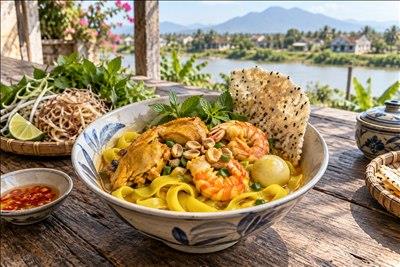 Mi Quang and the kitchens of Quang Nam: a bowl with little broth and a great deal of memory
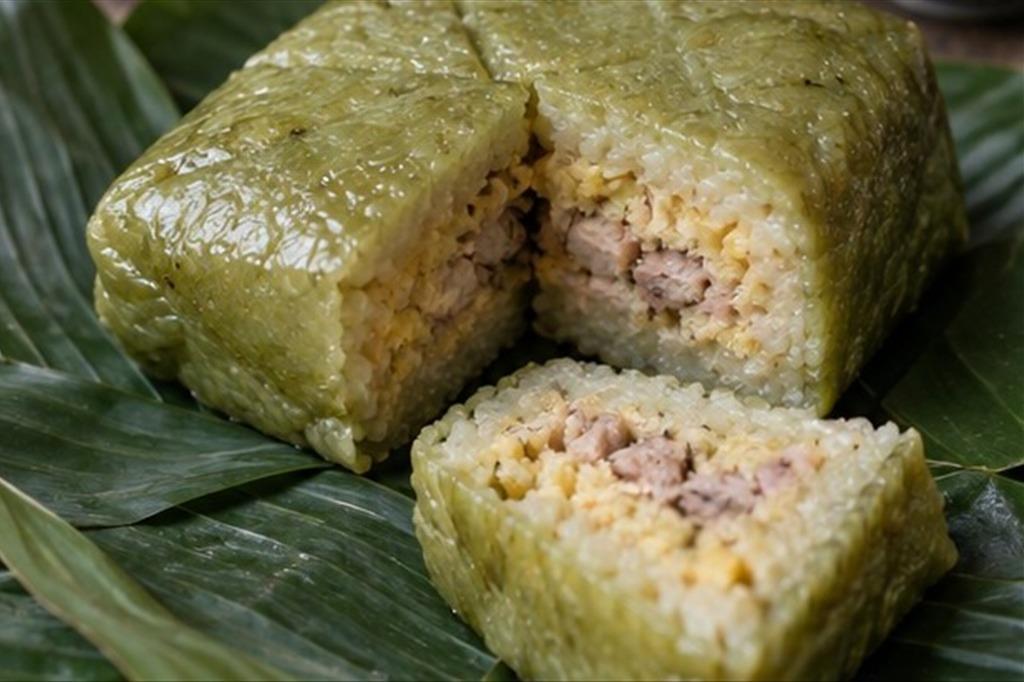 Bo Dau banh chung: the green square cake at the crossroads into Thai Nguyen
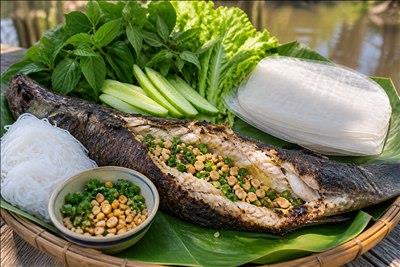 How to cook ca loc nuong trui: evenly done, juicy flesh and no taste of ash
 How to make Hoi An chicken rice: fluffy grains, juicy chicken and a crisp onion salad
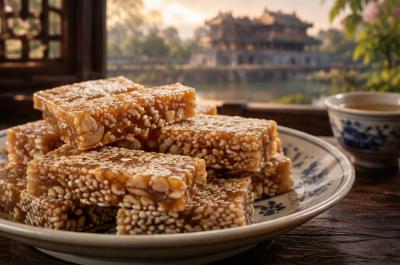 Me xung from Hue: chewy malt, toasted sesame and the slow rhythm of tea
 The food of Hue: where the royal kitchen, everyday dishes and small street stalls meet
Đăng nhập để bình luận: / Sign in to comment: