



Quang Binh Travel - Discovering the Mystery of the Caves
Geographical features, climate, along with the formation of residential communities through social development over various periods, have endowed Quang Binh with a rich and attractive system of natural tourism values.
[blue]1. Son Doong Cave[/blue]


Lying quietly in a remote mountainous area of Central Vietnam for millions of years, Son Doong Cave, the world's largest natural cave, after being discovered in 2009, has piqued the curiosity of travelers from all over the world to come explore and admire. Son Doong has an estimated length of 5 km, a height of 200 m, and a width of 150 m.


According to Conde Nast Traveler, it can fit an entire large city block in Manhattan, USA inside its cavern, equivalent to a 40-story skyscraper. Inside the cave is a distinct ecosystem where light passes through filters from sinkhole openings above, and clouds gather near the ceiling to create high humidity. The stalagmites in Son Doong reach up to nearly 80 m high. Baseball-sized limestone cave pearls are scattered across the cave floor. This magnificent scene deep underground shows that the world still has many beautiful landscapes left for humans to discover.
[blue]2. Hang En Cave[/blue]


Visiting Phong Nha – Ke Bang National Park this season, you will be overwhelmed by the majestic beauty of Hang En, known as the 3rd largest cave in the world. What makes it even more special is that exploring Hang En takes only two days and one night, making it very suitable for adventure enthusiasts who have limited time.


Hang En has a total length of 1,645m running through an entire mountain with 3 cave entrances, facing Southeast and Northwest along the Rao Thuong stream flow. Hang En was rated by National Geographic (USA) magazine as one of the most magnificent caves in the world. Notably, Hang En features a distinct ecosystem and microclimate, along with primary forests and a gorgeous river that will provide visitors with unique experiences.
[blue]3. Tu Lan Cave System[/blue]


The Tu Lan cave system is located in Tan Hoa village, Minh Hoa district, Quang Binh. Located about 70km northwest of Phong Nha, it consists of 8 caves discovered in 2009, with 4 additional valleys discovered in 2012. The Tu Lan cave system includes main cave systems – Tu Lan cave and secondary caves such as Song cave, Uoi cave, Chuot cave, Hung Ton cave, Kim cave, Tu Lan cave, Ken cave, and To Mo cave.


The Tu Lan cave system remains pristine and untouched, concealing the secrets of majestic nature inside limestone mountains, underground rivers, and endless waterfalls. To admire what Mother Nature has sculpted, you will have to traverse rugged mountains, trek through treacherous forests, hike across vast valleys, wade through slippery mud, and swim across rivers with water temperatures below 20°C. The magical beauty of the stalactites, the mystery of the underground river, combined with the wild charm of the forests will make your visit unforgettable.
[blue]4. Tam Co Cave[/blue]


Tam Co Cave is located in Tan Trach commune, Bo Trach district, Quang Binh province. Located 55km northwest of Dong Hoi city, this small cave commemorates the immense sacrifice of the Youth Volunteer Force during the anti-American resistance war for national salvation.
The story of Tam Co Cave is perhaps even more tragic than Dong Loc Junction. Many visitors here could not hold back their tears when listening to the guide retell the story of the sacrifice of 8 young volunteers, aged 18 to 20, all from Hoang Hoa district – Thanh Hoa province, in November 1972 at this fire coordinate – Road 20 Quyet Thang.
[blue]5. Thuy Cung Cave[/blue]

To reach Thuy Cung Cave, you have to cross vast grassy hills to reach the Dau Rai primary forest, home to hundreds of ancient trees so large that three or four people cannot span their girths. Next, go upstream along Tien Stream to Nuoc Lan Cave, which serves as the back entrance of Dark Cave. Equipped with specialized gear provided by the Phong Nha – Ke Bang Tourism Center, you will explore over 500m of the pristine Nuoc Lan Cave. Upon emerging, you can enjoy a lunch featuring wild vegetables, stream fish, grilled meat, rice balls, and more.


From Nuoc Lan Cave, continue trekking through the forest to reach Thuy Cung Cave with its strangely vibrant blue water. After a night of camping at Thuy Cung Cave, you will wake up to watch the sunrise in the middle of Sinh Ton Valley (Survival Valley), covering over 2,000 hectares and surrounded by sheer, majestic limestone cliffs and vast primary forests.
[blue]6. Dark Cave[/blue]


Dark Cave was discovered by locals very early on during the anti-American war and was used by soldiers and locals as a bomb shelter. In 1992, the British Cave Research Association conducted a survey, mapped it out, and measured Dark Cave to be 5,558m long horizontally, 80m deep, and 50m high.


Dark Cave has a stranger beauty than any other. Although it is called Dark Cave, it is actually not dark at all. Light from outside delicately weaves into the cave, casting shimmering sunlight onto the rock walls and reflecting off the sparkling water surface. Everything blends into the most exquisite natural picture.
[blue]7. Paradise Cave[/blue]

Dubbed the underground royal palace, Paradise Cave is one of the most magnificent and mystical wonders in the world. Hidden deep inside the Phong Nha – Ke Bang National Park World Natural Heritage site, the cave belongs to an ancient karst terrain dating back approximately 350 to 400 million years.


Paradise Cave is located at Km 16, nearly 4km from the edge of the West branch of Ho Chi Minh Highway, in Son Trach commune, Bo Trach district, Quang Binh province, about 70km northwest of Dong Hoi city center. It is about 25km from Phong Nha Cave, and access is very convenient.
[blue]8. Tien Son Cave[/blue]


Tien Son Cave (or Dry Cave) is a famous, beautiful cave in the Phong Nha – Ke Bang area. The trail up to Tien Son winds along the mountainside at an elevation of about 200m above sea level. The entrance to Tien Son Cave is located about 1,000m from Phong Nha Cave entrance; discovered in 1935, local residents initially called it Tien Cave (Fairy Cave) due to its magical, mystical beauty. Later, when Phong Nha Cave was discovered to be a wet cave, Tien Son Cave came to be known as Dry Cave.

Tien Son Cave is 980m long, and although they are not directly connected, Tien Son Cave and Phong Nha Cave are both parts of a common cave system. Tien Son Cave is considered a castle of stalactites and stalagmites featuring thousands of formations in a multitude of colors.
[blue]9. Phong Nha Cave[/blue]


Located in the Ke Bang limestone mountain area, Son Trach commune, Bo Trach district, Quang Binh province, 50km northwest of Dong Hoi city, Phong Nha Cave is considered the First Cave of the Southern Realm in Vietnam, sheltered by tropical rainforests.


From the Son River, it takes over 30 minutes to reach Phong Nha Cave. Measuring 7,729m in length, 83m in depth, and 50m in height, it has numerous large and small branch caves, including Bi Ki Cave, Tien Cave, and Cung Dinh Cave. It is a subterranean river cave running deep inside the mountain with many characteristic rock formations. Legend has it that the stalactites hanging down at the cave mouth helped inspire the poetic name Phong Nha, meaning wind blowing through teeth.
Source: Collected
[blue]1. Son Doong Cave[/blue]
Lying quietly in a remote mountainous area of Central Vietnam for millions of years, Son Doong Cave, the world's largest natural cave, after being discovered in 2009, has piqued the curiosity of travelers from all over the world to come explore and admire. Son Doong has an estimated length of 5 km, a height of 200 m, and a width of 150 m.
According to Conde Nast Traveler, it can fit an entire large city block in Manhattan, USA inside its cavern, equivalent to a 40-story skyscraper. Inside the cave is a distinct ecosystem where light passes through filters from sinkhole openings above, and clouds gather near the ceiling to create high humidity. The stalagmites in Son Doong reach up to nearly 80 m high. Baseball-sized limestone cave pearls are scattered across the cave floor. This magnificent scene deep underground shows that the world still has many beautiful landscapes left for humans to discover.
[blue]2. Hang En Cave[/blue]
Visiting Phong Nha – Ke Bang National Park this season, you will be overwhelmed by the majestic beauty of Hang En, known as the 3rd largest cave in the world. What makes it even more special is that exploring Hang En takes only two days and one night, making it very suitable for adventure enthusiasts who have limited time.
Hang En has a total length of 1,645m running through an entire mountain with 3 cave entrances, facing Southeast and Northwest along the Rao Thuong stream flow. Hang En was rated by National Geographic (USA) magazine as one of the most magnificent caves in the world. Notably, Hang En features a distinct ecosystem and microclimate, along with primary forests and a gorgeous river that will provide visitors with unique experiences.
[blue]3. Tu Lan Cave System[/blue]
The Tu Lan cave system is located in Tan Hoa village, Minh Hoa district, Quang Binh. Located about 70km northwest of Phong Nha, it consists of 8 caves discovered in 2009, with 4 additional valleys discovered in 2012. The Tu Lan cave system includes main cave systems – Tu Lan cave and secondary caves such as Song cave, Uoi cave, Chuot cave, Hung Ton cave, Kim cave, Tu Lan cave, Ken cave, and To Mo cave.
The Tu Lan cave system remains pristine and untouched, concealing the secrets of majestic nature inside limestone mountains, underground rivers, and endless waterfalls. To admire what Mother Nature has sculpted, you will have to traverse rugged mountains, trek through treacherous forests, hike across vast valleys, wade through slippery mud, and swim across rivers with water temperatures below 20°C. The magical beauty of the stalactites, the mystery of the underground river, combined with the wild charm of the forests will make your visit unforgettable.
[blue]4. Tam Co Cave[/blue]
Tam Co Cave is located in Tan Trach commune, Bo Trach district, Quang Binh province. Located 55km northwest of Dong Hoi city, this small cave commemorates the immense sacrifice of the Youth Volunteer Force during the anti-American resistance war for national salvation.
The story of Tam Co Cave is perhaps even more tragic than Dong Loc Junction. Many visitors here could not hold back their tears when listening to the guide retell the story of the sacrifice of 8 young volunteers, aged 18 to 20, all from Hoang Hoa district – Thanh Hoa province, in November 1972 at this fire coordinate – Road 20 Quyet Thang.
[blue]5. Thuy Cung Cave[/blue]
To reach Thuy Cung Cave, you have to cross vast grassy hills to reach the Dau Rai primary forest, home to hundreds of ancient trees so large that three or four people cannot span their girths. Next, go upstream along Tien Stream to Nuoc Lan Cave, which serves as the back entrance of Dark Cave. Equipped with specialized gear provided by the Phong Nha – Ke Bang Tourism Center, you will explore over 500m of the pristine Nuoc Lan Cave. Upon emerging, you can enjoy a lunch featuring wild vegetables, stream fish, grilled meat, rice balls, and more.
From Nuoc Lan Cave, continue trekking through the forest to reach Thuy Cung Cave with its strangely vibrant blue water. After a night of camping at Thuy Cung Cave, you will wake up to watch the sunrise in the middle of Sinh Ton Valley (Survival Valley), covering over 2,000 hectares and surrounded by sheer, majestic limestone cliffs and vast primary forests.
[blue]6. Dark Cave[/blue]
Dark Cave was discovered by locals very early on during the anti-American war and was used by soldiers and locals as a bomb shelter. In 1992, the British Cave Research Association conducted a survey, mapped it out, and measured Dark Cave to be 5,558m long horizontally, 80m deep, and 50m high.
Dark Cave has a stranger beauty than any other. Although it is called Dark Cave, it is actually not dark at all. Light from outside delicately weaves into the cave, casting shimmering sunlight onto the rock walls and reflecting off the sparkling water surface. Everything blends into the most exquisite natural picture.
[blue]7. Paradise Cave[/blue]
Dubbed the underground royal palace, Paradise Cave is one of the most magnificent and mystical wonders in the world. Hidden deep inside the Phong Nha – Ke Bang National Park World Natural Heritage site, the cave belongs to an ancient karst terrain dating back approximately 350 to 400 million years.
Paradise Cave is located at Km 16, nearly 4km from the edge of the West branch of Ho Chi Minh Highway, in Son Trach commune, Bo Trach district, Quang Binh province, about 70km northwest of Dong Hoi city center. It is about 25km from Phong Nha Cave, and access is very convenient.
[blue]8. Tien Son Cave[/blue]
Tien Son Cave (or Dry Cave) is a famous, beautiful cave in the Phong Nha – Ke Bang area. The trail up to Tien Son winds along the mountainside at an elevation of about 200m above sea level. The entrance to Tien Son Cave is located about 1,000m from Phong Nha Cave entrance; discovered in 1935, local residents initially called it Tien Cave (Fairy Cave) due to its magical, mystical beauty. Later, when Phong Nha Cave was discovered to be a wet cave, Tien Son Cave came to be known as Dry Cave.
Tien Son Cave is 980m long, and although they are not directly connected, Tien Son Cave and Phong Nha Cave are both parts of a common cave system. Tien Son Cave is considered a castle of stalactites and stalagmites featuring thousands of formations in a multitude of colors.
[blue]9. Phong Nha Cave[/blue]
Located in the Ke Bang limestone mountain area, Son Trach commune, Bo Trach district, Quang Binh province, 50km northwest of Dong Hoi city, Phong Nha Cave is considered the First Cave of the Southern Realm in Vietnam, sheltered by tropical rainforests.
From the Son River, it takes over 30 minutes to reach Phong Nha Cave. Measuring 7,729m in length, 83m in depth, and 50m in height, it has numerous large and small branch caves, including Bi Ki Cave, Tien Cave, and Cung Dinh Cave. It is a subterranean river cave running deep inside the mountain with many characteristic rock formations. Legend has it that the stalactites hanging down at the cave mouth helped inspire the poetic name Phong Nha, meaning wind blowing through teeth.
Source: Collected



 How to cook xoi gac: a beautiful red, chewy separate grains and never claggy
 Mi Quang and the kitchens of Quang Nam: a bowl with little broth and a great deal of memory
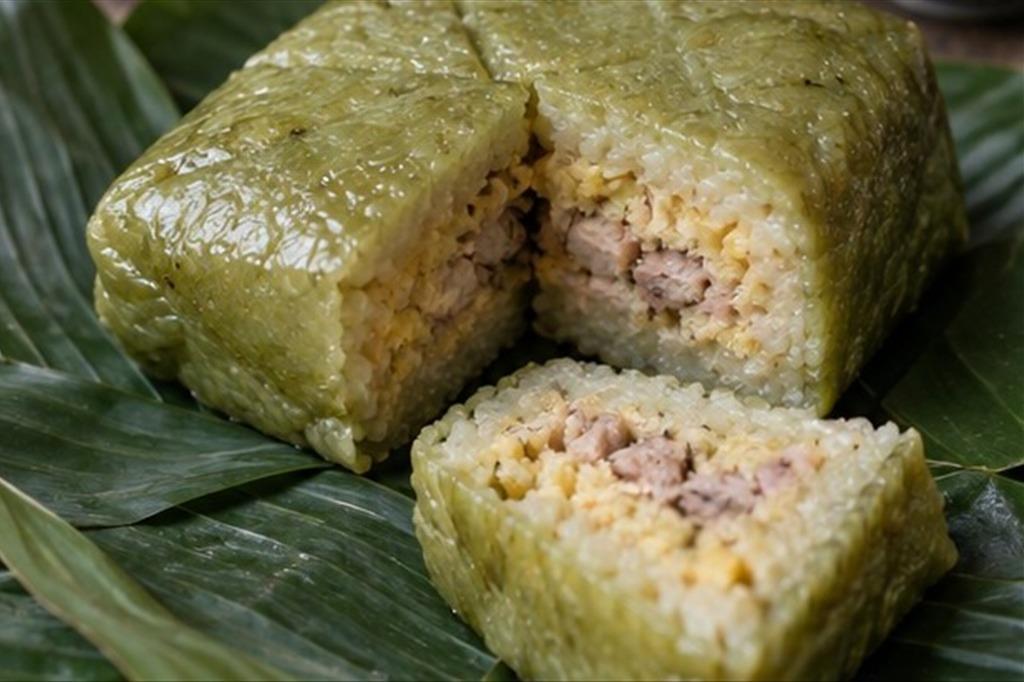 Bo Dau banh chung: the green square cake at the crossroads into Thai Nguyen
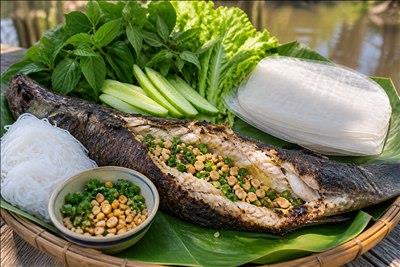 How to cook ca loc nuong trui: evenly done, juicy flesh and no taste of ash
 How to make Hoi An chicken rice: fluffy grains, juicy chicken and a crisp onion salad
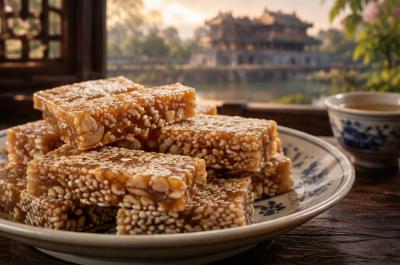 Me xung from Hue: chewy malt, toasted sesame and the slow rhythm of tea
 The food of Hue: where the royal kitchen, everyday dishes and small street stalls meet
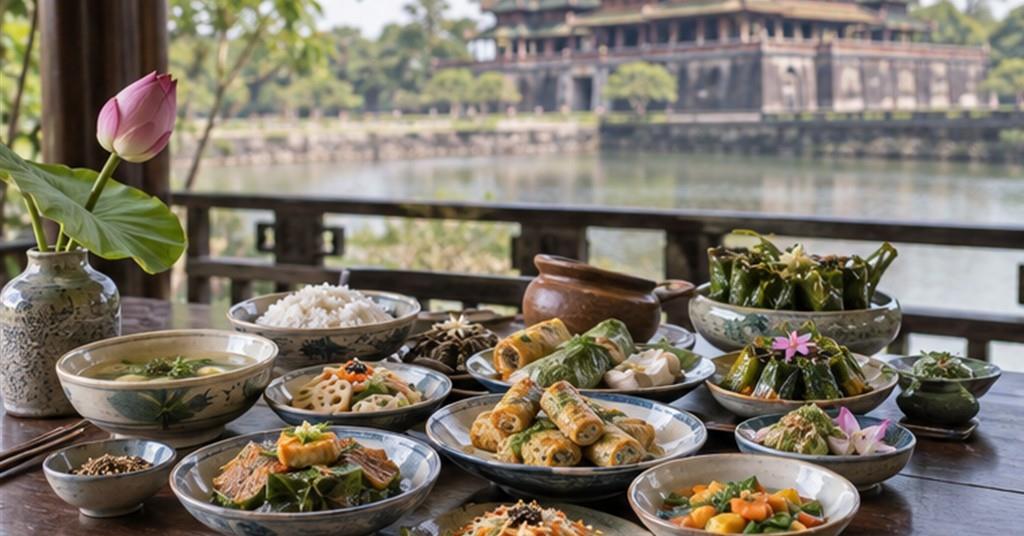 Hue vegetarian food: why is something so plain still so layered in flavour?
Đăng nhập để bình luận: / Sign in to comment: