



Mezze culture in the eastern Mediterranean: when the table becomes a space for sharing
Mezze is a way of eating built from many small plates set in the middle of the table, where the conversation and everyone's presence matter as much as the food. From hummus and dressed vegetables to pickles and bread, each element contributes a flavour, but no single dish stands for the whole region.
The food in this article is seen as a living system: dishes are tied to climate, ingredients, labour, family memory and the ways people sit down together. So this is not a claim that an entire country has only one palate or one set of rituals. Every region, religion, community and household has its own versions, and each deserves respect.
Quick facts
- Range: found under many names and variants across the eastern Mediterranean, the Levant, Anatolia and nearby regions.
- How it is used: as a starter, a long drawn-out meal or a shared banquet table.
- Common components: bread, pulses, sesame, vegetables, yoghurt, olives, herbs and sometimes meat or seafood.
- Spirit: sharing, conversation, hospitality and flexibility with the seasons.
- Note: the origins of individual dishes are often intertwined and may be kept alive by several communities at once.
How it came about
Mezze has no birthday and no standard menu. It grew up in a long-standing zone of exchange between the sea, the cities and the interior, where grain, olive oil, pulses, herbs, fermented dairy and spices moved across many empires, religions and language communities.
The name has relatives across several languages, and serving many small plates suits both a space for receiving guests and a meal that stretches out. In a tavern, a restaurant, a home or on a feast day, the function of mezze shifts: sometimes an opening, sometimes the entire meal.
UNESCO's framing of the Mediterranean diet stresses that eating together is a foundation of social exchange and community identity. Mezze illustrates that clearly, although it would be wrong to merge every tradition in the Mediterranean basin into a single cuisine.
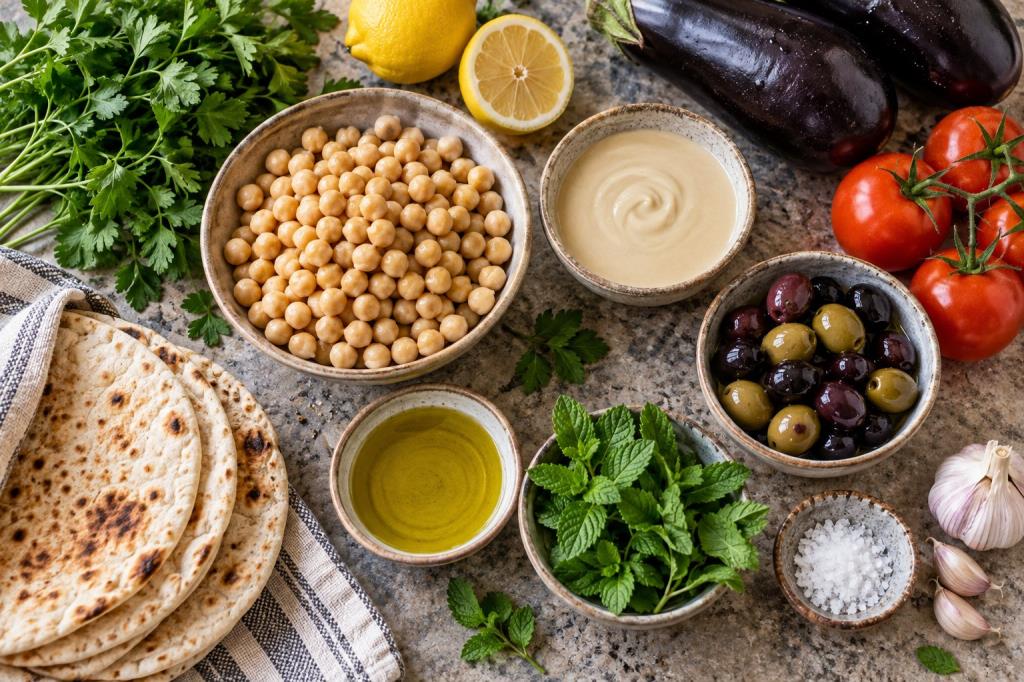
How is a meal put together?
A mezze table is usually built in layers: the cold dishes arrive first, bread is passed around, and hot dishes may follow from the kitchen. Diners take small amounts and switch between rich, sour, fresh, smoky and hot; the table is therefore not locked into the starter-then-main sequence of many modern Western menus.
Hummus brings smoothness and a nutty depth; tabbouleh brings herbs, acidity and crunch; baba ghanoush or moutabal carries the smell of roasted aubergine; labneh adds a tang of yoghurt; pickles, olives and bread link the plates together. The names, recipes and distinctions between dishes vary considerably from place to place.
The elements that make the character recognisable
- Flatbread is both food and the tool you pick things up with.
- Chickpeas, broad beans and lentils provide the lasting substance.
- Tahini from sesame gives richness, a light bitterness and body.
- Lemon, sumac, sour pomegranate and pickles balance the fat.
- Parsley, mint, other herbs and raw vegetables bring freshness.
- Grilled dishes, meatballs or seafood may appear depending on the community and the occasion.
The list above is a map for observing, not a formula that boxes anything in. An ordinary family meal may be far simpler, while a festival table is elaborate and full of symbolism. The cultural value lies as much in how things are chosen, prepared, divided and offered to one another as in the number of dishes.
Ingredients tell a story of geography
The Mediterranean climate favours olives, grapes, wheat, vegetables, fruit and herbs. Drier areas developed techniques of steeping, drying, fermenting and using seeds; port cities took in spices and ideas from far away. Each small plate can be a record of soil, water and trade routes.
Summer brings tomatoes, cucumbers and herbs to the table; the cold season suits pulses, root vegetables and hot dishes. Olive oil is not only a flavour but the product of a landscape, of harvesting and of pressing. Bread depends on the flour, the oven and the local rhythm of working the dough.
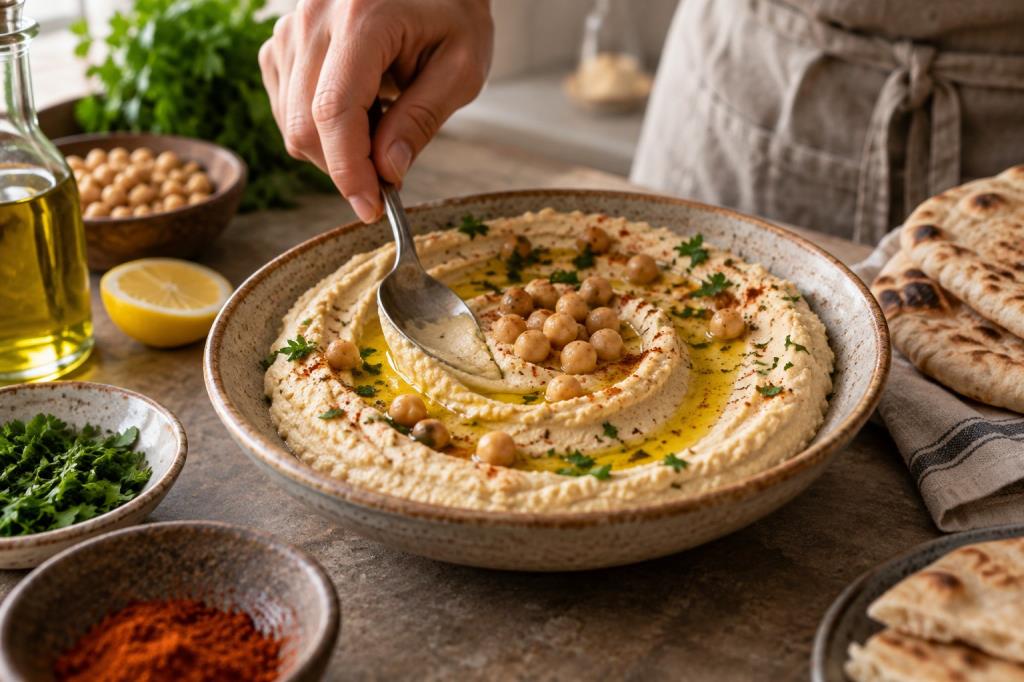
The techniques that build the flavour
Good hummus depends on pulses cooked soft, tahini in balance, something sour and a grinding process that forms an emulsion. Roasting or charring aubergine directly gives the flesh a smoky smell; squeezing it too hard can strip the flavour, while leaving too much water makes the dish thin and bland.
In many Levantine traditions, tabbouleh puts parsley at the centre rather than a large quantity of bulgur. The herbs must be dry before they are cut so the salad does not go soggy; the lemon and oil are usually balanced close to serving time. Small details like these explain why the same dish name does not necessarily produce the same experience.
Seen from the kitchen, a traditional technique is usually a community's answer to a very practical problem: making grain easier to eat, using up a harvest, extending how long food keeps, or building layers of aroma from a limited supply of fuel. When modern technology shortens a stage, the flavour may still be good, but the rhythm of the work, the sensory knowledge and the space in which the craft is handed on all change too.
The table, hospitality and good manners
Mezze creates a middle ground: the food belongs to the whole table, yet each person sets their own pace and portion. Hospitality may show itself in constant offers of more, in fresh bread arriving and in the best pieces being saved for the guest; a guest can receive that warmly while still being clear about their own limits.
- Wait for the host to invite you, or watch when everyone else begins.
- Take from the part nearest you, without reaching across and disturbing the whole table.
- Tear the bread into bite-sized pieces and dip each piece only once.
- Use the serving utensils if they are placed beside the dish.
- Be aware of each family's or faith's rules about alcohol, meat and diet.
- Praise a specific flavour or the work behind it, rather than arguing at the table over which country a dish belongs to.
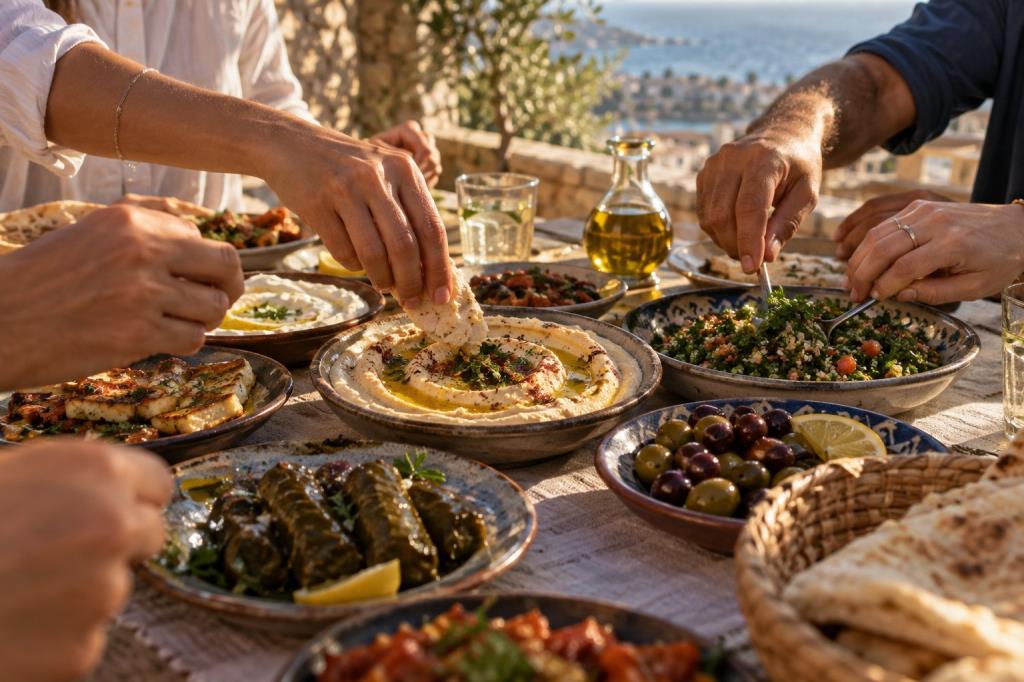
Differences between regions and families
In Lebanon, Syria, Jordan, Palestine, Turkey, Greece, Cyprus and many other places, the menus, names, seasonings and settings all differ. Hummus may be dense or silky, topped with meat or only with oil; an aubergine dish may lean towards tahini or towards vegetables; bread varies in thickness and in how it is baked.
Migrant communities keep bringing mezze into new restaurants and kitchens, using local produce while keeping the rhythm of sharing. Recording the right names and listening to the cooks' stories helps avoid turning a whole region into an anonymous list of dishes.
The best approach is to use the name of the region, the community or the specific dish wherever you can. Very broad labels such as “Asian food”, “Middle Eastern cuisine” or “African dishes” are convenient in conversation but easily blur history and diversity. A dish that has crossed borders may also be kept alive by several communities at once; looking for a single “owner” is often less meaningful than understanding the branches along which it grew.
Common misconceptions
Mezze is just dips
The purees are prominent, but a mezze table also holds salads, cooked vegetables, pastries, cheese, rolled dishes, grills and hot plates. It is a structure for eating, not a category of sauces.
There is one standard mezze menu everywhere
The similarities reflect long exchange, while the differences come from language, religion, season and family. A fixed list is usually a restaurant's product rather than a universal rule.
Everything on the table is light and healthy
Vegetables, pulses and olive oil are valuable, but salt, bread, fried dishes, meat and portion size still matter. A social tradition should not be reduced to a simple nutritional slogan.
A more respectful way to experience it while travelling
- Order enough and then add more, rather than leaving a table full of leftovers.
- Ask for the local name and the ingredients, because recipes change from place to place.
- Declare any allergy to sesame, dairy, nuts, gluten or pulses before ordering.
- Do not assume every dish is vegan or halal.
- Respect that a community may have its own name and its own memories of the same dish.
- Support places run by people from the community and read their story.
If a host or someone serving shows you a way of eating that differs from your habits, watch first and then follow it as far as you are comfortable. You can politely ask about allergies, dietary needs or how hot something is. Ask permission before photographing people cooking, an altar, a ritual or a private space; prices and judgements about the food also belong in their local context.
Trying it at home without turning the dish into a stereotype
A small table can start with hummus, a herb salad, olives, pickles, labneh and warm bread. Choose three to five dishes with different textures instead of rushing through ten. Cut the herbs close to serving, keep the bread warm, and let the purees come back to a moderately cool temperature before they go out.
If you have no sumac, no za'atar or not the right regional bread, say clearly what you substituted. Do not throw together a random spice mix and then call it the “authentic” version. It is better to learn one dish thoroughly from a trustworthy source and then build simple side dishes around it.
A version cooked at home should honestly be called an adaptation when the equipment or the local ingredients are missing. Say clearly what you substituted and how it affects the aroma, the texture and the colour. If you want to go deeper, learn from the cooks, writers and communities attached to that tradition rather than relying on a short video or a commercialised version.
An observation checklist for the five senses
- At which stage does the aroma appear: toasting, grinding, fermenting, steaming or simmering?
- Is the dominant texture crisp, airy, chewy, smooth or juicy?
- Does the depth of flavour sit in the main dish, or does it come from the side dishes and the seasonings on the table?
- What part do the utensils, the crockery and the seating arrangement play?
- Who prepares the food, how is the knowledge passed on, and on what occasion does the meal take place?
Traditional food in modern life
Modern restaurants turn mezze into a tasting menu, a vegetarian offer or a quick portion; industrially made hummus has spread the dish widely but sometimes blurs the regional differences. At the same time, cooks and writers from within the communities are retelling the history of these dishes in their own voices.
The sustainability story lies in pulses, grain, seasonal vegetables and the ability to turn small portions into an abundant meal. Even so, olive oil, sesame and farm produce are all under climate pressure; keeping this table culture alive means caring about the growers, the bakers and the supply chain as well.
Preserving heritage does not mean freezing a dish at some imagined moment in time. Young people, migrants, home cooks and restaurants all keep adjusting portions, equipment, sources of ingredients and ways of serving. What matters is recognising the core body of knowledge, acknowledging those who pass the craft on, and creating the conditions for a community to decide for itself how its heritage moves forward.
Terms worth remembering
- Mezze: a way of serving many small portions to be shared.
- Hummus: chickpeas pureed with tahini and seasonings.
- Tahini: ground sesame paste.
- Tabbouleh: a herb salad with tomato, bulgur and acidity in regionally varying proportions.
- Labneh: yoghurt drained until thick.
- Sumac: a reddish-purple spice with a fruity sourness.
Conclusion
A mezze table is appealing because it does not force a meal to run straight from beginning to end. Each small plate opens a conversation about land, memory and exchange; the finest way to enjoy it is to share slowly, use the right names where you know them, and leave room for many versions to exist side by side.


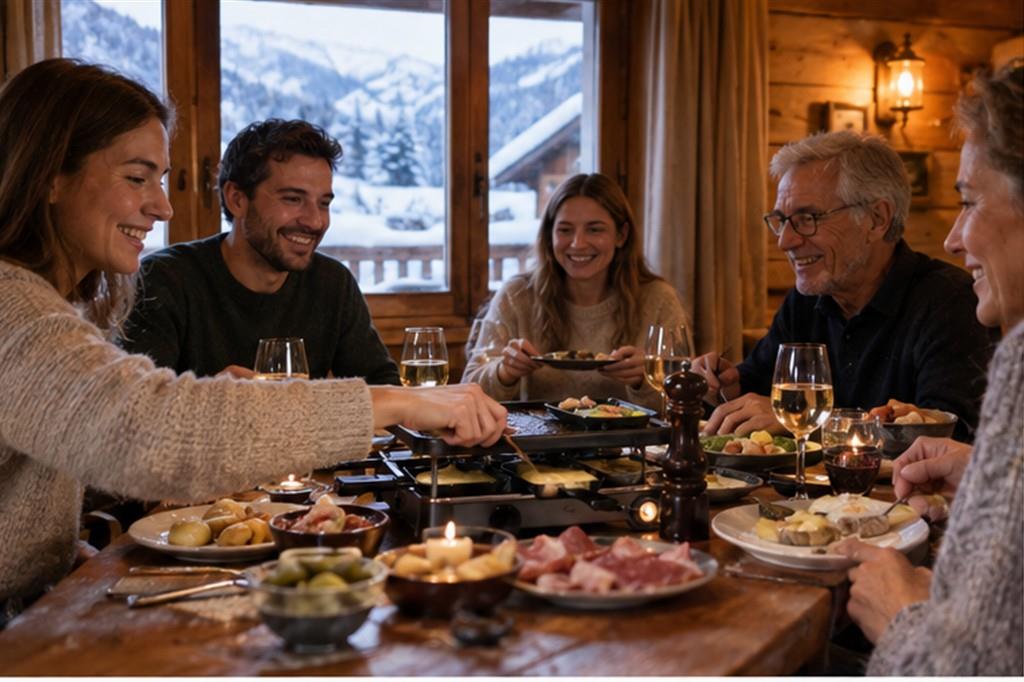 Swiss raclette: melted cheese and a shared table in the cold season
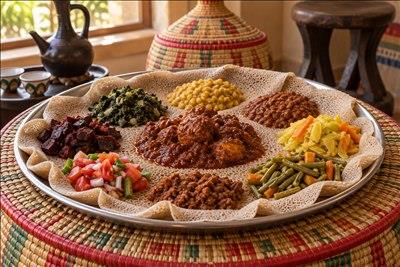 Injera in Ethiopia and Eritrea: the shared platter that binds a community
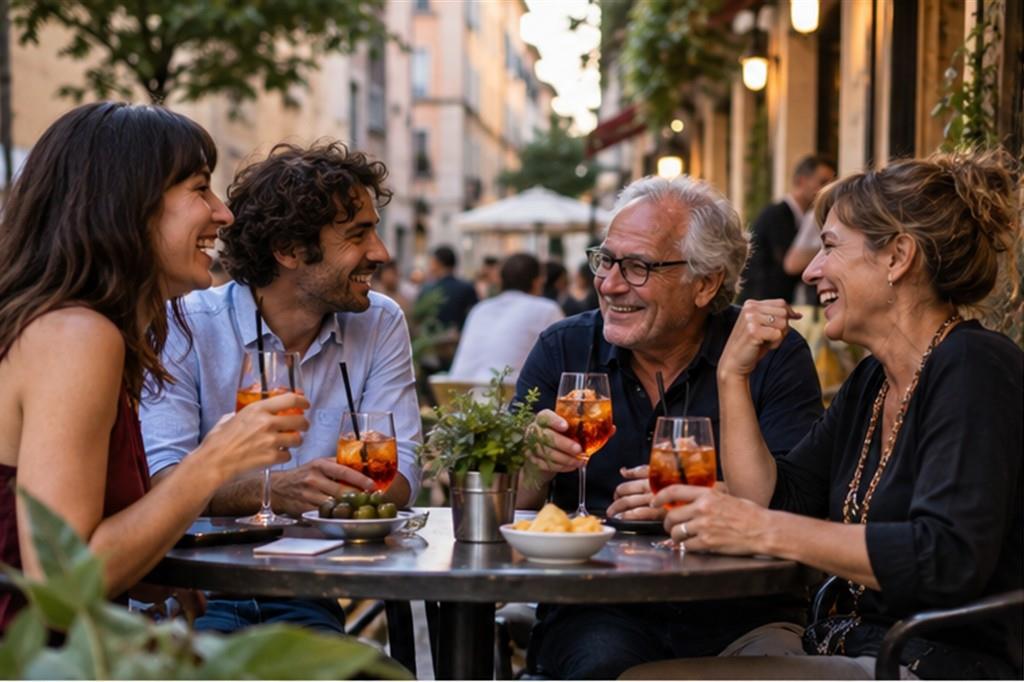 Italian aperitivo: the pause at the end of the day, between a drink and a conversation
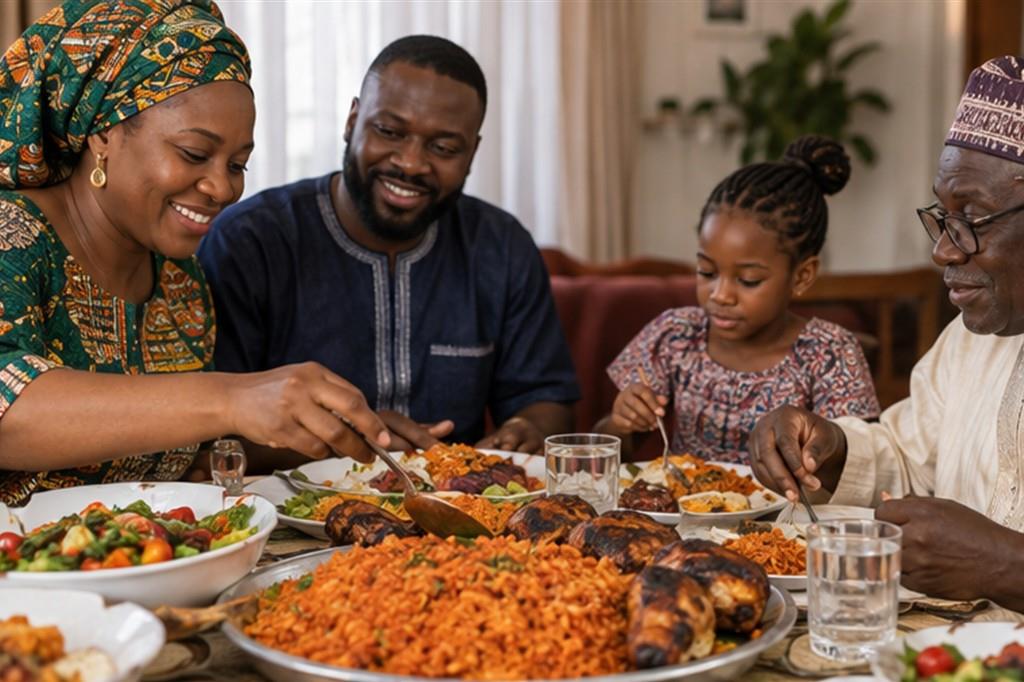 West African jollof: a pot of red rice, memories of home and a proud argument
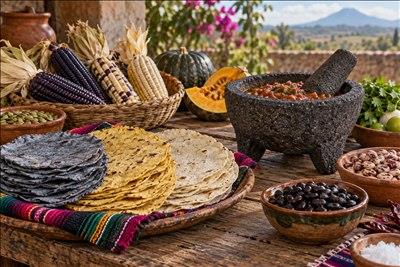 Mexican corn and the tortilla: how nixtamalisation feeds an entire cuisine
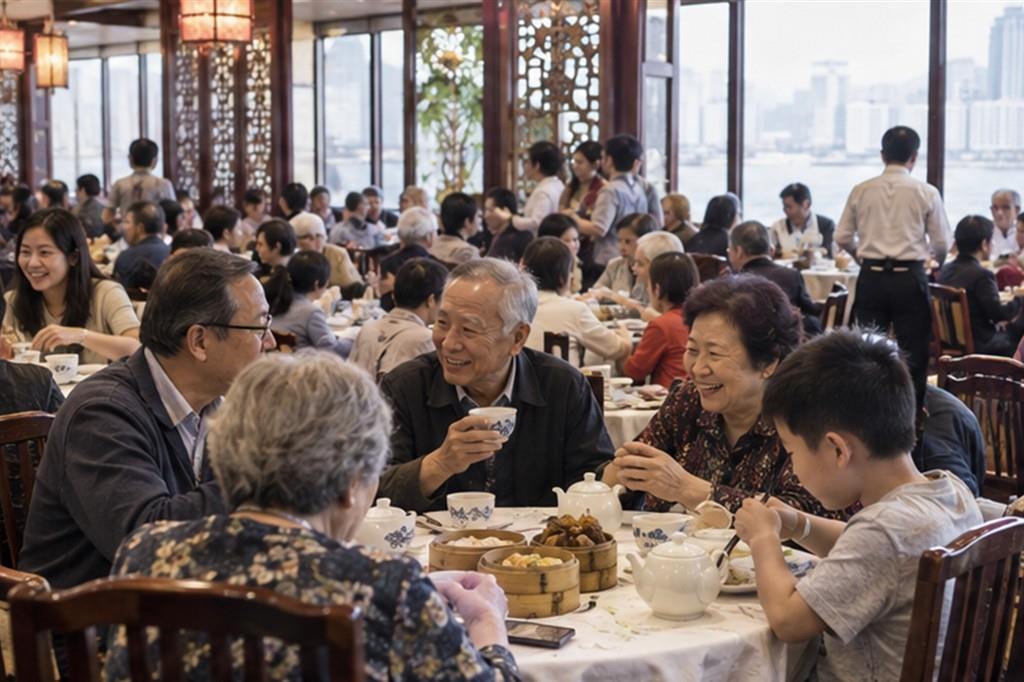 Yum cha in Hong Kong: drinking tea, eating dim sum and keeping the rhythm of morning meetings
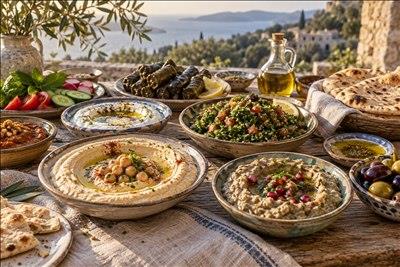 Mezze culture in the eastern Mediterranean: when the table becomes a space for sharing
 Top 10 Outstanding Dishes of Zhejiang, China
Đăng nhập để bình luận: / Sign in to comment: