



Injera in Ethiopia and Eritrea: the shared platter that binds a community
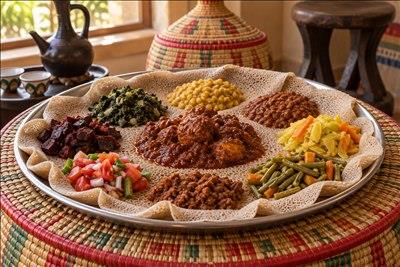
Injera is at once a fermented flatbread, the base that holds the stews and the tool for bringing food to your mouth. On the shared platter of Ethiopia and Eritrea, its spongy, lightly sour surface soaks up the sauces, while the act of tearing and dividing turns the meal into a communal experience.
The food in this article is seen as a living system: dishes are tied to climate, ingredients, labour, family memory and the ways people sit down together. So this is not a claim that an entire country has only one palate or one set of rituals. Every region, religion, community and household has its own versions, and each deserves respect.
Quick facts
- Principal grain: teff; depending on the place and circumstances it may be blended with sorghum, wheat or other grains.
- Technique: ferment the batter, then pour it onto a wide griddle.
- Served with: wot that is hot or mild, pulses, vegetables, meat and salad depending on the meal.
- Usual way of eating: tear the injera with your right hand into suitable pieces and use it to gather the food.
- Note: Ethiopia and Eritrea share a deeply connected history, yet each community has its own names, variants and stories.
How it came about
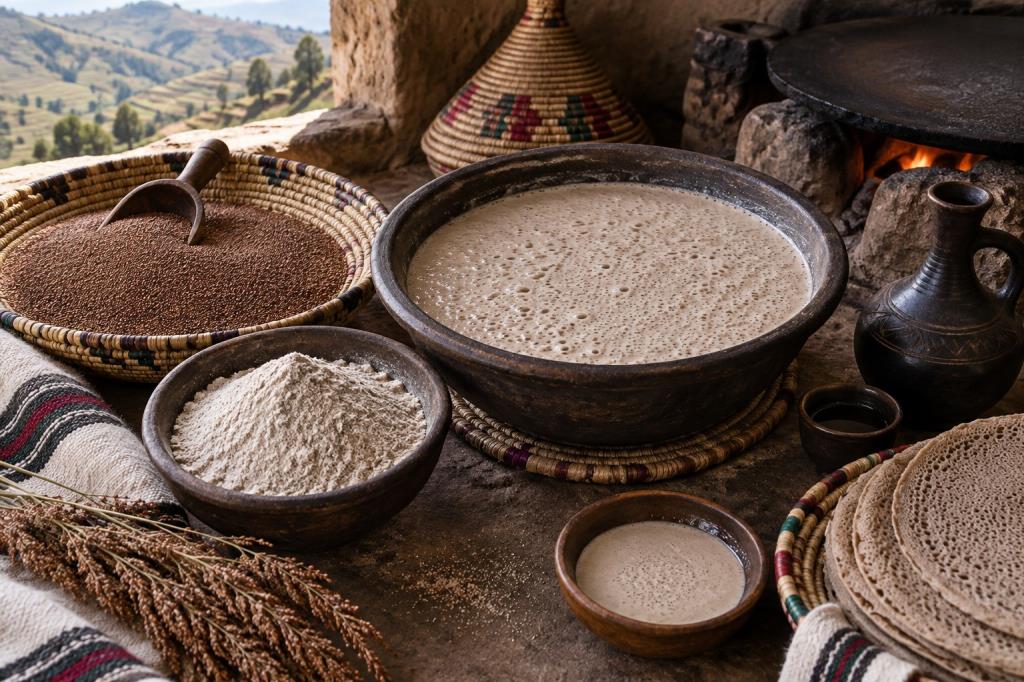
Teff is a very small grain adapted to highland conditions and holds an important place in Ethiopia; injera made from teff is prized for its aroma, structure and keeping quality. The FAO also records that other grains may be used, reflecting growing conditions and access to food.
Fermentation lets the batter develop sourness, gas and structure. The maker relies on a starter, the room temperature, time and a feel for the batter; the knowledge is usually passed on by watching rather than by recipes in grams. A large griddle produces a round bread wide enough to line the whole platter.
The food of Ethiopia and Eritrea is bound up with Christian and Muslim traditions and with local communities. Orthodox fasting days have produced a repertoire of plant-based dishes rich in pulses and vegetables; on other occasions, meat and spiced butter may take a prominent role.
How is a meal put together?
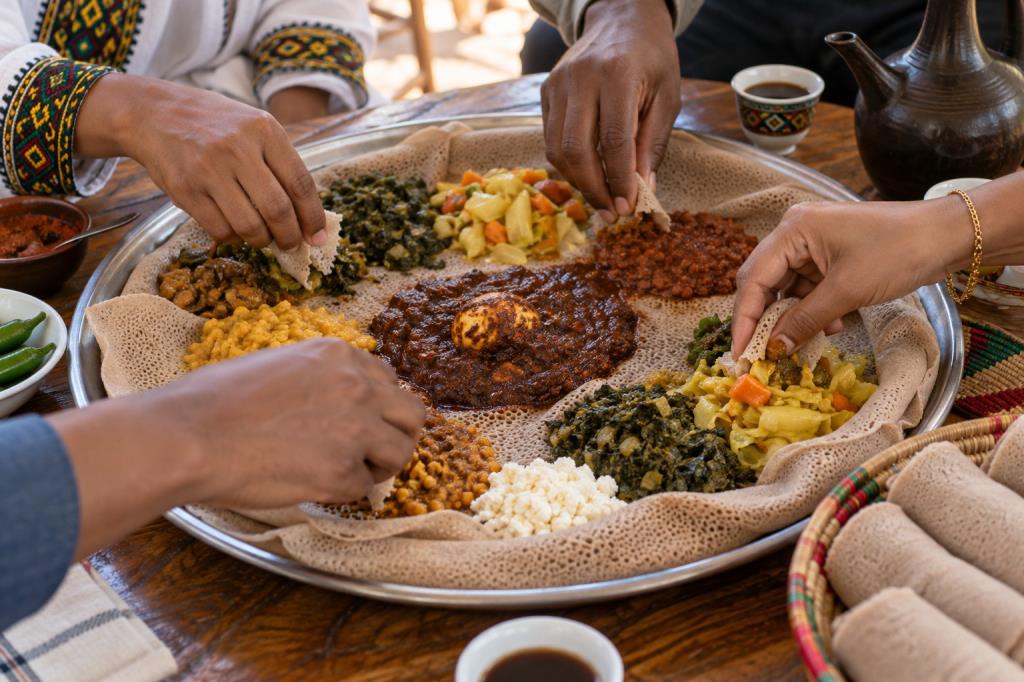
One or more sheets of injera are spread across the platter, with the wot and side dishes arranged in clusters. Diners sit around it, tear from the part nearest them and pinch up just enough of a dish; the sauces soak into the layer beneath, so by the end of the meal the base holds a combination of every flavour.
Wot may be a red stew heavy with berbere, a milder alicha, lentils, split peas, greens or meat. The balance comes from the sourness of the injera, the heat and aroma of the stew, and fresh vegetables or a soft cheese depending on the place.
The elements that make the character recognisable
- Teff gives a mineral note, a light sourness and the characteristic spongy structure.
- The starter and the fermentation time decide the aroma and the rise.
- The mitad is the round griddle used to cook the bread.
- Berbere brings layers of chilli and spice, not only heat.
- The wot provides the sauce for the injera to absorb.
- The mesob, a woven table basket, creates the space for a shared platter in many settings.
The list above is a map for observing, not a formula that boxes anything in. An ordinary family meal may be far simpler, while a festival table is elaborate and full of symbolism. The cultural value lies as much in how things are chosen, prepared, divided and offered to one another as in the number of dishes.
Ingredients tell a story of geography
Altitude, the rainy season and the soil all affect teff, barley, wheat, sorghum, pulses and spices. Teff has extremely small grains and demands skill in harvesting, cleaning and milling. Where teff is expensive or scarce, blending grains is an economic and historical choice rather than simply an inferior version.
Coffee, chillies, onions, pulses and leafy greens together shape the landscape of flavour. Red Sea trade routes and the movement of communities helped carry spices, utensils and ways of eating across borders; so it is worth speaking of the connections without erasing each identity.
The techniques that build the flavour
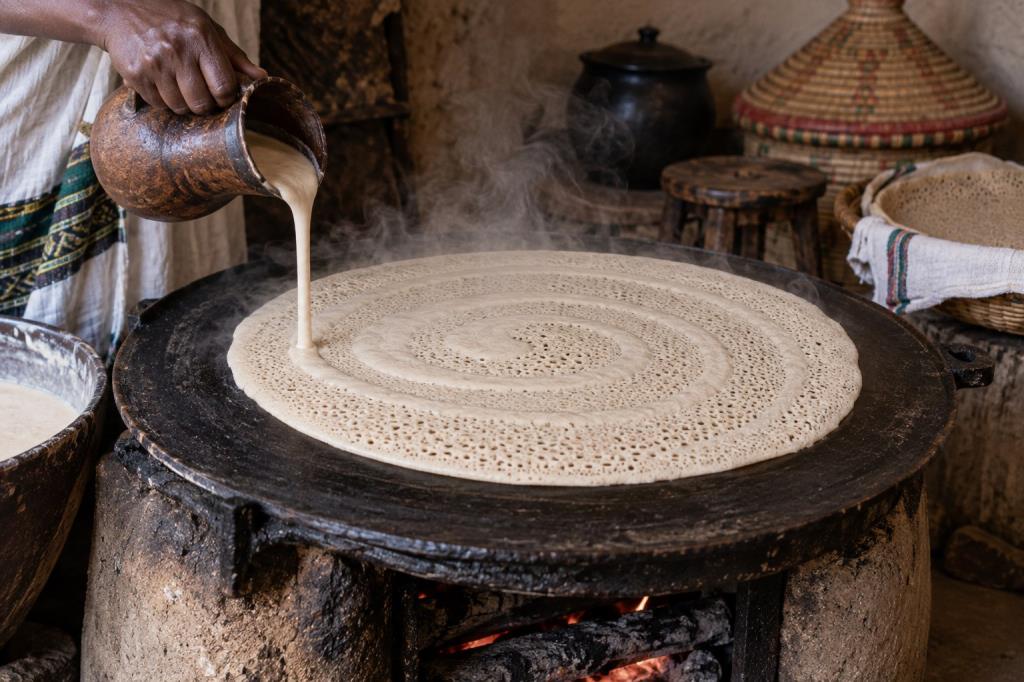
The injera batter is mixed with water and a starter and fermented until it smells cleanly sour and bubbles. Part of the batter may be cooked into absit and stirred back in to support the structure. The consistency has to be thick enough for the stream of batter to spread in a circle, yet not too thin.
To cook it, the maker pours in a spiral from the outside inwards onto a hot mitad, then covers it so the steam sets the surface. It is not flipped like a pancake. A good surface is covered in small “eyes”, with the underside cooked but not dry or crisp; each bread is cooled separately before being stacked.
Seen from the kitchen, a traditional technique is usually a community's answer to a very practical problem: making grain easier to eat, using up a harvest, extending how long food keeps, or building layers of aroma from a limited supply of fuel. When modern technology shortens a stage, the flavour may still be good, but the rhythm of the work, the sensory knowledge and the space in which the craft is handed on all change too.
The table, hospitality and good manners
Eating together from one platter creates closeness and an unspoken responsibility: each person keeps to their own area, avoids scattering the food and looks after the person beside them. Gursha — feeding someone else a morsel by hand — can express affection and respect in the right circumstances.
- Wash your hands before the meal, and eat with the right hand as is usual.
- Tear a piece of injera big enough for one mouthful, and avoid dropping food.
- Start from the part nearest you rather than reaching across the platter.
- Accept an offer of more food graciously, and say clearly when you have had enough.
- Do not offer gursha to a stranger on your own initiative; follow the host and the level of familiarity.
- Ask about fasting days and about butter and meat content if you have particular dietary needs.
Differences between regions and families
The degree of sourness, the colour, the proportion of teff and the thickness all change with place, climate and family. In Eritrea, injera is equally central, but the names of dishes, the seasonings, the Red Sea coastal influences and the settings in which it is served all have their own shades.
In diaspora communities, imported teff flour, electric equipment and a colder climate force cooks to adjust the starter, the timing and the grain proportions. Those changes are part of the history of migration and should not be mechanically read as a loss of authenticity.
The best approach is to use the name of the region, the community or the specific dish wherever you can. Very broad labels such as “Asian food”, “Middle Eastern cuisine” or “African dishes” are convenient in conversation but easily blur history and diversity. A dish that has crossed borders may also be kept alive by several communities at once; looking for a single “owner” is often less meaningful than understanding the branches along which it grew.
Common misconceptions
Injera is a sour pancake
The round shape and the pouring look superficially similar, but injera is a fermented bread, never flipped, and it doubles as the base of the platter and the eating utensil. Its social role goes far beyond that of a single bread.
All injera is made from 100% teff
Teff is preferred, but sorghum, wheat, maize or blends may appear depending on the region and on economic circumstances. Ask rather than judging by colour.
Eating from one platter means there are no manners
A shared platter has subtle rules about which hand to use, which area to take from, the size of a mouthful and how to offer food. Watching the host's rhythm is the best way to learn them.
A more respectful way to experience it while travelling
- Ask the server how dishes are named and how hot they are before choosing.
- Wash your hands thoroughly and use the right hand if you are eating in the traditional way.
- Do not demand cutlery as if it were a criticism; you can still ask for it if you need it.
- Say Ethiopian or Eritrean specifically, according to the restaurant and the cook.
- Declare a gluten allergy, because injera may be blended with gluten-containing grains.
- Allow time for the coffee ceremony if you accept the invitation and your schedule permits.
If a host or someone serving shows you a way of eating that differs from your habits, watch first and then follow it as far as you are comfortable. You can politely ask about allergies, dietary needs or how hot something is. Ask permission before photographing people cooking, an altar, a ritual or a private space; prices and judgements about the food also belong in their local context.
Trying it at home without turning the dish into a stereotype
Beginners should start from a recipe by an Ethiopian or Eritrean cook and use a scale. Fermentation behaves differently at different temperatures, so watch for the clean sour smell, the bubbles and the flow rather than only the clock. Using a wide non-stick pan with a lid is an adaptation, but the heat must be even.
Prepare two contrasting stews — one spicy pulse dish and one mild vegetable dish — rather than attempting too many. Let each injera cool separately before stacking so they do not stick. If you blend teff with other flour, state the ingredients for whoever is eating and avoid claiming it is the only correct recipe.
A version cooked at home should honestly be called an adaptation when the equipment or the local ingredients are missing. Say clearly what you substituted and how it affects the aroma, the texture and the colour. If you want to go deeper, learn from the cooks, writers and communities attached to that tradition rather than relying on a short video or a commercialised version.
An observation checklist for the five senses
- At which stage does the aroma appear: toasting, grinding, fermenting, steaming or simmering?
- Is the dominant texture crisp, airy, chewy, smooth or juicy?
- Does the depth of flavour sit in the main dish, or does it come from the side dishes and the seasonings on the table?
- What part do the utensils, the crockery and the seating arrangement play?
- Who prepares the food, how is the knowledge passed on, and on what occasion does the meal take place?
Traditional food in modern life
Global demand for teff opens market opportunities but also raises questions about price, farmers' rights and access within the communities of origin. Restaurants abroad have introduced many people to injera and have at the same time become places where language, ritual and social networks are kept alive.
Electric mitad, pre-ground flour and temperature control reduce the labour, but the experience of reading the fermentation still matters. Recording the methods of older generations and making space for young people to practise is how the heritage goes on living.
Preserving heritage does not mean freezing a dish at some imagined moment in time. Young people, migrants, home cooks and restaurants all keep adjusting portions, equipment, sources of ingredients and ways of serving. What matters is recognising the core body of knowledge, acknowledging those who pass the craft on, and creating the conditions for a community to decide for itself how its heritage moves forward.
Terms worth remembering
- Injera: a fermented flatbread, spongy and lightly sour.
- Teff: a small-grained cereal native to the Horn of Africa.
- Wot: the family of stews or sauces eaten with injera.
- Berbere: a blend of chilli and spices.
- Mitad: the wide griddle used to cook injera.
- Gursha: the gesture of feeding someone a morsel by hand in a close setting.
Conclusion
Injera shows that a single food can be plate, spoon and communal memory all at once. In tearing off a piece to gather up the wot, the diner joins a rhythm of sharing created by the teff grain, the fermentation, the hands that cooked it and the courtesies of the shared platter.



 Korean kimchi and banchan: the craft of fermentation and a table built on sharing
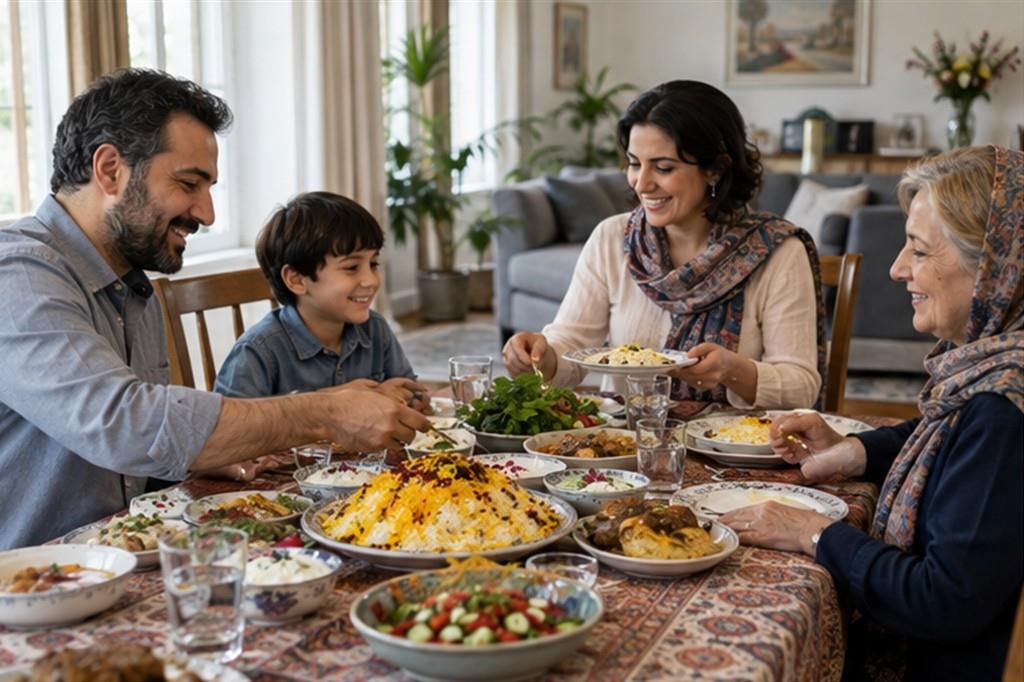 Persian rice and tahdig: saffron, a crisp bottom layer and the sofreh
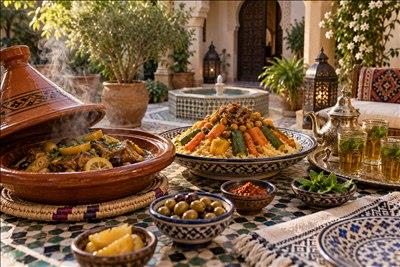 Moroccan couscous and tagine: rhythm, hospitality and the flavours of North Africa
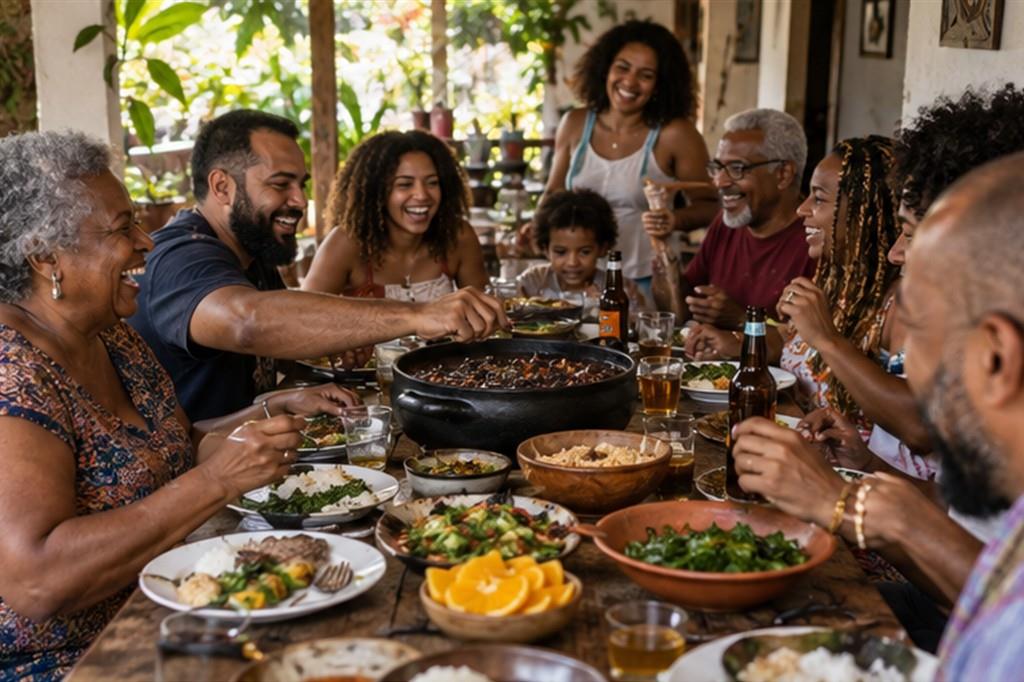 Brazilian feijoada: a pot of black beans, a weekend lunch and a story with many roots
 The Indian thali: a balanced tray that tells a regional story and a way of eating together
 Danish smørrebrød: the open sandwich and the art of composing a lunch
 Swiss raclette: melted cheese and a shared table in the cold season
 Injera in Ethiopia and Eritrea: the shared platter that binds a community
Đăng nhập để bình luận: / Sign in to comment: